Country fried chicken earns its place on the table because the crust stays shatteringly crisp while the meat underneath turns tender and juicy. The buttermilk marinade seasons the chicken all the way through, and the dredge builds those craggy ridges that fry up into a deep golden shell. Add a proper peppery gravy on top, and you’ve got the kind of meal that disappears fast.
The trick with this version is balancing moisture and structure. Cornstarch in the flour mix keeps the coating lighter and a little more brittle, while the smoked paprika and cayenne give the crust more than just salt-and-pepper flavor. The chicken also needs that hour in buttermilk; it’s long enough to tenderize without turning the meat mushy. Frying at a steady 325°F matters just as much. Too hot and the crust burns before the chicken cooks through. Too cool and the coating drinks in oil instead of crisping.
Below, you’ll find the details that keep the breading from slipping, the gravy from turning lumpy, and the chicken from coming out greasy. A few small choices make a big difference here.
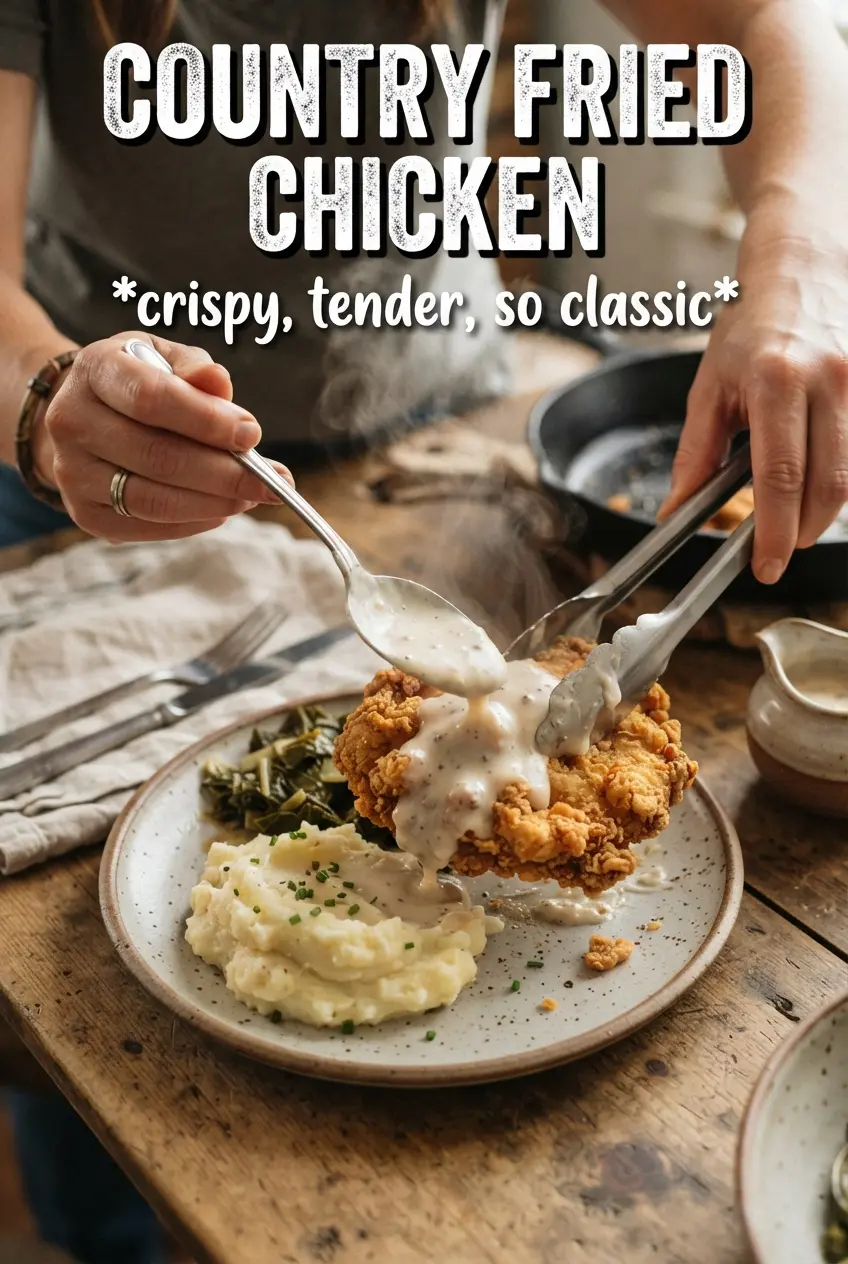
The crust stayed crunchy even after I spooned on the gravy, and the chicken was cooked through without drying out. The buttermilk soak and the 325° oil temp made all the difference.
Save this country fried chicken for the night you want a crackly crust, peppery gravy, and a skillet dinner that feels like a real win.
The Reason the Crust Stays Crisp Instead of Going Soggy
Country fried chicken falls apart when the coating doesn’t have enough structure or when the oil temperature swings around. The buttermilk marinade gives the flour something to cling to, but you still need a dry, well-seasoned dredge with a little cornstarch mixed in. That cornstarch matters. It interrupts the gluten a bit and helps the crust fry up crisper instead of dense.
The other mistake is crowding the pan. When too much chicken goes in at once, the oil temperature drops and the coating starts soaking up grease before it has a chance to set. Keep the heat steady at 325°F and fry in batches. The chicken should sound lively when it hits the oil, not quiet and sluggish.
What the Marinade, Dredge, and Gravy Each Bring to the Table

- Buttermilk — This tenderizes the chicken and gives the coating a slightly tacky surface so the flour sticks. Whole milk won’t do the same job. If you don’t have buttermilk, stir 2 tablespoons of lemon juice or vinegar into 2 cups of milk and let it sit for 10 minutes, but the flavor is a little less rich.
- Cornstarch — A small amount makes the crust lighter and more brittle. Skip it and the coating still works, but it won’t have that same shattery edge after frying.
- Smoked paprika and cayenne — These keep the crust from tasting flat. The paprika adds depth, not smokehouse flavor, and the cayenne gives just enough heat to balance the gravy.
- Whole milk and chicken broth — The gravy needs both. Milk gives it body and that classic country gravy feel, while broth keeps it from tasting one-note. Lower-fat milk can work, but the gravy will be thinner and less plush.
- Black pepper — Use more than you think. It’s the backbone of the gravy, and it should taste boldly peppery rather than mildly seasoned.
Building the Dredge and Frying at the Right Temperature
Seasoning the Flour Mix
Whisk the flour, cornstarch, and spices until every part looks evenly speckled. If the seasoning isn’t mixed well, you’ll get pockets of bland crust and pockets that taste too sharp. A shallow bowl makes dredging easier, but don’t overload it with chicken pieces all at once or the flour turns clumpy fast.
Pressing the Coating On
Lift each piece from the marinade and let the excess drip off for a few seconds, then press it firmly into the flour. The goal is a shaggy coating, not a thick paste. If the flour starts looking gummy, replace it; wet flour stops sticking properly and fries up heavy.
Frying Until Deeply Golden
Heat the oil to 325°F in a cast-iron skillet and keep the temperature steady as the chicken cooks. The crust should turn a deep golden brown and feel set before you even think about flipping it. If the outside is darkening too fast, lower the heat. Chicken pieces need time for the center to reach 165°F without the crust burning first.
Making the Gravy in the Same Pan
After frying, use a clean saucepan or carefully pour off oil from the skillet and start the gravy with butter and flour. Cook that paste for a minute or two so the gravy doesn’t taste raw, then whisk in the milk and broth slowly. If the gravy gets lumpy, it usually means the liquid went in too fast. Keep whisking and add a splash more warm broth until it smooths out.
How to Adapt This for Different Tables and Pantry Gaps
Gluten-Free Country Fried Chicken
Use a 1:1 gluten-free flour blend in place of the all-purpose flour and keep the cornstarch. The crust will still crisp well, though it may be a little more delicate when you turn the chicken. Let the coated pieces rest a few minutes before frying so the breading has time to set.
Dairy-Free Version
Swap the buttermilk for unsweetened dairy-free milk mixed with lemon juice or vinegar, and use a neutral oil for the gravy instead of butter if needed. The chicken will still fry up well, but the gravy loses some richness, so season it more aggressively with salt and black pepper.
Boneless Chicken Pieces
Boneless thighs or breast cutlets cook faster, so start checking early. They won’t have the same old-school feel as bone-in pieces, but they’re easier to serve and less fussy for a weeknight meal. Pull them as soon as they reach 165°F so they stay juicy.
Storage and Reheating
- Refrigerator: Store the chicken and gravy separately for up to 3 days. The crust softens in the fridge, but it still reheats well.
- Freezer: The fried chicken freezes better than the gravy. Wrap pieces tightly and freeze for up to 2 months. Freeze the gravy only if you don’t mind a slight change in texture after thawing.
- Reheating: Reheat chicken on a wire rack in a 375°F oven until hot and crisp again. Don’t microwave it if you want to keep the crust; that’s the fastest way to turn it leathery. Warm the gravy slowly on the stove with a splash of milk or broth.
Answers to the Questions Worth Asking
Country Fried Chicken
Ingredients
Equipment
Method
- Whisk buttermilk, hot sauce, salt, and black pepper in a bowl to make the marinade.
- Add the bone-in chicken pieces, cover, and marinate for 1 hour in the refrigerator.
- For deeper flavor, marinate up to overnight in the fridge, keeping the chicken covered.
- Whisk all dredge ingredients (all-purpose flour, cornstarch, garlic powder, onion powder, smoked paprika, cayenne, salt, and black pepper) in a shallow bowl.
- Remove chicken from the marinade and let excess drip off, then dredge each piece in the flour mixture.
- Press the dredge onto the chicken so it adheres, creating an even coating for crunch.
- Heat vegetable oil to 325°F in a large cast-iron skillet until it reaches steady frying heat.
- Fry the chicken for 12-15 minutes per side until deeply golden and cooked through.
- Check doneness by ensuring the thickest part reaches 165°F internal temperature, with a crisp, shatter-ready crust.
- Melt butter in the skillet or a clean pot over medium heat.
- Whisk in flour and cook for 1-2 minutes, until the roux looks lightly golden.
- Gradually whisk in whole milk and chicken broth, then cook until thick and smooth.
- Season the gravy with plenty of salt and black pepper until it tastes properly peppery and rich.
- Serve the fried chicken smothered in country gravy, with cracked black pepper on top for a bold finish.


