Grilled chicken gets a bad reputation when it’s dry, bland, or all char and no real flavor. Done well, though, it’s one of the most flexible things you can put on a grill: juicy thighs with sticky edges, smoke-kissed breasts that still slice cleanly, drumsticks with crackly skin, and marinades that taste different enough to keep the whole collection interesting. The best versions don’t rely on one big trick. They rely on matching the cut, the marinade, and the heat.
This collection works because each approach respects what chicken actually needs. Acid is useful, but too much of it for too long can make the surface chalky. Sugar helps browning, but it burns fast over high heat. Dark meat forgives more; lean breasts need tighter timing and a rest before slicing. Once you start thinking in those terms, you can mix and match flavors without guessing.
Below, I’ve laid out the parts that matter most: what changes the texture, what keeps the chicken juicy, and how to adapt the method when you’re working with a different cut or a different dinner plan.
I tried the citrus-herb version with thighs, and the chicken came off the grill juicy with the best little charred edges. I also liked that the marinade didn’t overpower the meat, so I can use the same method with different flavors next time.
Mix-and-match grilled chicken ideas with juicy marinades, smoky char, and cut-by-cut flavor that actually works on the grill.
The Biggest Mistake With Grilled Chicken: Treating Every Cut the Same
Grilled chicken goes wrong fastest when breasts, thighs, and drumsticks all get the same heat and the same clock. Breasts cook through quickly and dry out once they pass the line; thighs want a little more time to render and pick up color; drumsticks need enough heat to cook near the bone without scorching the skin. The grill isn’t just a cooker here. It’s a tool for controlling how each cut finishes.
Marinades and rubs change the surface, but the cut decides the method. A sugar-heavy glaze can be perfect for thighs and a headache for thin breasts. A lemon-heavy marinade can wake up drumsticks, but leave it on too long and the texture starts to tighten. The trick is to choose the flavor first, then match the cooking time and grill temperature to the cut you picked.
- Chicken breasts — Best when they’re pounded to an even thickness or butterflied so the thinner end doesn’t dry out before the thick end is done.
- Chicken thighs — More forgiving and better for bolder marinades. Their extra fat helps them stay juicy even if the grill runs a little hot.
- Chicken drumsticks — Need longer, steadier heat. If the outside is browning too quickly, move them to indirect heat and finish there.
- Marinades with acid — Great for flavor, but don’t marinate delicate cuts forever. Thirty minutes to a few hours is often enough; overnight is better reserved for less acidic mixtures.
What Each Ingredient Is Actually Doing in This Grilled Chicken Collection
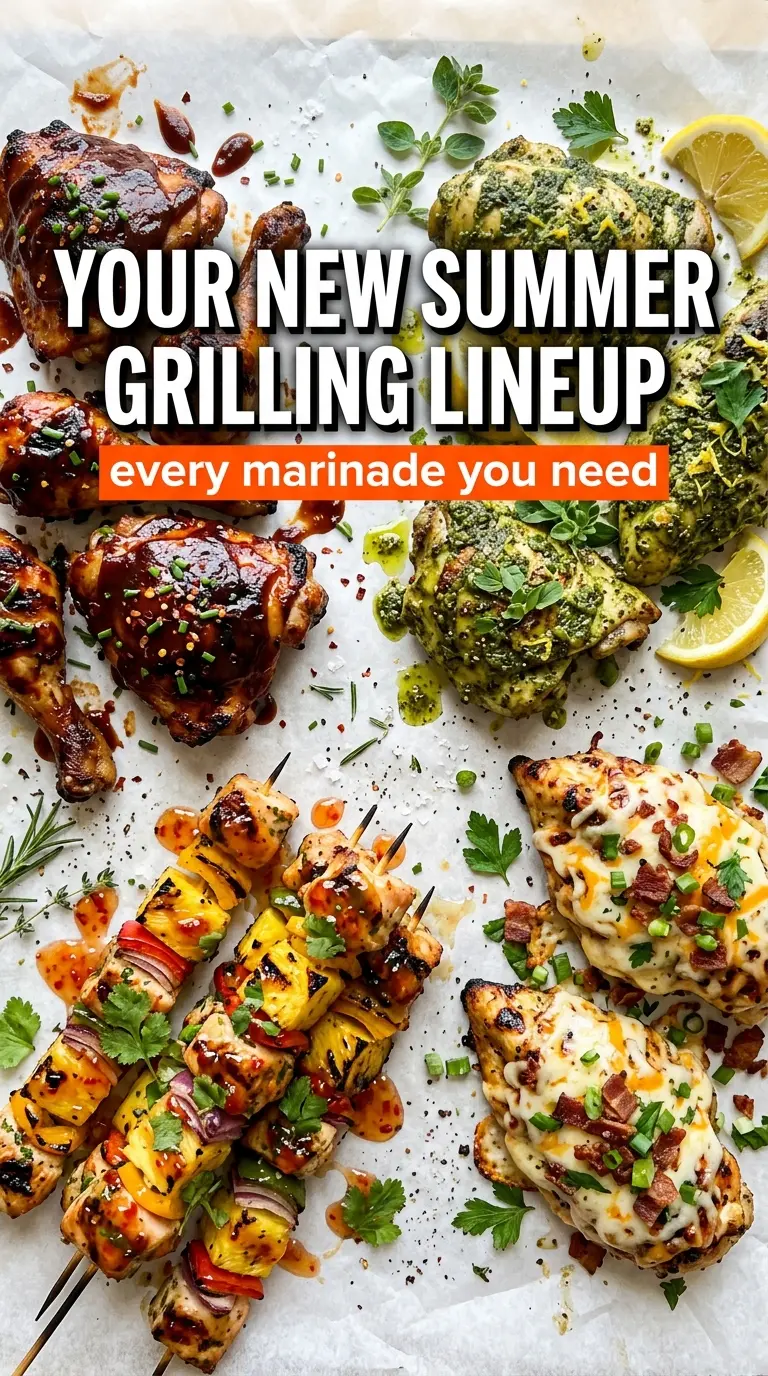
Chicken cuts — Use breasts when you want clean slices and a faster grill time, thighs when you want the most forgiving texture, and drumsticks when you want a hands-on, casual meal. The cut changes the whole experience, not just the cooking time.
Marinades and rubs — This is where the collection gets its variety. Wet marinades help carry acid, salt, oil, and aromatics into the surface of the meat, while dry rubs give you a crustier finish and more direct browning. A rub won’t tenderize the way a marinade can, but it often gives better bark on the grill.
Fresh herbs and citrus — Herbs bring brightness that survives heat better than delicate raw aromatics alone. Citrus wakes up the chicken, but too much juice can work against the texture if it sits too long. Zest is often the smarter move when you want the same lift without the same harshness.
Vegetables for grilling — They turn this from a plain protein into an actual meal and also give you an easy way to manage grill space. Toss them with oil and salt, then grill them while the chicken rests.
Serving sauces and accompaniments — A finishing sauce is where you can lean into sweetness, heat, or extra acidity without risking the texture of the meat itself. That’s useful when you want a bolder finish than the marinade alone can give.
How to Match Heat, Timing, and Flavor So the Chicken Stays Juicy
Picking the Right Marinade or Rub
Start by deciding what kind of finish you want: smoky and dry-rubbed, bright and citrusy, sticky and glazed, or herb-forward and clean. If the marinade is heavy on sugar, plan for a lower grill temp or a shorter sear so it doesn’t blacken before the chicken cooks through. If it leans acidic, keep the marinating window reasonable so the surface doesn’t turn soft or chalky.
Preheating the Grill the Right Way
Give the grill enough time to come up to temperature before the chicken ever touches the grates. Clean grates and a hot surface help you get those clean sear marks instead of sticking and tearing. If you’re grilling a mixed batch, set up a hotter zone and a cooler zone so you can move pieces around as needed.
Watching for the Moment to Flip
Chicken releases more easily once the first side has seared properly. If it sticks, it usually needs another minute or two, not more force. Flip only when the color is deepening and the meat looks opaque around the edges; that’s the sign the crust has formed and the grill has done its job on that side.
Resting Before Slicing or Serving
Pull the chicken off the grill and let it rest before cutting into it. That pause keeps the juices from running out onto the board the second you slice. Breasts need it most, but every cut benefits from a few minutes off the heat before serving with vegetables or sauce.
Turn the same method into a smoky BBQ batch
Use a rub with paprika, garlic, onion, brown sugar, and black pepper, then brush on sauce near the end of cooking. The sugar gives you better browning, but it needs the final minutes only, or the glaze will burn before the chicken finishes.
Make it dairy-free without losing richness
Most grilled chicken marinades are naturally dairy-free already, so the main move is choosing oil-based sauces instead of creamy finishers. A herb, lemon, or chili oil drizzle gives you the same lift at the end without muting the grill flavor.
Go gluten-free by checking the sauce, not the chicken
Plain chicken, herbs, citrus, oil, and salt are gluten-free on their own. The place to watch is bottled marinades, barbecue sauce, or soy-based ingredients, which can hide wheat unless you check the label.
Build a mixed grill for a crowd
Use more than one cut, but keep the seasoning family the same so the platter still feels intentional. Start the drumsticks first, add thighs next, and save breasts for last so everything lands on the table hot at the same time.
Storage and Reheating
- Refrigerator: Cooked grilled chicken keeps for 3 to 4 days in an airtight container. The surface can lose a little of its crispness, especially on skin-on pieces.
- Freezer: It freezes well for up to 2 months. Wrap individual portions tightly so they don’t pick up freezer burn, then thaw in the refrigerator.
- Reheating: Warm it gently in a covered skillet with a splash of water or broth, or use a low oven. High heat dries grilled chicken out fast, and the goal is to heat it through without cooking it again.
Questions I Get Asked About This Recipe

Creative Grilled Chicken Recipes Collection
Ingredients
Equipment
Method
- Pick one marinade or rub from your collection (BBQ-style, herb-citrus, or smoky spice) and set aside any extra sauce for finishing.
- Pat chicken dry so the marinade clings, then evenly coat breasts, thighs, and drumsticks with your selected marinade or rub.
- Cover and refrigerate the chicken for 30 minutes to overnight to let flavors penetrate (aim for about 4-12 hours when possible).
- Preheat the grill to medium-high heat, around 375-450°F (190-232°C), and set up for direct grilling.
- Grill chicken breasts until cooked through, turning as needed, about 6-8 minutes per side for 165°F (74°C) internal temperature (timing varies by thickness).
- Grill chicken thighs until cooked through, turning as needed, about 6-10 minutes per side until they reach 175°F (79°C) internal temperature.
- Grill chicken drumsticks until cooked through, turning occasionally, about 8-12 minutes per side until they reach 175°F (79°C) internal temperature.
- During the last 2-3 minutes of grilling, brush with BBQ sauce if using, then stop cooking when the exterior is caramelized but not burned.
- Rest the grilled chicken on a sheet pan for 5-10 minutes to let juices redistribute before slicing or serving.
- Toss grilled vegetables with any remaining marinade liquid or olive oil, then grill alongside chicken until tender-crisp and lightly charred.
- Serve with extra BBQ sauce, fresh herbs, and citrus wedges so each person can finish with a bright squeeze.
- Mix and match your cooked chicken, vegetables, and accompaniments to build your preferred grilled chicken meal.