Crock Pot beef stew pays off with deep, savory broth, fork-tender beef, and vegetables that hold their shape instead of melting into the pot. The slow cooker does the long, quiet work here, and the result is the kind of stew that tastes like it simmered all day because it did.
What makes this version work is the layering. The vegetables go in first so they can soak up the broth without overcooking on top of the meat, and the beef sits above them so it braises instead of boiling. Tomato paste, Worcestershire, and a little red wine build a darker, richer base than broth alone can manage, and the cornstarch slurry goes in at the end so the stew thickens cleanly instead of turning chalky.
Below, you’ll find the small timing details that keep the beef tender and the vegetables intact, plus the substitutions that still give you a proper stew when you need to work with what’s in the kitchen.
The broth got thick and glossy at the end, and the beef was falling apart without the potatoes turning mushy. I kept the leftovers for lunch and it tasted even better the next day.
Save this Crock Pot beef stew for a night when you want tender beef, a thick broth, and almost no hands-on work.
The Part That Keeps the Beef Tender Instead of Stringy
The biggest mistake in slow cooker stew is crowding everything into the liquid and expecting the meat to turn silky. Beef chuck needs steady heat and time, but it still does better when it sits partly above the broth, where it braises in steam and simmering liquid instead of just getting boiled from all sides. That’s why the vegetables go on the bottom here.
If the beef is submerged too early, it can still get tender, but the texture tends to go flat and the vegetables usually break down before the meat is ready. The other common problem is using too little seasoning at the start, then trying to fix it at the end. Beef stew needs salt early so the flavor reaches the center of the meat as it cooks, not just the surface.
- Beef chuck — This is the cut that gives you that fall-apart texture after a long cook. Leaner stew meat dries out more easily and doesn’t get the same rich mouthfeel.
- Red wine — It deepens the broth and helps cut through the richness. If you don’t want to use wine, extra beef broth works, but the stew will taste a little less layered.
- Tomato paste — This adds body and a cooked, savory depth that diced tomatoes alone can’t provide. Stir it in with the broth so it disperses evenly instead of clumping.
- Cornstarch slurry — Add this only at the end. If it goes in too early, it can lose thickening power after hours of cooking.
What Each Ingredient Is Actually Doing in the Pot
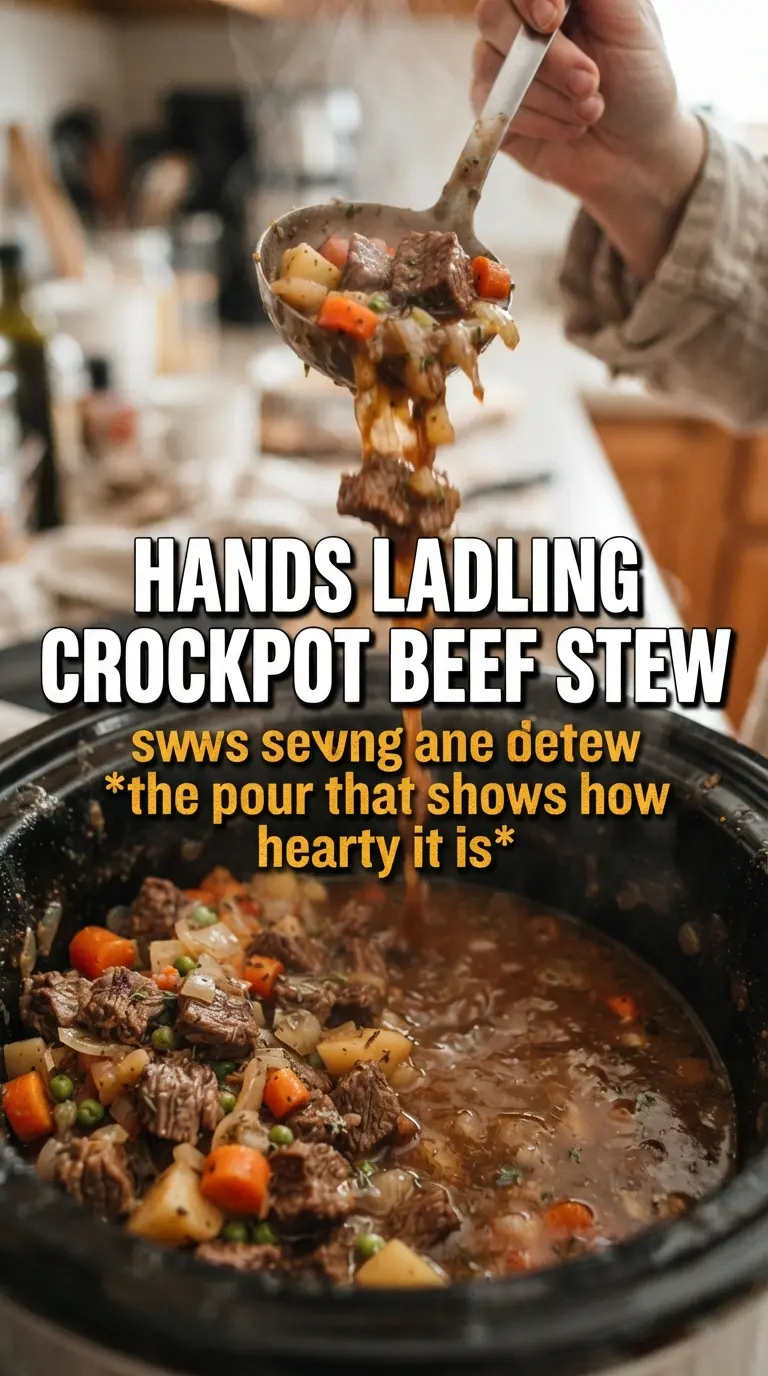
- Beef chuck — Marbled chuck turns soft and rich over a long, low cook. Cut it into larger cubes so it stays meaty instead of shredding too early.
- Baby potatoes — These hold their shape better than russets and soak up the broth without falling apart. Halving them keeps them from going waxy in the center.
- Carrots and celery — They bring sweetness, savoriness, and structure. Thick cuts matter here; thin slices disappear before the stew is done.
- Onion and garlic — They build the base flavor. The onion melts into the broth, while the garlic adds warmth that carries through the whole pot.
- Beef broth, tomatoes, Worcestershire, and herbs — This is the backbone of the stew. The broth gives body, the tomatoes add acidity, Worcestershire adds bass-note savoriness, and thyme, rosemary, and bay keep it tasting like actual stew, not just brown liquid.
Building the Stew So the Broth Thickens at the End, Not the Beginning
Layer the Pot Without Stirring Yet
Start with the potatoes, carrots, celery, and onion on the bottom, then nestle the beef on top. That arrangement keeps the vegetables from floating straight to the surface and overcooking before the meat is tender. Add the garlic, broth, wine, tomatoes, tomato paste, Worcestershire, thyme, rosemary, and bay leaves over everything, but don’t stir hard enough to break up the layers. The slow cooker will do the mixing for you as the stew cooks.
Cook Until the Beef Gives Way Easily
Low and slow is the right setting for the best texture. After 8 to 10 hours on Low, the beef should pull apart with a fork and the potatoes should be tender all the way through. If the beef still feels tight, it needs more time, not more heat. High heat can work in a pinch, but it makes the edges of the meat a little less supple and gives you less room for error.
Finish With the Slurry
Pull out the bay leaves before thickening, then stir in the cornstarch slurry. The broth should look loose at first; it thickens after another 20 to 30 minutes on High. If you add cornstarch too soon, the stew can take on a dull texture and the thickening won’t be as clean. Season at the end once the broth has reduced and concentrated, because that’s when you’ll finally know how much salt it actually needs.
How to Adjust This Stew Without Losing the Texture
Dairy-Free and Naturally Thickened
This stew already fits a dairy-free table, so the main thing to keep intact is the final thickness. Don’t skip the cornstarch slurry unless you want a looser broth; there isn’t enough starch in the potatoes alone to give you that glossy stew texture.
No Wine Version
Use extra beef broth in place of the wine. You’ll lose a little brightness and depth, so the stew benefits from a splash more Worcestershire or a small extra spoonful of tomato paste to keep the broth from tasting flat.
Make It with Different Vegetables
Parsnips, turnips, or chunks of sweet potato can stand in for part of the potatoes or carrots. Keep the cuts large, because smaller pieces soften fast in the slow cooker and turn the stew muddy instead of hearty.
Storage and Reheating
- Refrigerator: Store for up to 4 days. The broth thickens as it chills, and the vegetables soften a bit more by day two.
- Freezer: It freezes well for up to 3 months. Cool it completely first, then freeze in portions so the potatoes don’t get crushed during thawing.
- Reheating: Reheat gently on the stove over medium-low or in the microwave in short bursts. Add a splash of broth if it looks too tight, since chilled stew always thickens more than you expect.
Questions I Get Asked About This Recipe
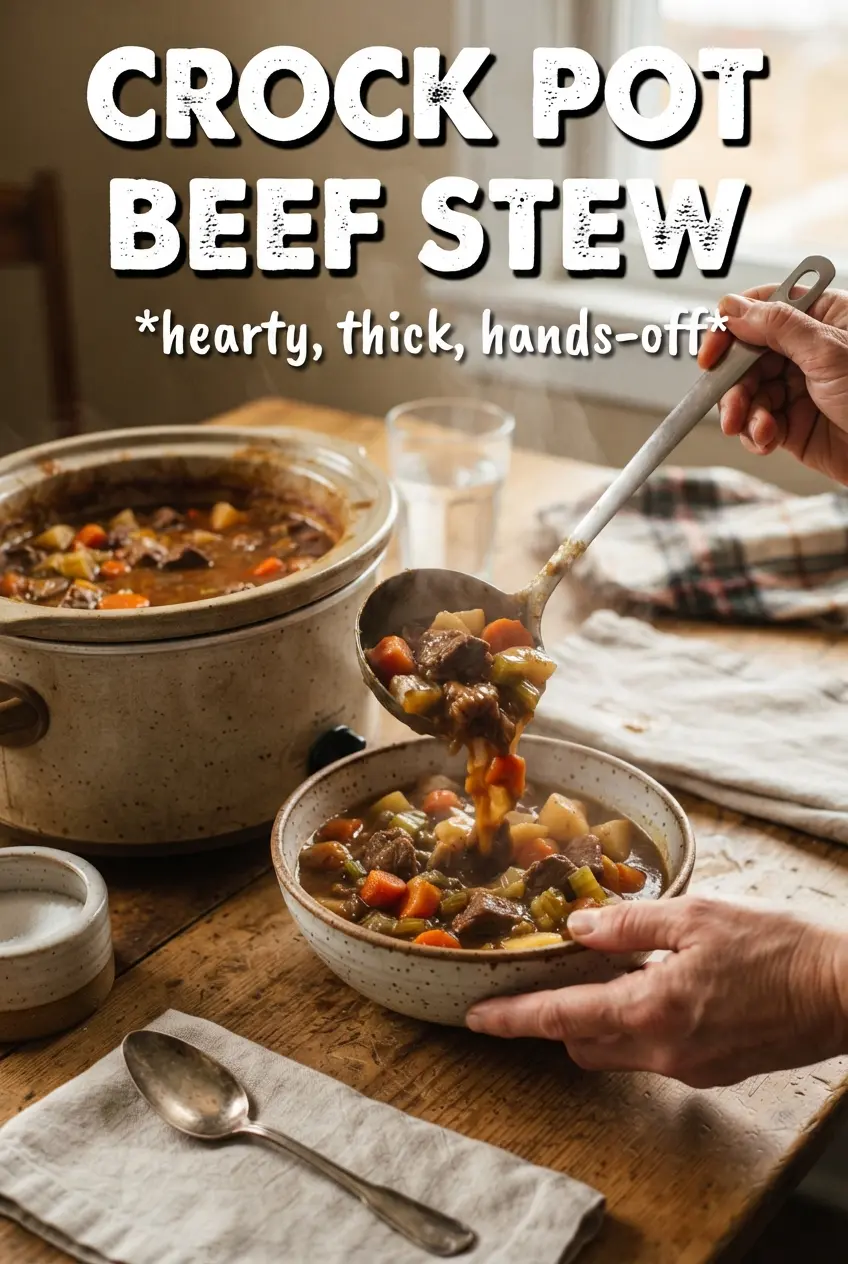
Crock Pot Beef Stew
Ingredients
Equipment
Method
- Season the beef chuck generously with salt and pepper until coated on all sides and no dry spots remain.
- Add the baby potatoes, carrots, celery, and onion to the bottom of the slow cooker, then nestle the beef on top.
- Add the garlic, beef broth, red wine or extra broth, diced tomatoes, tomato paste, Worcestershire sauce, dried thyme, dried rosemary, and bay leaves, spreading everything so it distributes around the beef.
- Cook on Low for 8-10 hours (or High for 4-5 hours) until the beef is fall-apart tender and the vegetables are softened.
- Remove the bay leaves, then stir the stew so the remaining pieces are evenly distributed.
- Stir together cornstarch and water to make a slurry, then pour it into the slow cooker while stirring until no lumps are visible.
- Cook on High for 20-30 minutes, stirring once midway, until the broth thickens to a glossy stew consistency.
- Season with salt and pepper to taste, then serve with crusty bread if desired.


