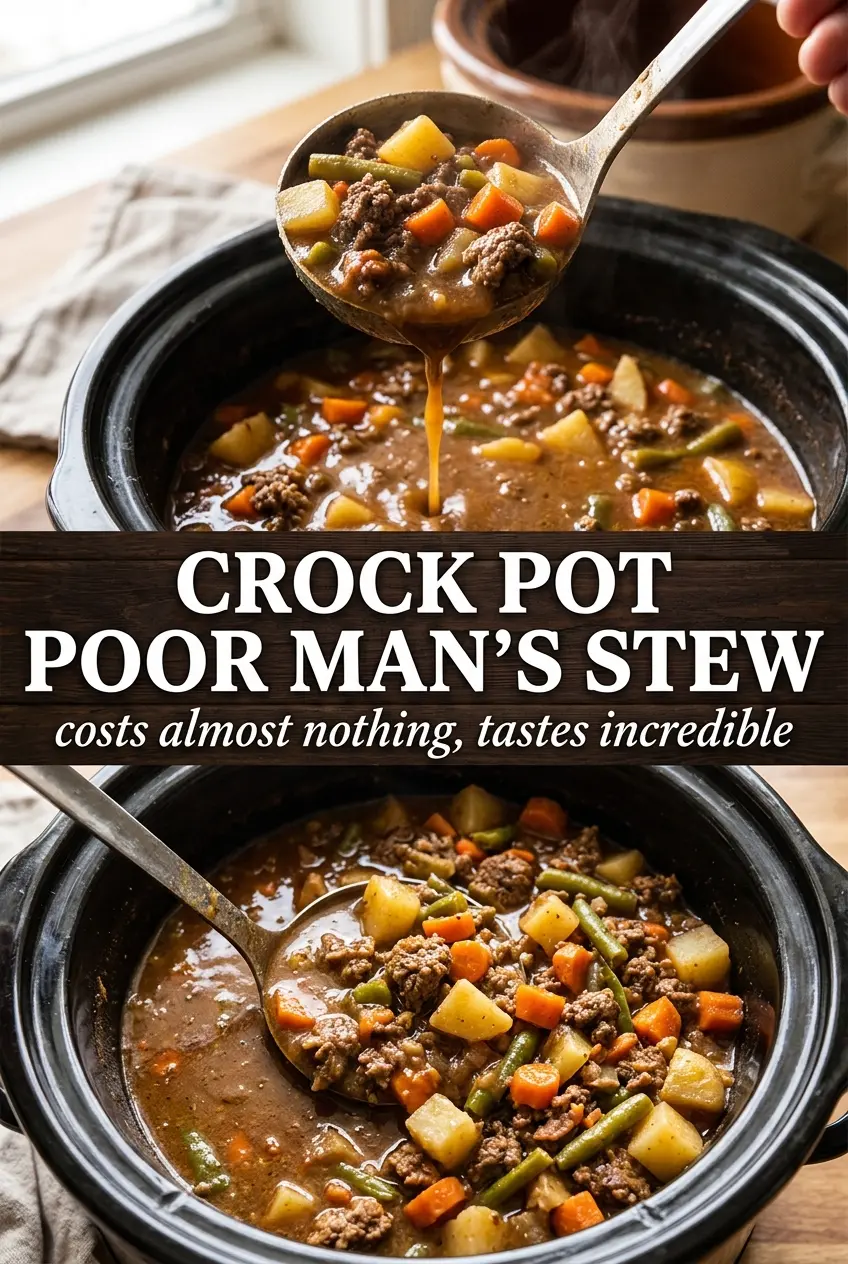
Ground beef, potatoes, carrots, and a rich tomato-kissed broth turn into the kind of stew that feels bigger than the sum of its parts. Crock Pot Poor Man’s Stew lands in that sweet spot where the vegetables stay tender, the broth thickens just enough to coat a spoon, and every bowl tastes like it cooked all day because it did. It is the sort of meal that quiets a hungry table fast.
What makes this version work is the layering. Browning the beef first gives the stew a deeper base than tossing it in raw, and the onion soup mix pulls a lot of savory flavor without a long ingredient list. The cornstarch goes in near the end, which keeps the broth from getting muddy and lets it tighten up into that rustic, spoonable texture people expect from a good slow cooker stew.
Below you’ll find the small details that matter: how to keep the potatoes from turning mealy, when the broth is ready to thicken, and a few easy swaps if you’re working with what you already have in the pantry.
The broth thickened up beautifully in the last half hour, and the potatoes held their shape instead of turning to mush. My husband went back for a second bowl and asked if I could make it again next week.
Love how the beef, potatoes, and thick tomato broth come together in this Crock Pot Poor Man’s Stew? Save it for the next time you want a simple slow cooker dinner that eats like a full meal.
The Secret to Keeping the Broth Rustic, Not Watery
The difference between a good slow cooker stew and a bland one usually comes down to two things: how much flavor you build before the lid goes on, and when you thicken it. Browning the beef first matters because raw ground beef can leave the broth greasy and flat. That quick skillet step gives you better texture and a deeper base before anything else starts cooking.
The other trap is adding cornstarch too early. If it cooks for hours, it loses its power and the stew can still end up thin at the end. Stir it in during the last 30 minutes, after the vegetables are already tender, so it can tighten the broth without turning pasty.
- Ground beef — Browned and drained beef gives the stew its backbone. If you skip the browning, the flavor gets muddier and the texture can feel loose instead of hearty.
- Yukon Gold potatoes — These hold their shape better than russets and give the stew a creamy bite without falling apart. Cut them into even 1-inch cubes so they finish cooking at the same time as the carrots.
- Onion soup mix — This is doing a lot of the heavy lifting for you. It adds salt, onion flavor, and a little savory depth that tastes like you cooked longer than you did.
- Diced tomatoes — They give the broth body and a little acidity, which keeps the stew from tasting one-note. Use the can as-is; draining them removes the liquid that helps round out the broth.
- Cornstarch slurry — This is the cleanest way to thicken a slow cooker stew. Mix it with cold water first so it disperses evenly; if it hits the pot dry, it clumps fast.
What Each Ingredient Is Actually Doing in This Recipe

- Primary ingredient (the star) — Quality matters most. Choose the best you can find.
- Cooking medium (oil, butter, or broth) — This carries flavors and prevents dryness.
- Seasonings (salt, pepper, spices, herbs) — Layer flavors so nothing overpowers. Build depth gradually.
- Aromatics (garlic, onion, herbs) — Cook with fat to bloom flavors. Become the foundation.
- Supporting ingredients — Complement the main ingredient without overpowering it.
- Sauce or liquid (if applicable) — Brings flavors together. Balance richness with acid.
- Acid (lemon, vinegar, wine, or other) — Brightens and prevents flat-tasting results.
- Final finish (garnish, glaze, or sauce) — Prevents one-dimensional taste and adds visual appeal.
Building the Slow Cooker in the Right Order
Browning the Beef First
Cook the ground beef over medium-high heat until it loses its pink color and starts to pick up a few browned edges. Drain off the excess fat so the finished stew tastes rich instead of oily. If the beef goes into the slow cooker raw, the broth can end up with a gray, flat flavor that never really recovers.
Layering the Vegetables and Broth
Add the potatoes, carrots, onion, celery, green beans, and tomatoes to the slow cooker, then pour the broth over everything. Stir in the seasonings so they distribute through the liquid instead of sitting on top. The vegetables should be mostly submerged but not drowned; if the liquid looks sparse at first, that is fine because the tomatoes and vegetables release more as they cook.
Letting Time Do the Work
Cook on low for 7 to 8 hours or on high for 3 1/2 to 4 hours, just until the potatoes and carrots are tender when pierced with a fork. Push the lid back only when needed because every peek lets out heat and slows the clock. If your potatoes are still firm, leave it alone and give them another 20 to 30 minutes instead of raising the heat and risking split vegetables.
Thickening at the End
Whisk the cornstarch and cold water together until smooth, then stir it into the stew during the last 30 minutes and switch to high. The broth should go from thin to lightly glossy and coat the back of a spoon without turning into paste. If it still looks loose at the end, let it sit uncovered for 10 minutes before serving; it keeps thickening as it cools.
What to Swap When You Need to Work With the Pantry
Make It Gluten-Free
Use a certified gluten-free onion soup mix and check that your Worcestershire sauce is gluten-free. The stew itself is already naturally thickened with cornstarch, so once those two ingredients are swapped, the texture and finish stay the same.
Swap in Ground Turkey
Ground turkey works if you brown it well and season it a little more aggressively, since it has a milder flavor than beef. The stew will taste lighter and less beefy, but the potatoes and tomatoes still carry the dish.
Use Fresh Green Beans Instead of Canned
Fresh green beans need a little more time to soften, so cut them into bite-size pieces and add them with the rest of the vegetables. They keep a brighter snap than canned beans, which makes the stew feel a little fresher.
How to Stretch It for More People
Add an extra potato, another carrot or two, and an extra cup of broth if you need the stew to feed a bigger group. The flavor stays balanced because the onion soup mix and Worcestershire still do the heavy lifting, but the broth may need an extra pinch of salt at the end.
Storage and Reheating
- Refrigerator: Store in an airtight container for up to 4 days. The broth thickens in the fridge, so expect it to look much denser the next day.
- Freezer: It freezes well for up to 3 months. Cool it completely first, then freeze in portions so the potatoes don’t get crushed when you thaw it.
- Reheating: Warm it gently on the stovetop or in the microwave with a splash of broth or water. The biggest mistake is blasting it on high heat, which can make the potatoes break down and turn the stew grainy.
The Questions People Ask Before Making This Stew
Crock Pot Poor Man's Stew
Ingredients
Equipment
Method
- Heat a cast iron skillet over medium-high heat, add the ground beef, and cook until browned. Drain excess fat so the stew stays balanced.
- Add the browned ground beef to the slow cooker along with the Yukon Gold potatoes, carrots, onion, and celery. Layer the vegetables so they cook evenly over the full batch.
- Add the green beans and diced tomatoes to the slow cooker. Spread them across the top for even heat contact.
- Pour the beef broth over everything in the slow cooker. Make sure most vegetables are in contact with liquid.
- Add the onion soup mix, Worcestershire sauce, garlic powder, salt, and black pepper to the slow cooker. Stir to combine so the seasonings disperse through the broth.
- Cook on low for 7–8 hours until the vegetables are tender. Keep the lid on and look for potatoes you can easily pierce with a fork.
- Whisk the cornstarch and cold water together until smooth. The mixture should look glossy with no dry lumps.
- Stir the cornstarch slurry into the stew. Cook on high for about 30 minutes or until the broth thickens to a stew-like consistency.
- Serve the stew hot with crusty bread or dinner rolls on the side. The broth should cling lightly to the vegetables when ladled.