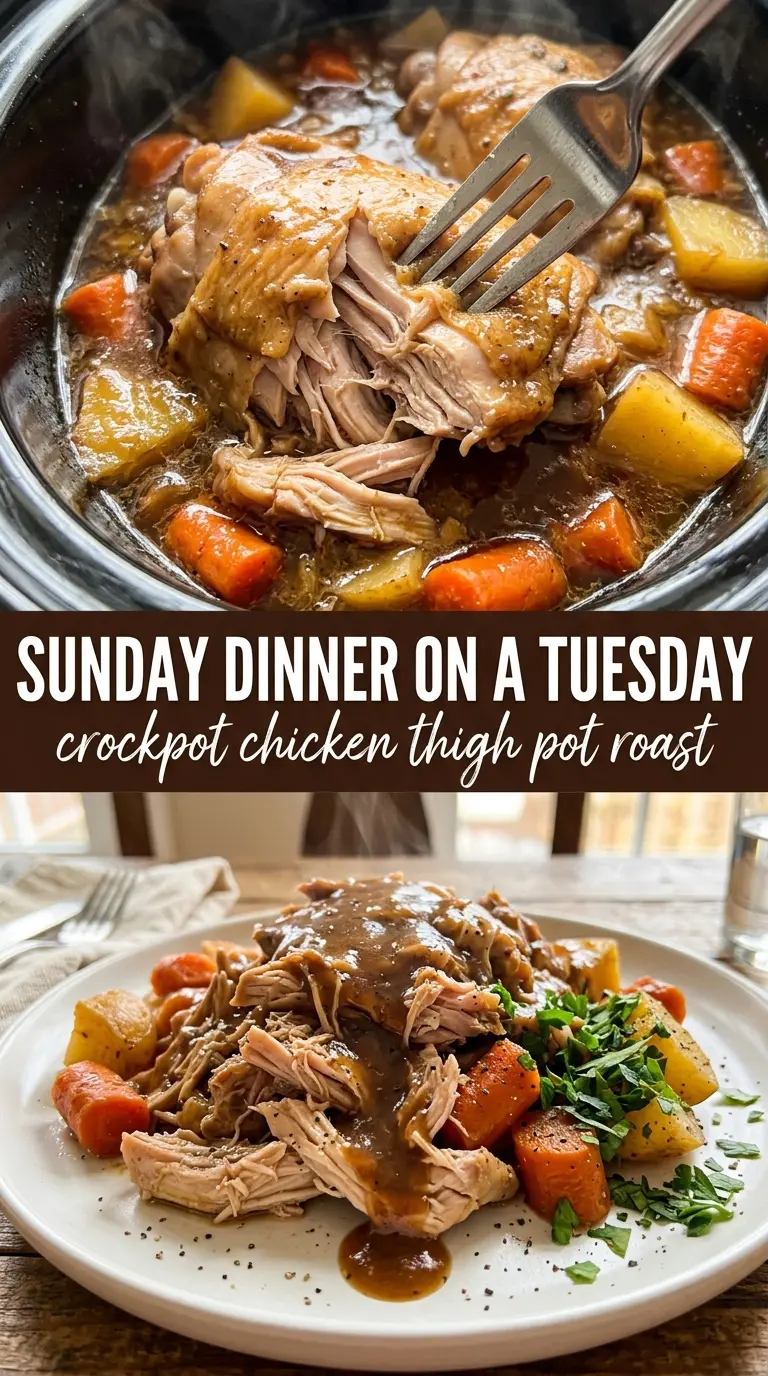
Bone-in chicken thighs turn silky and tender in the slow cooker, while the potatoes, carrots, celery, and onions soak up a rich herb broth that tastes like it took a lot more effort than it did. The skin won’t stay crisp during the long cook, but the meat stays juicy and the vegetables come out deeply seasoned and spoon-tender, which is exactly what you want from a pot roast-style dinner.
The key is layering the vegetables on the bottom so they get full contact with the broth, then keeping the thighs skin-side up above them. Tomato paste and Worcestershire sauce do the heavy lifting here, giving the cooking liquid the browned, savory depth that makes the whole dish taste finished instead of just cooked. A little butter on top of each thigh helps carry the herbs and keeps the chicken from tasting flat after hours in the slow cooker.
Below, I’ll show you the one step that helps the skin taste better even after slow cooking, plus a few swaps that still keep the dish hearty and roast-like.
The chicken came out fall-apart tender and the broth made the potatoes taste like they’d been roasting for hours. I broiled it at the end like you suggested, and the skin had actual color instead of turning leathery.
Save this crockpot chicken thigh pot roast for a hands-off dinner with tender chicken, herb broth, and vegetables that taste like they cooked in the oven all day.
The Skin Won’t Crisp in the Slow Cooker, and That’s Not the Real Goal
What ruins a lot of chicken-thigh pot roast recipes is expecting the slow cooker to do two jobs at once: braise the meat and crisp the skin. It won’t. The crockpot is great at turning connective tissue soft and making the vegetables absorb flavor, but it traps moisture, which is the opposite of what skin needs. That’s why this recipe gives you a broil at the end if you want a more roast-like finish.
Keeping the thighs skin-side up matters more than people think. If they sit in the broth, the skin turns soft and the seasoning washes off into the liquid. Placing them on top lets the chicken gently steam-braise while the vegetables do their thing underneath.
- Skin-on chicken thighs — These give you the richest result and stay moist over a long cook. Boneless thighs work in a pinch, but they lose some of that roast-chicken feel and cook faster, so start checking them early.
- Yukon Gold potatoes — They hold their shape better than russets and go creamy instead of mealy. If you only have russets, cut them larger so they don’t collapse.
- Tomato paste and Worcestershire sauce — This is where the broth gets depth. Tomato paste adds body and a little sweetness; Worcestershire brings the savory edge that makes the liquid taste like pan juices, not just seasoned stock.
What Each Ingredient Is Actually Doing in the Pot
- Chicken broth — Use a broth you’d actually drink. Since the liquid cooks for hours, a bland broth stays bland. Low-sodium is the smart choice because the Worcestershire and seasoning add their own salt.
- Dried thyme and rosemary — Dried herbs hold up better than fresh in a long cook. Fresh herbs can be added at the end for brightness, but the dried version gives the broth its backbone.
- Butter — Small amount, big payoff. It rounds out the broth and helps the chicken taste more like a pot roast than a plain braise.
- Garlic, smashed — Smashed cloves perfume the broth without disappearing completely. Minced garlic can turn harsh after a long cook; smashed cloves soften and mellow.
Layering the Slow Cooker So the Vegetables Taste Roasted, Not Watery
Build the Vegetable Bed First
Start with the potatoes, carrots, celery, and onion in the bottom of the slow cooker. That puts the vegetables in the broth where they can soften evenly and catch all the seasoning as it drips down from the chicken. If you toss everything together randomly, the bottom pieces overcook while the top stays pale and underseasoned.
Mix the Broth Before It Goes In
Whisk the chicken broth with the tomato paste and Worcestershire until the tomato paste disappears. If you leave little clumps, they’ll stay concentrated in one spot and you’ll get pockets of sharp tomato flavor instead of a balanced cooking liquid. Add the garlic and dried herbs after the broth is smooth so they disperse evenly.
Set the Chicken on Top and Leave It Alone
Place the seasoned thighs skin-side up over the vegetables, then dot the butter over each piece. Don’t push the chicken down into the liquid; you want the top portion exposed so it can cook like a braise instead of poaching. Cook on low for 7 to 8 hours, or on high for 3 1/2 to 4 hours, until the chicken hits 165°F and the vegetables are tender all the way through.
Broil for Color, Then Serve Right Away
If you want better-looking skin, move the thighs to a sheet pan and broil them for 3 to 4 minutes after slow cooking. Watch closely because the skin goes from pale to too dark fast under the broiler. Spoon the broth over everything, finish with fresh thyme, and serve while the vegetables are still holding their shape.
How to Adapt This Without Losing the Pot-Roast Character
Make it dairy-free
Skip the butter and use a little olive oil brushed over the chicken instead. You’ll lose some richness in the broth, but the tomato paste and Worcestershire still give the dish enough body to taste savory and complete.
Swap in boneless chicken thighs
Boneless thighs cook faster and shred a little more easily, which makes the dish feel less like a roast and more like a stew. Start checking them about an hour earlier, because overcooked boneless thighs go stringy before they go dry.
Use different root vegetables
Parsnips, turnips, or baby potatoes all fit here. Parsnips add sweetness, turnips add a little peppery bite, and baby potatoes keep their shape well; just keep the chunks large enough that they don’t turn mushy after hours in the slow cooker.
Make it gluten-free
Use a gluten-free Worcestershire sauce, since some brands contain wheat. The rest of the recipe already works naturally without gluten, and the texture stays the same.
Storage and Reheating
- Refrigerator: Store leftovers in an airtight container for up to 4 days. The vegetables soften a little more as they sit, but the flavor gets deeper.
- Freezer: The chicken freezes well for up to 2 months, though the potatoes can turn a bit grainy after thawing. Freeze the chicken and broth separately from the vegetables if you want the best texture.
- Reheating: Warm gently on the stove over low heat or in the microwave at medium power. High heat dries out the chicken and can make the potatoes break apart before the center is hot.
Answers to the Questions Worth Asking
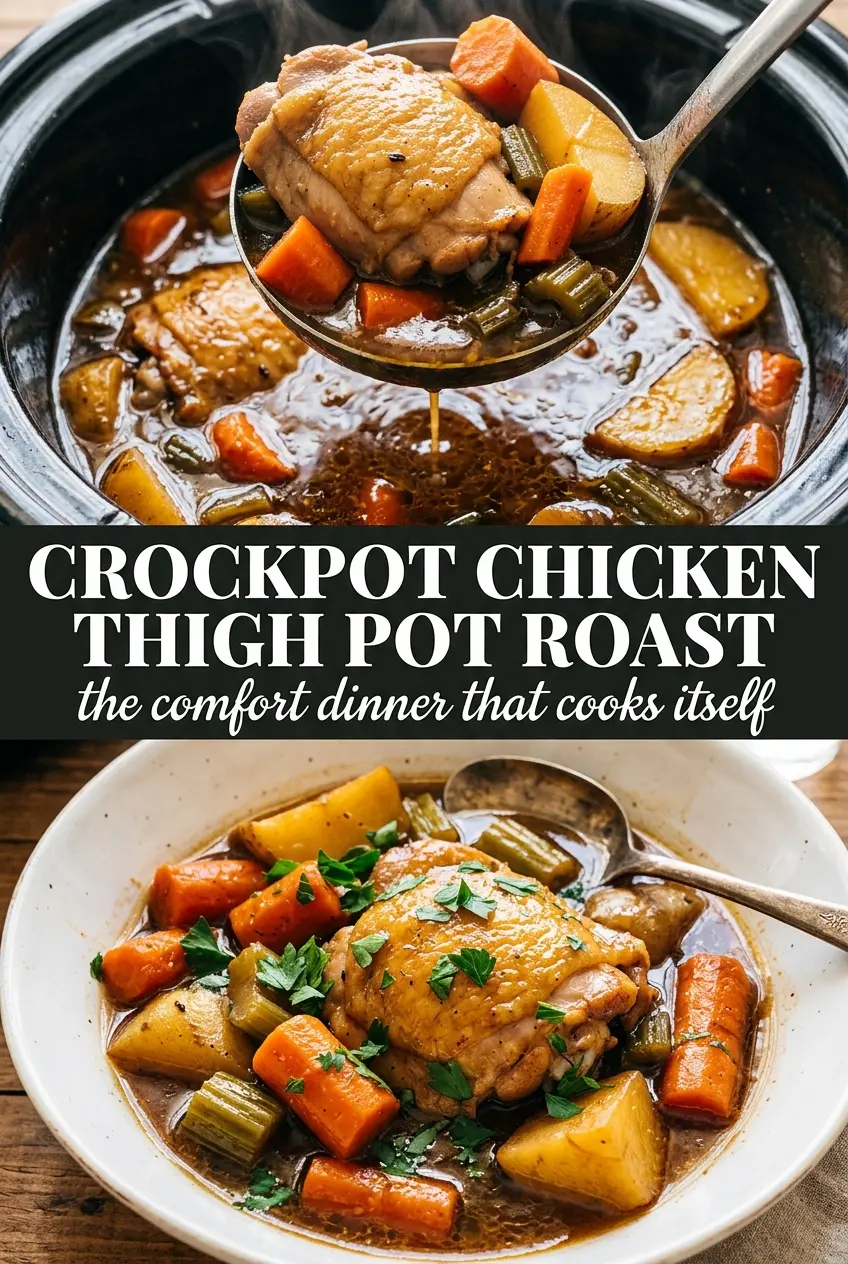
Crockpot Chicken Thigh Pot Roast
Ingredients
Equipment
Method
- Season the chicken thighs with garlic powder, salt, and black pepper, rubbing to coat the skin-side evenly. Keep the thighs at room temperature while you prepare the vegetables.
- Layer the potatoes, carrots, celery, and onion in the bottom of the slow cooker. Spread into an even layer so the vegetables cook uniformly.
- Whisk together the chicken broth, tomato paste, and Worcestershire sauce until the tomato paste loosens. Pour the mixture over the vegetables and add the smashed garlic and dried thyme and dried rosemary.
- Place the seasoned chicken thighs skin-side up on top of the vegetables. Dot the butter over each piece so it melts into the broth as it cooks.
- Cook on low for 7–8 hours or high for 3.5–4 hours until the chicken reaches 165°F and the vegetables are tender. Look for bubbling around the edges and soft, easily pierced vegetables.
- Broil for 3–4 minutes to crisp the chicken skin before serving. Watch closely for golden-brown spots on the surface.
- Ladle the broth over everything and garnish with fresh thyme. Serve while hot so the vegetables stay moist and the chicken remains juicy.