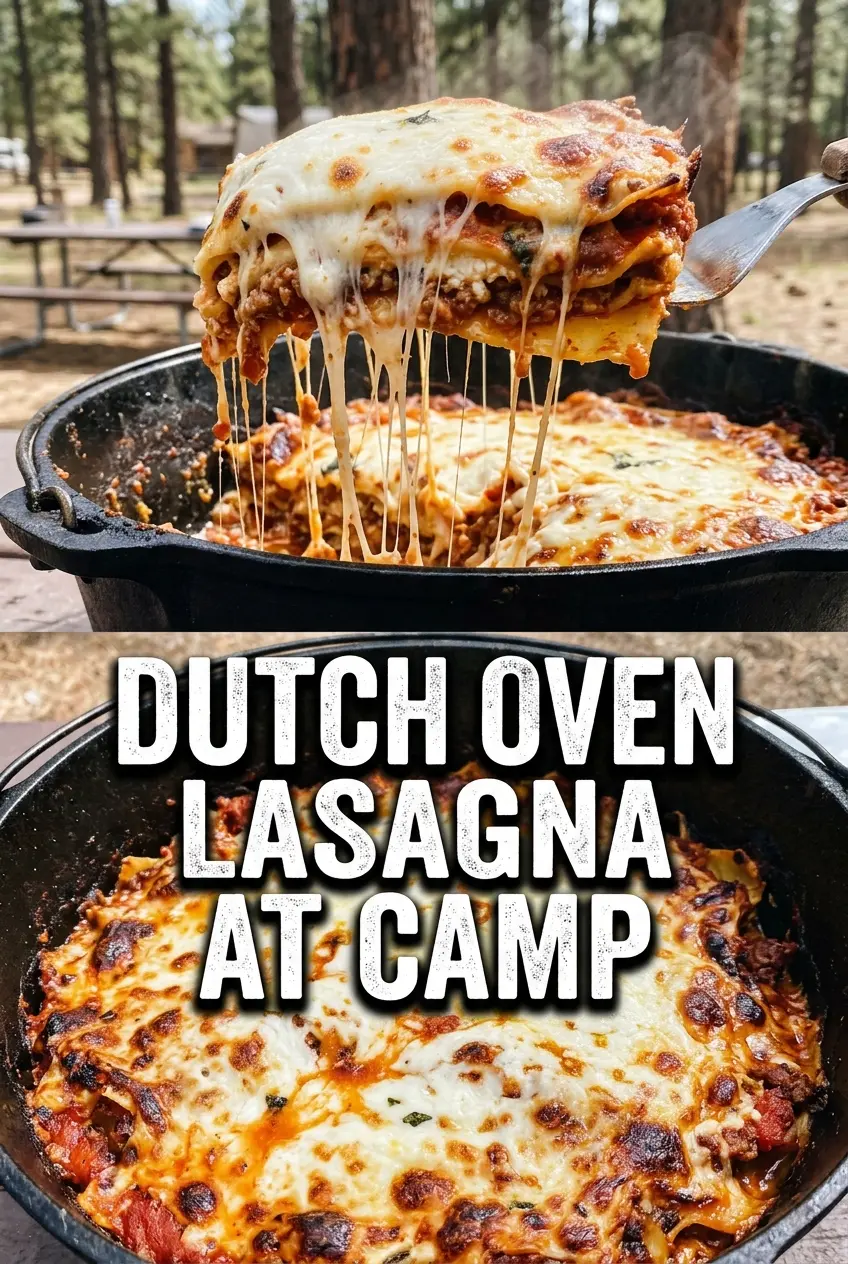
Layered Dutch oven lasagna comes out with all the comfort of the classic pan-baked version, but the edges pick up a little extra texture from the heat below and the top turns bubbling, bronzed, and irresistible. The noodles soften in the sauce, the ricotta layer stays creamy, and the whole thing slices into hearty squares that hold together after a short rest.
The trick with this version is balance: enough sauce to cook the noodles through, but not so much that the layers slide apart. Using uncooked noodles keeps the prep simple, and the covered Dutch oven traps the heat evenly so the pasta cooks without drying out. A little Parmesan in the ricotta mixture gives it more depth, and the egg helps that layer set instead of turning loose when you scoop.
Below, I’ve included the small details that matter most — how to keep the noodles from cracking when you layer them, what to look for when the lasagna is done over coals, and a few smart swaps if you’re cooking with a different setup.
The noodles cooked through perfectly in the Dutch oven, and the top got that bubbly browned cheese layer without drying out the middle. We made this at camp and everyone went back for seconds.
Save this Dutch oven lasagna for a bubbling campfire dinner with creamy ricotta layers and a golden mozzarella top.
The Part Most Dutch Oven Lasagna Recipes Skip: Heat Management
The biggest mistake with Dutch oven lasagna is treating it like an oven dish without adjusting for how coals behave. If the heat is too aggressive underneath, the bottom noodles can scorch before the center turns tender. If the lid stays too cool, the cheese never gets that melted, bakery-style finish and the top looks pale even after the pasta is done.
This recipe works because the sauce does double duty. It seasons the meat and gives the noodles enough moisture to cook through while the lid traps steam. The rest time matters just as much as the cook time; pull it too soon and the layers will slide apart instead of cutting cleanly.
- Ground beef — Brown it fully before it goes into the Dutch oven. That gives the lasagna a deeper, meatier base and keeps excess grease from watering down the sauce. If your beef is very fatty, drain it well after browning.
- Spaghetti sauce — Use a jarred sauce you actually like on its own. It’s carrying the seasoning for the entire pan, so a bland sauce stays bland. If you want a more rustic result, use a thicker marinara instead of a thin sauce.
- Ricotta cheese — Full-fat ricotta gives the creamiest layer and holds up better under heat. Low-fat ricotta can work, but it’s looser and more likely to make the filling watery. Stir it well with the egg so it spreads evenly.
- Lasagna noodles — Uncooked noodles are the point here. They absorb sauce as they bake, which keeps the process simple and gives the finished dish a firmer bite. Break them only as needed so the layers still cover most of the pan.
What Each Ingredient Is Actually Doing in This Recipe

- Primary ingredient (the foundation) — This is the star of the dish and carries most of the flavor. Quality matters here more than anywhere else.
- Salt and pepper (the seasonings that matter most) — These enhance all other flavors without masking them. Apply generously; underseasoned dishes taste flat.
- Fat (butter, oil, or from the meat) — Fat carries flavors and keeps the dish from tasting dry. It’s also what makes food taste delicious and satisfying.
- Acid (lemon, lime, vinegar, or tomato) — Acid brightens the dish and prevents it from tasting one-dimensional or heavy. It also helps balance rich flavors.
- Aromatics (garlic, onion, ginger) — These add depth and complexity. They mellow and become sweet when cooked, different from their raw state.
- Spices or herbs (the personality) — These give the dish its character and make it distinctive. Toast them to bloom their flavors or add fresh ones to finish.
- Supporting ingredients (vegetables, proteins) — These add texture, nutrition, and complementary flavors. They should support the star ingredient, not compete with it.
- Proper cooking technique (heat, time, stirring) — Even with great ingredients, technique determines the final result. Pay attention to temperature and timing.
Building the Layers So the Center Cooks Through
Start With a Thin Sauce Base
Spread a thin layer of meat sauce over the bottom of the greased Dutch oven before adding noodles. That thin base keeps the pasta from sticking and starts the steaming process from underneath. If you use too much sauce here, the bottom can turn heavy and the lasagna loses structure.
Fit the Noodles, Don’t Force Them
Lay down three noodles, breaking them only enough to cover the surface. Gaps are fine as long as the layer is mostly covered; the sauce will settle into the spaces and soften everything evenly. If the noodles overlap too much, the center can stay chewy where the layers stack too thick.
Mix the Ricotta Until It Spreads Cleanly
Combine the ricotta, one cup of mozzarella, Parmesan, egg, and Italian seasoning until the mixture looks smooth and spoonable. The egg helps the cheese layer set, and the Parmesan adds enough saltiness that the ricotta doesn’t taste flat. If the mixture is stiff, stir it a little longer before layering; clumpy filling is harder to spread and can tear the noodles.
Cover and Let the Heat Do the Work
Cook the covered Dutch oven over campfire coals with coals on the lid for 45 to 50 minutes. You’re looking for bubbling sauce at the edges and noodles that yield easily when pierced with a knife. If the top browns too quickly, the coals on the lid are too hot; if the middle stays firm, give it more time before lifting the lid too often.
Make It Meaty and Spicy
Swap half the ground beef for Italian sausage if you want a bolder, more seasoned filling. The sausage adds fat and spice, which gives the sauce more depth, but it also makes the dish richer, so I’d use a sauce with good acidity to keep it balanced.
Dairy-Free Version
Use a dairy-free ricotta alternative and skip the Parmesan, then choose a dairy-free mozzarella that melts well. The texture will be a little less creamy and the top won’t brown exactly the same way, but the lasagna still layers and slices nicely if the sauce is thick enough.
Gluten-Free Adjustment
Use gluten-free lasagna noodles that are labeled for baking, and add a few extra tablespoons of sauce if they seem dry. Gluten-free noodles can be a little more fragile, so let the lasagna rest the full 10 minutes before serving or the layers may collapse when you scoop.
Oven-Baked Version
If you’re not cooking over coals, bake the covered Dutch oven at 375°F until bubbling and tender, then uncover for the last few minutes if you want more color on top. The flavor stays the same, but the top usually browns more evenly in a standard oven than it does over campfire heat.
Storage and Reheating
- Refrigerator: Store leftovers covered for up to 4 days. The noodles continue to absorb sauce, so the lasagna gets a little firmer by day two.
- Freezer: It freezes well in portions for up to 2 months. Wrap tightly and thaw in the fridge before reheating so the center warms evenly.
- Reheating: Reheat covered in the oven at 325°F with a splash of sauce or water over the top to keep it from drying out. Microwaving works for single portions, but use medium power so the cheese doesn’t turn greasy before the middle is hot.
Questions I Get Asked About This Recipe
Dutch Oven Lasagna
Ingredients
Equipment
Method
- Brown ground beef until no longer pink, then mix it with spaghetti sauce. Keep the heat at medium-high (about 375-400°F) and cook just until the sauce is warmed and cohesive.
- Mix ricotta cheese with 1 cup shredded mozzarella cheese, Parmesan cheese, egg, and Italian seasoning until smooth and evenly combined. Stir until no egg streaks remain.
- Spray the Dutch oven with cooking spray, then spread a thin layer of meat sauce on the bottom. Use a light coating so the noodles don’t stick.
- Layer 3 lasagna noodles (broken to fit) over the sauce. Arrange them so they cover the base with minimal gaps.
- Spoon half the ricotta mixture over the noodles, then spread gently to cover. Aim for an even layer so every bite has filling.
- Spoon half of the remaining meat sauce over the ricotta. Spread to reach the edges of the noodles.
- Repeat the layers with the next 3 noodles (broken to fit), then add the rest of the ricotta mixture. Keep the top layer of filling level.
- Add the remaining meat sauce over the second ricotta layer. Smooth it out so the final noodles sit evenly.
- Top with the final 3 lasagna noodles (broken to fit). Place them so they fully cover the surface.
- Sprinkle the remaining shredded mozzarella cheese over the top. Make sure the cheese reaches the corners for a golden, bubbly finish.
- Cover the Dutch oven and place it on campfire coals, with additional coals on the lid. Cook for 45-50 minutes at about 375-425°F until the lasagna is hot and bubbling at the edges.
- Let the lasagna rest for 10 minutes before serving. This helps the layers set and makes scooping easier.