Golden, bubbling peach cobbler with a biscuit-like topping and a spoonful of vanilla ice cream on top is the kind of dessert that disappears fast, even after a big dinner. The peaches turn syrupy underneath, the topping bakes into a crisp-edged layer, and every scoop gives you a mix of warm fruit and buttery crumb. In a Dutch oven, the whole thing feels old-fashioned in the best way: simple ingredients, steady heat, and a dessert that tastes like you put in far more work than you did.
This version leans on canned peaches and a boxed yellow cake mix, which keeps it reliable whether you're cooking over campfire coals or in the oven at home. The key is not stirring once the cake mix goes on. You want distinct layers so the fruit can bubble up through the topping as the butter melts across the surface. That contrast is what gives you a cobbler with a tender center and those browned, crunchy patches around the edges.
Below you'll find the small details that matter most here, including how to get the butter distributed without leaving dry pockets and how to tell when the cobbler is done before the topping starts to overbrown.
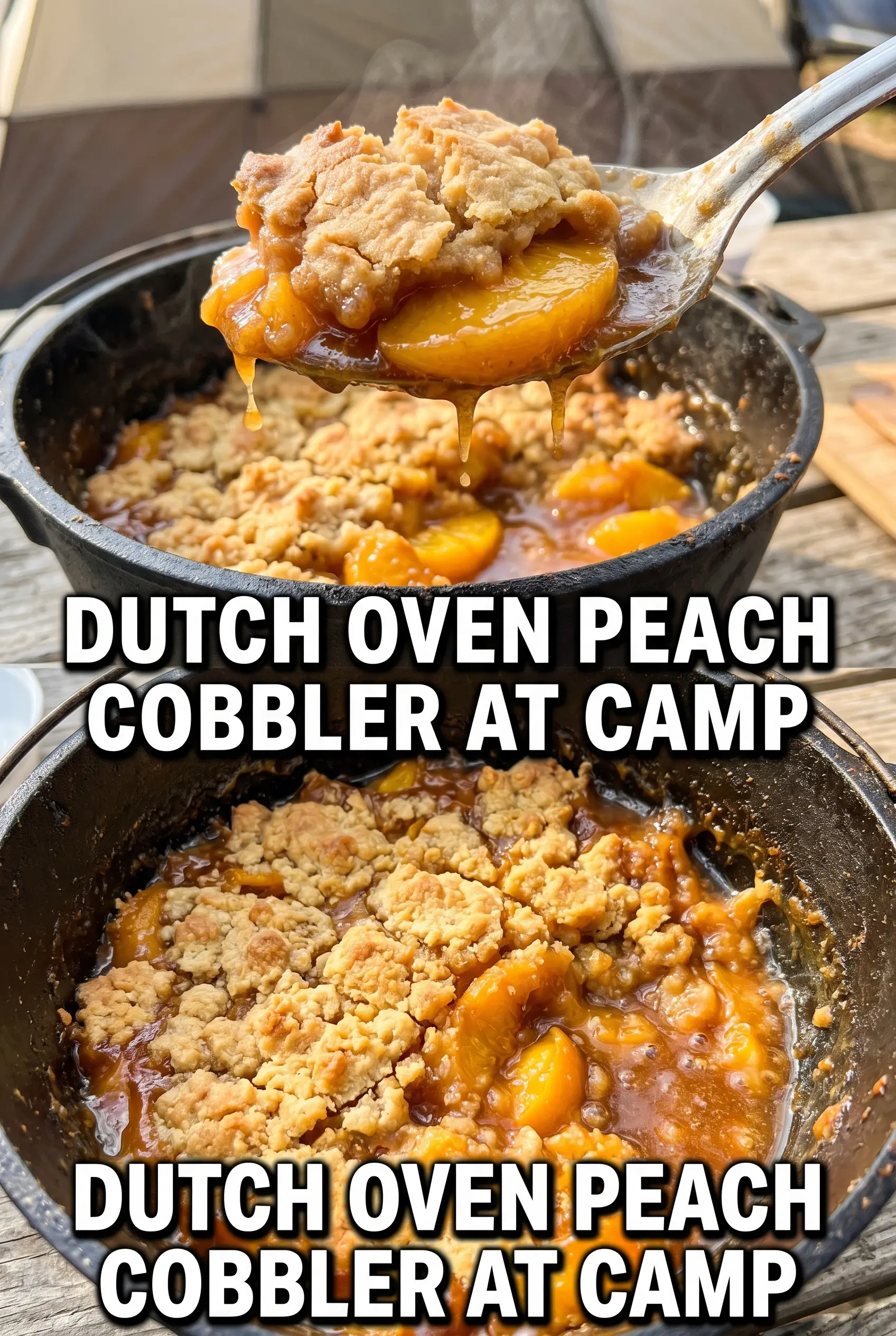
The topping set up with crisp edges and the peaches bubbled all the way through. I served it after about 10 minutes and the ice cream melted into the syrupy fruit just right.
Save this Dutch oven peach cobbler for the nights when you want bubbling fruit, a buttery cake-mix topping, and an easy campfire dessert.
Why the topping stays crisp instead of soggy
The biggest mistake with cobbler is stirring everything together. That seems helpful at first, but it turns the topping muddy and keeps the fruit from bubbling through in the right way. Here, the dry cake mix sits on top of the peaches and the melted butter works through it as the dessert bakes, creating pockets of crisp, browned crust instead of a dense layer.
Heat matters too. In a Dutch oven, the lid holds in moisture while the coals on top and underneath create steady, even heat. That balance is what cooks the fruit through without scorching the top. If the butter is drizzled too fast in one spot, you'll get dry patches of powder. Cover as much of the surface as you can, and the cobbler will bake into a better, more even crust.
- Canned peaches — These give you predictable sweetness and texture, which matters when you're relying on a boxed mix for the topping. Drain them well so the filling bubbles instead of turning watery.
- Yellow cake mix — This is the shortcut that makes the recipe work. It bakes up light, buttery, and tender without any mixing bowl fuss. A white cake mix works too, but yellow gives a richer, more cobbler-like result.
- Butter — Melted butter is the ingredient that turns dry cake mix into a browned topping. Real butter gives the best flavor. If you use margarine, expect a softer, less flavorful crust.
- Cinnamon and nutmeg — They add warmth without taking over. Fresh nutmeg is stronger, so use it lightly. If you only have cinnamon, the cobbler still works.
What Each Ingredient Is Actually Doing in This Campfire Dessert
- Sugar or sweetener (the flavor and texture) — Sugar caramelizes and browns the dessert while adding sweetness. Proper caramelization creates depth, not just sweetness.
- Chocolate (the richness and comfort) — Good chocolate makes the dessert luxurious. Lower-quality chocolate tastes waxy and doesn’t melt as smoothly.
- Butter (the binding and texture) — Butter keeps desserts tender and moist. It also carries vanilla and spice flavors throughout.
- Eggs or binding agent (the structure) — These create texture and help the dessert hold together. Proper ratios are important or the dessert can be too dry or too dense.
- Flour or crust (the foundation) — A proper crust or base keeps the filling contained and provides textural contrast to soft, rich fillings.
- Vanilla or spices (the aromatics) — These add complexity and prevent the dessert from tasting one-dimensional. They should complement the main flavor, not compete with it.
- Careful fire management (gentle, indirect heat) — Desserts need lower heat than savory dishes. High heat burns the outside before the inside cooks through.
- Rest time (letting it cool slightly) — Warm desserts are comforting, but letting them cool for a few minutes helps them set and makes them easier to serve without falling apart.
Building the layers so the fruit bubbles through
Setting the peach base
Spread the drained peaches in an even layer across the bottom of the Dutch oven. You want the fruit level enough that the topping cooks evenly, not piled in one corner where it can steam instead of bake. Sprinkle the sugar and spices over the peaches so they dissolve into the juices as the cobbler heats. If the peaches look especially syrupy after draining, hold back a spoonful or two of liquid so the filling doesn't turn thin.
Adding the dry topping
Pour the cake mix evenly over the peaches and don't stir. The dry layer is supposed to stay separate at this stage. That's what lets the butter seep through and form a crust. If you dump the mix in one heap, the center stays powdery while the edges overbrown, so take a minute to spread it all the way to the sides.
Getting the butter coverage right
Drizzle the melted butter slowly over the surface, moving around the pan so it lands across as much of the dry mix as possible. Dry spots mean dry floury bites later. If a few patches still look pale and loose, that's fine; the oven heat will help them bake through. The goal is broad coverage, not perfect saturation in one pass.
Cooking until the cobbler is set
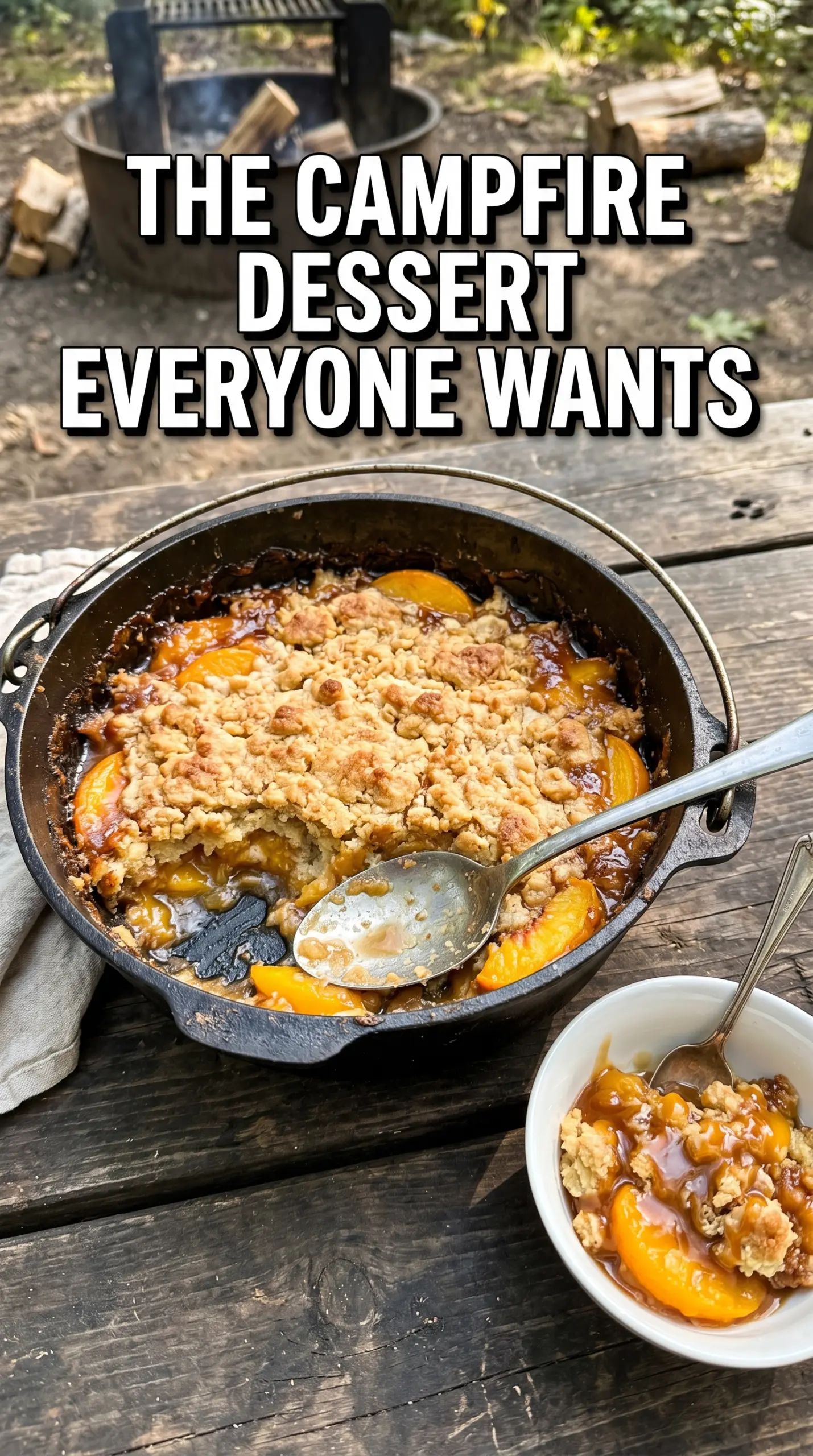
Cover the Dutch oven and cook with coals on top and underneath until the topping is golden and the peach filling is actively bubbling, usually 40 to 45 minutes. Bubbling is the real doneness cue here, not just color. If the top is brown but the fruit isn't moving at the edges, the center still needs time. Let it cool for about 10 minutes before serving so the filling thickens instead of running straight onto the plate.
Make it with fresh peaches
Use peeled, sliced fresh peaches when they're in season. Toss them with an extra spoonful or two of sugar because fresh fruit usually isn't as sweet as canned. You'll get a brighter flavor and a firmer bite, though the cobbler will need a little more attention to keep the juices from running thin.
Gluten-free version
Swap in a gluten-free yellow cake mix and use the same butter method. The texture will be slightly more delicate, but the flavor still lands in the same place. Check that the mix is designed to bake into cakes or bars, not just a quick bread, so it browns properly.
Less sweet cobbler
Cut the sugar back to 1/2 cup if you want the peaches to taste more prominent. The topping still bakes the same way, but the filling ends up lighter and a little less syrupy. This works especially well if your canned peaches are packed in juice rather than heavy syrup.
Storage and Reheating
- Refrigerator: Store covered for up to 4 days. The topping softens as it sits, but the flavor stays good.
- Freezer: Freeze portions tightly wrapped for up to 2 months. The texture gets softer after thawing, so it's best for leftovers rather than make-ahead serving.
- Reheating: Warm in a 325°F oven until heated through. The microwave works in a pinch, but it softens the topping fast and can make the filling runny.
The questions that come up once the lid comes off
Dutch Oven Peach Cobbler
Ingredients
Equipment
Method
- Spread the drained sliced peaches in the bottom of the Dutch oven so they form an even layer.
- Sprinkle the peaches with sugar, cinnamon, and nutmeg in an even layer.
- Pour the yellow cake mix evenly over the peaches (do not stir) so the powder stays on top.
- Drizzle the melted butter over the cake mix, covering as much of the surface as possible.
- Cover the Dutch oven and place it on campfire coals, with additional coals on top of the lid.
- Cook for 40-45 minutes, until the topping is golden and the peaches are bubbling all around the edges.
- Let the cobbler cool for 10 minutes before serving so the topping sets slightly.
- Serve each portion with vanilla ice cream.