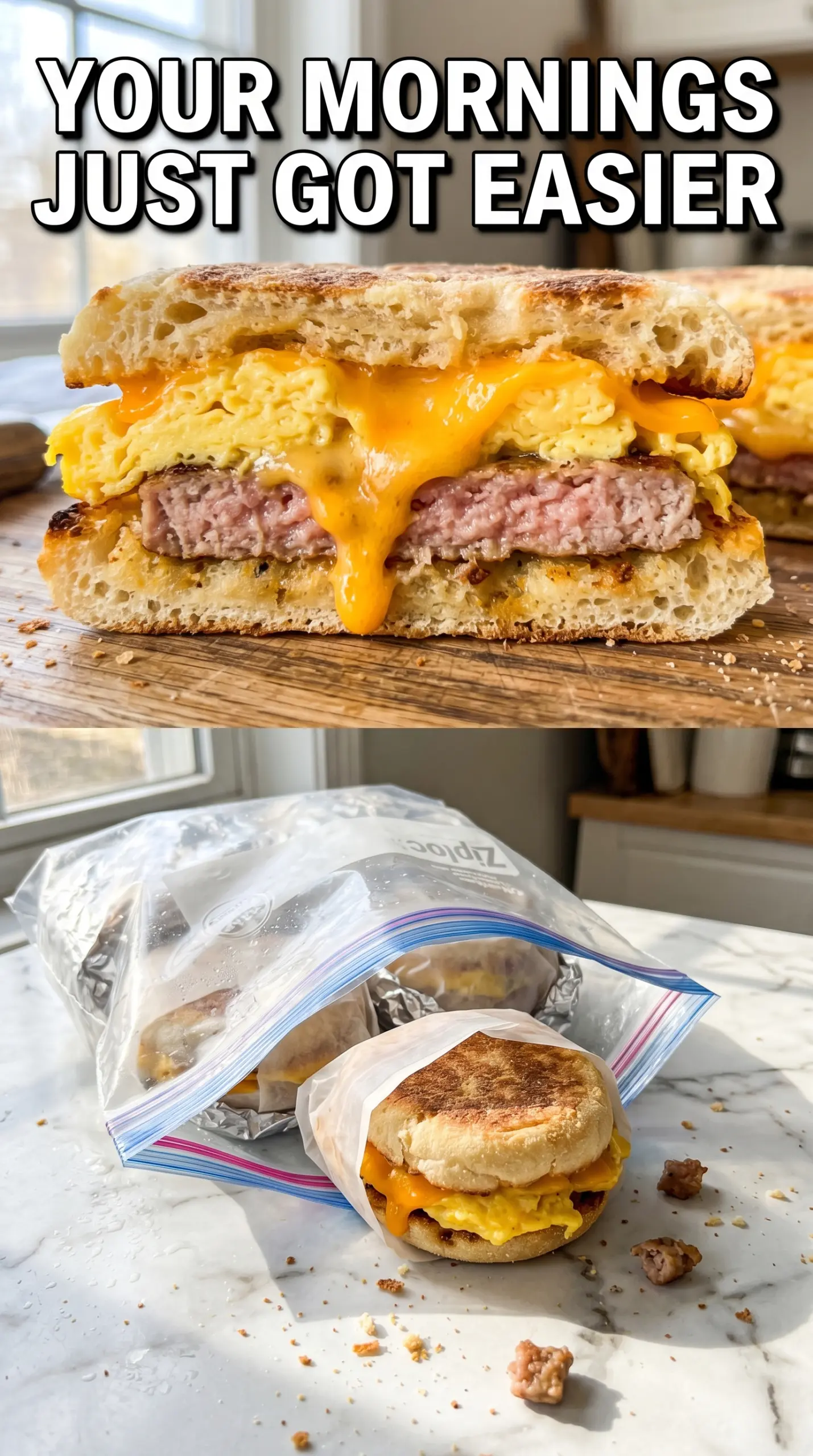
Freezer breakfast sandwiches earn their place in the rotation because they solve the hardest part of breakfast: getting something hot, filling, and steady on a morning when nobody has time to stand at the stove. The best ones reheat with a soft muffin, a set egg that still tastes fresh, and cheese that melts back into the sausage without turning the whole thing soggy.
This version works because the eggs are baked in a muffin tin instead of scrambled in a pan. That gives you neat portions that fit the English muffins, and it keeps the texture consistent from sandwich to sandwich. Lightly toasting the muffins before assembly also matters more than people think; it gives the bread enough structure to handle freezing and reheating without collapsing.
Below, I’ve included the little details that make these hold up in the freezer, plus a few ways to change the filling if you want to swap the meat or make a batch that works for different diets.
The eggs stayed tender after reheating and the muffins didn’t get mushy at all. I wrapped them the night before a road trip and every one warmed up perfectly in the microwave.
Like these freezer breakfast sandwiches? Save them to Pinterest for grab-and-go mornings with eggs, sausage, and melty cheese.
The Freezer Mistake That Makes Breakfast Sandwiches Soggy
The main thing that ruins make-ahead breakfast sandwiches is trapped steam. If the eggs are still soft in the center, or the muffins are packed away warm, that moisture turns into sogginess once the sandwiches freeze and thaw. Baking the eggs until just set and letting everything cool before wrapping keeps the bread from absorbing extra condensation.
The second mistake is skipping the toast on the muffin. Even a light toast gives the crumb a little shield against the egg and cheese. You don’t need a hard, crunchy toast here; you just need enough structure so the sandwich stays intact after a couple of weeks in the freezer.
What Each Ingredient Is Actually Doing in This Breakfast Recipe
- Eggs (the protein and binder) — Eggs coagulate under heat and hold everything together. They also add richness and creaminess to the dish.
- Cheese (the melting richness) — Cheese melts into the warm eggs and adds savory depth. Choose a cheese that melts smoothly and complements the other flavors.
- Bacon or sausage (the salt and smoke) — Cooked meat adds richness and seasoning that helps all the flavors work together. The rendered fat keeps eggs creamy instead of dry.
- Tortillas or bread (the vessel) — A proper tortilla or bread holds everything without tearing. It should be fresh and pliable enough to fold without cracking.
- Vegetables (peppers, onions, hash browns) — Fresh vegetables add texture, nutrition, and flavor balance. They release moisture that becomes part of the sauce.
- Butter or oil (the cooking medium) — Good fat prevents sticking and helps everything brown evenly. It also carries salt and seasonings throughout.
- Salt and pepper (proper seasoning) — Don’t underestimate seasoning in breakfast items. Eggs especially need generous salt to taste their best.
- Heat control (medium to prevent overcooking) — Eggs overcook fast and turn rubbery. Medium heat keeps them creamy and tender instead of dry and chalky.
What Each Part Is Doing in These Freezer Breakfast Sandwiches
- English muffins — Their nooks and crannies catch the cheese and egg, but they still hold up better than softer sandwich bread. Light toasting helps them survive freezing without turning gummy.
- Eggs — Baking them in a muffin tin gives you flat, even rounds that fit the sandwich shape. If you want a firmer texture, break the yolks before baking; if you like a little richness, leave them intact.
- Breakfast sausage patties — Sausage brings enough fat and seasoning to make the sandwich taste complete after reheating. Bacon works too, but it will be a little less substantial and can crisp up unevenly in the microwave.
- Cheese — American melts the smoothest and gives you the most reliable reheated texture. Cheddar has a stronger bite, but it can separate a little more when warmed, so slice it thin and place it directly against the hot egg.
- Butter and cooking spray — The spray keeps the eggs from sticking in the muffin tin, and a little butter on the muffins gives better flavor than dry toast. Don’t overdo either one or the sandwiches can feel greasy after freezing.
Building the Sandwiches So They Reheat Cleanly
Cooking the Egg Layer
Spray the muffin tin well, then crack one egg into each cup. If you want a tidy sandwich that reheats evenly, break the yolks before baking so the center sets at the same pace as the white. Bake at 350°F until the eggs are just set and no longer look glossy in the center, usually 12 to 15 minutes. If you pull them too early, they’ll weep when you reheat them and the muffin will soften faster than you want.
Toast, Then Stack
Toast the English muffins lightly before assembling. You want warm edges and a little surface dryness, not deep color. Build each sandwich with the muffin bottom, egg, sausage, cheese, and top, pressing down gently so the layers sit flat. If the sandwich gets stacked too tall or uneven, it won’t freeze as neatly and the reheated bite can fall apart in your hand.
Wrap for the Freezer
Wrap each sandwich tightly in plastic wrap, then move them into freezer bags. That double layer keeps freezer burn away and stops the muffins from picking up odors from the freezer. Label the bag with the date, because these are best within three months even though they keep longer. Don’t skip the wrap just because the bag is sealed; the extra barrier makes a noticeable difference in texture.
Reheat Without Drying Them Out
Unwrap the sandwich before microwaving so the plastic never goes near heat. Start with 1 minute, then add short bursts until the center is hot and the cheese has softened. If your microwave runs strong, wrap the sandwich in a paper towel so the muffin doesn’t turn leathery. The common mistake here is blasting it too long at once, which dries out the egg before the middle warms through.
Sausage, Bacon, or Both
Sausage gives the most classic breakfast sandwich texture because it stays juicy after freezing. Bacon works if you like a crisp-salty bite, but it can soften in the microwave, so cook it a little more than usual before assembling. You can also split the batch between sausage and bacon if you’re feeding a crowd with different preferences.
Dairy-Free Version
Use a dairy-free cheese slice that melts well and swap the butter for extra cooking spray or a neutral oil. The sandwich will still freeze well, but the finished bite will be a little less rich, so the seasoning on the eggs matters more. A pinch of garlic powder or smoked paprika in the eggs helps carry the flavor.
Gluten-Free Swap
Use gluten-free English muffins or sturdy gluten-free sandwich buns, then toast them a little longer than regular muffins so they hold together after freezing. The texture won’t be quite as chewy, so let the sandwiches cool completely before wrapping. That keeps the crumb from getting damp and fragile.
Vegetarian Breakfast Sandwiches
Skip the sausage and add a thin layer of sautéed spinach or a slice of tomato that has been patted dry. The sandwich will taste lighter and less salty, so use a sharper cheese or a little extra black pepper to keep it interesting. Wet vegetables are the one thing that can make the freezer texture suffer, so cook off as much moisture as possible first.
Storage and Reheating
- Refrigerator: Store assembled sandwiches for up to 3 days. The muffins soften a bit, but they’re still good for a short make-ahead stretch.
- Freezer: Freeze for up to 3 months. Wrap each sandwich individually before bagging so they don’t dry out or stick together.
- Reheating: Unwrap and microwave from frozen for 1 to 2 minutes, depending on your microwave. If the center is still cool, keep going in short bursts; long blasts dry out the egg and make the muffin tough.
Questions I Get Asked About This Recipe

Freezer Breakfast Sandwiches
Ingredients
Equipment
Method
- Cook breakfast sausage patties according to package directions, then set aside.
- If using bacon slices, cook them until cooked through and set aside so they can be assembled later.
- Spray a muffin tin with cooking spray, then crack one egg into each cup, breaking yolks if desired.
- Season eggs with salt and pepper.
- Bake at 350°F for 12-15 minutes until the eggs are set.
- Toast English muffins lightly so they hold up during freezing and reheating.
- Assemble sandwiches with the muffin bottom, egg, sausage patty, cheese slice, then the muffin top.
- Wrap each sandwich individually in plastic wrap, then place wrapped sandwiches in freezer bags.
- Freeze for up to 3 months; to reheat, unwrap and microwave for 1-2 minutes until heated through.