French onion meatballs deliver the deep, savory sweetness of caramelized onions without the long, fussy build of the classic soup. The meatballs stay tender, the sauce gets glossy and rich, and the melted cheese on top pulls everything together into a pan dinner that feels a little special without asking for much more than patience at the stove.
What makes this version work is the layering. The meatballs are browned first so they hold their shape and leave flavorful bits in the pan. Those browned bits become part of the onion sauce once the wine or broth hits the skillet. The onions need time over medium-low heat, not a rush, because the sweetness here comes from steady caramelization, not added sugar. A final broil gives you that bubbling Gruyere crust that makes the whole dish feel finished.
Below, I’ll walk through the small decisions that matter most: how dark the onions should get, when to add the liquid, and what to do if you want to swap the cheese or make the dish ahead.
The onions took a little patience, but they turned deep and jammy and the sauce thickened up beautifully. I used provolone on top and my husband kept going back for more bread to swipe up the broth.
Save these French Onion Meatballs for the night you want caramelized onions, melty cheese, and a rich pan sauce in one skillet.
The Trick Is Letting the Onions Get Deeply Brown, Not Just Soft
The biggest mistake with French onion flavors is stopping too soon. Pale, softened onions taste sweet in a one-note way; properly caramelized onions taste round, savory, and almost sticky at the edges. That difference is what turns this from meatballs in broth into a dish that actually tastes like French onion soup.
Keep the heat at medium-low and give the onions time. If they start to catch too fast, add a splash of broth and scrape the bottom, but don’t crank the burner up just to move things along. Slow browning builds the body of the sauce. The meatballs are sitting in that same pan later, so every browned bit you leave behind matters.
- Onions — Three large onions might look like a lot, but they cook down to the amount you need. Yellow onions are the best choice here because they caramelize steadily and bring the right balance of sweetness and savoriness.
- Dry white wine or beef broth — Wine gives the sauce a little lift and acidity, while beef broth keeps it deeper and more pantry-friendly. If you skip the wine, use broth and a small splash of vinegar only if the sauce tastes flat after simmering.
- Gruyere or provolone — Gruyere brings the classic nutty finish, while provolone melts more evenly and still gives you that stretchy, broiled top. Use the one that fits your budget and what you have on hand; both work well.
- Beef broth — This is the backbone of the sauce, so use one you’d actually drink from a spoon. A thin, salty broth will make the finished dish taste thin, too.
Building the Sauce Around the Meatballs
Mixing and Browning the Meatballs
Mix the beef with just enough binder to hold it together, then roll the meatballs lightly. Overworking the mixture makes them dense, and packed-tight meatballs won’t stay tender in the sauce. Brown them in butter until the outsides are well colored but the centers are still undercooked. They’ll finish gently in the broth later, which is how they stay juicy instead of dry.
Caramelizing the Onions
Use the same skillet so the browned meatball bits stay in play. Add the onions and let them soften first, then keep cooking until they turn deep gold and smell sweet and savory at the same time. If the pan looks dry or the onions stick hard, a small splash of broth loosens the fond without washing away the flavor. Don’t move on while they’re still blond; the sauce won’t taste finished.
Deglazing and Simmering
Pour in the wine or broth and scrape the bottom well. The liquid should hiss and loosen the browned bits into the sauce right away. Once the beef broth, Worcestershire, and thyme go in, return the meatballs and simmer until they’re cooked through and the sauce has thickened slightly around them. If it still looks watery, let it bubble a few minutes longer before the cheese goes on.
Finishing Under the Broiler
Move everything to a baking dish if your skillet isn’t broiler-safe, then scatter the cheese all the way to the edges. Broil just until the top is bubbling and spotted with gold. Walk away for even a minute and it can go from bronzed to scorched, especially with provolone. Let it sit briefly before serving so the cheese settles and the sauce doesn’t run everywhere when you scoop it.
How to Adapt These French Onion Meatballs Without Losing the Soul of the Dish
Make it gluten-free
Swap the breadcrumbs for gluten-free breadcrumbs or crushed gluten-free crackers. The meatballs will still hold together, but they may be a touch more delicate, so brown them gently and don’t flip them too early.
Use provolone for a milder, meltier finish
Gruyere gives the classic nutty edge, but provolone melts into a softer, gooier lid and is easier to find. It won’t taste quite as deep, but it works especially well if you want the cheese to stretch when you serve it.
Lean on broth instead of wine
If you don’t cook with wine, use beef broth for deglazing. The sauce will be a little rounder and less bright, so let the onions get a shade darker before adding the liquid to keep the flavor from falling flat.
Storage and Reheating
- Refrigerator: Store in an airtight container for up to 4 days. The onions will thicken and the cheese will set up, which is normal.
- Freezer: Freeze the meatballs and onion sauce before adding the cheese. The sauce freezes well for up to 2 months, but broil the cheese fresh after reheating.
- Reheating: Warm gently on the stove or in the oven until hot through. If you reheat over high heat, the sauce can break and the meatballs can dry out before the center warms.
Answers to the Questions Worth Asking
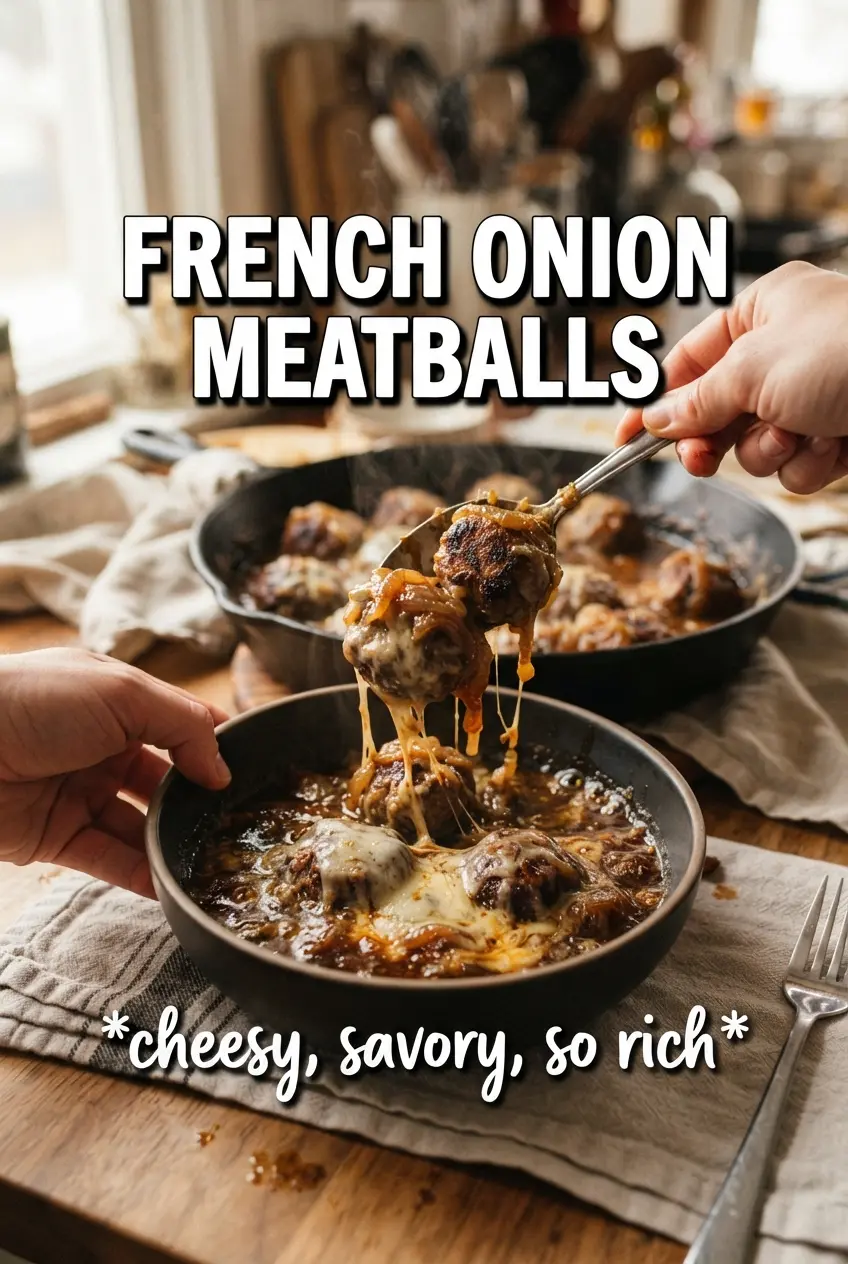
French Onion Meatballs
Ingredients
Equipment
Method
- Mix ground beef, breadcrumbs, egg, Worcestershire, garlic powder, onion powder, salt, and pepper, then roll into 1.5-inch balls. Lightly press each ball so it holds its shape while browning.
- Heat a cast iron skillet over medium heat and brown the meatballs in butter. Cook until well browned on the outside, then set aside.
- In the same skillet, caramelize the onions in butter over medium-low heat for 30-35 minutes. Stir occasionally until deeply golden and softened.
- Deglaze with wine, scraping up browned bits from the pan. Add beef broth, Worcestershire, and fresh thyme, then simmer briefly to combine.
- Return the browned meatballs to the onion sauce and simmer for 15 minutes. Turn the meatballs occasionally so they absorb the sauce.
- Transfer to a baking dish if your skillet isn’t oven-safe, then scatter the shredded Gruyère/provolone over everything. Keep the cheese evenly distributed so it melts into a full crust.
- Broil for 3-4 minutes until the cheese is golden and bubbly. Watch closely so the top browns without burning.


