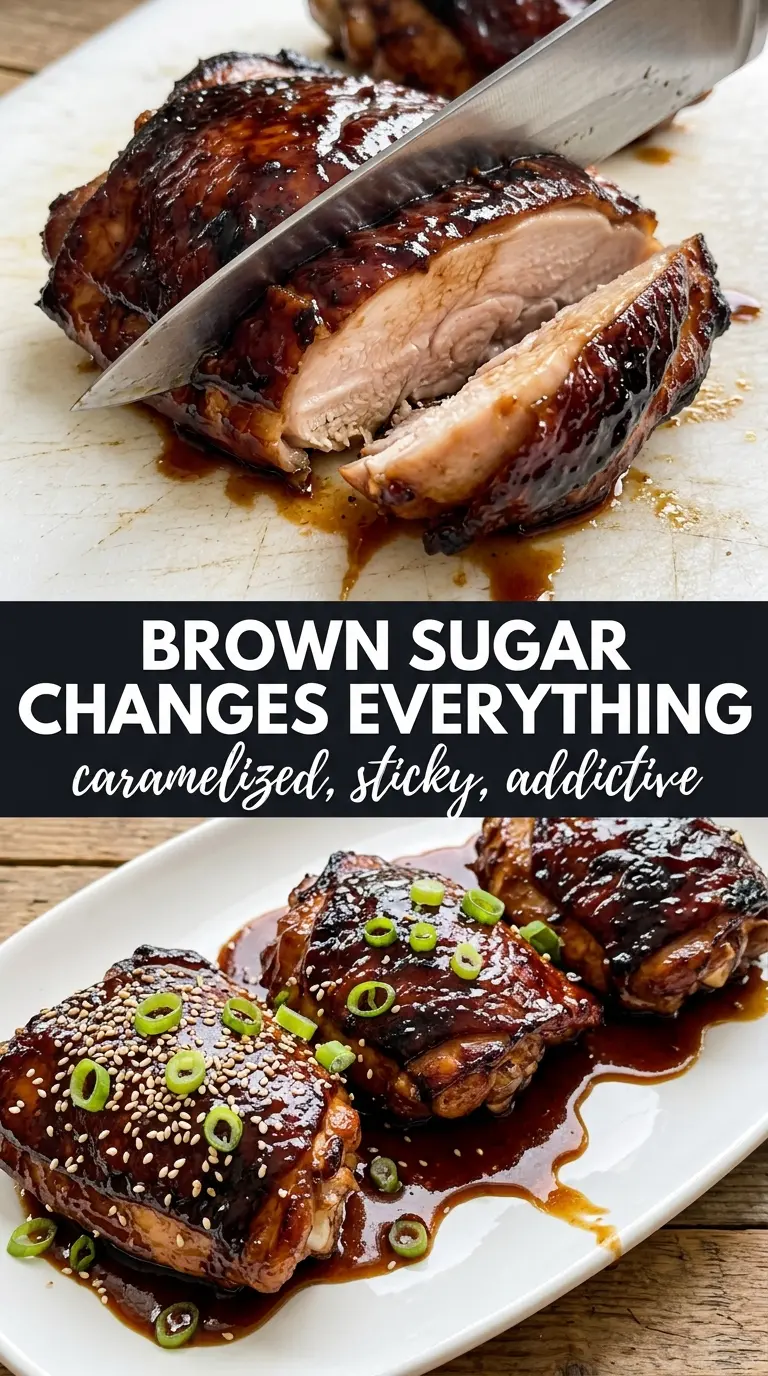
Sticky, glossy chicken thighs with a mahogany glaze land on the table with the kind of balance that keeps people going back for one more piece. The skin turns deeply caramelized in the oven while the sauce clings in a thin, lacquered layer instead of pooling at the bottom of the pan. You get salty, sweet, garlicky, and a little sharp from the vinegar, all in one bite.
The trick here is keeping the glaze concentrated enough to cling. Brown sugar gives the sauce its shine and body, but the soy sauce and vinegar keep it from tasting flat or candy-sweet. Marinating the chicken for even 30 minutes helps the seasoning penetrate the meat, and baking it skin-side up gives the fat a chance to render so the surface can brown properly.
Below, I’m walking through the part that matters most: how to get that sticky finish without burning the sugars before the chicken cooks through. I’ve also included a few smart swaps and storage notes for when you want to stretch the meal into lunches later in the week.
The glaze thickened up beautifully in the oven and the chicken stayed juicy under that sticky top layer. I added the broil at the end for just 2 minutes and it came out with that deep caramel color without tasting burnt.
Sticky soy brown sugar chicken thighs with that deep caramel glaze are perfect for your Pinterest dinner board.
The Trick to Keeping the Brown Sugar Glaze Glossy Instead of Burnt
This recipe lives or dies by heat control. Brown sugar caramelizes fast, and if the oven runs too hot or you broil too long, the glaze can turn bitter before the chicken finishes cooking. The safer move is to bake until the thighs are nearly done, baste once with the reserved marinade, and only then finish with a short broil if you want more color.
Bone-in, skin-on thighs are the right cut here because they stay juicy under a sticky glaze. That skin shields the meat and gives you a little built-in fat to help the sauce take on a richer finish. If you use boneless thighs, cut the baking time down and watch the surface closely, because they brown faster and dry out sooner.
- Soy sauce — This is the salty backbone and the main source of that deep, savory color. Use regular soy sauce for the best balance; low-sodium works too, but the glaze will taste a little softer.
- Brown sugar — Packed brown sugar gives the sauce body and that sticky sheen. Granulated sugar won’t give you the same caramel depth.
- Apple cider vinegar — The small amount of acid keeps the glaze from tasting heavy. If you swap in rice vinegar, the flavor stays clean but a little milder.
- Fresh ginger and garlic — Fresh is worth it here. Powdered versions don’t give the same sharp, fragrant edge that keeps the glaze lively.
- Chicken thighs — Bone-in, skin-on thighs stay moist through the bake and handle the glaze better than breasts. If you only have boneless thighs, start checking for doneness about 8 to 10 minutes earlier.
What Each Ingredient Is Actually Doing in This Chicken Dish
- Chicken (pat dry for browning) — Room temperature cooks more evenly. Even pieces ensure uniform doneness.
- Oil or butter (the browning medium) — High-heat oil essential for proper searing. Creates pan flavor.
- Seasonings (salt, pepper, spices) — Apply generously. Chicken carries the entire flavor profile.
- Aromatics (garlic, ginger, herbs) — Cook with fat to bloom flavors. Become the foundation.
- Sauce or braising liquid (if using) — This keeps chicken moist. Balance richness with acid.
- Vegetables (if using) — Layer by cooking time so everything finishes together.
- Acid (vinegar, wine, lime, or pineapple) — This brightens and prevents one-dimensional flavor.
- Proper doneness (165°F internal temperature) — Use thermometer for accuracy. Overcooked is dry.
Building the Glaze, Then Letting the Oven Finish the Job
Mixing the Marinade
Whisk the soy sauce, brown sugar, olive oil, garlic, vinegar, ginger, and red pepper flakes until the sugar dissolves as much as it can. It won’t look fully smooth, and that’s fine. The sugar finishes dissolving as the chicken sits, and the oil helps the glaze cling instead of sliding right off. If the garlic is left in thick clumps, break it up now so it doesn’t scorch on the surface later.
Marinating for Flavor, Not Just Time
Coat the chicken thoroughly and let it sit for at least 30 minutes. That short rest is enough to season the surface and start softening the garlic and ginger into the meat. You can marinate it longer for a deeper finish, but don’t go past 24 hours or the vinegar starts to push the texture in the wrong direction. Turn the thighs once if you have time so every side gets a chance to soak.
Baking to Render the Skin
Arrange the chicken skin-side up in a baking dish and pour in only the reserved marinade around it, not all over the top at once. The exposed skin needs direct heat to crisp and brown. Bake at 425°F until the thighs are mostly cooked and the surface is taking on color; if the pan looks dry too early, spoon a little glaze over the meat, but don’t drown the skin or it will steam instead of caramelize.
Finishing with the Broiler
Once the chicken is cooked through, broil for 2 to 3 minutes if you want a darker, stickier finish. Stay close to the oven because the difference between lacquered and burnt can be less than a minute. Pull the pan the moment the glaze turns glossy and the edges of the skin look deeply caramelized, then let the chicken rest so the juices stay in the meat instead of running out onto the cutting board.
How to Adjust These Chicken Thighs When You Need a Different Outcome
Gluten-Free Version
Use a certified gluten-free soy sauce or tamari. The glaze stays sticky and savory, and the finished dish tastes nearly identical. Check your garnish too if you use any bottled toppings, since some sesame blends carry gluten-containing additives.
Lower-Sugar Finish
You can cut the brown sugar to 3 tablespoons and still get a glossy coating, but the sauce will be looser and a little less sticky. If you go much lower than that, the glaze turns more savory than lacquered, so expect a thinner coating on the chicken.
Boneless Thighs Instead of Bone-In
Boneless thighs work, but they cook faster and won’t have the same built-in protection from drying out. Start checking them earlier and keep the broil brief. The glaze will still cling well, but you lose some of the deeper roasted flavor that comes from bone-in chicken.
Making It Spicier
Add another 1/2 teaspoon of red pepper flakes or a spoonful of chili garlic sauce to the marinade. That changes the glaze from sweet-savory to sweet-heat without affecting the thickness much. If you use chili sauce, reduce the brown sugar slightly so the balance doesn’t tilt too sweet.
Storage and Reheating
- Refrigerator: Store leftovers in an airtight container for up to 4 days. The glaze will thicken as it chills.
- Freezer: These freeze well for up to 2 months. Cool completely first and freeze in a single layer or with parchment between pieces so the sticky glaze doesn’t glue everything together.
- Reheating: Warm covered in a 325°F oven until heated through, then uncover for a few minutes to re-gloss the skin. The common mistake is blasting them in the microwave, which makes the glaze tacky in a bad way and softens the skin completely.
Questions I Get Asked About This Recipe

Glazed Soy Sauce Brown Sugar Chicken Thighs
Ingredients
Equipment
Method
- Whisk soy sauce, brown sugar, olive oil, garlic, apple cider vinegar, ginger, and red pepper flakes until the sugar dissolves and the mixture looks glossy.
- Marinate the chicken at least 30 minutes or up to 24 hours, skin-side up if possible, so the thighs absorb the sweet soy mixture.
- Preheat the oven to 425F, place the chicken skin-side up in a baking dish, and reserve the marinade.
- Bake for 20 minutes at 425F, then baste with the reserved marinade and bake 10–15 more minutes until caramelized and cooked through.
- Broil for 2–3 minutes to deepen the caramelization if desired, watching closely to prevent burning.
- Garnish with sesame seeds and sliced green onions right before serving.