Gnocchi chicken pot pie turns a classic comfort dinner into something even heartier, with pillowy gnocchi tucked into a creamy chicken filling and capped with a golden crust that cracks at the edges when you scoop it out. The gnocchi soften right in the sauce, so every bite has that pot-pie richness without needing a separate starch on the side.
The trick is keeping the filling thick enough before it goes into the oven. If it’s too loose on the stove, it will stay loose in the bake and turn the bottom of the crust soggy. A brief simmer after the broth and cream go in gives the flour time to do its job, and folding the gnocchi in uncooked lets them finish in the sauce instead of turning mushy in a separate pot.
Below you’ll find the small details that make this dish work: how to keep the sauce creamy, when the gnocchi go in, and why the topping bakes best when the filling is already properly thickened.
The sauce thickened up beautifully and the gnocchi stayed tender instead of falling apart. I used biscuits on top and my husband went back for a second bowl before I even sat down.
Save this gnocchi chicken pot pie for the nights when you want creamy comfort food under a golden puff pastry or biscuit top.
The Part That Keeps the Bottom From Going Soggy
Pot pie filling only works when it’s thick before it meets the oven. If the base is thin on the stove, the gnocchi and vegetables keep releasing moisture as they bake, and that steam has nowhere to go except into the crust. You want the sauce to coat the back of a spoon and hold a clear trail for a second when you drag a spoon through it.
The other mistake is rushing the roux. Butter and flour need that full minute together before the broth goes in, or the sauce can taste pasty and won’t thicken as smoothly. Once the liquid is added, simmer it long enough to lose the raw flour edge and build a body that feels velvety, not gluey.
What Each Ingredient Is Actually Doing In This Dish
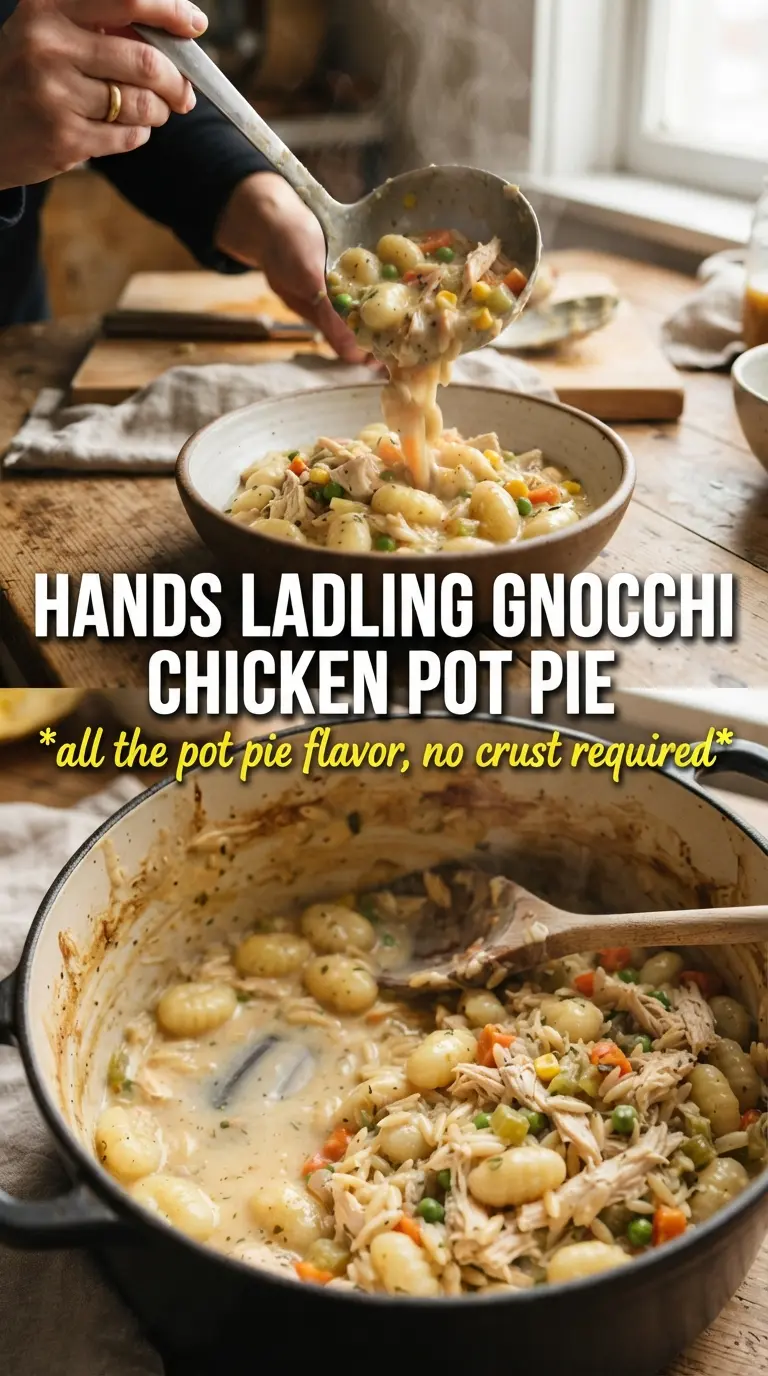
- Potato gnocchi — These replace the usual potatoes or dumplings and give you a soft, chewy bite that holds up in the sauce. Use shelf-stable gnocchi straight from the package; no need to boil them first, and that’s what keeps them from getting waterlogged.
- Cooked shredded chicken — Rotisserie chicken works well here because it’s already seasoned and stays tender in the bake. Any plain cooked chicken works, but cut it into bite-size shreds so it settles into the filling instead of clumping.
- Butter, flour, broth, and cream — This is the backbone of the sauce. The butter and flour make the roux, the broth brings savory depth, and the cream smooths everything out; swapping in half-and-half will work, but the sauce will be a little lighter and less plush.
- Frozen peas, carrots, celery, onion, and garlic — These build the familiar pot-pie base. Dice the carrots and celery small so they soften in time, and don’t skip the sauté at the beginning or they’ll stay crunchy after the bake.
- Puff pastry or biscuits — Puff pastry gives a flakier, more elegant top, while biscuits make the dish feel more rustic and hearty. Both need an egg wash for color; without it, the top bakes up pale and dull.
Building the Filling Before It Goes Under the Crust
Softening the Vegetables First
Start by cooking the onion, carrots, and celery in butter until the onion turns translucent and the edges of the carrots look glossy. That first sauté does more than soften them; it pulls sweetness out of the vegetables and gives the filling a deeper base. If you rush this stage, the carrots can stay firm while everything else is already done.
Making the Sauce in the Same Pan
Stir in the garlic and thyme for just a minute, then add the flour and cook it until it looks pasty and smells a little nutty. Slowly whisk in the broth and cream so the mixture stays smooth, then let it simmer until it thickens enough to cling to the spoon. If it looks grainy, the heat was too high or the liquid went in too fast; keep whisking and lower the burner before it catches.
Adding the Chicken and Gnocchi
Fold in the chicken, peas, and uncooked gnocchi once the sauce has thickened. The gnocchi should sit in the sauce, not float in it, and that’s your sign the filling is ready for the oven. Taste and season now, because once the crust goes on, you won’t be stirring again.
Baking Until the Top Is Deep Gold
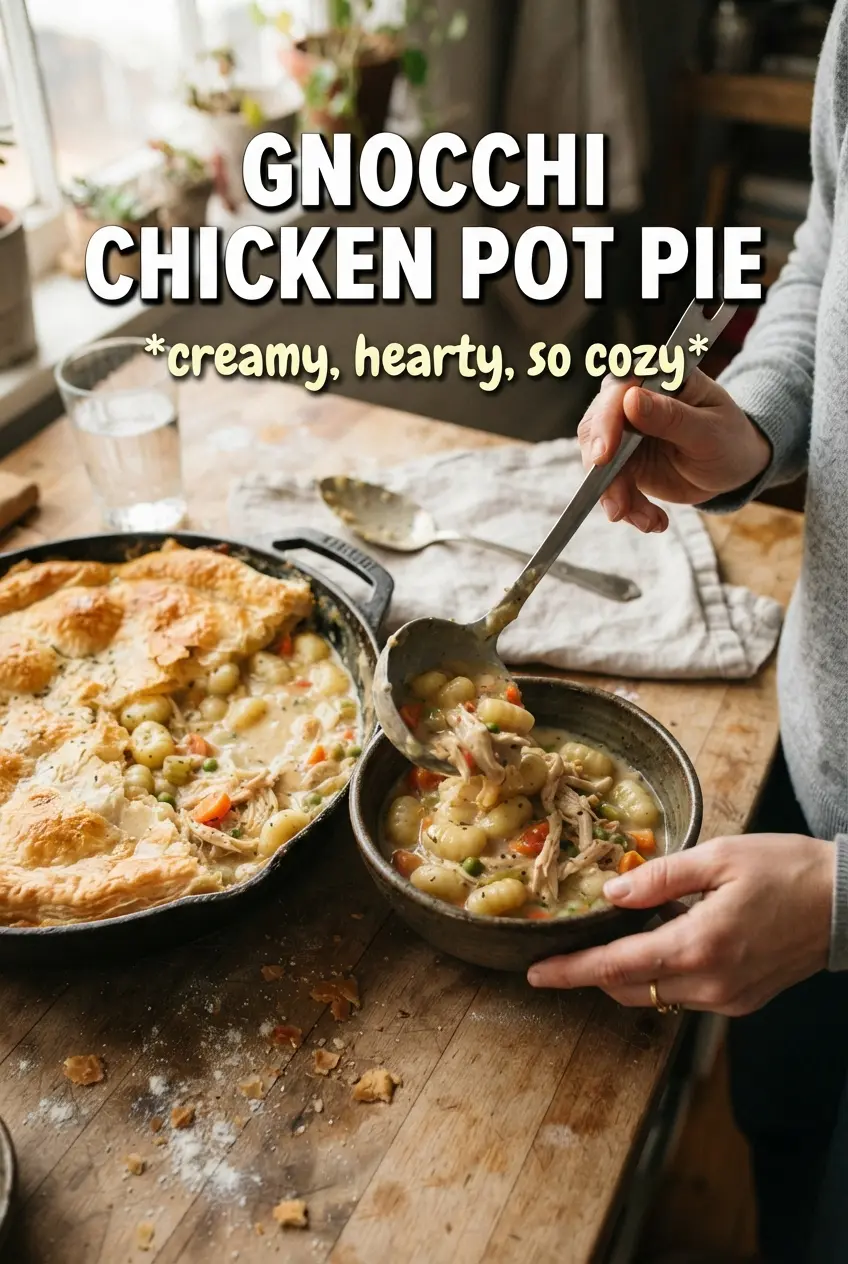
Transfer everything to a baking dish, cover it with puff pastry or lay on the biscuits, and brush the top with egg wash. Bake until the crust is deeply golden and the filling is bubbling at the edges and through any vents in the top. If you pull it too early, the top may look done but the center will still be loose underneath.
How to Adapt This for Different Kitchens and Diets
Use Puff Pastry for a Flakier Finish
Puff pastry gives the most dramatic top because it bakes into crisp layers that shatter when you cut in. Keep it cold until the last minute, and score a few vents so the steam can escape instead of turning the top soft.
Biscuits for a Heavier, More Rustic Pot Pie
Refrigerated biscuits make this feel closer to a farmhouse pot pie and they’re easier if you don’t want to roll anything out. Leave a little space between them so the steam rises through the gaps and the centers cook through.
Make It Gluten-Free
Use gluten-free gnocchi and swap the flour for a gluten-free all-purpose blend that can thicken on the stove. The texture will be just a touch softer, but the filling still comes together if you simmer it until it has real body before baking.
Dairy-Free Without Losing the Creaminess
Use dairy-free butter and an unsweetened cream substitute made for cooking. The sauce won’t be as rich as the original, but a good full-fat oat or coconut cooking cream keeps the filling smooth and stable in the oven.
Storage and Reheating
- Refrigerator: Store covered for up to 4 days. The crust softens in the fridge, but the filling stays creamy.
- Freezer: Freeze the baked filling without the top for best texture, or freeze the assembled dish unbaked and add the topping just before baking. Full leftovers freeze, but the gnocchi get softer after thawing.
- Reheating: Reheat in a 350F oven until the center is hot and the crust has crisped back up. The microwave works in a pinch, but it makes the top soggy, which is the one thing this dish needs you to avoid.
Questions I Get Asked About This Recipe
Gnocchi Chicken Pot Pie
Ingredients
Equipment
Method
- Preheat the oven to 400°F. Sauté the onion, carrots, and celery in the butter for 5 minutes, until softened and fragrant.
- Add the garlic and thyme, then whisk in the flour and cook for 1 minute. Stir constantly to eliminate raw flour taste.
- Gradually add the chicken broth and heavy cream, then simmer until thickened. Keep simmering until the mixture coats the back of a spoon.
- Fold in the shredded chicken, frozen peas, and uncooked gnocchi, then season with salt and pepper to taste. Stir until the gnocchi is evenly distributed.
- Pour the mixture into a baking dish, spreading it into an even layer. Leave some space near the edges for the topping to expand.
- Top with puff pastry or biscuits, fitting it to cover the surface. Make sure the venting area will be exposed once baked (or allow natural venting at seams).
- Brush the top with an egg wash. Bake for 25–30 minutes at 400°F until golden and bubbly, with visible steam rising through the top.


