Juicy chicken, charred edges, and bright lemon-garlic marinade are what make Greek chicken kabobs worth firing up the grill for. The vegetables pick up a little smoke and sweetness, the chicken stays tender when it has enough time in the marinade, and the whole skewer tastes clean and bold instead of heavy.
The trick is in the balance. Lemon brings the sharpness, olive oil carries the herbs, and a small spoonful of Dijon helps the marinade cling to every piece of chicken without tasting mustardy. Four hours is the sweet spot here: long enough for the flavor to get in, not so long that the lemon starts to work against the texture. If you’ve ever had kabobs turn dry on the grill, it’s usually because the chicken was cut unevenly or cooked past the point where the juices stay in.
Below, I’ve included the one marinade detail that matters most, the best way to keep the vegetables from overcooking, and a few smart variations if you want to swap the protein or make the meal easier to prep ahead.
The chicken stayed juicy and the lemon-garlic marinade gave it that classic Greek flavor without overpowering the vegetables. I grilled it for exactly 12 minutes and it came off perfectly cooked.
Greek chicken kabobs with lemon, oregano, and tzatziki are the kind of grill dinner that disappears fast — save this one for the next time you want smoky skewers with almost no cleanup.
The Marinade Is Doing More Than Adding Flavor
The biggest mistake with kabobs is treating the marinade like a seasoning bath. This one needs time to work, and the olive oil, lemon juice, and oregano each pull their weight in a different way. The oil helps the chicken brown instead of drying out, the lemon brightens the meat and softens the surface just enough, and the garlic and oregano build that unmistakable Greek profile.
Dijon might look minor, but it helps everything emulsify so the marinade actually sticks. Without it, the lemon and oil separate fast, and the herbs slide to the bottom of the bowl. If you’ve had grilled chicken taste flat even after a long soak, that’s often the reason: the flavor never got evenly distributed before it hit the heat.
- Chicken breasts — These cook quickly and stay clean-tasting, but they dry out if the pieces aren’t cut evenly. Cut them into similar-sized cubes so every skewer finishes at the same time.
- Lemon juice — Fresh lemon matters here. Bottled juice can taste dull and harsh, and this marinade depends on brightness.
- Fresh oregano — Fresh oregano gives a greener, less dusty flavor than dried. If you only have dried, use 2 teaspoons instead of 2 tablespoons.
- Red onion and bell pepper — These add sweetness and a little char. Cut them into chunks large enough to hold on the skewer without falling apart.
- Wooden skewers — Soak them long enough that they don’t scorch. Dry skewers can catch before the chicken is finished.
What Each Ingredient Is Actually Doing in This Chicken Marinade

- Chicken breasts (the lean protein) — Cut evenly so pieces cook at the same rate. Lean chicken picks up marinade flavors quickly without needing long soaking.
- Soy sauce or tamari (the savory base) — This provides umami and salt that seasons the chicken all the way through. Low-sodium versions work if that’s your preference.
- Fresh citrus juice (lime, lemon, or orange) — Acid tenderizes the surface and brings brightness. Fresh juice tastes better than bottled in marinades.
- Olive oil or sesame oil (the carrier) — Oil helps the marinade coat evenly and prevents the chicken from sticking on the grill. It also carries aromatic flavors throughout.
- Garlic and ginger (fresh aromatics) — These add pungent depth that mellows slightly when grilled, becoming sweet and mellow rather than harsh.
- Honey or brown sugar (the caramelizer) — A small amount helps the chicken brown and glaze on high heat. Too much can burn before the chicken finishes cooking.
- Fresh herbs (cilantro, parsley, or basil) — These bring freshness that prevents the marinade from tasting heavy. Add some after grilling to keep the dish bright.
- Proper marinating time (30 minutes to 4 hours) — Longer isn’t always better. Acid can soften the chicken surface if it sits too long, so find the balance between flavor and texture.
Threading and Grilling Without Drying Out the Chicken
Building the Skewers Evenly
Start by making the chicken pieces and vegetables roughly the same scale, even though they won’t cook at exactly the same speed. If the chicken chunks are tiny and the peppers are huge, the chicken will dry out before the vegetables are anywhere close. Pack the skewers snugly enough that they hold together, but leave a little room so the heat can circulate.
Grilling Over Medium-High Heat
Lay the kabobs on a preheated grill and don’t move them too soon. You want visible grill marks and a little release from the grates before turning, which usually takes about 5 to 6 minutes per side. If they stick hard, they’re not ready to turn yet. The chicken should feel firm but still springy, and the juices should run clear at the thickest piece.
Finishing With a Clean, Bright Plate
Pull the skewers as soon as the chicken is cooked through, then let them rest for a few minutes before serving. That short pause keeps the juices from running all over the cutting board the second you pull a bite apart. Serve with tzatziki, warm pita, and lemon wedges so the cool sauce and fresh citrus sharpen the smoky grill flavor.
How to Adapt These Kabobs Without Losing the Greek Character
Make it dairy-free without changing the main dish
The kabobs themselves are already dairy-free, so the only thing to watch is the sauce on the side. Serve them with a dairy-free tzatziki or a lemony cucumber sauce made with a plant-based yogurt. You’ll keep the cooling contrast without changing the grill method at all.
Swap in chicken thighs for a juicier result
Boneless chicken thighs stay more forgiving on the grill and can handle a little extra char without drying out. Cut them into the same size pieces as the breasts and expect a slightly richer, softer bite. The flavor stays Greek; the texture just gets more relaxed.
Turn it into a low-carb plate
Skip the pita and serve the kabobs over chopped cucumbers, tomatoes, and extra tzatziki. You’ll keep all the same flavors, and the cool vegetables make a great landing pad for the hot skewers. This is the easiest way to keep the meal light without making it feel stripped down.
Use the broiler when the grill isn’t an option
Set the skewers on a foil-lined sheet pan and broil them close to the heat source, turning once. You won’t get the same smoky edge as an outdoor grill, but you’ll still get browning and tender chicken if the pieces are cut evenly. Keep a close eye on them because the sugars in the marinade can move from browned to burnt fast under the broiler.
Storage and Reheating
- Refrigerator: Store cooked kabobs in an airtight container for up to 4 days. The vegetables soften a bit, but the flavor holds well.
- Freezer: Freeze the cooked chicken and vegetables off the skewers for up to 2 months. The texture of the peppers and onions will soften after thawing, so I prefer freezing just the marinated raw chicken instead.
- Reheating: Reheat gently in a covered skillet over medium-low heat or in a 300°F oven until warmed through. High heat dries the chicken out fast, especially if it was already grilled once.
Answers to the Questions Worth Asking
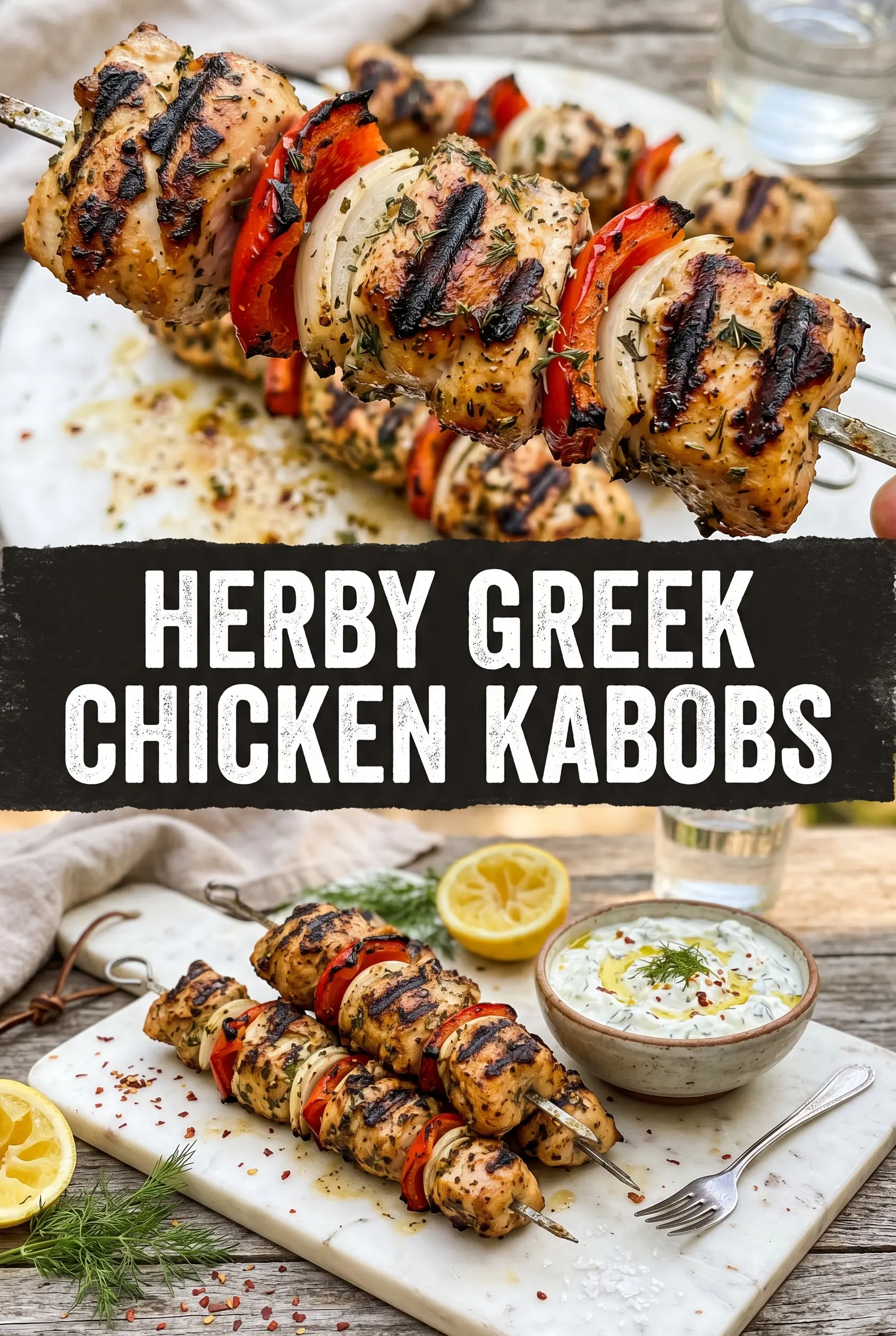
Greek Chicken Kabobs
Ingredients
Equipment
Method
- Whisk together olive oil, lemon juice, minced garlic, fresh oregano, Dijon mustard, salt, and black pepper until evenly combined and glossy.
- Add cubed chicken breasts to the marinade, cover, and marinate in the refrigerator for 4-8 hours.
- Thread marinated chicken breasts with cherry tomatoes, red onion chunks, and bell pepper chunks onto soaked wooden skewers, alternating for even cooking.
- Preheat the grill to medium-high heat and grill the kabobs for 5-6 minutes per side until the chicken is cooked through, turning once for clear grill marks.
- Serve the Greek chicken kabobs hot with tzatziki sauce, pita bread, and lemon wedges.