Golden chicken thighs, roasted potatoes with crisp edges, and tomatoes that collapse into their own savory juices make this Greek sheet pan chicken dinner the kind of meal that earns a permanent spot in the weeknight rotation. Everything lands on one pan, but it doesn’t taste thrown together. The chicken turns deeply browned, the lemon softens and sweetens in the oven, and the feta finishes the whole thing with a salty, creamy bite.
What makes this version work is the order of the vegetables and the way the dressing gets split. The potatoes start first so they have time to lose their raw starch and pick up color before the chicken goes in. Brushing the thighs with the remaining lemon-oregano mixture after the potatoes have begun roasting keeps the seasoning concentrated where it matters and helps the skin stay crisp instead of steaming under a wet marinade.
Below, I’ve included the small details that keep the potatoes from turning pale, how to get the chicken skin properly browned, and a few swaps that still keep the dish tasting like itself.
The potatoes went crisp on the edges, the chicken stayed juicy, and the lemon slices on top turned sweet instead of bitter. I loved that the feta browned just a little under the broiler.
Save this Greek sheet pan chicken dinner for a night when you want crispy potatoes, juicy chicken thighs, and one pan that comes out smelling like lemon, oregano, and roasted garlic.
The Reason the Potatoes Roast Before the Chicken Goes In
Potatoes need a head start here because they’re the ingredient most likely to stay underdone while everything else looks finished. If you pile raw potatoes, chicken, and vegetables onto the tray all at once, the chicken will brown before the potatoes have had enough time to soften and caramelize. Starting the potatoes first gives them direct contact with the hot pan, which is where that crisp edge comes from.
The second piece that matters is spacing. Once the chicken goes in, the potatoes need to live around the edges, not buried under the thighs or crowded under a pile of tomatoes. Crowding traps steam, and steam is what turns sheet pan dinners limp. A little open space between the pieces means browning instead of pale, wet vegetables.
What Each Ingredient Is Actually Doing in This Dish

- Bone-in, skin-on chicken thighs — These stay juicy through the full roast and give you the best browned skin. Boneless thighs work in a pinch, but they cook faster and won’t give you the same crisp, roasted finish.
- Baby potatoes — Halving them creates flat surfaces that can sit against the pan and brown. If you use larger potatoes, cut them into even chunks so they finish at the same time as the chicken.
- Lemon juice and sliced lemons — The juice seasons the pan and brightens the chicken, while the slices roast into soft, slightly sweet rounds. Use fresh lemons here; bottled juice tastes flat and misses the point of the dish.
- Feta and kalamata olives — These go on at the end because they bring salt, creaminess, and a punch of briny flavor without drying out in the oven. Add them too early and the feta melts away before it has a chance to brown.
- Olive oil, garlic, oregano, and thyme — This is the base flavor and it needs a full whisk together before it touches the pan so the herbs coat everything evenly. Dried oregano matters most here; it carries the Greek flavor and stands up to high heat better than fresh.
Building the Roast So the Chicken Skin Stays Crisp
Mix the Dressing First
Whisk the olive oil, garlic, lemon juice, oregano, thyme, salt, and pepper until the mixture looks cloudy and fully blended. That matters because the oil carries the herbs onto the food, and the lemon juice keeps the whole pan bright instead of greasy. If the garlic sits in a puddle of oil without being mixed through, it tends to scorch in spots rather than season the chicken evenly.
Give the Potatoes Their Head Start
Toss the halved potatoes with half of the dressing and spread them out on the pan in a single layer. Roast them for 10 minutes before anything else goes in. That first blast of heat starts the browning process, and it also means the potatoes won’t be playing catch-up while the chicken is finishing.
Roast, Then Broil for the Finish
Once the chicken and vegetables have roasted and the thighs reach 165F in the thickest part, scatter the olives and feta over the pan and broil for about 3 minutes. Watch closely here, because the leap from lightly browned feta to scorched feta happens fast. The broiler gives you those caramelized edges and wakes up the whole pan right before serving.
Make It Dairy-Free Without Losing the Greek Character
Skip the feta and finish with an extra handful of parsley and a few more olives. You lose the creamy saltiness, but the lemon, garlic, and oregano still carry the dish. A drizzle of good olive oil at the table helps replace some of the richness.
Use Boneless Chicken Thighs or Breasts
Boneless thighs work well and shave a few minutes off the cook time. Chicken breasts can be used, but they dry out faster, so pull them as soon as they hit 165F and keep the potato pieces on the smaller side so everything finishes together.
Make It Gluten-Free as Written
This recipe is naturally gluten-free as long as your feta and dried spices are certified gluten-free if cross-contamination matters to you. The structure of the dish doesn’t depend on any flour or breading, which keeps the roasting clean and simple.
Swap the Potatoes for Cauliflower or Zucchini
For a lighter pan, use cauliflower florets or thick zucchini chunks, but add them later so they don’t collapse before the chicken is done. You’ll lose the crispy potato edges, but you gain a faster roast and a softer, more vegetable-forward tray.
Storage and Reheating
- Refrigerator: Store leftovers in an airtight container for up to 4 days. The potatoes soften a bit, but the flavor holds up well.
- Freezer: Freeze the chicken and vegetables for up to 2 months, though the tomatoes and potatoes will lose some texture. For the best result, freeze only the chicken and potatoes, then add fresh tomatoes after reheating if you can.
- Reheating: Reheat on a sheet pan in a 375F oven until hot, about 15 to 20 minutes. The mistake to avoid is microwaving everything together, which makes the skin rubbery and the potatoes mealy.
Answers to the Questions Worth Asking
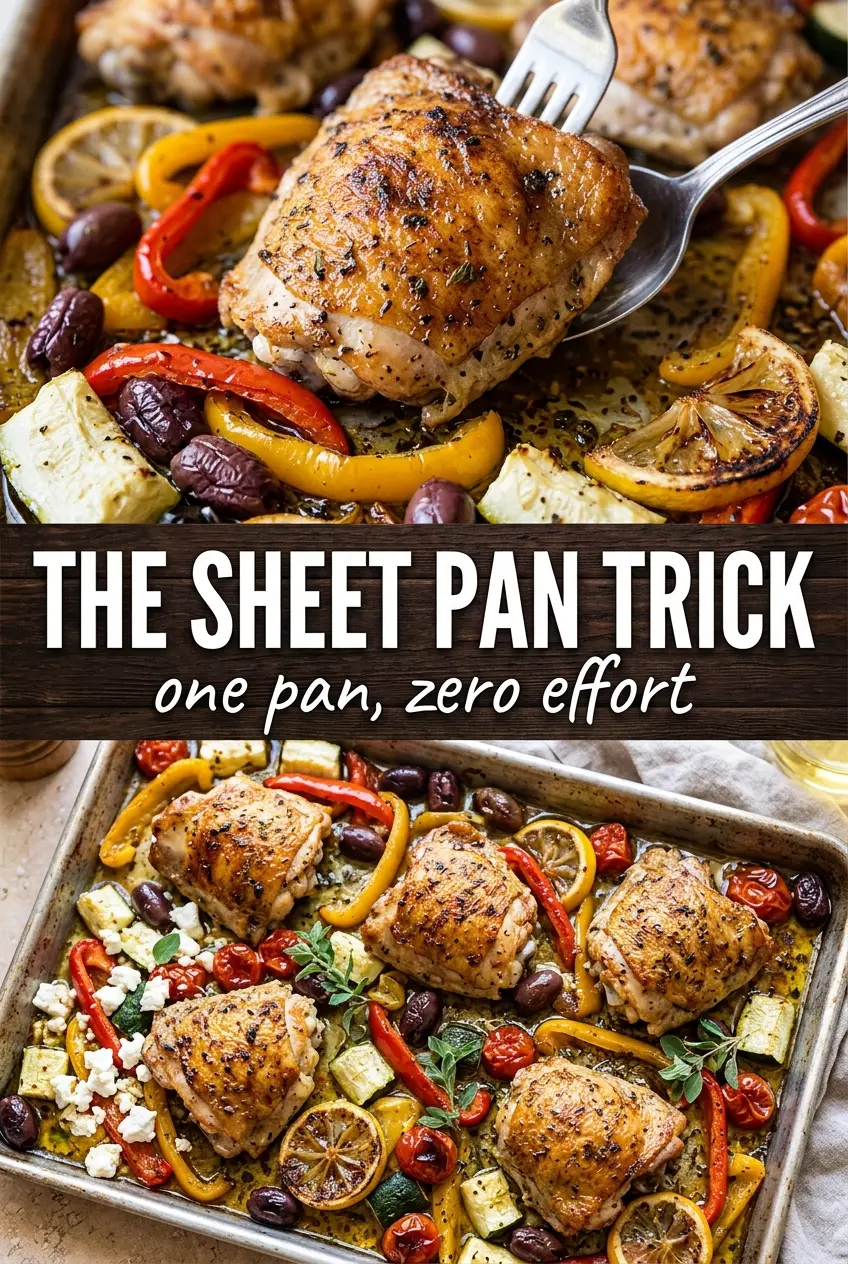
Greek Sheet Pan Chicken Dinner
Ingredients
Equipment
Method
- Preheat the oven to 425F and line a large rimmed baking sheet with foil, so it’s ready for roasting right away.
- Whisk olive oil, minced garlic, lemon juice, dried oregano, dried thyme, salt, and black pepper until evenly combined.
- Toss the halved baby potatoes with half the dressing and spread them on the baking sheet in an even layer.
- Roast for 10 minutes to start blistering the edges and setting the foundation for crispy potatoes.
- Push the potatoes to the sides and nestle the bone-in skin-on chicken thighs in the center.
- Brush the chicken with the remaining dressing for a golden, herby coating.
- Scatter the cherry tomatoes, red onion wedges, and sliced lemon around the chicken so everything roasts together.
- Roast 30-35 minutes until the chicken skin is golden and the internal temperature reaches 165F.
- Scatter the kalamata olives and crumbled feta over the top, then broil for 3 minutes until the feta starts to brown.
- Garnish with chopped fresh parsley and serve directly from the pan.