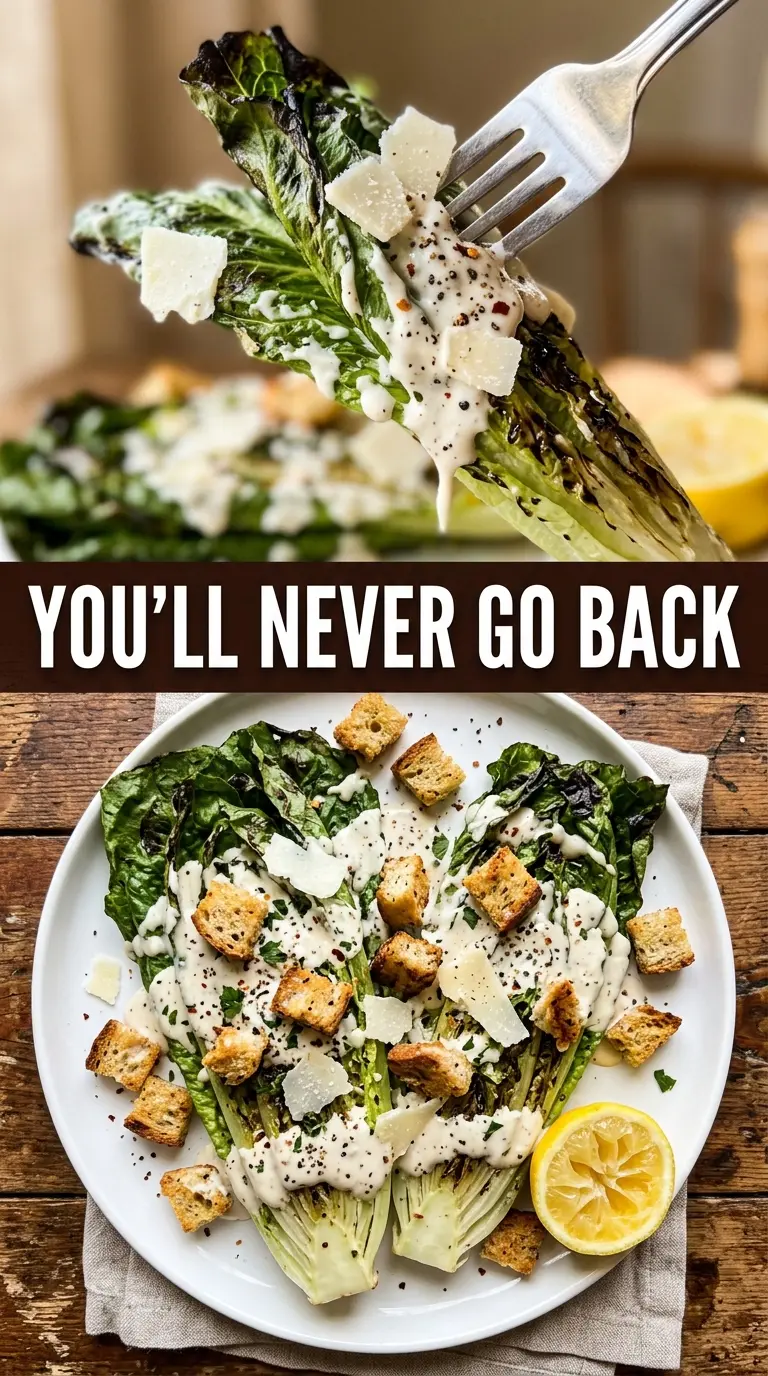
Charred romaine gives Caesar salad a smoky edge that makes the whole plate feel brighter, fresher, and a little more special than the usual bowl of greens. The lettuce stays crisp at the core while the cut sides pick up just enough grill flavor to stand up to the creamy dressing, crunchy croutons, and sharp Parmesan.
The trick is working fast over medium-high heat. Romaine only needs a couple of minutes cut-side down, or it turns limp before the edges have time to char. The dressing is built with mayonnaise, which gives you a stable, clingy base without the fuss of emulsifying raw egg yolk, and a hit of lemon keeps it from tasting heavy.
Below, I’ve included the small details that keep the lettuce crisp, how to get the best char without bitterness, and a few easy ways to adapt this into a more filling side or a lighter plate.
The romaine stayed crisp in the middle and the little bit of char made the Caesar dressing taste even richer. I served it with grilled chicken and the whole plate disappeared.
Love the smoky char on this Grilled Caesar Salad? Save it to Pinterest for the nights when you want a side that tastes restaurant-worthy with almost no extra work.
The Charred Cut Side Is the Whole Trick
Grilled romaine succeeds because the heat hits one flat surface hard and fast. That gives you blistered edges, a smoky note, and just enough collapse at the outer leaves while the heart stays crisp enough to eat with a fork. If you try to grill it too long, the lettuce turns watery and the whole thing slides from crisp to limp in a minute.
Keep the grill hot and the cut side dry. Oil helps the romaine make contact with the grates instead of steaming, and a light seasoning of salt and pepper gives the lettuce a head start before the dressing goes on. The other mistake is moving it around too much; let it sit cut-side down until you can see dark grill marks and the leaves just begin to soften at the edges.
What Each Ingredient Is Actually Doing in This Recipe
- Primary ingredient (the foundation) — This is the star of the dish and carries most of the flavor. Quality matters here more than anywhere else.
- Salt and pepper (the seasonings that matter most) — These enhance all other flavors without masking them. Apply generously; underseasoned dishes taste flat.
- Fat (butter, oil, or from the meat) — Fat carries flavors and keeps the dish from tasting dry. It’s also what makes food taste delicious and satisfying.
- Acid (lemon, lime, vinegar, or tomato) — Acid brightens the dish and prevents it from tasting one-dimensional or heavy. It also helps balance rich flavors.
- Aromatics (garlic, onion, ginger) — These add depth and complexity. They mellow and become sweet when cooked, different from their raw state.
- Spices or herbs (the personality) — These give the dish its character and make it distinctive. Toast them to bloom their flavors or add fresh ones to finish.
- Supporting ingredients (vegetables, proteins) — These add texture, nutrition, and complementary flavors. They should support the star ingredient, not compete with it.
- Proper cooking technique (heat, time, stirring) — Even with great ingredients, technique determines the final result. Pay attention to temperature and timing.
What the Dressing Needs to Taste Like Caesar, Not Mayonnaise
Romaine hearts — Hearts are sturdier than loose outer leaves, and they hold up better to direct heat. Use the freshest ones you can find; wilted romaine will taste flat before it ever reaches the grill.
Mayonnaise — This is the creamy base that makes the dressing fast and reliable. It gives body right away, so you don’t have to fuss with emulsifying oil and egg yolk. If you want a lighter version, swap half the mayo for plain Greek yogurt, but expect a tangier, less silky dressing.
Parmesan — Grated Parmesan brings the salty, nutty backbone that makes Caesar taste like Caesar. Use the real stuff if you can; pre-grated cheese often tastes dusty and won’t melt into the dressing as smoothly.
Lemon juice and Dijon — Lemon keeps the dressing bright enough for grilled lettuce, and Dijon helps it thicken and stay cohesive. Worcestershire adds the savory depth that people miss when they leave it out.
Croutons and shaved Parmesan — These aren’t garnish here. They give you the crunch and salt that keep the salad from feeling like warm greens with dressing on top.
How to Grill and Dress the Romaine Without Wilting It
Prepping the Lettuce for the Grill
Halve the romaine hearts lengthwise and keep the core intact so the leaves stay together on the grill. Brush the cut sides lightly with olive oil, then season with salt and pepper. If the leaves are wet, they’ll steam instead of char, so pat them dry first if they were rinsed recently.
Getting the Char in Two Minutes Flat
Lay the romaine cut-side down over medium-high heat and leave it alone for 2 to 3 minutes. You’re looking for dark grill marks and just a little softening at the edges, not a full collapse. If the grill is too cool, the lettuce will dry out before it browns, so wait for proper heat before you start.
Whisking the Dressing Until It Clings
Stir the mayonnaise, Parmesan, lemon juice, garlic, Dijon, Worcestershire, salt, and pepper until the dressing looks thick and glossy. It should spoon slowly, not pour like salad dressing from a bottle. If it tastes flat, add a pinch more salt before anything else; Caesar depends on salt to make the cheese and garlic sing.
Plating While the Romaine Still Has Bite
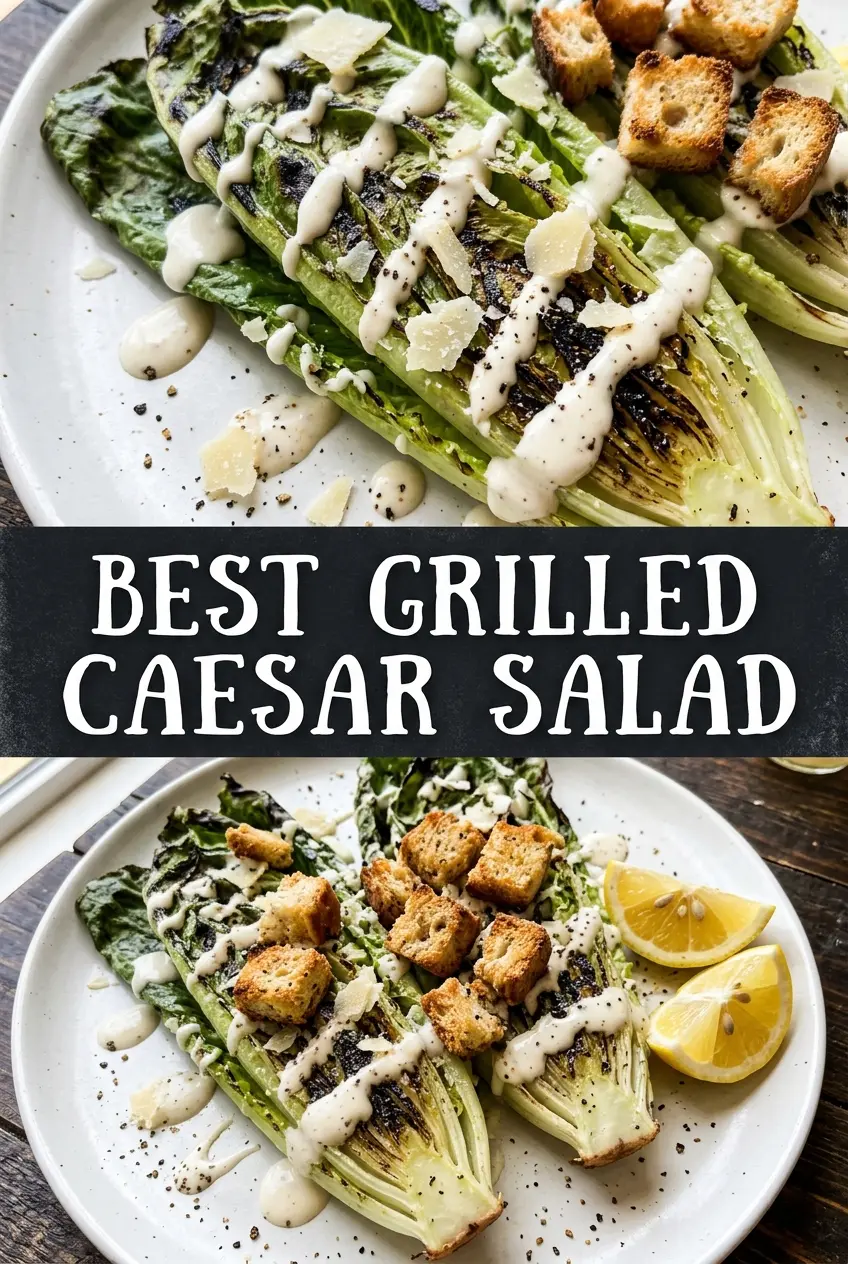
Move the grilled romaine to plates right away and drizzle the dressing over the warm leaves. Add croutons, shaved Parmesan, and lemon wedges at the end so the crunch stays intact. If you dress the lettuce too early, the heat from the grill softens everything and the salad loses the contrast that makes it work.
How to Change This Without Losing the Point of the Salad
Make it dairy-free
Use a dairy-free mayonnaise and swap the Parmesan for a dairy-free Parmesan-style alternative. The dressing will still be creamy and smoky from the grill, but it won’t have quite the same salty, nutty finish, so add a little extra Worcestershire and lemon to keep the flavor lively.
Turn it into a main-dish salad
Add grilled chicken, shrimp, or sliced steak on top of the plated romaine. The smoky lettuce already handles bold toppings well, so you don’t need much extra dressing once the protein goes on.
Skip the grill and use a grill pan
A hot grill pan gives you the same char marks indoors, just with a little less smoke flavor. Use the same short cooking time and don’t overcrowd the pan, or the lettuce will steam where the surface isn’t in direct contact.
Storage and Reheating
- Refrigerator: Store the dressing for up to 4 days in a covered container. Grilled romaine is best eaten right away; once it sits, it softens and loses the contrast that makes it worth grilling.
- Freezer: The dressing doesn’t freeze well because the mayonnaise can separate when thawed. The lettuce itself should never be frozen.
- Reheating: There isn’t a true reheating step for the salad. If you want to take the chill off leftovers, let the dressing sit at room temperature for 10 minutes and serve the romaine cold or just slightly warm, not hot.
Questions I Get Asked About This Recipe
Grilled Caesar Salad
Ingredients
Equipment
Method
- Brush the cut sides of romaine hearts with olive oil and season with salt and pepper, ensuring each cut face is coated. Visual cue: the cut surfaces look glossy with oil and lightly speckled with seasoning.
- Grill the romaine hearts cut-side down over medium-high heat for 2-3 minutes until charred. Visual cue: you should see dark char marks and the cut edges start to soften.
- Whisk together mayonnaise, grated Parmesan cheese, lemon juice, minced garlic, Dijon mustard, and Worcestershire sauce until smooth and creamy. Visual cue: the mixture turns uniform in color with no visible garlic clumps.
- Season the dressing with salt and pepper to taste. Visual cue: taste-adjust so the dressing is balanced and bright, not flat.
- Place grilled romaine hearts on plates and drizzle with Caesar dressing. Visual cue: dressing coats the charred faces without fully soaking through.
- Top with crispy croutons, shaved Parmesan, and lemon wedges. Visual cue: croutons sit on top with visible texture and the Parmesan looks finely layered.