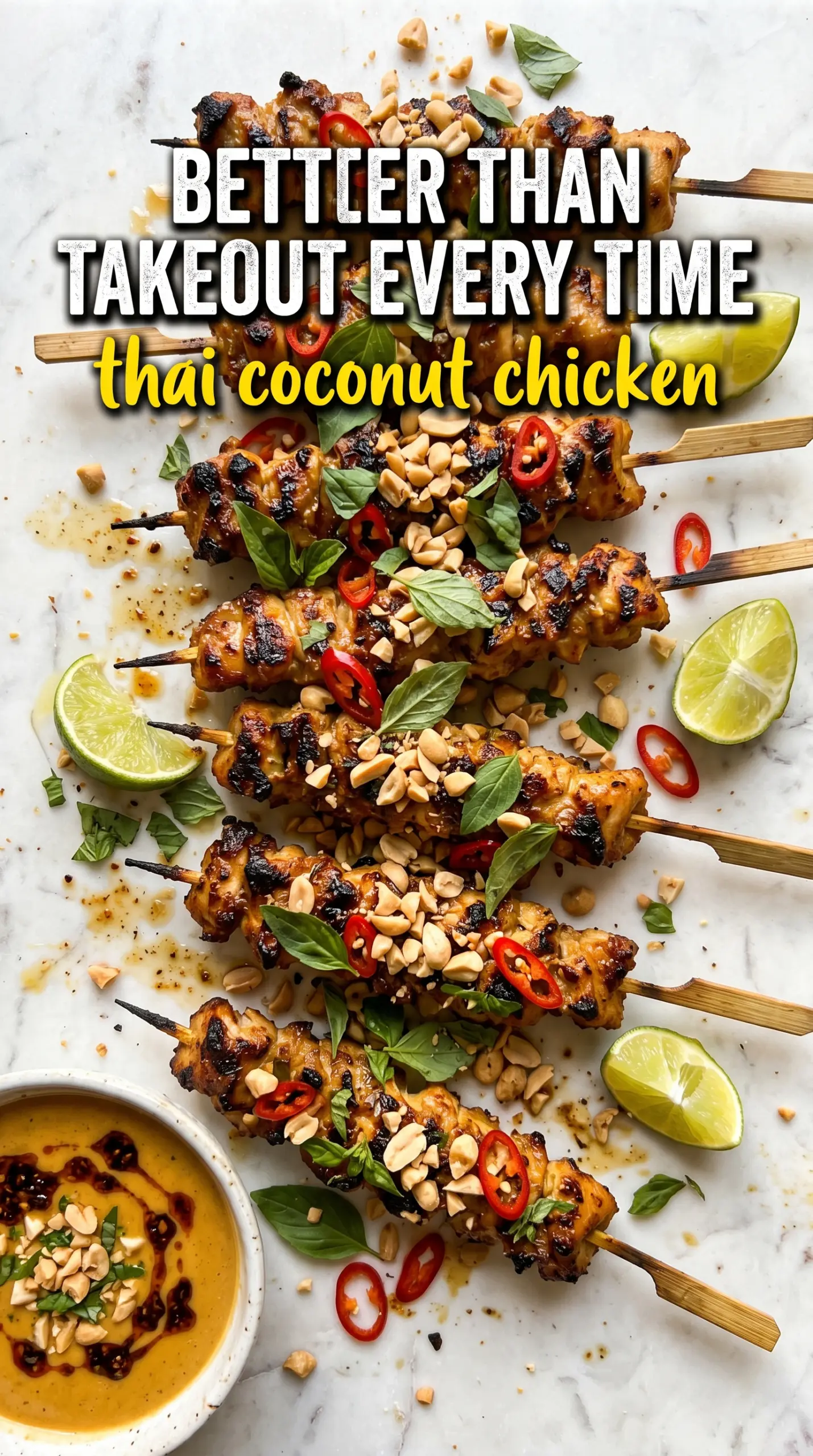
Golden, lightly charred chicken skewers with a coconut-lemongrass marinade are one of those grilled dinners that disappear fast. The coconut milk keeps the chicken tender, the fish sauce adds depth, and the brown sugar helps the edges pick up that sticky, browned finish that makes each bite taste like it came off a much more complicated grill setup.
What makes this version work is balance. The marinade is rich, but it isn’t heavy once the lemongrass, ginger, garlic, and curry powder have a chance to infuse the chicken. I use boneless chicken breast cut into even pieces so the skewers cook quickly and stay juicy, and I always soak the wooden skewers so they don’t scorch before the chicken is done.
Below you’ll find the timing that matters most for getting clean grill marks, the ingredient swaps that still keep the Thai character intact, and the small fixes that help when the marinade starts to cling instead of drip.
The coconut marinade clung to the chicken and the skewers came off the grill with just the right char. I served them with peanut sauce and lime, and even the leftovers were still juicy the next day.
These grilled Thai coconut chicken skewers get their charred edges and creamy peanut sauce finish just right when you marinate them overnight or at least long enough for the lemongrass to work through the chicken.
The Marinade Needs Time to Coat, Not Just Season
The biggest mistake with chicken skewers like these is rushing the marinade and expecting the grill to do all the work. Coconut milk carries the aromatics, but it needs time to settle around the chicken so the lemongrass, ginger, garlic, and curry powder actually penetrate instead of sitting on the surface. One hour is the minimum that gives you a noticeable payoff; up to four hours brings the best balance of flavor and texture.
Cut the chicken into even 1-inch pieces so every skewer cooks at the same pace. If the pieces are too small, they dry out before you get a little char. If they’re too large, the outside overcooks while the center stays pale. The goal is juicy chicken with browned edges, not thick chunks that need a long grill time.
What Each Ingredient Is Actually Doing in These Skewers
- Coconut milk — This is the base of the marinade and the reason the chicken stays tender over high heat. Full-fat coconut milk works best because it carries the flavors better and clings to the chicken; light coconut milk gives you a thinner marinade and a less luxurious finish.
- Fish sauce — This adds the salty backbone and the savory depth that makes the skewers taste finished, not flat. There isn’t a good substitute for the exact flavor, but soy sauce will get you close if you need a vegetarian or fish-free swap, though the result will be a little less round.
- Lemongrass — Fresh lemongrass brings the bright, citrusy perfume that defines the dish. Mince it very finely so it softens in the marinade; large pieces stay fibrous and can read stringy on the skewers.
- Chicken breasts — Breast meat cooks fast and stays clean-tasting against the rich marinade. If you use thighs instead, you’ll get a juicier, more forgiving skewer with a deeper flavor and a little more room for grill time.
- Brown sugar — This helps the chicken caramelize and gives the marinade that slight sticky edge you want on the grill. White sugar will work in a pinch, but brown sugar adds a deeper note that plays better with the coconut milk.
Building Char Without Drying Out the Chicken
Mixing the Marinade
Stir the coconut milk, fish sauce, brown sugar, lemongrass, ginger, garlic, and curry powder until the sugar dissolves and the mixture looks evenly speckled. You want a marinade that smells bright and savory, not one where the spices are sitting in separate clumps at the bottom. If the coconut milk has separated in the can, whisk it well first so the marinade stays uniform.
Coating and Marinating the Chicken
Add the chicken pieces and turn them until every side is coated. Cover and refrigerate for 1 to 4 hours; any longer and the surface can start to turn a little soft from the acid and salt in the marinade. If you’re short on time, even 45 minutes helps, but don’t skip the marinating step entirely because the flavor depends on it.
Skewering for Even Cooking
Thread the chicken onto soaked wooden skewers with a little space between pieces. Crowding them too tightly traps steam and makes it harder to get those browned edges. If a piece of chicken is folded or doubled over on the skewer, it will lag behind the others and can leave the rest of the skewer overdone while you wait for the center to finish.
Grilling to the Right Finish
Preheat the grill to medium-high so the grates are hot enough to sear the outside quickly. Grill for 5 to 6 minutes per side, turning once, until the chicken is cooked through and lightly charred at the edges. If the marinade starts to flare on the grill, move the skewers to a cooler spot for a minute instead of pushing through over direct heat, which can burn the sugar before the chicken catches up.
Three Ways to Make These Skewers Fit Your Table
Dairy-Free, Naturally
This recipe already leans dairy-free, so nothing needs to change in the marinade. Just check your peanut sauce if you’re serving a bottled version, because some brands add milk powder. The skewers stay just as creamy and flavorful without any dairy at all.
Chicken Thigh Swap for a Juicier Result
Use boneless chicken thighs instead of breasts if you want a richer bite and a little more forgiveness on the grill. Thighs stay juicy even if they get a minute or two extra heat, but they won’t slice quite as cleanly off the skewer and they’ll pick up a slightly deeper, meatier flavor.
Gluten-Free Serving Notes
The skewers themselves are gluten-free as written, but the peanut sauce can be the catch if it includes soy sauce or thickeners. Use a certified gluten-free sauce or make your own with gluten-free soy sauce or tamari. The grilled chicken keeps the same charred, coconut-scented flavor either way.
No Grill, Use a Broiler
Set the skewers on a foil-lined sheet pan and broil them close to the heat, turning once, until the edges brown and the chicken is cooked through. The flavor is still there, but you’ll get less smoky char and a more even surface color. Watch them closely because the sugar in the marinade can darken fast under the broiler.
Storage and Reheating
- Refrigerator: Store cooked skewers in an airtight container for up to 3 days. The chicken stays moist, though the grilled edges soften a little as it sits.
- Freezer: Freeze the cooked chicken off the skewers for up to 2 months. Thaw overnight in the refrigerator before reheating so the outside doesn’t dry out before the center warms.
- Reheating: Warm in a 325°F oven, covered loosely with foil, until heated through. A microwave works for speed, but it can make the chicken rubbery if you blast it too long, so use short bursts and stop as soon as it’s hot.
Answers to the Questions Worth Asking

Grilled Thai Coconut Chicken Skewers
Ingredients
Equipment
Method
- Combine coconut milk, fish sauce, brown sugar, lemongrass, ginger, garlic, and curry powder in a bowl until smooth and evenly blended.
- Add chicken pieces to the marinade and refrigerate for 1-4 hours.
- Thread marinated chicken onto soaked wooden skewers, leaving a little space between pieces for even grilling.
- Preheat grill to medium-high heat.
- Grill skewers for 5-6 minutes per side until chicken is cooked through and slightly charred, watching for golden edges and visible char.
- Serve grilled Thai coconut chicken skewers immediately with peanut sauce for dipping, fresh cilantro, and lime wedges.