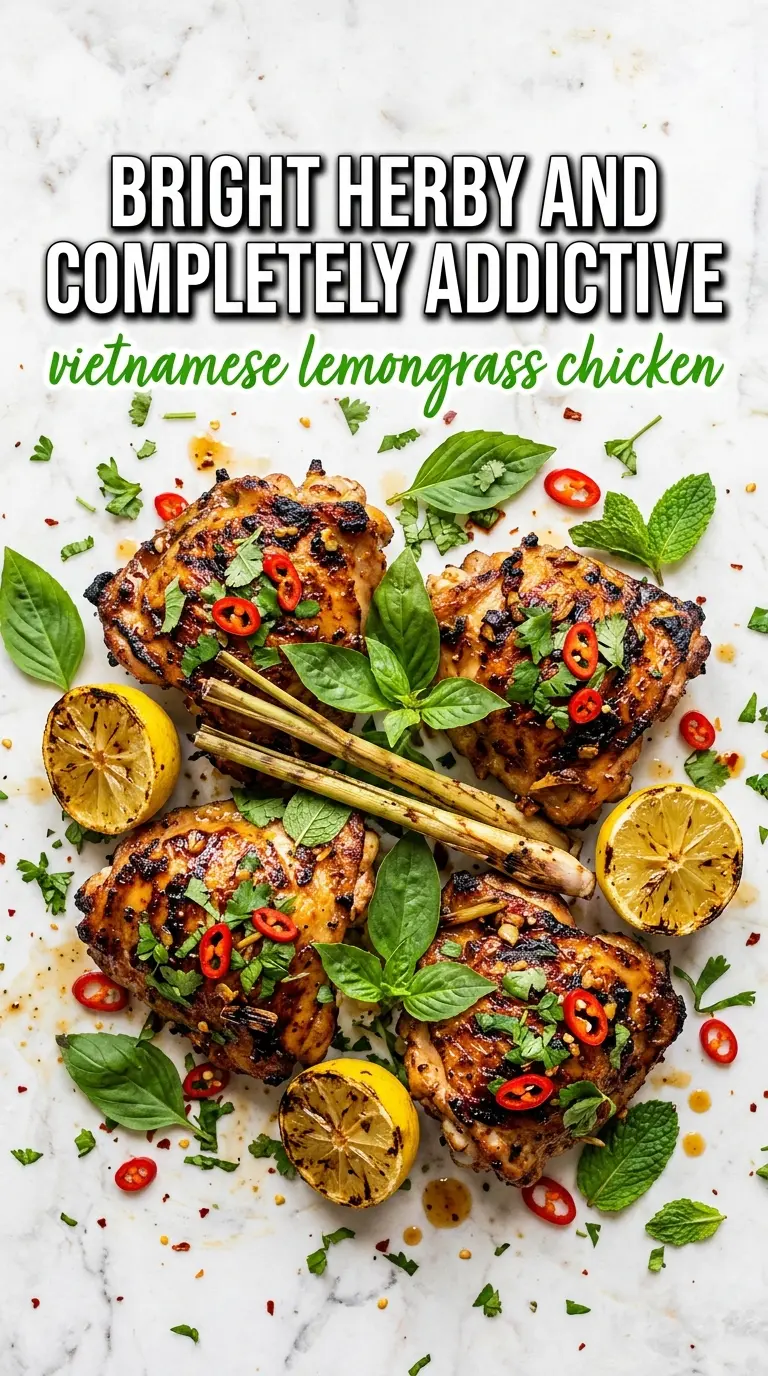
Grilled Vietnamese lemongrass chicken lands on the table with caramelized edges, juicy centers, and that unmistakable mix of smoky grill char and bright aromatic marinade. The chicken picks up a deep savory-sweet crust that tastes like it took much more effort than it actually did, which is exactly why it earns repeat status in my kitchen.
The key is in the marinade balance. Lemongrass brings the citrusy, grassy perfume that makes this dish taste unmistakably Vietnamese, while fish sauce and soy sauce build the salty backbone and brown sugar helps the surface caramelize instead of drying out on the grill. Boneless thighs are the right cut here because they stay tender even when the edges get properly charred.
Below, I’ve included the small details that matter most: how finely to mince the lemongrass, how long to marinate for the best flavor, and what to watch for on the grill so you get color without losing juiciness.
The marinade coated the chicken beautifully and the grilled edges caramelized just like I hoped. I let it go overnight and the flavor was bold without being salty.
Save this grilled Vietnamese lemongrass chicken for the nights when you want smoky char, fragrant marinade, and rice-bowl comfort in one pan.
The Marinade Needs Time, Not More Salt
The biggest mistake with lemongrass chicken is rushing the soak and then trying to force flavor with extra fish sauce or soy sauce. That only pushes the dish toward harsh and salty instead of fragrant and balanced. The marinade needs time for the lemongrass, garlic, and shallot to perfume the chicken all the way through the surface.
Boneless thighs hold up best because they stay succulent over direct heat, and the little bit of sugar in the marinade gives you those lacquered, dark brown edges that make this dish so good. If you use chicken breast, it will cook faster and give you a leaner bite, but it also asks for tighter attention on the grill.
- Lemongrass — Mince it as finely as you can. Big woody pieces don’t dissolve into the marinade, and they’ll stick to the grill instead of helping build flavor.
- Fish sauce — This is the backbone of the marinade. Cheap fish sauce is fine here as long as it tastes clean and savory, not overly funky or harsh.
- Brown sugar — It doesn’t just sweeten. It helps the chicken caramelize and keeps the grill marks from tasting bitter.
- Boneless chicken thighs — They’re forgiving on the grill and keep the finished chicken juicy even after a strong sear.
What Each Ingredient Is Actually Doing in This Recipe
- Primary ingredient (the foundation) — This is the star of the dish and carries most of the flavor. Quality matters here more than anywhere else.
- Salt and pepper (the seasonings that matter most) — These enhance all other flavors without masking them. Apply generously; underseasoned dishes taste flat.
- Fat (butter, oil, or from the meat) — Fat carries flavors and keeps the dish from tasting dry. It’s also what makes food taste delicious and satisfying.
- Acid (lemon, lime, vinegar, or tomato) — Acid brightens the dish and prevents it from tasting one-dimensional or heavy. It also helps balance rich flavors.
- Aromatics (garlic, onion, ginger) — These add depth and complexity. They mellow and become sweet when cooked, different from their raw state.
- Spices or herbs (the personality) — These give the dish its character and make it distinctive. Toast them to bloom their flavors or add fresh ones to finish.
- Supporting ingredients (vegetables, proteins) — These add texture, nutrition, and complementary flavors. They should support the star ingredient, not compete with it.
- Proper cooking technique (heat, time, stirring) — Even with great ingredients, technique determines the final result. Pay attention to temperature and timing.
Building Char Without Drying Out the Chicken
Mixing the Marinade
Stir the lemongrass, fish sauce, brown sugar, oil, garlic, shallot, soy sauce, and black pepper until the sugar dissolves and the mixture looks glossy. The marinade should smell sharp, savory, and a little sweet all at once. If the sugar clings in a gritty layer at the bottom, keep stirring for another minute so it coats the chicken evenly instead of burning in spots later.
Marinating for Real Flavor
Coat the chicken thoroughly and refrigerate it for at least 4 hours, with overnight giving you the deepest flavor. A shallow bowl or zip-top bag both work, but the chicken needs full contact with the marinade. If you go much beyond 24 hours, the salt in the fish sauce starts to dominate and the texture can get a little dense on the outside.
Grilling to the Right Finish
Preheat the grill to medium-high and lay the chicken on the grates only after they’re hot. You want a steady sizzle and clear grill marks, not a slow pale steam. Cook 6 to 7 minutes per side, then check for a firm surface and juices that run mostly clear; if the heat is too high, the sugar will blacken before the chicken cooks through, so move hotter spots to the cooler side of the grill if needed.
Resting and Serving
Let the chicken rest for a few minutes before slicing so the juices stay in the meat instead of flooding the cutting board. Slice against the grain and serve with rice, fresh herbs, and lime wedges. The lime wakes everything up at the end, especially if the grilled surface is deeply caramelized.
How to Adapt This for a Bigger Crowd, a Different Cut, or a Lower-Carb Plate
Chicken Breast Instead of Thighs
Chicken breast works if that’s what you have, but it needs a shorter grill time and closer attention because it dries out faster than thighs. Pound it lightly or cut it into even pieces so it cooks at the same pace, and pull it as soon as the center is no longer pink.
Dairy-Free and Naturally Gluten-Free
This recipe is already dairy-free, and it can be gluten-free too if you use a gluten-free soy sauce or tamari. The flavor stays the same, though tamari usually tastes a touch rounder and less sharp than standard soy sauce.
No Grill, Use a Broiler
A broiler gets you close to grill flavor when the weather or setup won’t cooperate. Put the chicken on a rack over a lined sheet pan and broil it close to the heat, watching carefully so the sugar in the marinade caramelizes instead of burning in one spot.
Storage and Reheating
- Refrigerator: Store leftovers for up to 4 days. The flavor holds well, though the edges won’t stay as crisp.
- Freezer: Freezes well for up to 2 months if you slice it first and wrap it tightly. Thaw overnight in the refrigerator.
- Reheating: Warm gently in a skillet over low heat with a splash of water or broth, or use the microwave in short bursts. High heat dries out the thighs and can make the marinade taste too dark.
Answers to the Questions Worth Asking

Grilled Vietnamese Lemongrass Chicken
Ingredients
Equipment
Method
- In a bowl, combine minced lemongrass, fish sauce, brown sugar, vegetable oil, minced garlic, minced shallot, soy sauce, and black pepper, stirring until the sugar dissolves and the mixture looks glossy.
- Add boneless chicken thighs to the bowl, coat well, cover, and refrigerate for 4-24 hours to let the flavors soak in.
- Preheat the grill to medium-high heat so it’s hot enough to char the outside quickly.
- Grill the marinated chicken for 6-7 minutes per side until deeply charred and cooked through.
- Let the chicken rest briefly after grilling, then slice and serve with rice, fresh herbs, and lime wedges.