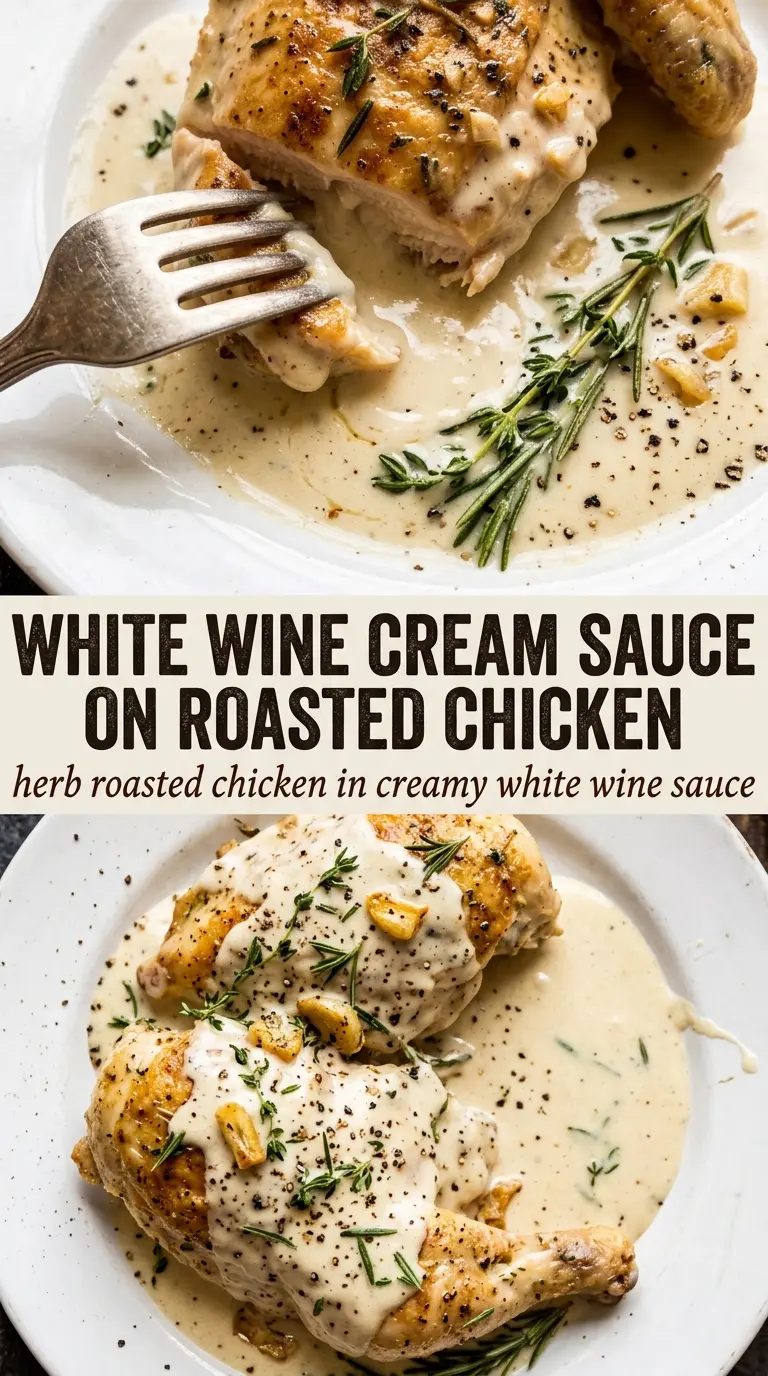
Golden herb-crusted chicken thighs in a silky white wine cream sauce earn a permanent place on the dinner rotation because they deliver a deep, restaurant-style pan sauce without fussy steps. The skin stays crisp on top, the chicken turns tender underneath, and the shallots melt into the sauce just enough to give it that slow-cooked feel. It looks like you spent all afternoon on it. You didn’t.
The key is building the sauce in stages instead of dumping everything into the pan at once. Searing the chicken first gives you the browned bits that make the white wine sauce taste layered, and the wine gets a few minutes to reduce before the cream goes in so the finished sauce doesn’t taste flat. Dijon adds a little backbone, not mustardy bite, while thyme and rosemary keep the whole dish tasting bright instead of heavy.
Below you’ll find the exact order that keeps the sauce silky, plus a few smart swaps if you want to use what’s already in the kitchen. The oven finish does the last bit of work for you, and that’s where the chicken becomes juicy while the sauce settles into that glossy, spoon-coating texture.
The sauce reduced beautifully and stayed silky after I added the cream. My chicken thighs came out with crisp skin and the shallots gave it such a nice restaurant feel.
Save this herb roasted chicken in creamy white wine sauce for the nights when you want crisp skin, a silky pan sauce, and dinner that feels a little special.
The Part That Keeps the Sauce from Breaking
The mistake most people make with cream sauces is rushing the whole pan. If the wine is barely reduced or the heat is too high when the cream goes in, the sauce can turn thin, greasy, or oddly sharp. This version avoids that by letting the wine cook down first, then adding broth and cream together so the pan has enough liquid to stay stable while the chicken finishes in the oven.
Skin-on thighs are the right cut here because they stay juicy through the oven time and give you enough fat to help the sauce taste rich without turning it heavy. The chicken also helps season the sauce as it bakes, which is why the pan gets better by the minute. If you use breasts instead, they need less oven time and the sauce won’t have quite the same depth.
- Chicken thighs — Bone-in, skin-on thighs stay tender and give the dish its best flavor. Boneless thighs work too, but cut 5 to 10 minutes off the oven time.
- Dry white wine — Pick something you’d drink. A crisp Sauvignon Blanc or Pinot Grigio keeps the sauce bright. Skip sweet wine; it makes the sauce taste off.
- Heavy cream — This gives the sauce its silkiness and holds up in the oven. Half-and-half can work, but the sauce will be thinner and more likely to split if it boils hard.
- Shallots — They melt into the sauce and taste gentler than onion. If you substitute onion, mince it very fine so it softens enough before the wine goes in.
- Dijon mustard — Just a teaspoon sharpens the sauce and keeps it from tasting bland. Don’t skip it unless you have to.
What Each Ingredient Is Actually Doing in This Recipe
- Primary ingredient (the star) — Quality matters most. Choose the best you can find.
- Cooking medium (oil, butter, or broth) — This carries flavors and prevents dryness.
- Seasonings (salt, pepper, spices, herbs) — Layer flavors so nothing overpowers. Build depth gradually.
- Aromatics (garlic, onion, herbs) — Cook with fat to bloom flavors. Become the foundation.
- Supporting ingredients — Complement the main ingredient without overpowering it.
- Sauce or liquid (if applicable) — Brings flavors together. Balance richness with acid.
- Acid (lemon, vinegar, wine, or other) — Brightens and prevents flat-tasting results.
- Final finish (garnish, glaze, or sauce) — Prevents one-dimensional taste and adds visual appeal.
Getting the Chicken Seared Before the Sauce Starts
Crisping the Skin
Start the chicken skin-side down in the butter and oil and leave it alone until the skin turns deep golden and releases from the pan without sticking. That takes about 6 minutes, and if you move it too soon, the skin tears and stays pale. The goal here isn’t to cook the chicken through; it’s to build flavor and render enough fat so the sauce has a better base.
Building the Aromatics
Once the chicken comes out, the shallots go into the same pan and soak up everything left behind. Cook them until they’re soft and translucent, then add the garlic, thyme, and rosemary just long enough to smell fragrant. If the garlic browns, it turns bitter fast, so keep the heat moderate and move straight to the wine once it’s fragrant.
Reducing the Wine
Pour in the wine and let it bubble until the sharp alcohol smell cooks off and the liquid looks slightly reduced. This is the point that gives the sauce its backbone. If you rush it, the finished sauce can taste boozy instead of balanced, and the cream won’t smooth it out the way you want.
Finishing in the Oven
Stir in the broth, cream, and Dijon, return the chicken skin-side up, then move the pan to the oven. The sauce should simmer gently around the edges, not boil hard. Bake until the thighs are cooked through and the skin is deeply golden; if the sauce looks a little loose when it comes out, give it a few minutes to settle before serving and it will thicken as it stands.
How to Adapt This Dish Without Losing the Point
Use chicken breasts instead of thighs
Chicken breasts work if that’s what you have, but they need less time and dry out faster. Sear them briefly, then bake only until they reach temperature and pull them early, since carryover heat will finish the job. The sauce still tastes good, but thighs give you the juiciest result.
Make it dairy-free
Use full-fat coconut cream instead of heavy cream and swap the butter for extra olive oil or a dairy-free butter substitute. The sauce will be a little richer and less classic in flavor, but it still turns silky and coats the chicken well. Keep the wine reduction step the same so the sauce doesn’t taste flat.
Make it gluten-free
This dish is naturally gluten-free as written as long as your chicken broth and Dijon are certified gluten-free. That’s one of the reasons it’s so easy to put on the table without changing the method. Just check the label on the broth if you’re cooking for someone sensitive.
Storage and Reheating
- Refrigerator: Store leftovers in a sealed container for up to 4 days. The sauce will thicken and the skin won’t stay crisp, but the flavor holds up well.
- Freezer: This freezes better than many cream sauces, though the texture may be a little less smooth after thawing. Freeze in portions for up to 2 months and thaw overnight in the fridge.
- Reheating: Warm gently on the stovetop over low heat with a splash of broth or cream. Don’t boil it, or the sauce can separate and the chicken will tighten up.
Questions I Get Asked About This Recipe
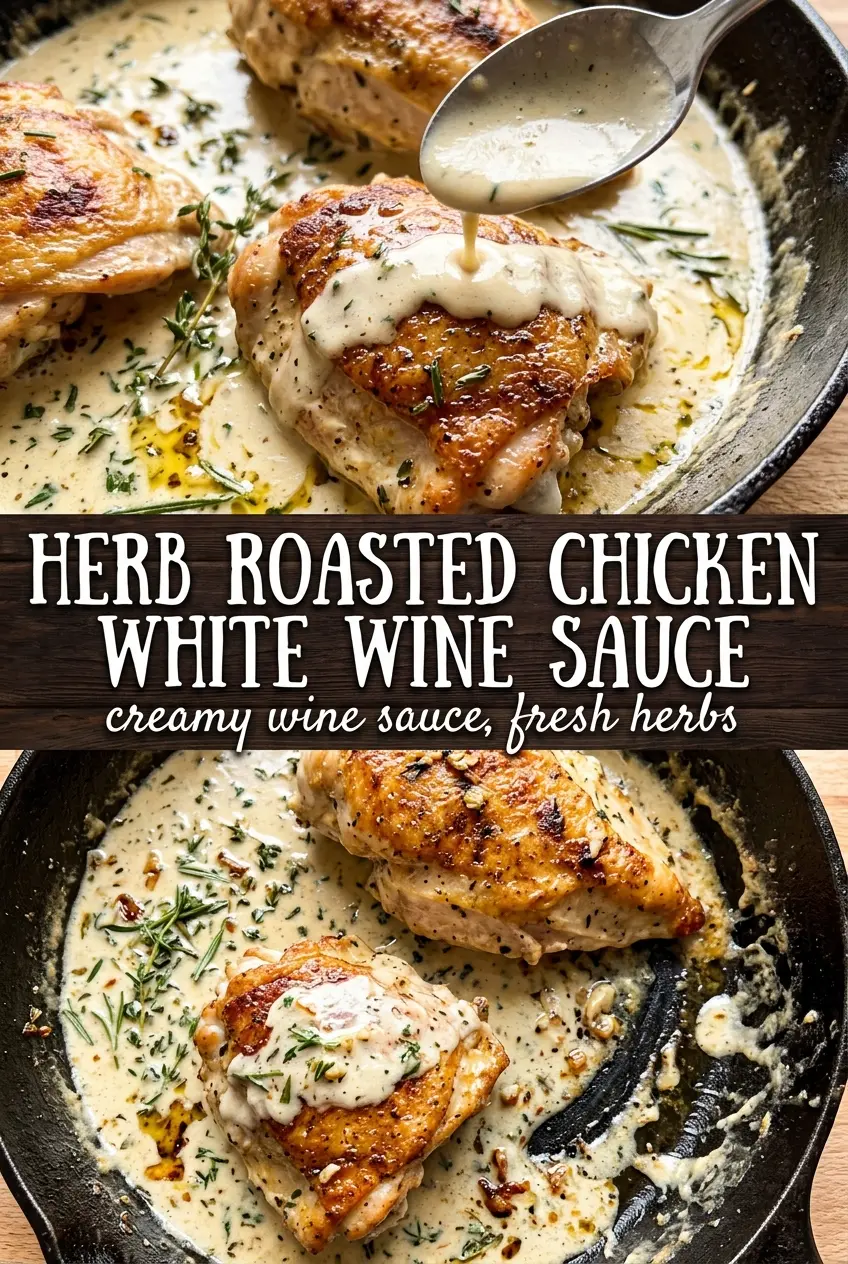
Herb Roasted Chicken in Creamy White Wine Sauce
Ingredients
Equipment
Method
- Preheat oven to 400F. Season chicken thighs with salt and pepper, then sear skin-side down in butter and olive oil for 6 minutes until the skin is golden. Remove chicken from the Dutch oven.
- Sauté minced shallots in the Dutch oven for 3 minutes until softened. Add minced garlic, fresh thyme, and chopped rosemary, then cook for 1 minute until fragrant.
- Deglaze with dry white wine, scraping up browned bits. Simmer for 3 minutes, then stir in chicken broth, heavy cream, and Dijon mustard and bring to a simmer until glossy.
- Return chicken to the Dutch oven skin-side up. Transfer to the oven and bake 25-30 minutes until the chicken is golden and cooked through.
- Garnish with fresh parsley and let the sauce cling to the chicken before serving.