Hobo Dinner Foil Packets come off the fire with the kind of simple, steady comfort that makes camp cooking worth the setup: tender potatoes, sweet carrots, soft onions, and seasoned beef all steaming together in one neat package. When the foil opens, you get a full dinner with browned edges, buttery vegetables, and almost no cleanup.
What makes this version work is the layering. The vegetables sit under the beef so they catch the butter and drippings as everything cooks, and the beef is pressed into a thin patty so it finishes in the same window as the potatoes. Heavy-duty foil matters here because thin foil tears when you flip the packets or open them over steam.
Below, I’ve included the timing cues that keep the vegetables from turning chalky or the beef from drying out, plus a few easy swaps if you’re cooking over a campfire, grill, or oven.
I used Yukon gold potatoes and cut the carrots thin like you suggested, and everything was perfectly tender at 30 minutes. The butter kept the beef from drying out, and my husband opened his packet and said it smelled like our camping trips growing up.
Save these hobo dinner foil packets for the nights when you want a full campfire meal with beef, potatoes, and butter-steamed vegetables in one packet.
The Part That Keeps the Potatoes Tender Before the Beef Is Done
Foil packets fail when everything goes in the same way and the same size. Potatoes need the longest head start, carrots come next, and the beef should sit on top as a thin patty so the drippings move down through the vegetables instead of pooling around the meat. If your potatoes are sliced too thick, the packet will finish with cooked beef and stubborn, underdone potatoes.
The other thing that matters is the seal. A loose packet leaks steam, and steam is what softens the potatoes and carrots without scorching the foil. Crimp the edges tightly and leave a little air space inside each packet so the ingredients can steam instead of compressing into a dense bundle.
What Each Ingredient Is Doing Inside the Packet
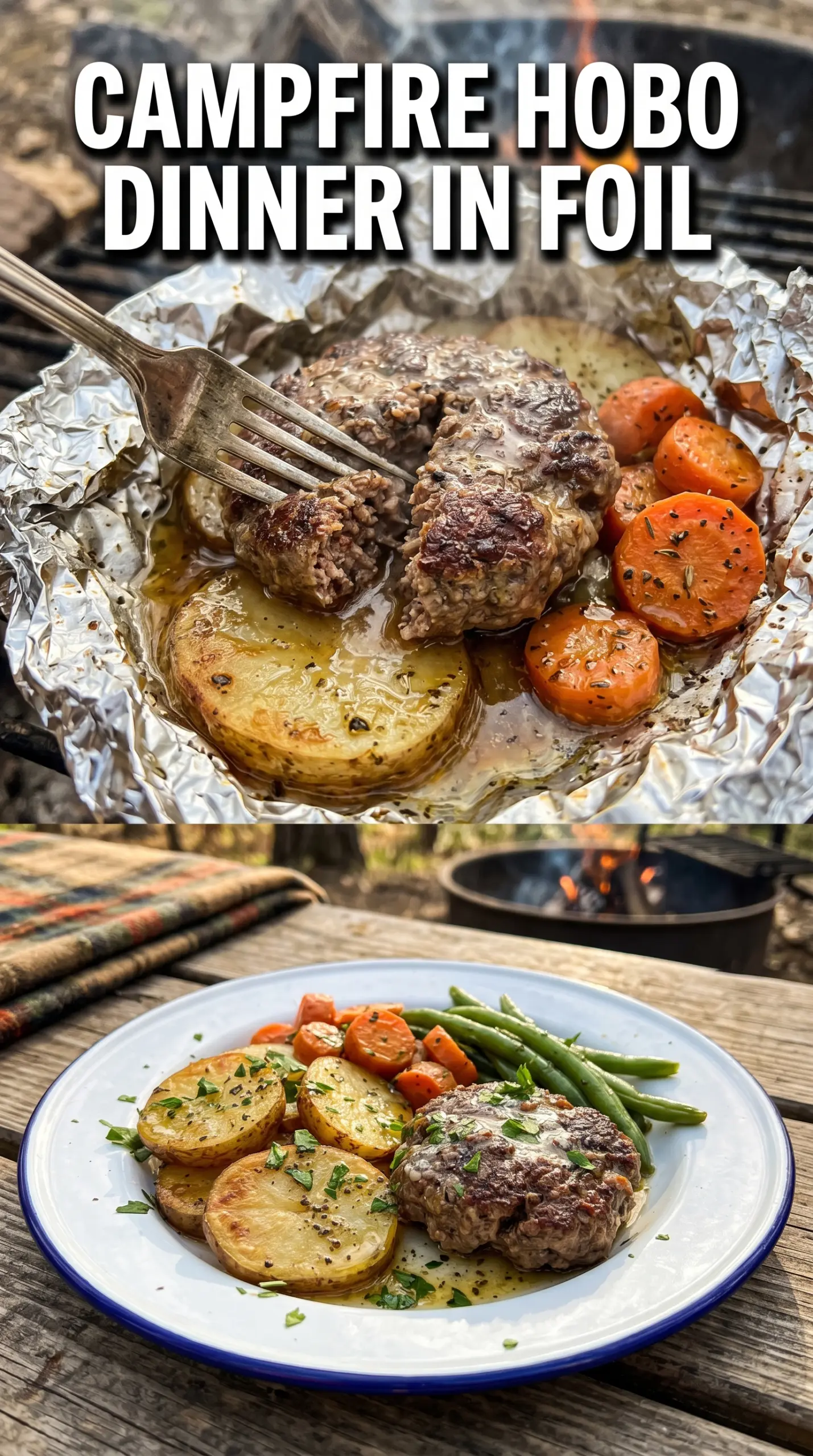
- Ground beef — This gives the packet its main protein and the juices that flavor the vegetables. A standard 80/20 blend stays more succulent than extra-lean beef; if you use leaner meat, the butter matters even more. Shape it into thin patties so it cooks through in the same time as the vegetables.
- Potatoes — These need to be sliced fairly thin, about 1/4-inch thick, so they soften in 25 to 30 minutes over medium heat. Yukon golds or red potatoes hold their shape best. Russets work, but they can break down a little more and turn softer around the edges.
- Carrots and onion — Carrots bring sweetness, and onions melt down into the packet juices. Slice them evenly so nothing is left crunchy while the rest is done. If your carrots are thick, cut them lengthwise first, then into half-moons.
- Butter — This is the quiet ingredient that keeps the packet from tasting dry or flat. It bastes the vegetables as it melts and helps the beef brown gently without sticking to the foil. You can swap in olive oil, but the result will be lighter and less rich.
- Heavy-duty foil — Thin foil tears too easily when you fold, flip, or open the packets. Heavy-duty foil holds the steam in and protects the bottom layer from direct flare-ups on the campfire grate.
Getting the Packet Closed, Cooked, and Opened Without Losing the Steam
Building the Layers
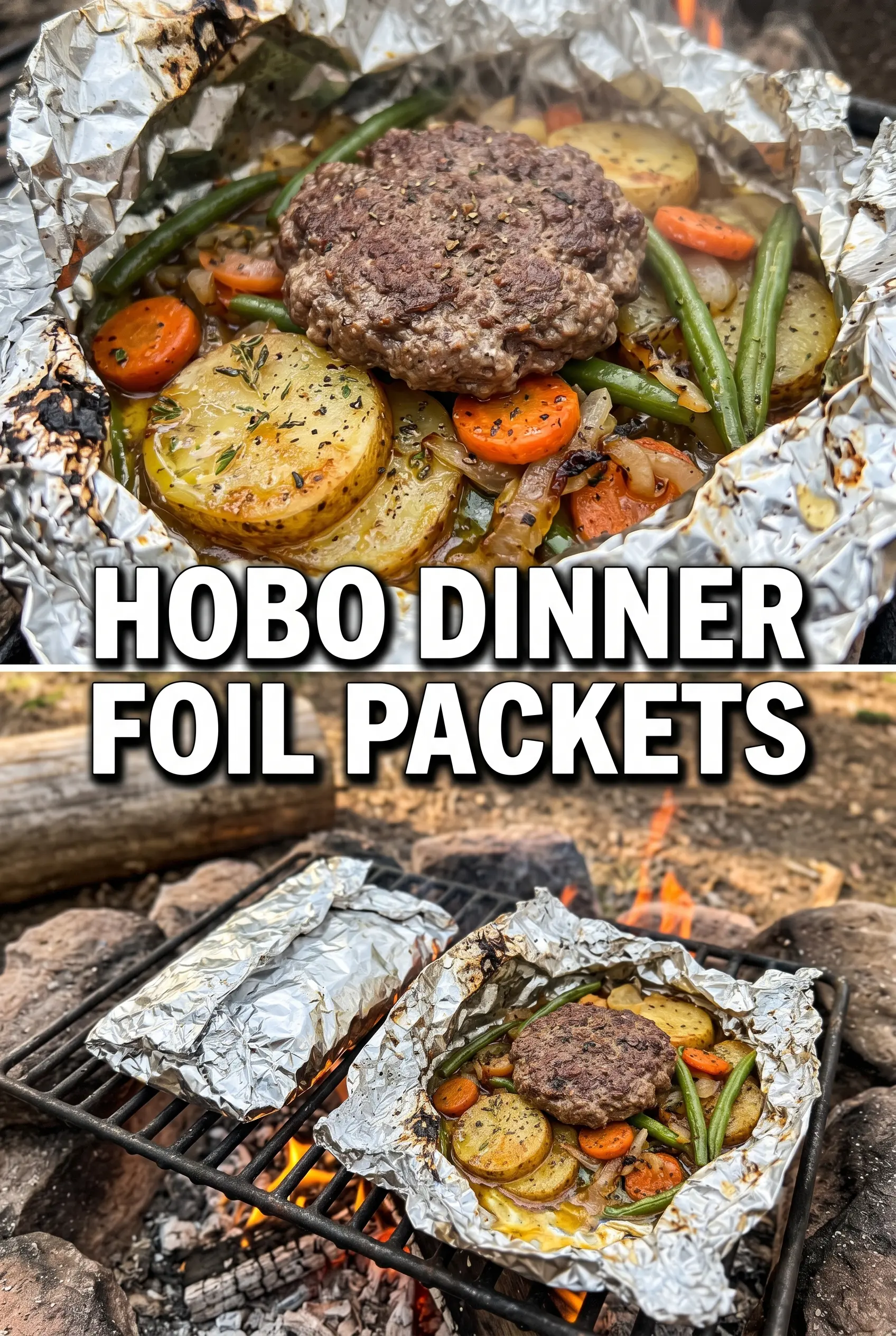
Lay each sheet of foil shiny side up, then build a flat base of potatoes, carrots, and onions before placing the beef patty on top. Keep the vegetables in one even layer instead of a loose pile so they cook at the same rate. If the patty is thick or domed, the center will lag behind the vegetables and you’ll end up overcooking the edges while waiting on the middle.
Sealing for the Fire
Bring the long sides of the foil together first, fold them over several times, then crimp the short ends tightly. The packet should be sealed, but not smashed flat. That little pocket of air lets heat circulate and steam build, which is what softens the vegetables instead of just drying the whole thing out.
Cooking Over Medium Heat
Set the packets over medium heat on a grate and flip them halfway through so one side doesn’t scorch. You’re looking for a steady sizzle, not aggressive popping or blackened spots on the foil. If the fire runs hot, move the packets to a cooler edge; too much heat on the bottom will char the foil before the potatoes finish.
Opening the Packets Safely
Let the packets rest for a few minutes, then open them slowly away from your face. The steam rush is real, and it can burn you faster than the heat from the fire. Check that the beef is cooked through and the potatoes yield when pierced with a fork; if they still feel firm, re-seal the packet and give it a few more minutes over the heat.
How to Change These Foil Packets Without Losing the Comfort Factor
Make It Dairy-Free
Swap the butter for olive oil or a dairy-free butter alternative. You’ll lose a little of that classic campfire richness, but the packets still cook up tender and satisfying. Olive oil gives a cleaner flavor, while plant-based butter keeps the closest match to the original.
Use Ground Turkey Instead of Beef
Ground turkey works, but it needs the butter to stay moist because it doesn’t render much fat of its own. Season it a little more boldly than beef, since turkey is milder. Form it into thin patties just like the beef version so it finishes on time.
Oven Packet Dinner
Bake the sealed packets on a sheet pan at 400°F for about 35 to 40 minutes. Oven heat is gentler and more even than a fire, so the timing runs a little longer. This is the best route when you want the same dinner at home without guessing at the flame.
Storage and Reheating
- Refrigerator: Store leftovers in an airtight container for up to 3 days. The potatoes soften a bit more as they sit, but the flavor stays good.
- Freezer: These packets aren’t ideal for freezing after cooking because the potatoes turn grainy and the onions lose their texture. If you want to prep ahead, freeze the raw components separately and assemble later.
- Reheating: Reheat covered in a 350°F oven or in a skillet over medium-low heat with a splash of water. The common mistake is blasting them in the microwave until the beef turns tough and the potatoes dry out.
Answers to the Questions Worth Asking
Hobo Dinner Foil Packets
Ingredients
Equipment
Method
- Divide the ground beef into 4 portions and shape each into a thin patty.
- Place 1 foil sheet on a flat surface and layer sliced potatoes, carrots, and onions.
- Set a beef patty on top of the vegetables on the foil sheet.
- Season with salt, pepper, and garlic powder, then dot the top with 1 tablespoon butter.
- Fold the foil into a sealed packet and crimp the edges tightly to prevent steam from escaping.
- Place packets on a campfire grate over medium heat for 25 to 30 minutes, flipping halfway through.
- Carefully open the packets, watching for steam, and check the beef is cooked through and vegetables are tender.
- Let packets cool for 5 minutes before serving directly from the foil.