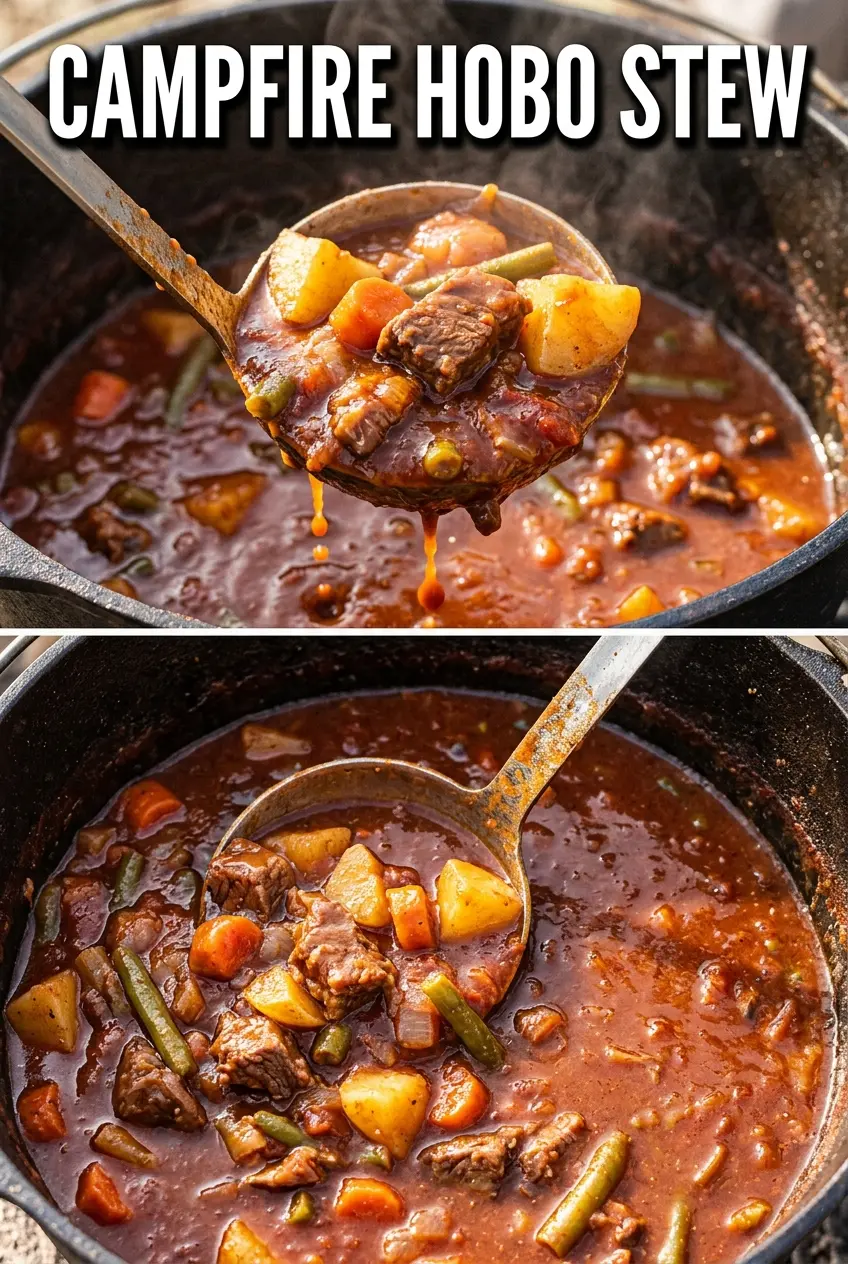
Bubbling hobo stew has a way of tasting bigger than the handful of ingredients going into it. The potatoes turn soft at the edges, the carrots soak up the broth, and the whole pot settles into that old-fashioned, stick-to-your-ribs kind of meal that works just as well over a campfire as it does on the stove at home. It’s the sort of dinner people go back to for seconds because the broth is savory, the vegetables hold their shape, and every spoonful feels complete.
What makes this version work is the order. The meat gets browned first so the pot picks up a little depth before the broth goes in, and the potatoes go in early enough to thicken the stew naturally as they cook. Canned tomatoes, corn, and green beans keep this practical and pantry-friendly, but they also add enough sweetness and body that you don’t need a long ingredient list to get a full, hearty pot.
Below, I’ve included the small details that matter most: how to keep the vegetables from going mushy, what to use if you want to swap ground beef for stew meat, and how to make this even when you’re cooking over coals instead of a burner.
I used ground beef and let it simmer the full 40 minutes, and the potatoes turned out tender without falling apart. The broth picked up so much flavor from the browned meat and paprika that my husband went back for a second bowl before I’d even sat down.
Save this hobo stew for the nights when you want a single-pot campfire dinner with tender potatoes and a rich, savory broth.
The Trick to Keeping the Pot Stew-Like, Not Watery
The most common mistake with hobo stew is adding everything at once and walking away. Canned vegetables and tomatoes release liquid fast, and if the pot never gets back to a real simmer, you end up with thin broth instead of a stew that coats the spoon. Browning the meat first gives you a stronger base, and keeping the lid on during the simmer traps enough heat to soften the potatoes without drying out the broth.
If you’re using stew meat instead of ground beef, give it a few extra minutes up front so the pieces actually brown instead of just steaming. That browning matters here because this recipe doesn’t rely on a long ingredient list or a roux to build body. The depth has to come from the pot itself.
- Browned meat — This is where the flavor starts. If the pan looks dry, a small splash of oil keeps the beef from sticking before it has a chance to color.
- Potatoes — They thicken the stew as they cook, which is why cubing them evenly matters. Large chunks stay hard while the smaller pieces break down and cloud the broth.
- Canned vegetables — They make this stew fast and practical. Drain them well so the broth doesn’t get diluted.
- Diced tomatoes — These add acidity and body. Use the canned juices too; they help the stew taste like it’s been simmering longer than it has.
What Each Ingredient Is Doing in the Pot
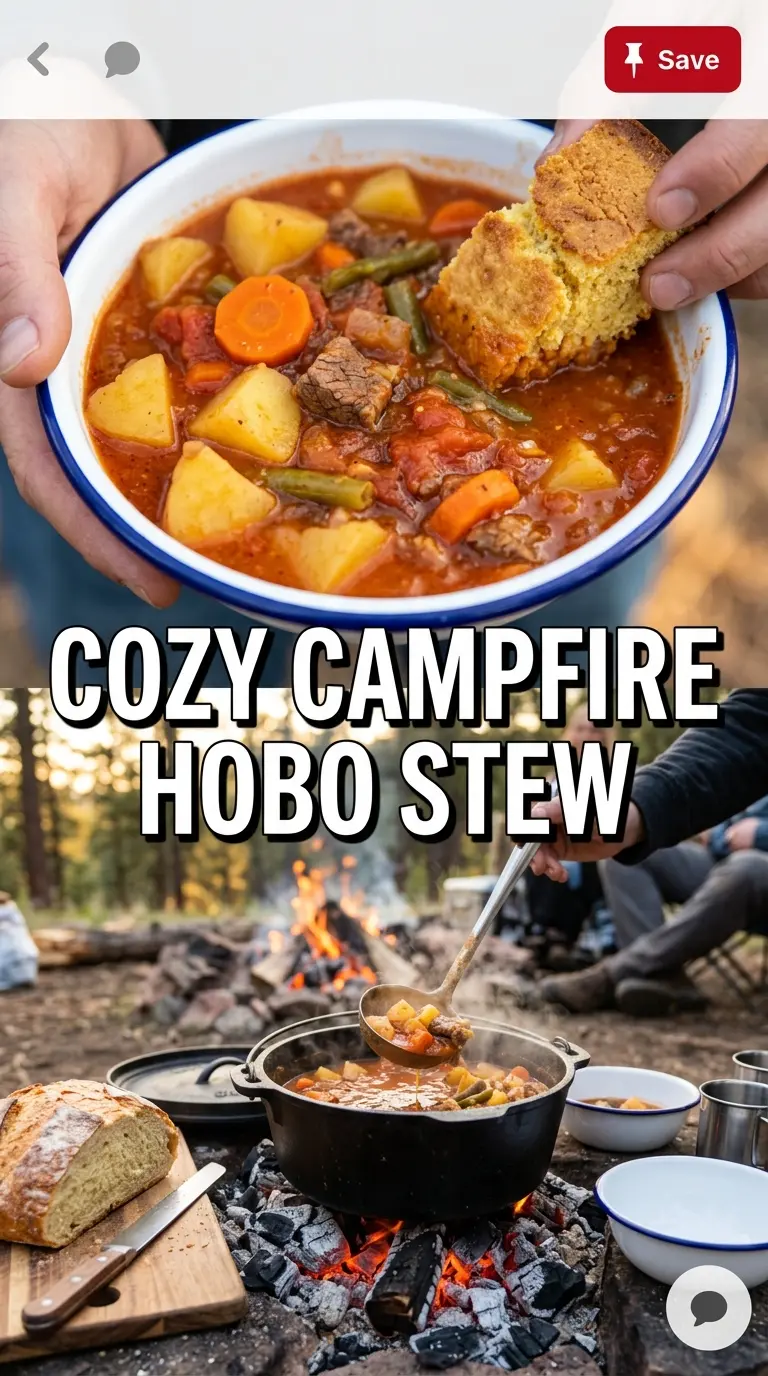
- Stew meat or ground beef — Ground beef gives you a quicker, softer finish. Stew meat brings a meatier bite, but it needs a longer simmer to turn tender. Use what fits your time and the texture you want.
- Potatoes — Russets break down a little more and help thicken the broth. Yukon Golds hold their shape better if you want firmer chunks.
- Carrots, onion, corn, and green beans — This mix gives you sweetness, texture, and color without extra work. Frozen vegetables can stand in for canned green beans or corn if that’s what you have, but add them near the end so they don’t go mushy.
- Beef broth — This carries the seasoning and ties the whole pot together. Store-bought broth is fine here, but use a lower-sodium version if you want control over the salt at the end.
- Garlic powder and paprika — Garlic powder blends smoothly into a campfire stew without needing fresh garlic handling. Paprika adds a warm, round edge that makes the broth taste deeper than the ingredient list suggests.
Building the Stew So the Vegetables Finish at the Same Time
Getting Color on the Beef
Heat the Dutch oven over your fire or burner and brown the meat until you get real color on the bottom, not just gray crumbles. If you’re using ground beef, break it up as it cooks, but leave it alone for a minute or two at a time so it can sear. If you rush this part, the stew tastes flat later because all the flavor stays trapped in pale meat instead of moving into the broth.
Adding the Vegetables in the Right Order
Once the beef is browned, add the potatoes, carrots, onion, corn, green beans, tomatoes, and broth. Stir well and scrape the bottom of the pot so none of the browned bits stay stuck. The potatoes and carrots need the full simmer time, while the canned vegetables are already cooked, so keeping everything at a gentle boil for too long is how they lose their shape.
Letting the Broth Reduce Without Burning
Bring the pot up to a boil, then lower the heat to a steady simmer and cover it. You want small bubbles around the edges, not a hard rolling boil, because hard heat turns the potatoes to mush and can scorch the bottom of the pot. Stir once or twice during the simmer, especially if you’re cooking over campfire coals where the heat can shift quickly.
Finishing the Pot
Check the potatoes and carrots for tenderness after 35 minutes. They should cut easily with a spoon, but still hold their shape. Taste the broth at the end and add salt and pepper in the final minutes, since broth and canned vegetables can change how salty the stew feels once everything has reduced together.
Use Ground Beef for a Faster Weeknight Version
Ground beef cooks quickly and gives you a softer, more familiar stew texture. It won’t have the same chewy bite as stew meat, but it also doesn’t need the long braise that tougher cuts do. If you want dinner on the table fast, this is the easiest swap.
Make It Dairy-Free and Naturally Gluten-Free
This recipe already works without dairy, and as long as your broth is gluten-free, the whole pot stays gluten-free too. That makes it one of the easiest comfort meals to serve a mixed crowd without changing the flavor or texture.
Swap in Frozen Vegetables When the Pantry Is Thin
Frozen corn and green beans work well and keep the stew from feeling too heavy. Add them in the last 10 minutes so they stay bright and don’t lose all their texture. If you use frozen carrots, cut back slightly on simmer time because they soften faster than fresh ones.
Stretch It for a Bigger Crowd
Add another potato, an extra can of vegetables, and another cup of broth if you need more servings. The stew gets a little looser, but the flavor stays balanced because the paprika and tomatoes scale well. Just use a larger pot so the ingredients can simmer instead of crowding into a boil.
Storage and Reheating
- Refrigerator: Store for up to 4 days. The potatoes soften a little more as it sits, but the stew stays hearty.
- Freezer: It freezes well for up to 3 months. Cool it completely first, and leave a little room in the container since the broth expands.
- Reheating: Warm it slowly on the stove over medium-low heat, stirring now and then. A fast boil can break up the potatoes and make the vegetables turn mushy before the center is hot.
Questions I Get Asked About This Recipe
Hobo Stew
Ingredients
Equipment
Method
- Heat a Dutch oven over a campfire and brown the stew meat until browned all over, using steady heat and keeping it in the pot. You should see dark sear marks and smell a toasted, meaty aroma.
- Add potatoes, carrots, onion, corn, green beans, diced tomatoes, and beef broth to the Dutch oven and stir to combine. The pot will look full and the liquids will begin turning opaque as starches mix in.
- Sprinkle in garlic powder and paprika, then season with salt and pepper and stir again so the spices distribute evenly. The surface should look evenly speckled with seasoning.
- Bring the stew to a boil, then reduce to a gentle simmer and cover with the lid. Keep it at a steady simmer so you see small bubbling throughout rather than aggressive rolling.
- Simmer covered for 35-40 minutes, until the vegetables are tender. The potatoes and carrots should yield easily when pressed with a spoon, and the stew should thicken slightly as it bubbles.
- Ladle the hobo stew into bowls and serve hot. It should be actively steaming with visible chunks of meat and vegetables.