Glossy, caramelized chicken kabobs with sweet soy glaze have a way of disappearing fast. The edges pick up a little char, the pineapple turns jammy on the grill, and the peppers stay just crisp enough to balance all that sticky honey garlic sauce. This is the kind of dinner that looks like you worked harder than you did.
The trick is in the marinade balance. Honey gives the kabobs that burnished finish, soy sauce brings salt and depth, and rice vinegar keeps the glaze from tasting heavy. A little sesame oil and fresh ginger round everything out, and reserving part of the marinade for basting gives you a shiny coating without risking raw chicken contamination.
Below, I’ve included the one grill timing detail that keeps the chicken juicy, plus a few smart swaps if you want to adjust the vegetables or make the recipe gluten-free.
The marinade made the chicken tender and the glaze thickened right up on the grill. I loved how the pineapple charred just enough without turning mushy.
Love the sticky honey garlic finish and grilled pineapple? Save these Asian chicken kabobs for your next easy weeknight grill dinner.
The Marinade Timing That Keeps the Glaze Sticky, Not Burnt
The biggest mistake with honey-based kabobs is putting them over heat before the marinade has had time to work, then blasting them with a glaze that scorches before the chicken cooks through. This recipe avoids that by using a short marinade window and reserving a portion for basting. The chicken picks up flavor, but the sugars don’t turn bitter on the grill.
Another detail that matters: cut the chicken and vegetables into similar sizes. If the peppers are huge and the chicken is small, one will be overdone while the other is still catching up. Pineapple belongs here because it echoes the honey and gives the skewers that sweet-savory finish, but it also needs to be cut large enough to stay on the skewer and not collapse into the grates.
- Chicken breasts — Breasts stay juicy when they’re cut into even chunks and grilled quickly. Thighs work too if you want a richer bite, but they’ll need a minute or two longer and bring a softer texture.
- Honey — This is what gives the kabobs their lacquered finish. Maple syrup can replace it in a pinch, but the glaze will taste a little darker and less floral.
- Soy sauce — Use a good everyday soy sauce here; you don’t need anything fancy. For gluten-free kabobs, tamari works cleanly without changing the texture of the marinade.
- Rice vinegar and ginger — These keep the marinade bright and keep the sweetness from flattening out. Lemon juice can step in for rice vinegar, but use a lighter hand so the flavor doesn’t turn sharp.
What Each Ingredient Is Actually Doing in This Chicken Marinade

- Chicken breasts (the lean protein) — Cut evenly so pieces cook at the same rate. Lean chicken picks up marinade flavors quickly without needing long soaking.
- Soy sauce or tamari (the savory base) — This provides umami and salt that seasons the chicken all the way through. Low-sodium versions work if that’s your preference.
- Fresh citrus juice (lime, lemon, or orange) — Acid tenderizes the surface and brings brightness. Fresh juice tastes better than bottled in marinades.
- Olive oil or sesame oil (the carrier) — Oil helps the marinade coat evenly and prevents the chicken from sticking on the grill. It also carries aromatic flavors throughout.
- Garlic and ginger (fresh aromatics) — These add pungent depth that mellows slightly when grilled, becoming sweet and mellow rather than harsh.
- Honey or brown sugar (the caramelizer) — A small amount helps the chicken brown and glaze on high heat. Too much can burn before the chicken finishes cooking.
- Fresh herbs (cilantro, parsley, or basil) — These bring freshness that prevents the marinade from tasting heavy. Add some after grilling to keep the dish bright.
- Proper marinating time (30 minutes to 4 hours) — Longer isn’t always better. Acid can soften the chicken surface if it sits too long, so find the balance between flavor and texture.
Building the Skewers So They Cook Evenly
Mixing the Marinade
Whisk the honey, soy sauce, garlic, rice vinegar, sesame oil, and ginger until the honey loosens completely and the mixture looks glossy. If the honey sits in a sticky ribbon at the bottom, it hasn’t been mixed long enough and the chicken won’t marinate evenly. Pull out 1/4 cup before the chicken goes in so you have a clean basting sauce later.
Marinating the Chicken
Add the chicken to the remaining marinade and toss until every piece is coated. One hour is enough for good flavor; four hours gives you a deeper savory-sweet edge, but don’t leave it much longer or the vinegar will start to soften the outside too much. Keep the chicken refrigerated while it marinates.
Threading the Skewers
Alternate chicken, peppers, onions, and pineapple so each skewer has a mix of sweet, savory, and fresh in every bite. Leave a little space between pieces instead of packing them tightly together; crowded skewers steam instead of browning. If you’re using wooden skewers, soak them long enough that they don’t scorch at the ends on the grill.
Grilling and Basting
Lay the kabobs over medium-high heat and let the first side cook until it releases with some color, about 5 to 6 minutes. Brush with the reserved marinade after flipping, not before, so the sugars can set instead of burning in the first minute. The chicken is done when it’s firm, opaque all the way through, and reaches 165°F in the thickest piece.
How to Adapt These Kabobs Without Losing the Sticky Glaze
Gluten-Free Version
Swap the soy sauce for tamari or a certified gluten-free soy sauce. The flavor stays deep and salty, and the glaze still caramelizes the same way on the grill.
No Pineapple on Hand
Use zucchini chunks or extra bell pepper instead. You’ll lose the sweet, juicy burst that pineapple brings, so the kabobs taste a little less bright, but the marinade still carries the dish.
Chicken Thigh Swap
Boneless skinless thighs work beautifully here if you want a juicier, more forgiving kabob. They take the glaze well, but they usually need a little extra grill time and won’t have quite the same lean bite as breast meat.
Make-Ahead Grill Prep
You can marinate the chicken and cut the vegetables a few hours ahead, then assemble the skewers just before grilling. Once threaded, they hold best if you cook them the same day; the vegetables start to soften if they sit too long on the sticks.
Storage and Reheating
- Refrigerator: Store leftovers in an airtight container for up to 3 days. The glaze stays tasty, but the vegetables soften a bit.
- Freezer: The cooked chicken freezes well, though the peppers and onions turn soft after thawing. Freeze off the skewers for the best texture.
- Reheating: Reheat gently in a covered skillet over medium-low heat or in a 300°F oven until warmed through. High heat dries the chicken and burns the sweet glaze before the center heats up.
Answers to the Questions Worth Asking
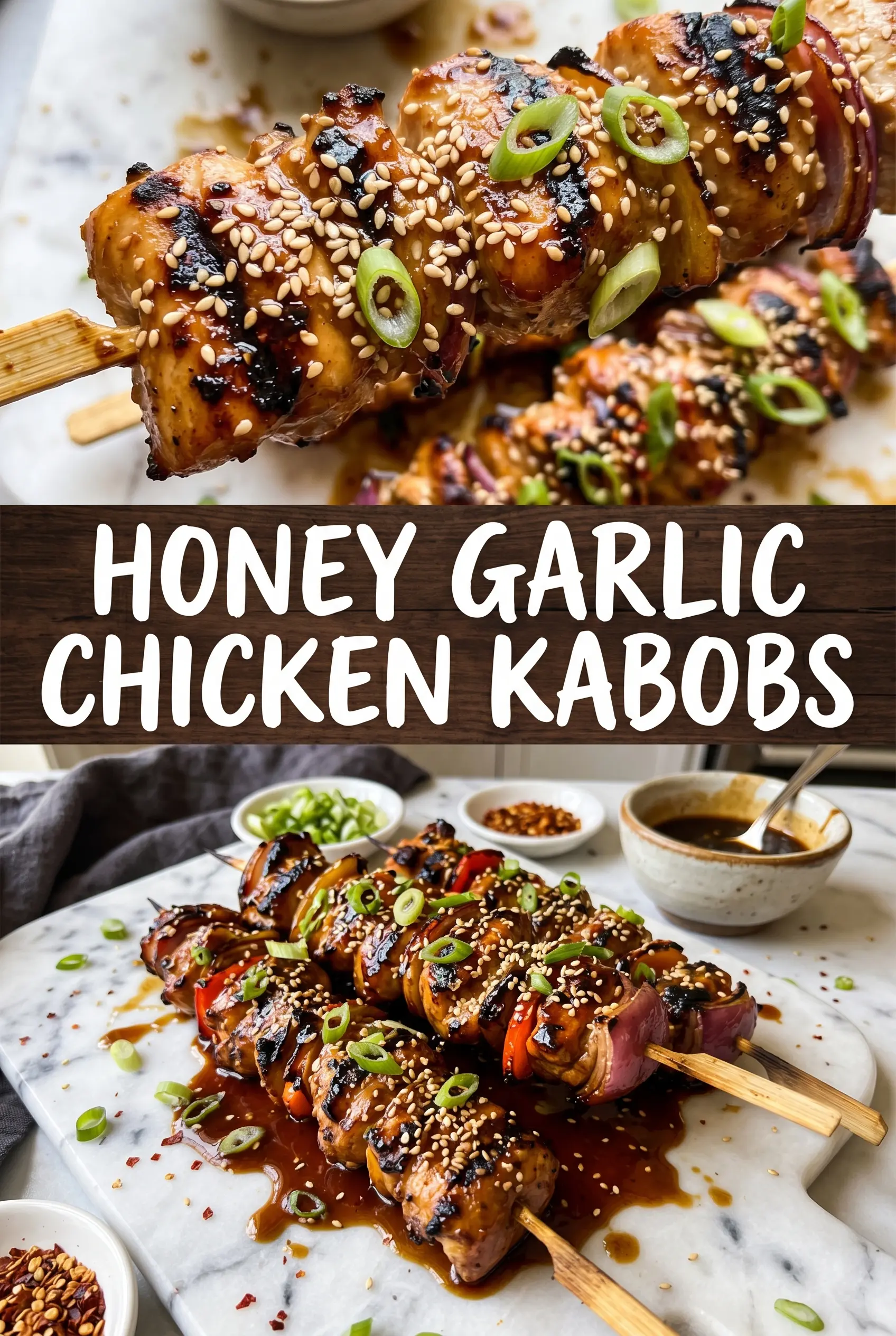
Honey Garlic Asian Chicken Kabobs
Ingredients
Equipment
Method
- Whisk honey, soy sauce, garlic, rice vinegar, sesame oil, and ginger until the mixture looks smooth and glossy.
- Reserve 1/4 cup marinade for basting, then set it aside so you can use it while the kabobs grill.
- Marinate the cubed chicken in the remaining marinade for 1-4 hours, covered, so the chicken absorbs the sweet soy flavor.
- Thread chicken, bell peppers and onions, and pineapple chunks onto soaked wooden skewers with even spacing.
- Preheat the grill and cook the skewers over medium-high heat for 5-6 minutes per side until the chicken is cooked through and the glaze looks set.
- Baste the skewers with the reserved marinade during grilling for visible shine and caramelized edges.
- Top the hot kabobs with sesame seeds and green onions for a fresh, garnished finish.