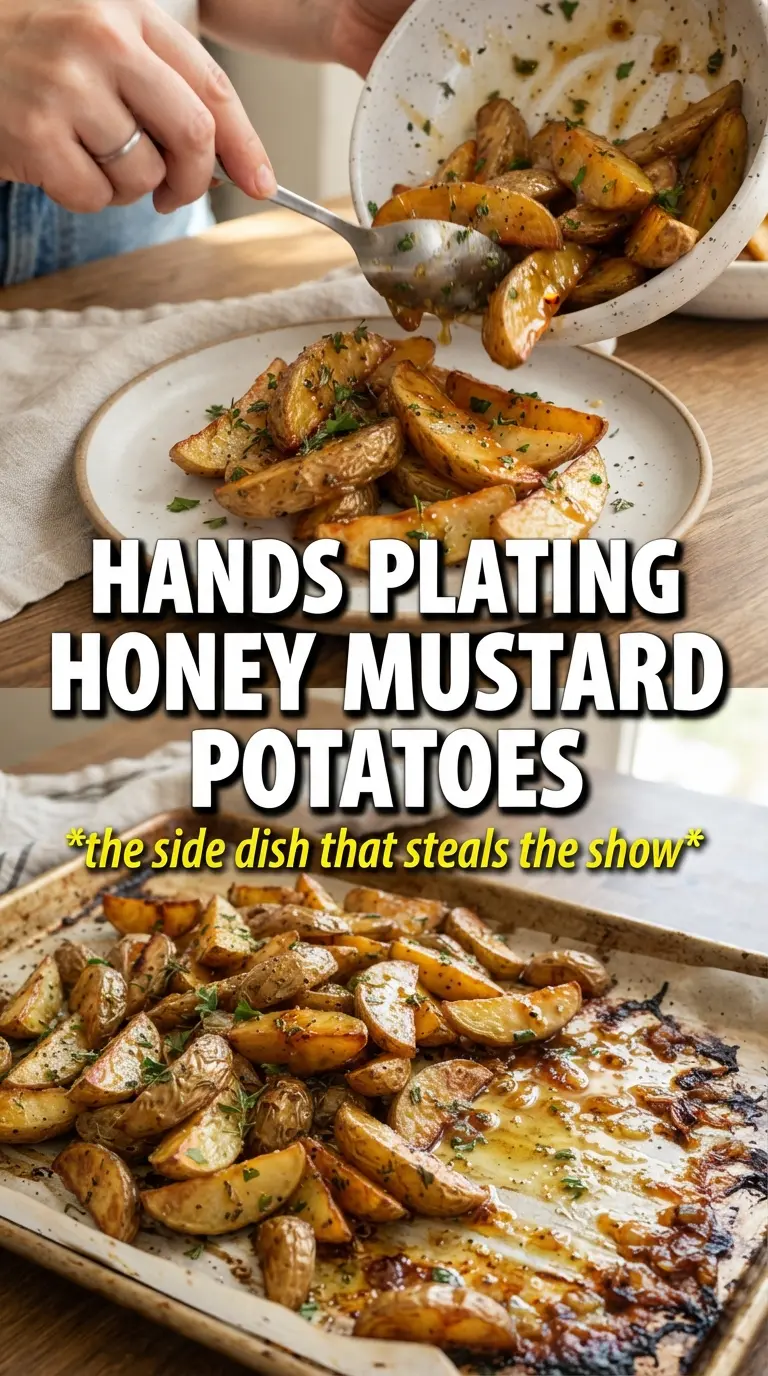
Honey mustard potatoes hit that sweet spot between crisp-edged and sticky-glazed, with caramelized spots on the pan and tender centers that hold their shape. The mustard brings sharpness, the honey cooks into a lacquer, and the rosemary keeps the whole tray from tasting one-note. They’re the kind of side dish that disappears fast because they taste bold without asking for much work.
The key here is balance. Too much honey and the potatoes turn soft before they brown; too little and you lose that glossy finish. A mix of Dijon and whole grain mustard gives you both punch and texture, while a splash of apple cider vinegar keeps the glaze from tasting heavy. Roasting at a high heat on a hot, well-spaced pan does the rest.
Below, I’ve included the small details that keep the potatoes caramelized instead of steamed, plus a few easy swaps if you need to work with what’s already in the kitchen.
The glaze clung to every wedge and the edges turned crisp instead of soggy. I used Yukon golds and they came out golden in exactly the time listed.
Save these honey mustard potatoes for the nights when you want crisp, caramelized wedges with a glossy Dijon-honey finish.
The Reason These Potatoes Caramelize Instead of Go Soft
The difference between roasted potatoes with a glossy glaze and roasted potatoes that slump into a tray of sauce comes down to moisture and spacing. The honey mustard mixture is doing two jobs at once here: coating the potatoes and helping them brown, but it can only do that if the potatoes sit in a single layer with room around them. Crowd the pan and the steam has nowhere to go.
The other detail that matters is the balance of acids and sugars. Dijon and apple cider vinegar cut through the honey, which keeps the coating lively instead of cloying. The paprika adds a little color and a faint smoky note, but it’s the high-heat roast that gives you those deeply browned edges.
- Baby potatoes or Yukon golds hold their shape and stay creamy in the center. Russets soften faster and can break apart before they caramelize.
- Dijon mustard brings sharpness and helps emulsify the glaze. It’s not interchangeable with yellow mustard if you want the same depth.
- Whole grain mustard adds little pops of texture and a rustic look. If you skip it, the flavor still works, but the coating feels smoother.
- Apple cider vinegar keeps the glaze from tasting heavy. Lemon juice works in a pinch, but it tastes brighter and less round.
What the Glaze Is Actually Doing in the Oven
- Honey is the browning agent here. Use the full amount if you want that sticky sheen; cutting it too far makes the potatoes roast dry instead of lacquered.
- Olive oil helps the potatoes roast evenly and keeps the glaze from scorching. A neutral oil works, but olive oil gives the finished dish a fuller taste.
- Garlic and rosemary add savory depth. Fresh rosemary is worth using because dried rosemary can taste woody and sharp in a short roast like this.
- Flaky salt at the end matters more than it sounds. It wakes up the glaze and gives the potatoes that last little pop of texture.
Building the Glaze and Roasting Without Burning It
Whisk the coating until it looks smooth and glossy
Mix the Dijon, whole grain mustard, honey, olive oil, vinegar, garlic, rosemary, paprika, salt, and pepper until the mixture looks unified and slightly loose. If the honey sits in streaks, it won’t coat evenly, and some potatoes will brown faster than others. The goal is a pourable glaze that clings to a spoon.
Coat every cut surface before the potatoes hit the oven
Toss the halved potatoes until every piece is slick with the mustard mixture, especially the flat cut sides. Those cut sides are where the browning happens, so if they’re bare, you lose a lot of flavor and color. A bowl gives you better control than trying to mix everything directly on the pan.
Roast hot and give the pan space to breathe
Spread the potatoes in a single layer on the lined baking sheet and roast at 425°F. Halfway through, toss them so the bottom sides get a turn against the hot pan. If they’re crowded or piled up, they’ll steam first and brown late, which is the fastest way to miss that crisp, caramelized edge.
Finish with the last layer of flavor
Once the potatoes are golden and the edges look deeply bronzed, pull them from the oven right away. Scatter parsley over the top and finish with flaky salt while they’re still hot so it sticks. The final salt and herbs brighten the glaze and make the potatoes taste freshly cooked instead of just sauced.
How to Change These Potatoes Without Losing the Good Part
Dairy-Free and Naturally Gluten-Free
This recipe already fits both needs as written, which is part of why it’s such an easy side dish to keep in rotation. The glaze gets its body from mustard, oil, and honey instead of butter or flour, so you don’t lose texture by keeping it simple.
Make It Sharper or Sweeter
For a more mustard-forward version, add another teaspoon of Dijon and cut the honey back slightly. For a sweeter glaze, add an extra teaspoon of honey, but don’t push it much further or the potatoes will brown too quickly before they soften.
Swap the Herb, Keep the Structure
Rosemary can be swapped for thyme if that’s what you have, and the dish will still roast beautifully. Thyme reads a little softer and more herbal, while rosemary gives a piney edge that stands up well to the honey.
Storage and Reheating
- Refrigerator: Store leftovers in an airtight container for up to 4 days. The potatoes will soften a bit, but the flavor holds well.
- Freezer: They can be frozen, but the texture turns softer after thawing. If you freeze them, spread them out on a tray first, then transfer to a bag once solid.
- Reheating: Reheat on a baking sheet in a hot oven or air fryer until the edges crisp back up. The microwave works in a pinch, but it wipes out the caramelized texture.
Answers to the Questions Worth Asking

Honey Mustard Potatoes
Ingredients
Equipment
Method
- Preheat the oven to 425F and line a baking sheet. Make sure the sheet is ready so the potatoes start roasting right away.
- Whisk Dijon mustard, whole grain mustard, honey, olive oil, apple cider vinegar, garlic, rosemary, smoked paprika, salt, and pepper in a bowl until smooth. Stop when the glaze looks evenly combined and coats the whisk.
- Toss the halved baby potatoes or Yukon golds in the honey mustard mixture. Ensure every cut side is glossy with glaze.
- Spread the potatoes in a single layer on the prepared baking sheet. Roast at 425F for 30-35 minutes, tossing halfway, until caramelized and golden, with browned edges visible.
- Finish the honey mustard potatoes with fresh parsley and flaky salt. Serve right away while the glaze is still tacky and the potatoes are crisp at the edges.


