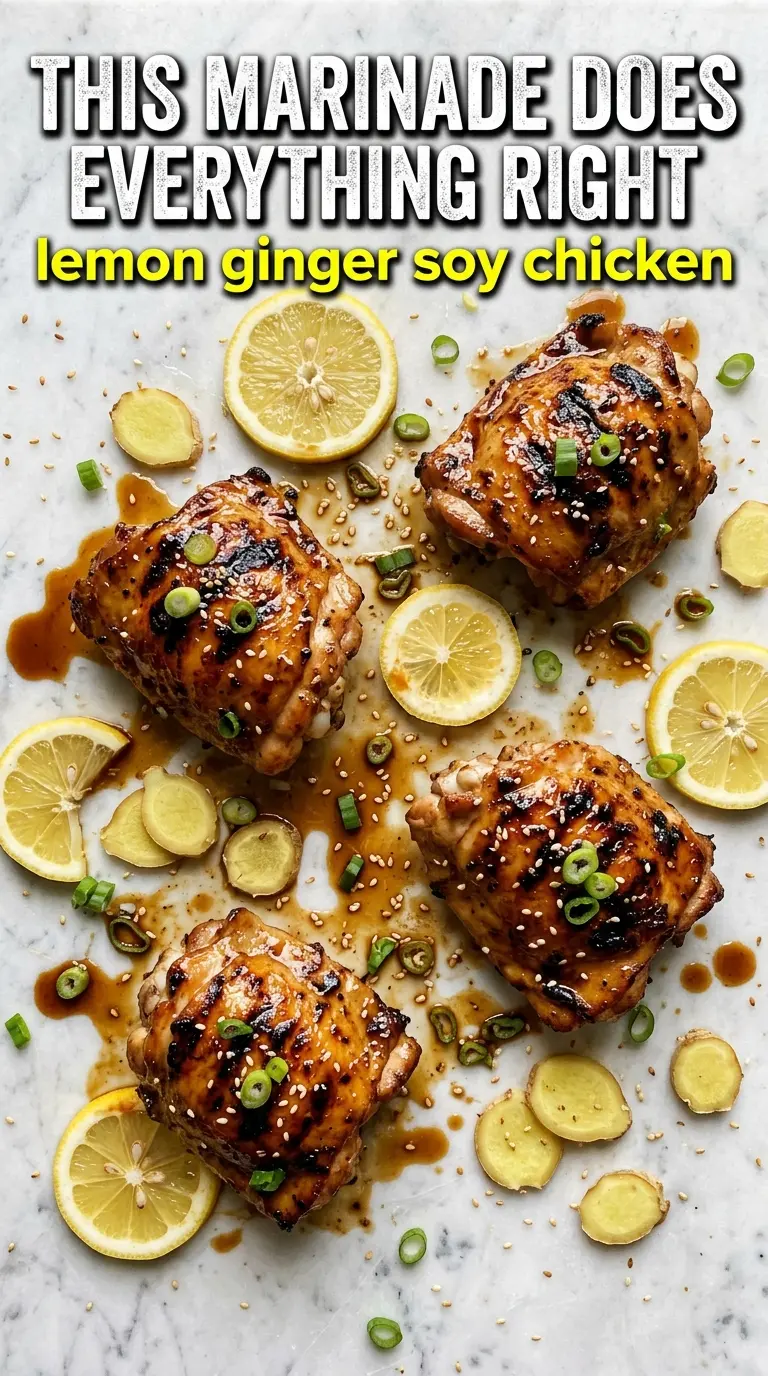
Juicy grilled chicken with a lacquered, caramelized surface and a bright hit of lemon and ginger is the kind of dinner that disappears fast. The marinade pulls double duty here: it seasons the meat all the way through and helps the outside take on those dark grill marks that make the whole dish taste finished. You get savory, citrusy, a little sweet, and just enough ginger heat to keep each bite interesting.
What makes this version work is the balance. Soy sauce brings salt and depth, lemon juice keeps the flavor clean and lively, and a small amount of honey helps the chicken brown without turning sticky or burnt. Ginger and garlic do most of the aromatic heavy lifting, but the sesame oil is what rounds everything out at the end. I’ve found that this recipe is best when the chicken has time to sit in the marinade long enough to pick up flavor, but not so long that the lemon starts to toughen the surface.
Below, I’ve included the marinade details that matter most, the grill cues I watch for, and a few swaps that still keep the chicken tender and bright.
The chicken came off the grill with real char on the outside and stayed juicy inside. I marinated it for about 3 hours, and the lemon-ginger flavor went all the way through without tasting sharp.
Save this lemon ginger soy grilled chicken for the nights when you want bold marinade flavor and a fast grill finish.
The Marinade Needs Acid, But Not Too Much Time
Lemon is the ingredient that makes this chicken taste bright instead of heavy, but it’s also the part that can work against you if the chicken sits too long. A couple of hours is the sweet spot. Long enough for the soy, ginger, garlic, and citrus to get into the meat, but not so long that the surface starts to get a cured, firm texture.
- Chicken thighs stay juicier and are more forgiving on the grill. Breasts work too, but they dry out faster, so pull them as soon as they hit 165°F.
- Soy sauce gives you salt, umami, and color. Low-sodium soy works if that’s what you keep on hand, but the marinade may taste flatter unless you season the chicken lightly before grilling.
- Fresh ginger matters here. Ground ginger won’t give you the same sharp, clean bite or the little flecks that cling to the chicken as it cooks.
- Honey is there for browning, not sweetness. Skip it and the chicken will still taste good, but you’ll lose some of the glossy caramelized edges.
What Each Ingredient Is Actually Doing in This Recipe
- Primary ingredient (the foundation) — This is the star of the dish and carries most of the flavor. Quality matters here more than anywhere else.
- Salt and pepper (the seasonings that matter most) — These enhance all other flavors without masking them. Apply generously; underseasoned dishes taste flat.
- Fat (butter, oil, or from the meat) — Fat carries flavors and keeps the dish from tasting dry. It’s also what makes food taste delicious and satisfying.
- Acid (lemon, lime, vinegar, or tomato) — Acid brightens the dish and prevents it from tasting one-dimensional or heavy. It also helps balance rich flavors.
- Aromatics (garlic, onion, ginger) — These add depth and complexity. They mellow and become sweet when cooked, different from their raw state.
- Spices or herbs (the personality) — These give the dish its character and make it distinctive. Toast them to bloom their flavors or add fresh ones to finish.
- Supporting ingredients (vegetables, proteins) — These add texture, nutrition, and complementary flavors. They should support the star ingredient, not compete with it.
- Proper cooking technique (heat, time, stirring) — Even with great ingredients, technique determines the final result. Pay attention to temperature and timing.
Getting the Grill Marks Without Drying Out the Meat
Mixing the Marinade Until It Smells Balanced
Whisk the soy sauce, lemon juice, zest, olive oil, ginger, garlic, honey, sesame oil, salt, and pepper until the honey disappears and the mixture looks glossy. Taste a drop if you want to check the balance before the chicken goes in; it should taste salty, tart, and aromatic, not harsh. If the lemon seems aggressive in the bowl, it settles down after marinating. Don’t skip the oil, because it helps carry the flavors and keeps the surface from sticking to the grill.
Marinating for Flavor, Not Mushiness
Coat the chicken well and refrigerate it for 2 to 6 hours. Two hours gives you good flavor, while 6 hours deepens the seasoning without pushing the lemon too far. If you leave it overnight, the texture can start to turn tight at the edges, especially on thinner chicken breasts. Flip the bag or dish once halfway through so the marinade reaches every part of the meat evenly.
Grilling to Color Before It Overcooks
Preheat the grill to medium-high and let the grates get hot before the chicken goes on. You want a steady sizzle the moment the meat touches the grates; that’s what helps form those browned ridges. Grill for 6 to 8 minutes per side, depending on thickness, and resist the urge to move it around too soon. If the chicken sticks, it usually means it needs another minute before it’s ready to release cleanly.
Resting Before the First Slice
Pull the chicken once it reaches 165°F in the thickest part, then let it rest for 5 minutes. That pause matters because the juices settle back into the meat instead of running out onto the cutting board. Slice against the grain if you want the most tender bite, especially with chicken breasts. The finish should be juicy, lightly charred, and coated with enough marinade flavor to stand on its own.
Small Changes That Still Keep the Chicken Bright and Juicy
Make It With Thighs for a More Forgiving Grill
Chicken thighs hold up better to the heat and stay juicy even if your grill runs a little hotter than expected. They also pick up the marinade flavor beautifully, with a richer bite than breasts. If you want the easiest version of this recipe, thighs are the one to choose.
Use Tamari for a Gluten-Free Version
Tamari swaps in cleanly for soy sauce and keeps the same deep savory backbone. The flavor is a touch smoother and less sharp, which works well with the lemon and ginger. Just check the label if you need the recipe fully gluten-free.
Skip the Honey for a Lower-Carb Grill Dinner
Leaving out the honey makes the marinade a little less glossy and the chicken won’t brown as deeply, but the main flavors still land. If you want a touch of sweetness without sugar, use a small amount of monk fruit or another heat-stable sweetener that measures like honey. The key is keeping it light so the grill surface doesn’t scorch.
Scale It for Bowls, Salads, or Meal Prep
This chicken keeps its flavor when sliced, so it works well for grain bowls, chopped salads, and packed lunches. Cook the chicken a minute or two less if you plan to reheat it later, because gentle carryover heat will finish the job. The marinade flavor stays brightest when you slice it after resting and chill it in shallow containers.
Storage and Reheating
- Refrigerator: Store in an airtight container for up to 4 days. The lemon flavor softens a bit as it sits, but the chicken stays useful for salads, rice bowls, and wraps.
- Freezer: Cooked chicken freezes well for up to 2 months. Slice it first and freeze it in a flat layer so it thaws evenly.
- Reheating: Warm it gently in a covered skillet over low heat with a splash of water or broth, or microwave in short bursts. High heat dries out grilled chicken fast, especially breasts.
Answers to the Questions Worth Asking

Lemon Ginger Soy Marinated Grilled Chicken
Ingredients
Equipment
Method
- Whisk together soy sauce, lemon juice, lemon zest, olive oil, ginger, garlic, honey, sesame oil, salt, and pepper until evenly combined and glossy.
- Coat chicken with the marinade, cover, and refrigerate for 2-6 hours so the ginger pieces and lemon fragrance cling to the surface.
- Preheat the grill to medium-high heat and keep it steady so the chicken sears quickly.
- Grill chicken for 6-8 minutes per side, turning once, until the internal temperature reaches 165°F.
- Rest grilled chicken for 5 minutes before slicing so the juices redistribute and the center stays tender.