Golden, herb-roasted chicken thighs with blistered cherry tomatoes, briny olives, and creamy feta land on the table with the kind of pan juices that beg for bread or rice. The skin turns crisp, the lemons perfume the whole dish, and the tomatoes collapse just enough to turn sweet and jammy around the edges. It’s the kind of dinner that tastes like you worked harder than you did.
The trick here is getting enough acid and olive oil into the marinade without drowning the chicken. Lemon juice and zest wake everything up, but the chicken still needs time to sit so the herbs and garlic can settle into the surface. Baking the thighs skin-side up at a fairly high temperature gives you a browned top before the tomatoes fully break down, and the quick broil at the end softens the feta just enough without turning it dry or gritty.
Below, I’ve included the small details that matter most: when to add the olives, why the feta goes on at the end, and what to do if you want to make this ahead for an easier dinner later in the week.
The chicken skin came out crisp, the tomatoes turned jammy in the pan juices, and the feta melted just enough to coat everything without disappearing. I added the olives halfway through like you said and they kept their bite.
Love the golden chicken skin, lemony pan juices, and feta finish? Save this Mediterranean Chicken Thighs recipe for an easy one-pan dinner with big flavor.
The Reason the Chicken Stays Juicy While the Skin Turns Crisp
Bone-in, skin-on thighs are the right cut here because they handle a hot oven without drying out. The skin protects the meat, and the fat renders slowly enough to give you that crisp, lacquered top instead of the rubbery skin people blame on “bad chicken.” If you use boneless thighs, they’ll cook faster and still taste good, but you lose that built-in shield and the finished dish won’t have the same rich, roasted character.
The other thing that matters is oven temperature. A 425°F oven gives the skin enough heat to brown before the tomatoes collapse completely. If you roast too low, the chicken steams in the pan juices instead of roasting in them, and that’s the difference between a glossy finish and a soft, pale one.
What Each Ingredient Is Actually Doing in This Dish

- Chicken thighs — Bone-in, skin-on thighs give you the best texture and the most forgiving cook. The skin protects the meat from drying out, and the bone helps the thighs stay juicy through the full roast.
- Olive oil — This carries the garlic, herbs, lemon zest, and salt across the chicken so the seasoning clings instead of sliding off. Use a decent olive oil here because you’ll taste it in the pan juices.
- Lemon juice and zest — Juice brings the brightness, but zest is what makes the marinade taste deeply lemony instead of just sharp. If you only use juice, the flavor is thinner and less layered.
- Garlic, oregano, and thyme — These are the backbone of the dish. Dried oregano holds up well in the oven, and thyme adds a little woodsy note that keeps the marinade from tasting one-dimensional.
- Cherry tomatoes, olives, and feta — The tomatoes soften into sweet, savory juices, the olives bring salt and bite, and the feta finishes the dish with creamy tang. Add the olives later so they keep their shape, and add the feta at the end so it warms without drying out.
- Lemon slices and parsley — The sliced lemon perfumes the pan as it roasts, and parsley brightens the final dish right before serving. Fresh parsley matters more than dried here because it lifts the richness at the end.
How to Build the Pan So the Chicken Roasts, Not Steams
Mix the Marinade First
Whisk the olive oil, lemon juice, lemon zest, garlic, oregano, and thyme until the mixture looks cloudy and well blended. That matters because the oil helps carry the herbs across the chicken instead of leaving them in clumps at the bottom of the bowl. Coat the thighs evenly, then let them sit for 30 minutes while the oven preheats. If you skip the rest, the seasoning stays on the surface and the lemon never has time to settle into the meat.
Set Up the Pan for Roasting
Arrange the chicken skin-side up in a baking dish and tuck the lemon slices and cherry tomatoes around it, not under it. The chicken needs direct heat on the skin, and the tomatoes need space to burst without flooding the pan right away. If everything is crowded, the vegetables release too much liquid too soon and the skin softens before it browns. A little open space around each thigh makes a big difference.
Add the Olives at the Right Moment
Bake the chicken for 25 minutes until the skin is starting to turn deep gold, then scatter the olives around the pan. Adding them later keeps them from wrinkling down into little salty pellets and lets them stay plump enough to give the dish contrast. Return the pan to the oven for another 10 minutes so the olives warm through and the chicken finishes cooking. If the skin is still pale at that point, give it a minute or two under the broiler before you add the feta.
Finish With Feta and a Quick Broil
Crumble the feta over the top and broil for about 3 minutes, just until the edges soften and the top gets a little color. Don’t walk away during this part; feta can go from warm and creamy to dry and browned fast under the broiler. The goal is a little melt around the edges, not a fully molten cheese blanket. Finish with parsley as soon as the pan comes out so the herbs stay bright.
How to Adapt This When You Need a Different Finish
For a dairy-free version
Leave off the feta and finish with a handful of chopped parsley plus an extra squeeze of lemon. You lose the creamy-salty finish, but the dish stays bright and satisfying, and the olives carry more of the savory weight.
For boneless chicken thighs
Use boneless thighs and start checking them a few minutes earlier, since they cook faster and won’t need as much time to reach doneness. You’ll get a softer, quicker dinner, but the skinless texture is less crisp and the pan juices won’t be quite as rich.
For a lower-carb plate
Serve the chicken over sautéed greens, cauliflower rice, or roasted zucchini instead of bread or pasta. The sauce from the pan is still the star, so choose a base that catches those juices without competing with the lemon and feta.
For make-ahead meal prep
Marinate the chicken up to 24 hours ahead, then assemble and bake when you’re ready. The flavor deepens nicely, but don’t add the tomatoes and feta early or they’ll lose their shape and turn the whole pan watery.
Storage and Reheating
- Refrigerator: Store leftovers in an airtight container for up to 4 days. The chicken stays juicy, though the skin will soften.
- Freezer: It freezes well without the feta for up to 2 months. Thaw overnight in the fridge and add fresh feta after reheating for the best texture.
- Reheating: Warm covered in a 325°F oven until heated through, then uncover for the last few minutes to help the skin re-crisp. The common mistake is blasting it in the microwave, which turns the skin rubbery and the tomatoes mushy.
Questions I Get Asked About This Recipe
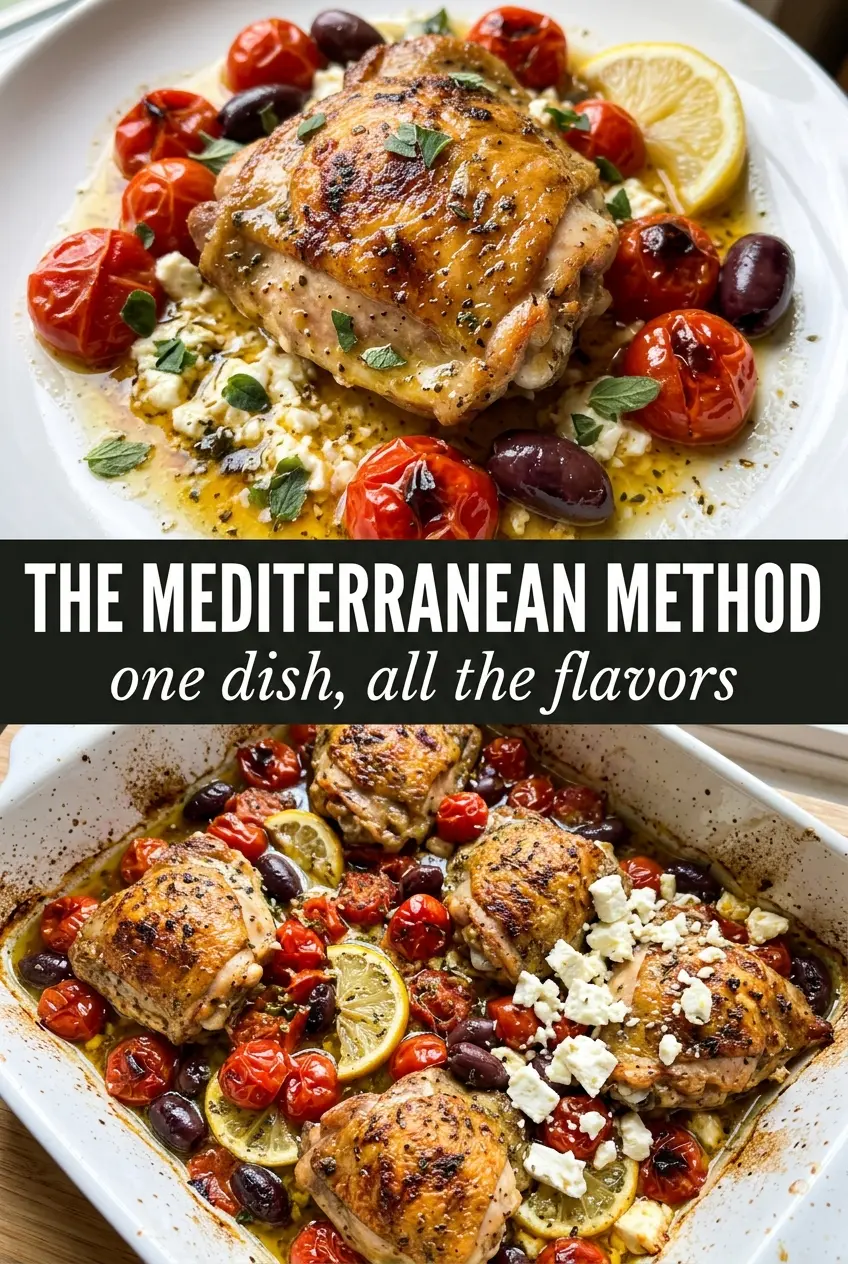
Mediterranean Chicken Thighs
Ingredients
Equipment
Method
- Whisk olive oil, lemon juice, lemon zest, garlic, dried oregano, and dried thyme until evenly combined and fragrant.
- Marinate the chicken in the lemon herb mixture for 30 minutes, then preheat the oven to 425°F.
- Place the chicken skin-side up in a baking dish and tuck lemon slices and cherry tomatoes around it.
- Bake at 425°F for 25 minutes, until the skin begins to turn golden and the tomatoes start to blister.
- Scatter kalamata olives around the chicken and return to the oven for 10 more minutes to deepen browning.
- Crumble feta over the top and broil for 3 minutes, until the cheese softens and lightly browns.
- Garnish with fresh parsley just before serving for a bright herbal finish.