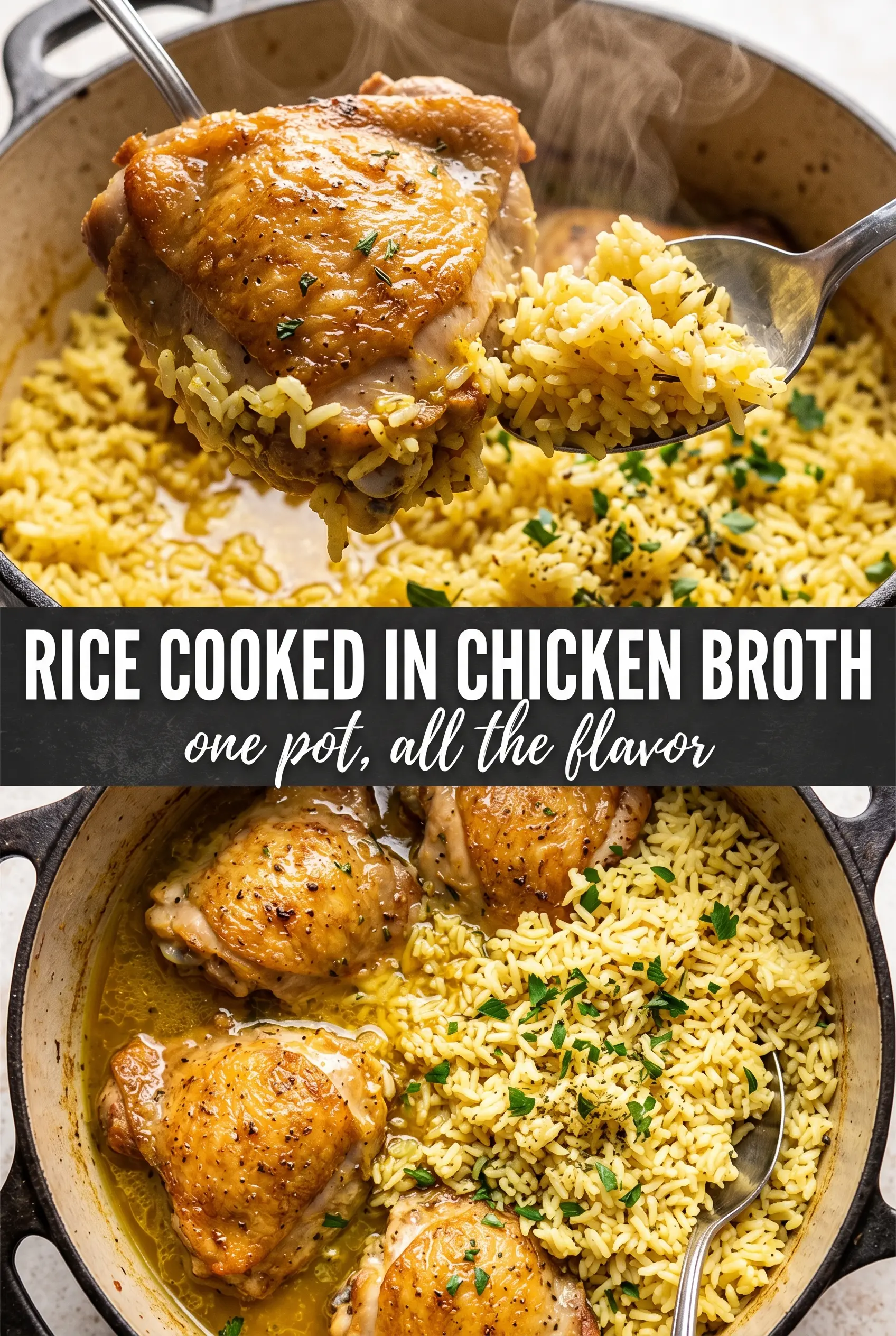
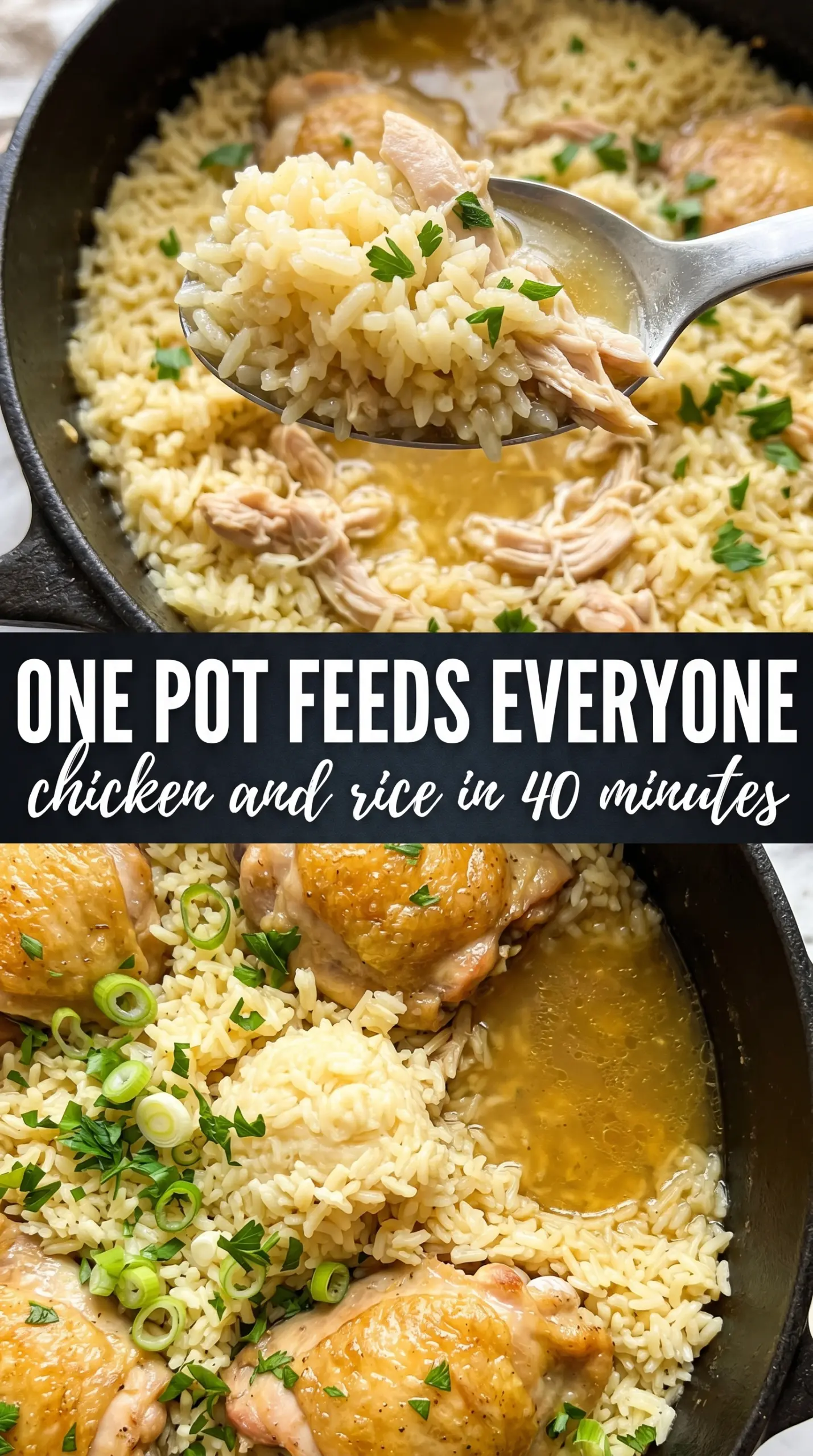
Golden chicken thighs over fluffy rice is one of those dinners that disappears fast because it gets the basics exactly right: crisped skin, tender meat, and grains that soak up every bit of seasoned broth from the pot. The rice isn’t an afterthought here. It cooks in the chicken drippings, so each spoonful tastes like it had a lot more work done to it than it actually did.
The key is giving the chicken a real sear before the rice goes in. That first step builds flavor in the bottom of the pot, and the rice picks it up as it simmers. Rinsing the rice helps keep the texture separate and light, while a tight lid and low heat keep the bottom from scorching before the grains are tender.
Below, you’ll find the small details that keep this one-pot chicken and rice from turning mushy or bland, plus a few ways to adapt it when you need to work with what’s in the fridge.
The rice came out fluffy, not mushy, and the chicken skin stayed golden even after the simmer. I loved that the carrots and peas cooked right in without turning everything into a soft casserole.
Love the golden chicken thighs and fluffy herb rice? Save this one-pot chicken and rice for a fast, comforting dinner with almost no cleanup.
The Part That Keeps the Rice Fluffy Instead of Gummy
The biggest failure point in one-pot chicken and rice is rushing the liquid stage. If the rice goes into a pot that’s too wet or the heat stays too high, the grains swell unevenly and the bottom starts to scorch before the top is done. This version avoids that by toasting the rice briefly in the fat and spices first, then cooking it covered over low heat so the steam can do its job evenly.
Bone-in thighs matter here because they hold up to the longer cook without drying out, and they leave enough fat behind to season the rice properly. Long grain white rice is the right choice for a loose, separate texture. Short-grain rice or something like arborio will turn creamy and heavy, which isn’t what you want in this dish.
What Each Ingredient Is Actually Doing in This Chicken Dish
- Chicken (pat dry for browning) — Room temperature cooks more evenly. Even pieces ensure uniform doneness.
- Oil or butter (the browning medium) — High-heat oil essential for proper searing. Creates pan flavor.
- Seasonings (salt, pepper, spices) — Apply generously. Chicken carries the entire flavor profile.
- Aromatics (garlic, ginger, herbs) — Cook with fat to bloom flavors. Become the foundation.
- Sauce or braising liquid (if using) — This keeps chicken moist. Balance richness with acid.
- Vegetables (if using) — Layer by cooking time so everything finishes together.
- Acid (vinegar, wine, lime, or pineapple) — This brightens and prevents one-dimensional flavor.
- Proper doneness (165°F internal temperature) — Use thermometer for accuracy. Overcooked is dry.
What Each Ingredient Is Actually Doing in This Dish
- Bone-in chicken thighs — They stay juicy through the simmer and give the pot the rich drippings that flavor the rice. Boneless thighs will work in a pinch, but they cook faster and won’t leave quite as much depth behind.
- Long grain white rice — This is what keeps the finished dish light and fluffy. Rinse it until the water runs mostly clear so the extra surface starch doesn’t make the pot sticky.
- Chicken broth — This is where most of the flavor comes from once the lid goes on. Use a broth you’d actually sip; a weak broth makes the whole dish taste flat.
- Turmeric, paprika, and cumin — These season the rice from the inside instead of relying on a sprinkle at the end. Turmeric gives the rice that warm golden color, paprika rounds out the chicken, and cumin adds a little earthiness that keeps the dish from tasting one-note.
- Carrot, onion, garlic, and peas — The onion and garlic build the base, the carrot softens into the rice, and the peas go in at the end so they stay bright. If you swap the peas for another frozen vegetable, add it during the last few minutes so it doesn’t turn limp.
- Fresh parsley — It’s not just garnish. The fresh finish cuts through the richness and keeps the pot from tasting heavy.
How to Build the Pot So the Bottom Doesn’t Burn
Season and Sear the Chicken First
Season the thighs with paprika, garlic powder, salt, and pepper before they hit the pan so the spices can toast a little in the oil. Put them skin-side down in hot oil and leave them alone until the skin is deep golden and releases cleanly, which takes about 5 to 6 minutes. If the pan feels crowded, cook in batches; crowded chicken steams instead of searing, and you’ll lose the browned bits that make the rice taste like something special. Remove the chicken once it’s browned, but don’t drain the pot.
Cook the Vegetables in the Chicken Fat
Onion, carrot, and garlic go into the same pot after the chicken comes out. Stir them just until the onion softens and the garlic smells sweet, not sharp. If the garlic starts browning before the onion is tender, the heat is too high and it will turn bitter later. Those bits stuck to the bottom should loosen as the vegetables release moisture.
Toast the Rice Before the Broth Goes In
Stir the rinsed rice into the vegetables along with the turmeric and cumin, then cook it for a minute or two until the grains look glossy. That short toast helps the rice keep its shape during the simmer instead of collapsing into paste. Pour in the broth and scrape the bottom of the pot well so the browned bits dissolve into the liquid. Nestle the chicken back on top, skin-side up, so the skin stays above the rice and has a chance to stay intact.
Steam, Rest, and Finish With the Peas
Bring the pot to a boil, then drop it to low and cover it tightly. If the lid doesn’t fit snugly, the rice will dry out before it cooks through, so use a heavy lid or a layer of foil under the lid if yours is loose. Once the rice is tender and the liquid is absorbed, stir in the frozen peas, cover again, and let the pot rest off the heat for 5 minutes. That last rest finishes the rice gently and keeps the peas bright instead of overcooked.
How to Adapt This for a Different Pantry
Make It Dairy-Free Without Changing Anything
This recipe is already dairy-free as written, which is part of why it works so well for a weeknight dinner. Just keep the broth and seasoning straightforward, and you’ll still get a rich result from the chicken drippings and the covered steam.
Use Boneless Thighs for a Faster Finish
Boneless thighs cook faster and are easier to serve, but they won’t give you quite the same deep flavor in the pan. Sear them for less time so they don’t dry out, then shorten the covered simmer and start checking the rice a few minutes early.
Swap in Brown Rice Only If You Plan for It
Brown rice needs more liquid and a much longer cook time, so this isn’t a direct swap. If you use it, expect a firmer texture and add more broth, then cook until the grains are tender instead of stopping at the 20 to 25 minute mark.
Storage and Reheating
- Refrigerator: Store leftovers in an airtight container for up to 4 days. The rice will firm up a little as it chills, but it stays flavorful.
- Freezer: This freezes better than a lot of rice dishes if you cool it first and portion it tightly. The peas may soften a bit after thawing, but the texture still holds up for a made-ahead meal.
- Reheating: Reheat covered with a splash of broth or water over low heat on the stove, or microwave in short bursts with the lid slightly ajar. The common mistake is blasting it on high heat, which dries out the chicken and turns the rice tough before the center is hot.