Pot roast twice baked potatoes turn leftover roast into a full dinner with crisp potato skins, a creamy filling, and a layer of melted cheddar that goes golden under the broiler. The best part is how the gravy ties everything together. It keeps the shredded beef juicy and gives the filling a savory depth that plain mashed potatoes can’t match.
This version works because the potato flesh gets mashed with enough butter, sour cream, and milk to stay fluffy, but not so much that it turns loose. The beef goes in warm and coated with gravy before it’s folded into the filling, which keeps it from tasting like separate leftovers stuffed into a shell. Then the whole thing bakes long enough to heat through before the broiler finishes the top with a little crispness.
Below, I’ve included the small details that keep the potato shells sturdy, plus the best way to handle the gravy if yours is a little thick or a little thin.
The potato shells stayed sturdy and the filling was creamy without being soupy. I used a little extra gravy on top at the end and it tasted like a whole new meal, not just leftovers.
Save these pot roast twice baked potatoes for the night you want leftover roast turned into a crispy, cheesy main dish.
The Reason the Potato Shells Stay Crisp Instead of Getting Soggy
The shell matters just as much as the filling here. If you scoop the potatoes too thin, they collapse under the beef mixture; too thick, and the whole thing eats heavy instead of balanced. A quarter-inch shell gives you enough structure to hold the filling while still leaving a layer of potato under every bite.
The other thing that keeps this dish from turning soft is the warm filling. Cold mashed potato and cold roast take longer to heat, which means more time in the oven and a greater chance that the skins steam instead of crisp. The roast should go in hot enough to loosen into the mash, but not so hot that it melts the dairy and makes the filling greasy.
What Each Ingredient Is Doing in These Stuffed Potatoes
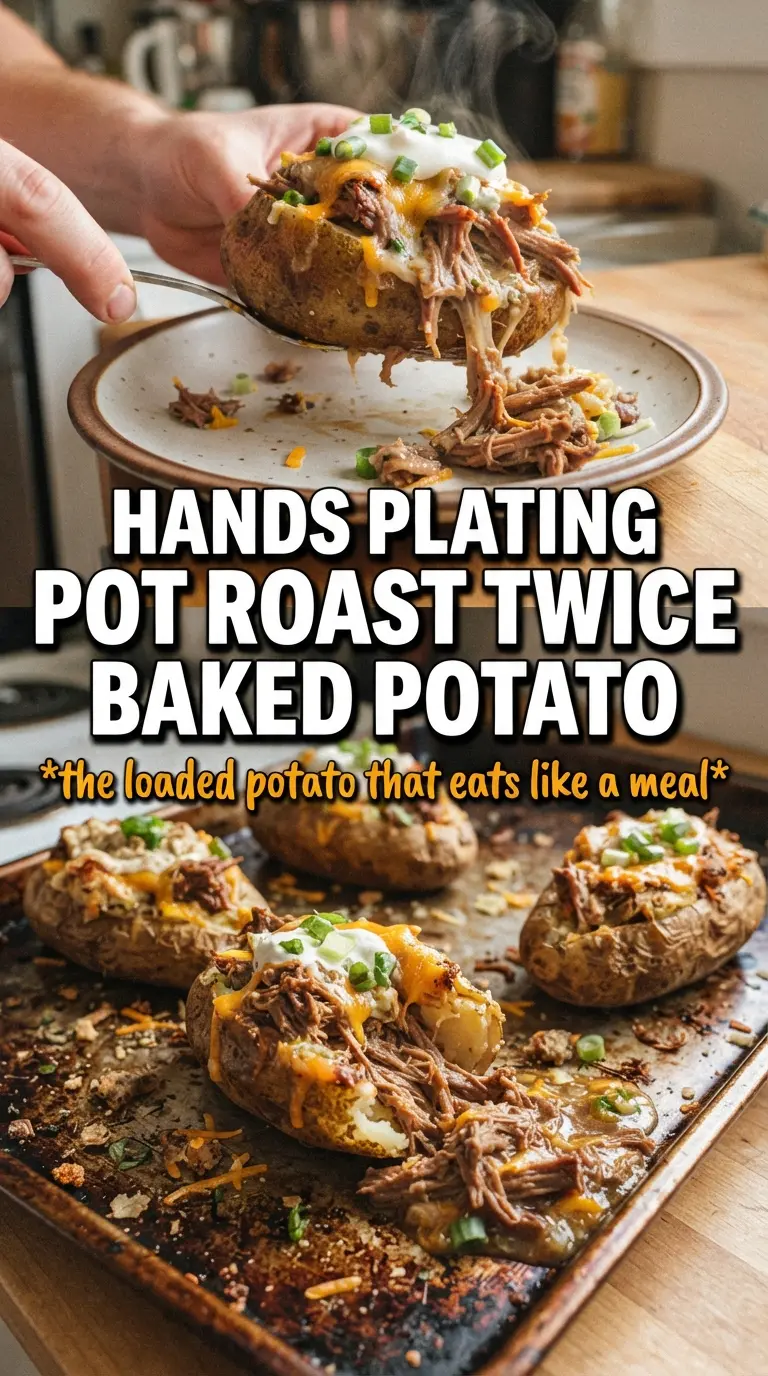
- Russet potatoes — Their starchy flesh mashes light and fluffy, and their thick skins hold up better than waxier potatoes. Use the largest ones you can find so there’s enough shell left after scooping.
- Leftover pot roast — This is where the deep beef flavor comes from. Shred it finely so it blends into the potato mixture instead of clumping into big chunks.
- Pot roast gravy — Gravy keeps the beef moist and seasons the filling all the way through. If yours is very thick, loosen it with a splash of beef broth before mixing so it coats the meat evenly.
- Sour cream, butter, and milk — These turn the potato flesh into a smooth, spoonable filling. Sour cream adds tang and body, while butter gives richness and milk controls the texture; use the full amount of milk only if your potatoes are especially dry.
- Sharp cheddar — Sharp cheddar cuts through the richness and still tastes bold after baking. Pre-shredded cheese works, but freshly shredded melts cleaner and gives you a smoother top.
- Green onions — They finish the dish with a fresh bite that keeps the filling from feeling too heavy. Add them after baking so they stay bright.
Building the Filling So It Stays Creamy After Baking
Preparing the Potato Shells
Cut the baked potatoes in half lengthwise and scoop out the centers, leaving a sturdy border all the way around. A spoon works best if you leave a little potato attached to the skin instead of scraping it completely clean. That thin layer helps the shell stay intact when you fill and bake it again.
Mashing the Base
Mash the potato flesh with butter, sour cream, milk, and one cup of cheddar until the mixture is smooth and cohesive. Stop as soon as it looks fluffy and spreadable; if you overwork it, the potatoes can turn gluey. Season it before adding the beef so the dairy base tastes complete on its own.
Adding the Pot Roast
Warm the shredded roast in its gravy first, then fold it into the potato mixture. This step keeps the meat juicy and helps the gravy distribute evenly instead of pooling at the bottom of the shells. If the mixture looks stiff, add a spoonful more gravy or a splash of broth until it mounds easily.
Baking and Finishing Under the Broiler
Fill the shells generously and top with the remaining cheddar. Bake until the centers are hot and the cheese has melted, then broil just long enough to spot the tops with deep golden brown. Watch it closely during the broil; cheese goes from browned to burnt fast, especially in a shallow dish.
How to Adapt These Pot Roast Twice Baked Potatoes for Different Leftovers
Use Braised Beef Instead of Pot Roast
Braised beef works the same way as leftover pot roast as long as it shreds easily. If the meat was cooked with a lighter sauce, add a little beef broth and extra salt so the filling still tastes rich and savory.
Make It Gluten-Free
This recipe is naturally close to gluten-free, but the gravy is the place to check. Use a gluten-free gravy or a broth thickened with cornstarch, and the rest of the dish stays the same.
Swap the Cheddar for a Smokier Finish
Smoked cheddar or a little Gruyère gives the potatoes a deeper, more savory top. The tradeoff is that the flavor becomes less classic and a little less sharp, so use it only if you want the cheese to lean richer than tangier.
Make the Filling Even Creamier
For a softer, more casserole-like filling, add an extra tablespoon or two of sour cream and a splash more milk. That makes the centers looser and richer, but it also means the potatoes won’t hold quite as much height in the shells.
Storage and Reheating
- Refrigerator: Store in an airtight container for up to 3 days. The shells soften a little, but the flavor holds up well.
- Freezer: Freeze wrapped individual potatoes for up to 2 months. Thaw in the refrigerator before reheating for the best texture.
- Reheating: Reheat in a 350F oven until hot in the center, usually 15-20 minutes depending on size. The oven keeps the skins from getting limp; the microwave will warm them, but it also steams the shell and softens the top.
Questions I Get Asked About This Recipe
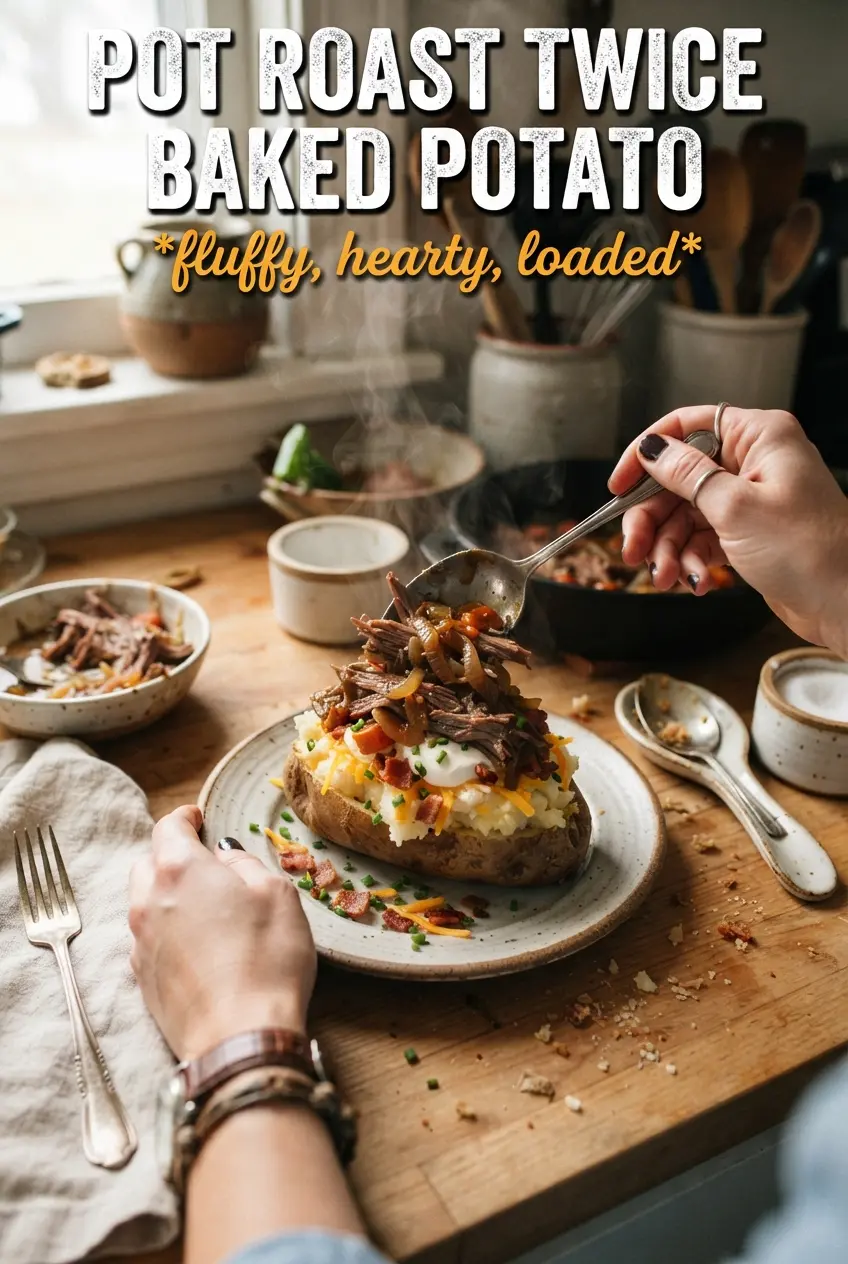
Pot Roast Twice Baked Potato
Ingredients
Equipment
Method
- Preheat the oven to 400F, and set a sheet pan ready to bake the stuffed potato shells. Use a hot oven so the filling heats through and the cheese bubbles quickly.
- Halve the baked russet potatoes lengthwise and scoop out the flesh, leaving a 1/4-inch shell. Keep the shells intact so they hold the pot roast filling.
- Mash the potato flesh with unsalted butter, sour cream, milk, 1 cup cheddar, salt, and pepper until smooth. Stop when creamy and lump-free so the filling stays silky.
- Warm the pot roast in the gravy, then fold it into the mashed potato mixture until evenly combined. The filling should look cohesive and spreadable.
- Fill the potato shells with the pot roast mixture, then top each with the remaining cheddar. The surface should be well covered so it melts and browns.
- Bake the stuffed shells for 15-18 minutes at 400F until heated through and the cheese is bubbly. Watch for active bubbling in the center as the visual cue.
- Broil for 2 minutes until golden, then top with green onions and drizzle with extra gravy. Look for browned cheese edges and a glossy gravy finish.


