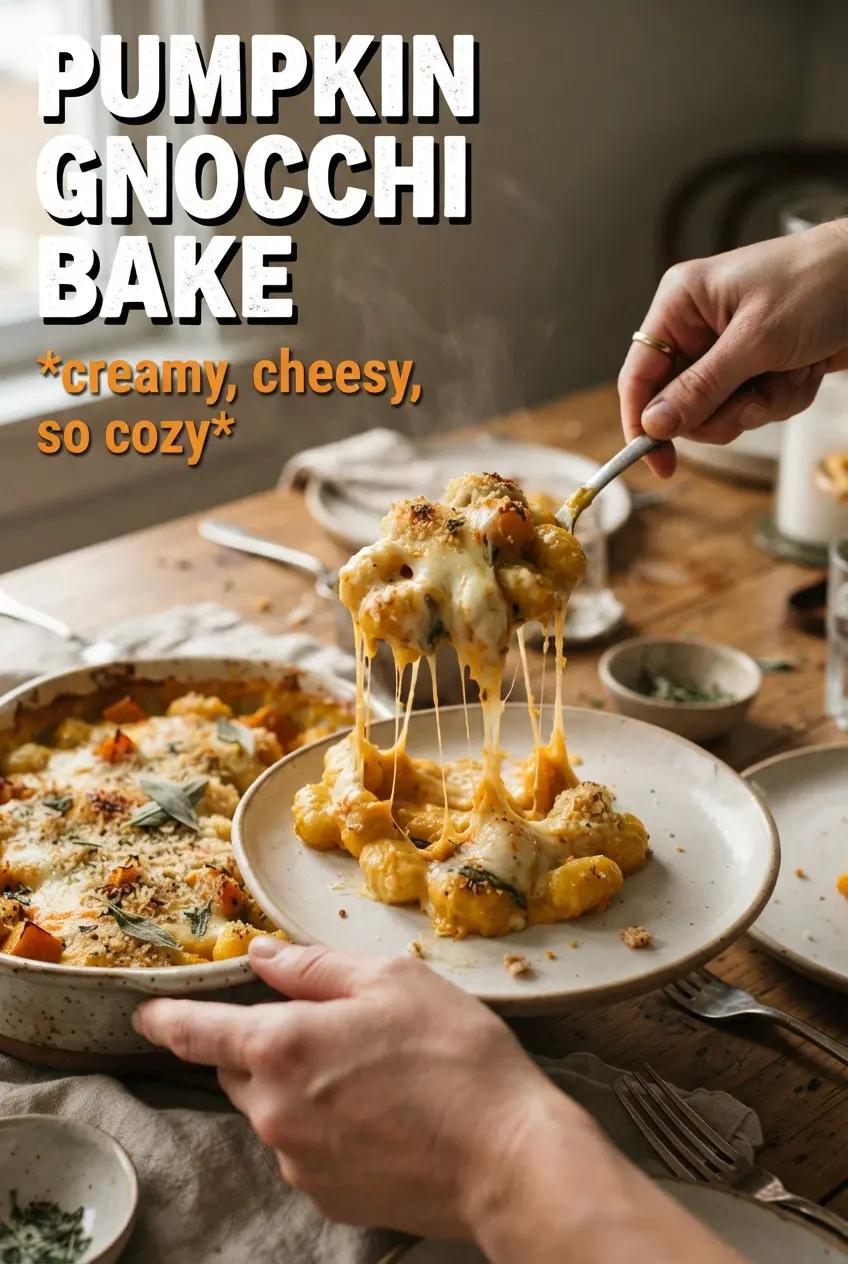
Pillowy gnocchi baked in a creamy pumpkin sauce land on the table with a bubbling edge and a browned, cheesy top that cracks under the spoon. The sausage brings enough savory depth to keep the pumpkin from reading sweet, and the sage turns the whole dish into something warm, rich, and grounded. It eats like a cozy casserole, but the texture stays close to a good pasta bake instead of turning dense or heavy.
The trick here is that the gnocchi go into the baking dish uncooked. They finish in the sauce, where they absorb flavor as they soften, which keeps them tender instead of gummy. The pumpkin, cream, and broth make a sauce that starts loose and then tightens in the oven, so the dish ends up silky without needing a roux. Browning the sausage first matters too, because those browned bits carry a lot of the final flavor.
Below, I’ve included the small details that keep the sauce smooth, the gnocchi tender, and the topping properly golden. If you’ve ever had a baked gnocchi dish turn thick before the center cooked through, the process notes will help with that.
The gnocchi stayed pillowy and the pumpkin sauce baked up thick and creamy without getting grainy. I loved that the sausage browned in the pan first because every bite tasted seasoned, not flat.
Save this Pumpkin Gnocchi Bake for the night you want a creamy sausage pasta bake with a golden mozzarella crust.
The Part That Keeps the Gnocchi Tender Instead of Mushy
Gnocchi can go wrong in baked dishes when they sit too long in a heavy sauce before the oven gets a chance to do its job. Here, the sauce is loose enough to coat every piece without trapping it in a paste, and the whole pan bakes uncovered so excess moisture can evaporate. That keeps the top browned and the center creamy instead of soupy.
The other thing that matters is the sausage. If you skip browning it well, the final dish tastes flat, even with pumpkin and parmesan in the mix. Those browned bits from the skillet dissolve into the sauce and give the whole pan a deeper, more savory base.
- Uncooked potato gnocchi — These finish beautifully in the oven as long as the sauce has enough moisture. Shelf-stable gnocchi work fine here; just don’t boil them first or they’ll go too soft.
- Pumpkin puree — Use plain pumpkin puree, not pumpkin pie filling. The puree gives body and a mild sweetness that plays well with sausage and sage, while pie filling would throw the seasoning off completely.
- Heavy cream — This is what gives the sauce its plush texture. Half-and-half can work in a pinch, but the sauce will be thinner and a little less stable once baked.
- Fresh sage — Fresh sage matters here because it tastes earthy and a little peppery after baking. Dried sage will work if that’s what you have, but use less and rub it between your fingers before adding it to wake it up.
- Mozzarella and parmesan — Mozzarella brings the stretch and the browned top, while parmesan sharpens the flavor. Pre-shredded mozzarella works, but freshly shredded melts more evenly and gives you a cleaner crust.
Building the Sauce Before the Oven Takes Over
Browning the Sausage
Cook the sausage in a large skillet until it is deeply browned and no longer pink, breaking it into small crumbles as it cooks. You’re looking for actual color, not just cooked-through meat, because that browning is where a lot of the flavor comes from. Drain the excess fat, but leave a little in the pan if it tastes clean; that helps carry the sage and garlic. If the sausage steams instead of browns, the finished bake will taste softer and less seasoned.
Waking Up the Garlic and Sage
Melt the butter in the same skillet and add the garlic and sage for just a minute or two. The garlic should smell fragrant, not sharp, and the sage should darken slightly and scent the whole pan. If the garlic starts to brown, pull the pan off the heat right away; burnt garlic will linger all through the sauce. This short step is what makes the pumpkin taste savory instead of one-note.
Loosening the Pumpkin Base
Stir in the pumpkin, cream, broth, nutmeg, and red pepper flakes, then let the sauce simmer for 3 to 4 minutes. It should look glossy and pourable, not stiff. If it seems too thick before baking, add a splash more broth so the gnocchi have enough liquid to cook properly. Season now, because pumpkin needs salt to stop tasting muted.
Baking Until the Top Turns Golden
Toss the uncooked gnocchi and sausage in the sauce directly in the baking dish, then scatter the cheeses evenly over the top. Bake at 400F until the sauce is bubbling around the edges, the gnocchi are tender, and the cheese is bronzed in spots. If the top is browning before the center is hot, lay a piece of foil loosely over the dish for the last stretch. Let it sit for a few minutes before serving so the sauce settles and thickens.
How to Adapt This Pumpkin Gnocchi Bake for the Table You Have
Dairy-Free Version with a Different Finish
Use full-fat coconut milk or an unsweetened dairy-free cream in place of the heavy cream, and swap the cheeses for a good melting plant-based blend. The sauce will taste a little lighter and less tangy, but it still bakes up creamy if you don’t overdo the liquid. Watch the top closely, since dairy-free cheese often browns faster.
Gluten-Free With No Other Changes
Many potato gnocchi are already gluten-free, but you need to check the package because some brands use wheat flour. If you use a certified gluten-free gnocchi, the rest of the recipe stays the same. The bake still needs enough sauce to keep the gnocchi from drying out, so don’t reduce the cream or broth just because the gnocchi are GF.
Vegetarian Version with More Depth
Skip the sausage and add sautéed mushrooms, or use a plant-based sausage crumble if you want the same hearty shape. Without the sausage, the dish leans softer and a little sweeter, so the extra browning from mushrooms or the seasoning in a meatless sausage helps keep it balanced. A pinch more parmesan at the end helps replace some of the savory edge.
Storage and Reheating
- Refrigerator: Store leftovers in an airtight container for up to 4 days. The sauce will thicken as it chills.
- Freezer: It freezes reasonably well for up to 2 months, though the texture of the gnocchi softens a bit after thawing. Freeze in portions for the best results.
- Reheating: Reheat covered in a 350F oven until hot, or warm single portions in the microwave with a splash of broth or cream. The extra liquid keeps the sauce from turning paste-like as it reheats.
Answers to the Questions Worth Asking
Pumpkin Gnocchi Bake
Ingredients
Equipment
Method
- Preheat oven to 400F and grease a 9x13 baking dish so the gnocchi won’t stick.
- Brown the Italian sausage in a large skillet, then drain the fat and set the crumbled sausage aside.
- Melt the butter, then sauté the garlic and chopped sage for 1-2 minutes until fragrant and lightly softened.
- Add pumpkin puree, heavy cream, chicken broth, nutmeg, and red pepper flakes, stirring until combined.
- Simmer the sauce for 3-4 minutes, then season with salt and pepper until well balanced.
- Toss the uncooked potato gnocchi directly in the baking dish with the pumpkin sauce, then add the browned sausage and mix to coat.
- Scatter mozzarella and parmesan over the top for a browned, cheesy crust.
- Bake at 400F for 30-35 minutes until the gnocchi are cooked through, the sauce is bubbling, and the cheese is golden, with a visibly set top layer.


