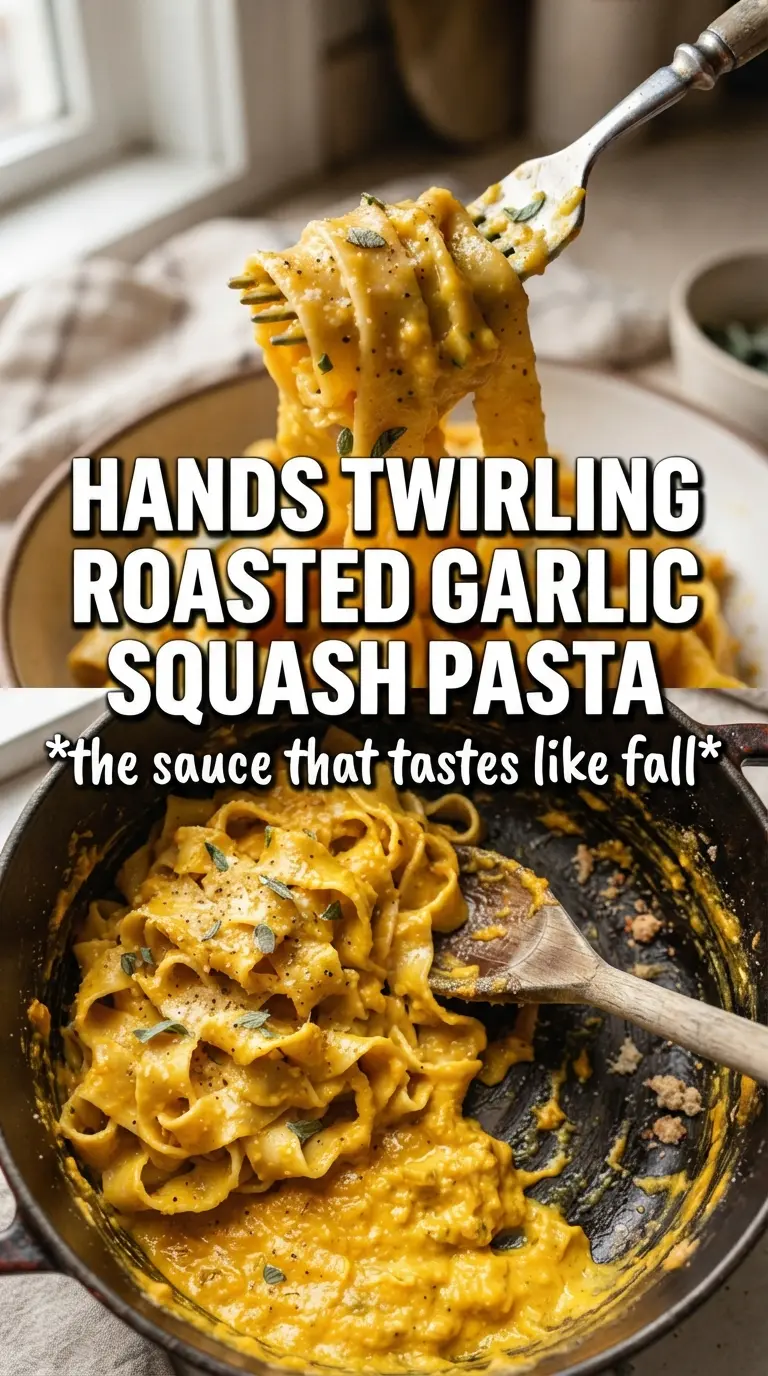
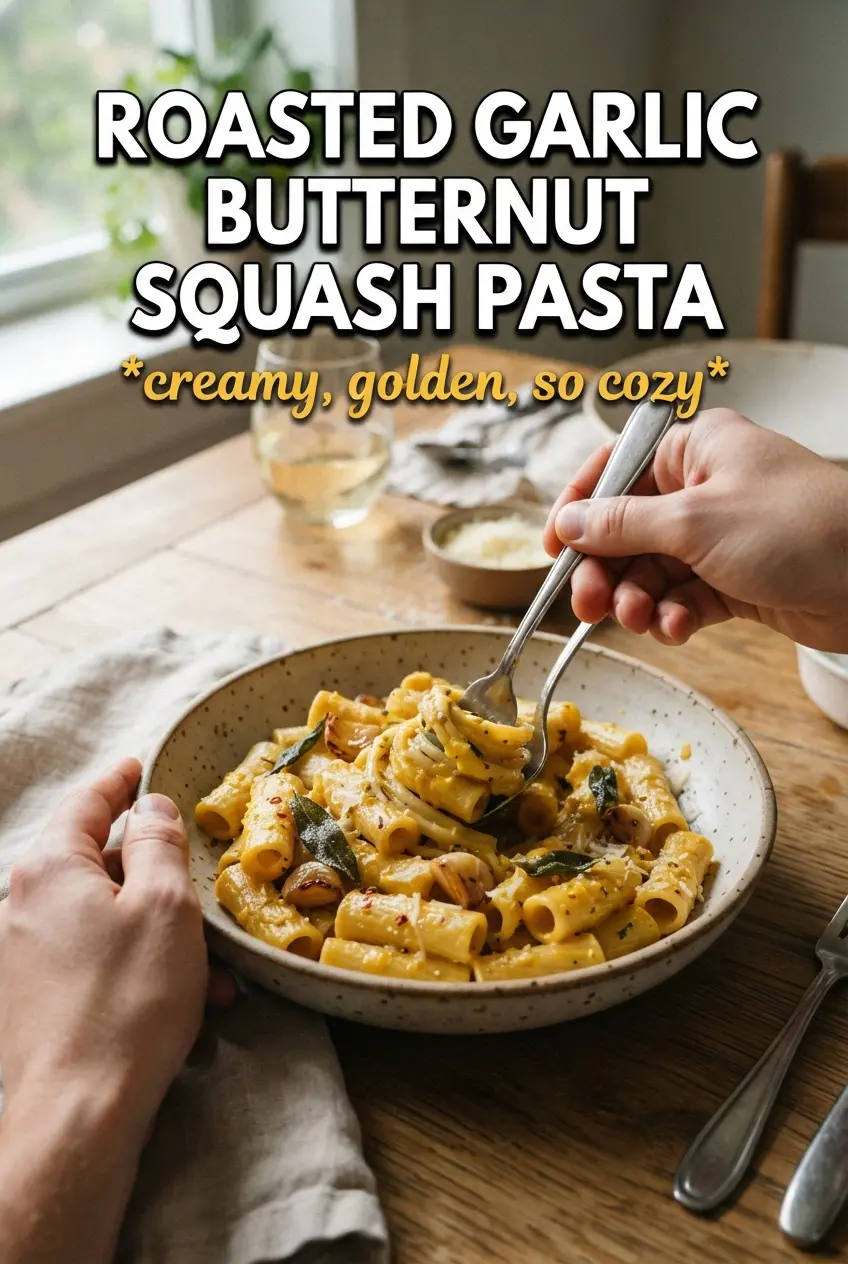
Roasted garlic butternut squash pasta lands on the table with a sauce that tastes like it took all afternoon, even though most of the work happens quietly in the oven. The squash turns silky and sweet, the garlic melts into it, and the whole thing coats rigatoni in a glossy orange sauce that clings instead of sliding off. Crispy sage and parmesan finish it with just enough salt and crunch to keep every bite interesting.
The key here is roasting both the squash and the garlic until they’re fully soft, not just browned at the edges. Under-roasted squash gives you a grainy sauce, and pale garlic tastes sharp instead of mellow. Blending the sauce until completely smooth before it ever hits the pan is what gives this pasta that restaurant-style texture without any flour or roux.
Below, I’ve included the little details that matter most: how to keep the sauce smooth, what to do if it seems too thick, and the one swap that still works when you don’t have heavy cream on hand.
The squash turned into the smoothest sauce I’ve made without adding flour, and the roasted garlic gave it this sweet, mellow depth. Even my picky kid ate the crispy sage on top.
Save this roasted garlic butternut squash pasta for the nights when you want a silky sauce, crisp sage, and almost no cleanup.
The Reason the Sauce Stays Silky Instead of Grainy
This sauce works because the squash is roasted until the flesh collapses completely, not just until the outside looks browned. That full roast gives you a puree that blends smooth without needing extra starch or a long simmer. The roasted garlic matters just as much; once it softens and sweetens in the oven, it blends into the sauce instead of leaving sharp little bits behind.
The other thing that keeps the sauce stable is the order of operations. Blend the sauce before it goes back on the heat, then simmer it briefly just long enough to marry the cream, broth, and parmesan. If you boil it hard after the cheese goes in, the sauce can turn chalky or split, especially if your parmesan is finely grated and melts fast.
What Each Ingredient Is Doing in This Pasta
- Butternut squash — This is the body of the sauce, and it needs to be fully tender so it blends into something velvety instead of fibrous. A small squash is easier to manage and usually sweeter than a huge one.
- Garlic — Roasting the whole head turns it soft, sweet, and spreadable. Raw garlic won’t give you the same mellow depth and will overpower the sauce.
- Heavy cream — This gives the sauce its plush texture and helps it coat the pasta without thinning out. Half-and-half can work in a pinch, but the sauce will be lighter and slightly less rich.
- Vegetable broth — This loosens the puree without making it watery and keeps the sauce from tasting heavy. Use a good-tasting broth here, since it’s a big part of the final flavor.
- Parmesan — Stir it in off a hard boil so it melts into the sauce instead of turning gritty. Freshly grated parmesan melts far better than the shelf-stable powdery kind.
- Fresh sage — Frying it quickly in oil gives you a crisp, aromatic topping that cuts through the sweetness of the squash. Don’t skip this if you want the dish to feel finished.
Building the Sauce, Tossing the Pasta, and Finishing Without Overcooking
Roasting the Squash and Garlic Until They Collapse
Brush the squash halves and the garlic head with olive oil, then roast them at 425°F until the squash is completely soft and the garlic squeezes out like paste. The squash should feel almost jammy when you pierce it with a fork, and the garlic cloves should be pale gold and soft all the way through. If the squash still feels firm in the center, the sauce will blend up with a grainy edge that no amount of stirring will fix later.
Blending the Base Until It’s Fully Smooth
Scoop the squash into a blender with the roasted garlic, cream, broth, nutmeg, and red pepper flakes, then blend longer than you think you need to. You want a thick puree with no visible threads or lumps. If your blender struggles, add the broth a splash at a time so the blades can keep moving instead of cavitating on a thick paste.
Finishing the Sauce on Low Heat
Pour the blended sauce into a pan and simmer it gently for about 5 minutes, then stir in the parmesan. Keep the heat low enough that the sauce barely bubbles at the edges. This is where a lot of sauces break: high heat makes dairy seize or separate, while low heat lets the cheese melt into the puree without turning it heavy.
Tossing with Pasta Water for the Right Texture
Add the cooked rigatoni or penne to the sauce with a splash of pasta water and toss until every piece is coated. The starch in the water helps the sauce cling and gives it a glossy finish. Add only enough to loosen the sauce; if you pour in too much, the pasta turns soupy instead of creamy.
How to Adapt This Pasta When You Need a Different Finish
Dairy-Free Version
Use full-fat coconut milk or an unsweetened oat cream in place of heavy cream, and finish with a dairy-free parmesan-style topping if you like. Coconut milk adds a faint sweetness, while oat cream stays closer to the original flavor and keeps the sauce mellow.
Gluten-Free Pasta Night
Use a sturdy gluten-free rigatoni or penne and cook it just to al dente so it doesn’t break apart when tossed. Gluten-free pasta absorbs sauce fast, so reserve a little extra pasta water and toss immediately after draining.
Lighter Sauce, Less Richness
Swap half the cream for extra vegetable broth if you want a looser, less rich sauce. The texture will be a little less plush, but the squash and garlic still carry enough flavor to keep the dish satisfying.
Make It More Savory
Add a pinch more red pepper flakes or a little extra parmesan if you want the sweetness of the squash pushed into the background. A squeeze of lemon at the end also sharpens the sauce without making it taste acidic.
Storage and Reheating
- Refrigerator: Store leftovers in an airtight container for up to 4 days. The sauce will thicken as it sits.
- Freezer: The sauce freezes well on its own for up to 2 months, though the texture is best if you freeze it before tossing with pasta. Thaw overnight in the fridge.
- Reheating: Warm gently on the stove with a splash of water or broth, stirring until the sauce loosens again. High heat can make the parmesan separate, so keep it low and slow.
Answers to the Questions Worth Asking
Roasted Garlic Butternut Squash Pasta
Ingredients
Equipment
Method
- Preheat oven to 425F. Brush butternut squash halves and the garlic head with olive oil, then season with salt and pepper.
- Roast the squash and garlic for 35-40 minutes (squash) and 35 minutes (garlic) until completely tender, with browned edges on the squash.
- Scoop the squash flesh and squeeze the roasted garlic cloves from the skins.
- Blend the squash, roasted garlic, heavy cream, vegetable broth, nutmeg, and red pepper flakes until very smooth.
- Simmer the blended sauce for 5 minutes, then stir in parmesan until melted and glossy.
- Cook rigatoni or penne until al dente, then reserve 1/2 cup pasta water for the sauce.
- Toss the cooked pasta with the sauce and 1/2 cup pasta water, then season with salt and pepper until evenly coated.
- Top with crispy fried sage right before serving.


