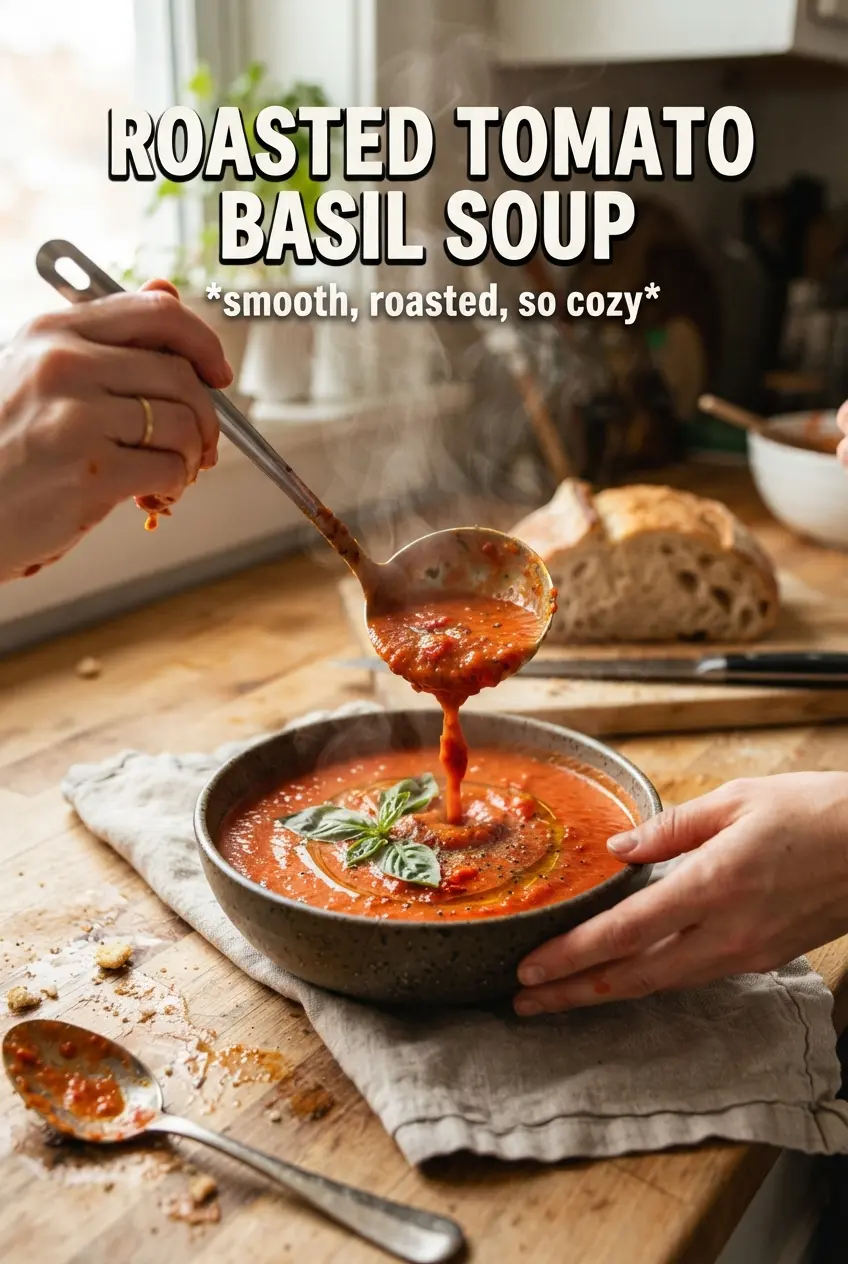
Roasted tomato basil soup turns deep red, silky, and quietly rich when the tomatoes spend enough time in the oven to concentrate instead of just soften. The flavor lands somewhere between fresh summer soup and a slow-cooked tomato sauce, with sweet edges from the roast, a little tang from balsamic, and enough cream to round everything out without turning it heavy.
The part that makes this version worth making is the roasting step. Tomatoes, onion, and garlic all go onto the pan together, and the oven does the work of building the base before anything ever hits the pot. That means the soup tastes layered instead of flat, and the basil stays bright because it goes in near the end rather than being cooked into dust.
Below, I’ve included the small details that matter most: how dark to roast the vegetables, when to add the cream so it stays smooth, and the one simple adjustment that keeps the soup balanced if your tomatoes taste sharp instead of sweet.
The roasted garlic made this taste like it simmered all afternoon, and the soup blended up completely smooth. I served it with grilled cheese croutons and my son asked for the same lunch the next day.
Save this roasted tomato basil soup for the nights when you want a velvety bowl with roasted garlic, fresh basil, and grilled cheese croutons.
The Roast Is Doing More Than Softening the Tomatoes
Roasting changes the tomato flavor in a way simmering alone can’t. The high heat evaporates water, concentrates the natural sugars, and gives the onion and garlic some color, which is where the soup gets its depth. If your soup tastes thin, it usually means the vegetables didn’t get enough time in the oven or the pan was crowded and they steamed instead of caramelizing.
Give the tomatoes space on the sheet pan and let the edges darken a little. That light char is not a mistake here. It adds the smoky, savory note that keeps the soup from tasting like warm tomato juice.
- Roma or vine tomatoes — Roma tomatoes are meatier and less watery, which makes blending easier and the final soup thicker. If you use vine tomatoes, roast them until they collapse and lose a good amount of moisture.
- Garlic — Roasting a whole head turns sharp garlic sweet and spreadable. Don’t swap in raw garlic here; it won’t give the same roundness or the mellow finish this soup needs.
- Balsamic vinegar — This doesn’t make the soup taste like vinegar. It sharpens the tomato flavor and gives the broth a darker, fuller edge. Add it after roasting so it stays bright.
- Heavy cream — Cream softens the acidity and gives the soup that smooth, restaurant-style body. Half-and-half works in a pinch, but the soup will be lighter and a little less silky.
Building the Soup in the Right Order
Roast Until the Edges Caramelize
Lay the tomatoes cut-side up on a rimmed sheet pan with the onion and halved garlic. Drizzle with part of the olive oil, season well, and roast until the tomatoes slump and the edges pick up some color. You want concentrated juices on the pan and browned spots on the vegetables, not a tray of pale softened produce.
Blend the Hot Vegetables With the Broth
Tip everything into a large pot and add the broth and balsamic vinegar before blending. An immersion blender is the easiest route here because it keeps the soup in the pot and lets you control the texture. If you use a countertop blender, work in batches and vent the lid, because hot soup can build pressure fast.
Finish With Cream and Basil Off a Hard Boil
Stir in the cream and basil, then keep the heat at a gentle simmer. If the soup boils hard after the cream goes in, the texture can turn a little grainy and the basil loses its fresh edge. Add the sugar at the end only if the tomatoes taste sharp; it should round the soup, not make it sweet.
Make It Dairy-Free
Swap the heavy cream for full-fat coconut milk or an unsweetened oat cream. Coconut milk gives the soup a faintly sweeter finish, while oat cream keeps it closer to the original flavor. Add it at the same stage as the cream and keep the simmer gentle so it stays smooth.
Make It Vegetarian
Use vegetable broth instead of chicken broth and the soup stays just as rich after roasting. Pick a broth with some body, not a thin, salty one, because the vegetables still need something savory underneath them.
Make It Thicker and More Filling
Reduce the broth by about 1/2 cup for a thicker bowl, or blend in a small piece of crusty bread with the roasted vegetables for extra body. This makes the soup spoon-coating and a little more rustic, which works especially well if you’re serving it as a main dish.
Storage and Reheating
- Refrigerator: Store in an airtight container for up to 4 days. The basil will mellow a bit, but the flavor stays strong.
- Freezer: It freezes well, though the cream can separate slightly after thawing. For the smoothest result, freeze the soup before adding the cream, then stir it in when you reheat.
- Reheating: Warm it over low heat and stir often. Don’t let it boil hard, especially if the cream is already in the soup, or the texture can split.
Questions I Get Asked About This Soup
Roasted Tomato Basil Soup
Ingredients
Equipment
Method
- Preheat oven to 425F. Arrange tomatoes, garlic, and onion on a rimmed baking sheet.
- Drizzle with 1/4 cup olive oil. Season with salt, pepper, and oregano.
- Roast 35-40 minutes until caramelized and slightly charred at edges. Keep an eye on the corners so they darken without burning.
- Squeeze roasted garlic from skins. Transfer all roasted vegetables to a large pot.
- Add broth and balsamic vinegar. Blend smooth with an immersion blender.
- Stir in heavy cream and fresh basil leaves. Simmer 10 minutes until hot and lightly thickened.
- Add sugar, then taste and season with salt and pepper. Stir until fully dissolved and the flavor balances.
- Ladle soup into bowls. Serve with grilled cheese croutons or crusty bread.


