Sheet pan sausage and fall veggies comes out with the kind of dinner payoff that makes a weeknight feel handled: browned sausage edges, caramelized squash, tender Brussels sprouts, and sweet apple slices that pick up just enough balsamic glaze to taste like they belong there. Everything roasts on one pan, but the result still lands with layers of texture instead of the soft, gray tangle that happens when the vegetables crowd each other.
The trick is in the cut size and the glaze. Butternut squash needs to be small enough to soften in the same window as the sausage, while the Brussels sprouts and onions get enough surface area to catch heat and color. The maple-Dijon-balsamic mixture doesn’t just add flavor; it helps the vegetables lacquer and brown instead of drying out. If you’ve ever had sheet pan dinner ingredients steam in their own liquid, this version avoids that by giving everything room and by starting with a hot oven.
Below, you’ll find the small details that keep the pan from turning soggy, plus a few easy swaps for the vegetables you have on hand.
The squash caramelized beautifully and the apple held its shape instead of turning mushy. I loved how the glaze coated everything without making the pan watery.
Save this sheet pan sausage and fall veggies dinner for the nights when you want browned edges, maple-Dijon glaze, and one pan to clean.
Why the Pan Needs Space, Not Just Heat
The biggest mistake with sheet pan dinners is packing everything in as if a crowded pan somehow equals efficiency. It doesn’t. When the sausage, squash, Brussels sprouts, and onions are piled on top of each other, they trap steam and go soft before they ever brown. Giving the ingredients a true single layer is what turns this into dinner with edges, not a tray of warm vegetables.
The second piece is the oven temperature. Four hundred twenty-five gives the vegetables enough blast to caramelize before the sausage dries out. If your squash is cut too large, it won’t catch up in time; if it’s too small, it can collapse before the rest of the pan is done. Aim for pieces that are about the same bite size as the Brussels sprout halves so everything finishes together.
- Spacing matters more than stirring. Once the pan is crowded, no amount of tossing will give you browning.
- Smaller, even cuts keep the timing honest. Uneven squash pieces are the main reason one part of the pan overcooks while another stays firm.
- Broiling at the end is a finishing move, not a shortcut. It deepens color fast, but only after the vegetables are already tender.
What the Glaze Is Doing Beyond Flavor
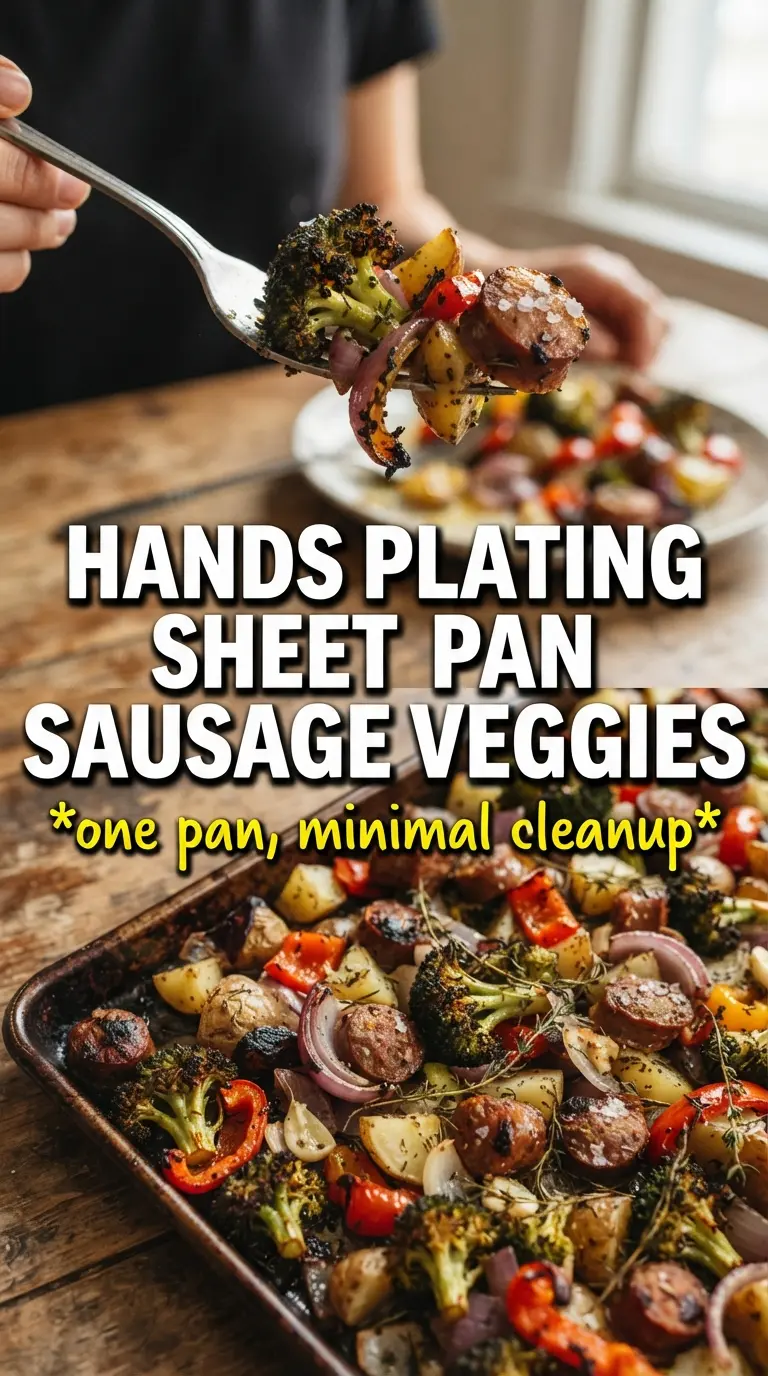
- Italian sausage links — Sliced sausage browns on the cut sides and renders enough fat to help season the pan. A milder sausage works too, but the dish loses some of its backbone. If you use fully cooked sausage, it still works; it just needs less time in the oven.
- Butternut squash — This gives the pan sweetness and substance. It’s worth buying pre-cut only if the pieces are still firm and evenly sized; mushy squash won’t roast well. Sweet potato can stand in here, but it usually needs a few extra minutes.
- Brussels sprouts — Halving them exposes the cut side so it can caramelize. Whole sprouts stay stubborn and underdone in a sheet pan format.
- Apple — The apple adds a fresh sweet note that balances the sausage and glaze. Use a crisp variety that holds its shape, not a mealy one that disappears into the pan.
- Olive oil, balsamic, maple syrup, Dijon, garlic, and rosemary — This mixture coats the ingredients and helps them brown instead of drying out. Dijon keeps the glaze from tasting flat, while rosemary gives it a savory edge that keeps the apple from taking over. If you swap in dried rosemary, use less and crush it between your fingers first so it blooms in the glaze.
The Roast That Gets You Browning Without Burning
Building the Glaze First
Whisk the olive oil, balsamic, maple syrup, Dijon, garlic, rosemary, Italian seasoning, salt, and pepper together before anything hits the pan. The mixture should look loose and glossy, not separated. If the mustard isn’t fully dispersed, it will cling in spots and you’ll end up with uneven seasoning.
Arranging for Color
Spread the sausage and vegetables across a parchment-lined rimmed baking sheet in a single layer. The parchment keeps the glaze from sticking, but the real win is that the ingredients can sizzle instead of weld themselves to the pan. If the pan looks full, split it between two pans; otherwise the vegetables will steam before they brown.
Roasting Until the Edges Caramelize
Roast for 30 to 35 minutes, stirring once halfway through so the squash and sprouts can expose fresh sides to the heat. You’re looking for browned sausage edges, tender squash, and Brussels sprouts with dark, crisp spots on the cut faces. If the pan looks dry before everything is done, that usually means the oven runs hot; add a small drizzle of oil rather than more glaze, which can burn.
The Final Broil
Broil for 2 to 3 minutes only after the vegetables are tender. This is where the edges deepen fast, so don’t walk away. The line between beautifully charred and bitter can be less than a minute, especially with the maple in the glaze.
How to Adapt This Sheet Pan Dinner Without Losing the Texture
Make It Gluten-Free Without Changing the Method
Use a gluten-free sausage and check the Dijon label, since some brands include hidden starches or vinegar blends that contain gluten. The roasting method stays the same, and the pan still caramelizes the same way. This is one of the easiest versions to keep gluten-free because there’s no breading or pasta to work around.
Make It Dairy-Free as Written
This recipe is already dairy-free if your sausage is made without cheese. That makes it an easy dinner for guests with dairy restrictions because you don’t have to swap the glaze or adjust the roasting time. Just double-check the sausage label if you’re using a specialty flavor.
Swap the Vegetables for What’s in the Crisper
Acorn squash, carrots, cauliflower, or broccoli all work well, as long as they’re cut into pieces that can roast in about the same time as the sausage. Softer vegetables like zucchini need less time and should go in later, or they’ll collapse. The key is matching size and density, not copying the exact produce list.
Use Chicken Sausage for a Lighter Finish
Chicken sausage works if you want something leaner, but it usually browns a little less and releases less fat into the pan. That means the vegetables may need an extra drizzle of oil before roasting. The flavor stays bright, but the finish is a touch less rich than with pork sausage.
Storage and Reheating
- Refrigerator: Store leftovers in an airtight container for up to 4 days. The vegetables soften a bit after chilling, but the flavor holds well.
- Freezer: It freezes, but the Brussels sprouts and squash lose some texture. If you do freeze it, pack portions tightly and thaw overnight in the refrigerator before reheating.
- Reheating: Warm it on a sheet pan in a 400°F oven until hot and the edges wake back up, about 10 to 15 minutes. The microwave works in a pinch, but it softens the vegetables and mutes the caramelized bits.
Questions I Get Asked About This Recipe
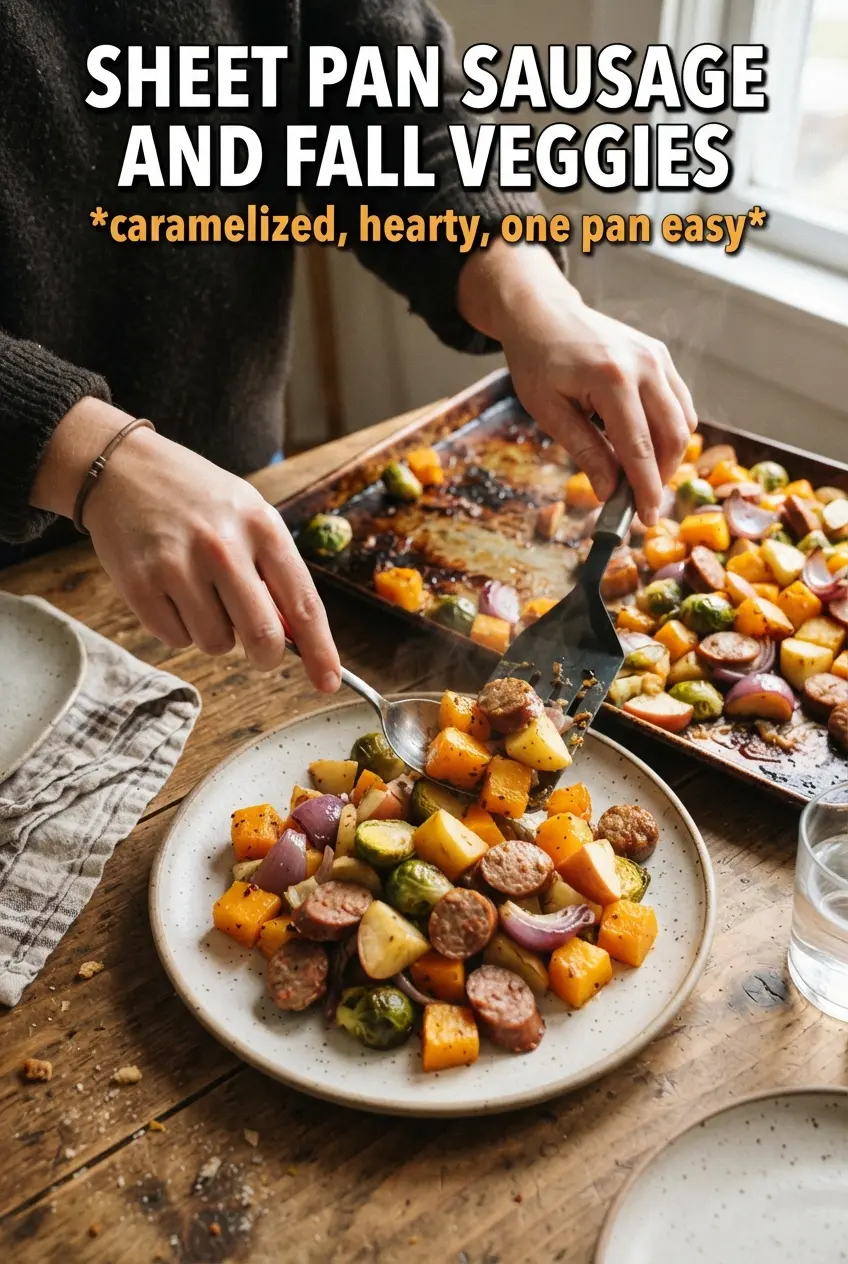
Sheet Pan Sausage And Fall Veggies
Ingredients
Equipment
Method
- Preheat the oven to 425°F and line a large rimmed baking sheet with parchment.
- Whisk together olive oil, balsamic vinegar, maple syrup, Dijon mustard, garlic, fresh rosemary, Italian seasoning, salt, and black pepper until smooth.
- Arrange the sausage, butternut squash, Brussels sprouts, red onion, bell peppers, and apple in an even layer on the prepared sheet pan.
- Drizzle the glaze over everything and toss to coat so the vegetables and sausage are lightly covered.
- Roast for 30-35 minutes at 425°F, stirring once halfway, until the vegetables are caramelized and the sausage is cooked through.
- Broil for 2-3 minutes to add extra caramelization, watching closely so the edges brown without burning.


