Deep, dark gumbo has a way of stopping the whole table for a minute. The roux brings the kind of toasted, nutty richness that turns broth into something you want to spoon slowly over rice, and the shrimp and sausage give it both sweetness and smoke in every bite. When it’s built right, the broth should cling just enough to the spoon without turning heavy.
This version leans on patience in the roux and restraint at the end. The flour and oil need time over steady medium heat until they reach a true chocolate-brown color, because that’s where the flavor lives. Once the broth goes in, the gumbo gets a long simmer so the vegetables soften and the sausage seasons the pot from the inside out. The shrimp go in last so they stay tender instead of going rubbery.
Below, I’ve included the small details that matter most: how to keep the roux from burning, when okra works best, and what to do if you want a thicker bowl or a looser, soupier one.
The roux took a little patience, but it turned out deep and silky, and the shrimp stayed tender because I added them at the very end. My husband kept going back for another bowl over rice.
Love the deep roux, smoky sausage, and tender shrimp in this gumbo? Save it to Pinterest for the nights when you want a proper bowl over rice.
The Roux Has to Go Past Brown or the Whole Pot Stays Flat
A pale roux gives you thickness, not gumbo. What makes this dish taste like gumbo is the slow move from blond to peanut butter to deep chocolate-brown, and that happens before a single vegetable goes in. If you stop too early, the broth will taste thin and floury instead of nutty and layered.
The other mistake is heat. Medium is the right call here because once the flour darkens, it can go from perfect to burnt in a blink. Keep the spoon moving and pay attention to the smell: it should shift from raw flour to toasted bread, then to a deep, almost popcorn-like nuttiness.
- Roux — This is the backbone of the dish. The darker it gets without burning, the richer the finished gumbo will taste.
- Andouille sausage — It seasons the broth as it simmers, so a good smoky sausage matters here. If you swap it, choose something with real smoke and spice.
- Okra — It thickens the pot and gives the gumbo its classic body. Fresh or thawed frozen okra both work; slice it before it goes in so it softens evenly.
- Filé powder — Optional, but useful at the end if you want a slightly earthier finish. Add it off the heat or it can turn stringy.
What Each Ingredient Is Actually Doing in This Pot
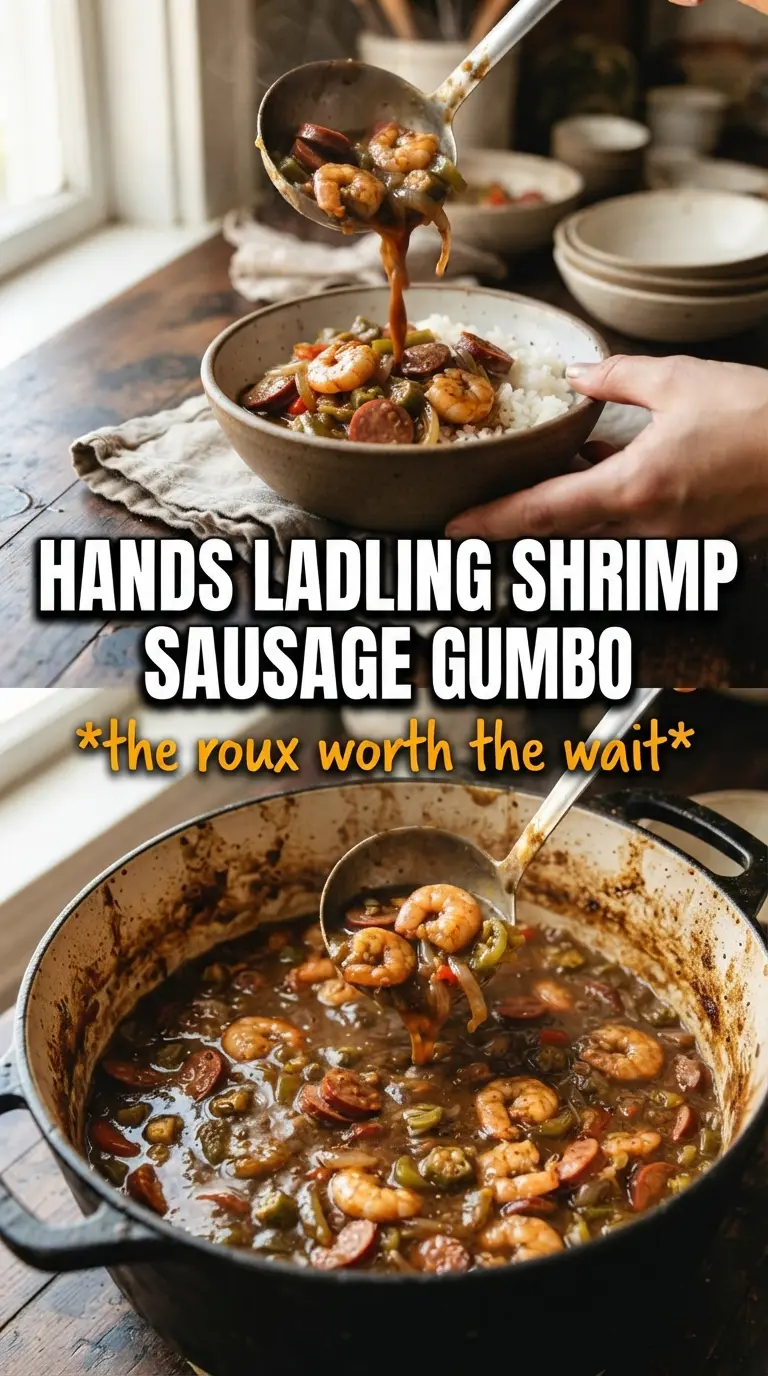
The shrimp bring sweetness and a clean finish, but they only stay good if they go in after the long simmer. The sausage and vegetables have already done the heavy lifting by that point, so the shrimp only need a few minutes to turn pink and curl. Add them too early and they tighten up and lose that tender bite.
The Holy Trinity — onion, celery, and green bell pepper — gives the gumbo its Cajun base note. Garlic goes in after those vegetables have softened, not before, so it doesn’t scorch in the hot roux. The broth can be shrimp or chicken broth; shrimp broth gives a deeper seafood edge, while chicken broth keeps the pot a little cleaner and more flexible if that’s what you have on hand.
- Shrimp — Large shrimp hold up better in the pot and stay juicy after a short simmer.
- Cajun seasoning — This layers salt, heat, and herbs into the broth. Taste before adding extra salt, because some blends are already heavy on sodium.
- All-purpose flour and vegetable oil — Together they build the roux. Neutral oil is best because it lets the flour develop flavor without adding competing tastes.
- Parsley and green onions — These finish the bowl with freshness. Add them at the end so the gumbo tastes bright, not flat.
Building the Gumbo in the Right Order
Cooking the Roux Until It Earns the Pot
Start with the flour and oil in a heavy pot and keep the heat at medium. Stir constantly, scraping the bottom and corners, because any unmoved spot can scorch and leave a bitter edge in the finished gumbo. The color should move slowly and steadily, and when it reaches deep chocolate-brown, pull in the vegetables right away so the roux doesn’t keep darkening from the residual heat.
Softening the Holy Trinity
Add the onion, celery, and bell pepper and cook them for about five minutes. They should soften and pick up the color of the roux while the sharp raw smell fades. Stir in the garlic for just a minute at the end; if it goes in too early, it can burn and taste harsh through the whole pot.
Turning the Roux Into a Broth
Whisk in the broth gradually instead of dumping it all at once. That keeps the roux from clumping and helps the liquid turn smooth and glossy instead of streaky. Once the sausage, Cajun seasoning, and bay leaves go in, let the pot come to a gentle simmer, not a hard boil, or the flavors won’t meld as well.
Finishing with Okra and Shrimp
Let the gumbo simmer for 45 minutes before adding the okra. The okra needs enough time to soften and lose its raw edge, but not so much that it disappears. Add the shrimp only in the last 3 to 5 minutes, just until they turn pink and opaque, then stir in filé powder off the heat if you’re using it.
Three Ways to Adapt the Pot Without Losing the Gumbo
Make it gluten-free without losing body
Replace the flour with a gluten-free all-purpose blend that contains starches and a binder, then cook the roux the same way. The texture will be slightly less silky than a classic flour roux, but the gumbo still gets the dark, toasted base it needs.
Skip the shrimp and make it sausage-forward
Use 2 pounds of andouille and leave the shrimp out entirely for a deeper, meatier bowl. You’ll lose the sweet seafood finish, but you gain a gumbo that holds even better for leftovers and reheats without any risk of overcooking seafood.
Make it milder for smaller heat tolerance
Use a mild smoked sausage and a gentler Cajun seasoning blend, then add extra black pepper only at the table. The gumbo still tastes layered and savory, but the heat stays in the background instead of dominating the bowl.
Storage and Reheating
- Refrigerator: Store in an airtight container for up to 4 days. The gumbo thickens as it sits, so it may need a splash of broth when reheated.
- Freezer: It freezes well without the shrimp. For best texture, freeze the gumbo base first and add freshly cooked shrimp after reheating.
- Reheating: Warm it gently on the stove over low to medium-low heat, stirring often. Don’t boil it hard or the shrimp will turn tough and the roux can separate.
Answers to the Questions Worth Asking
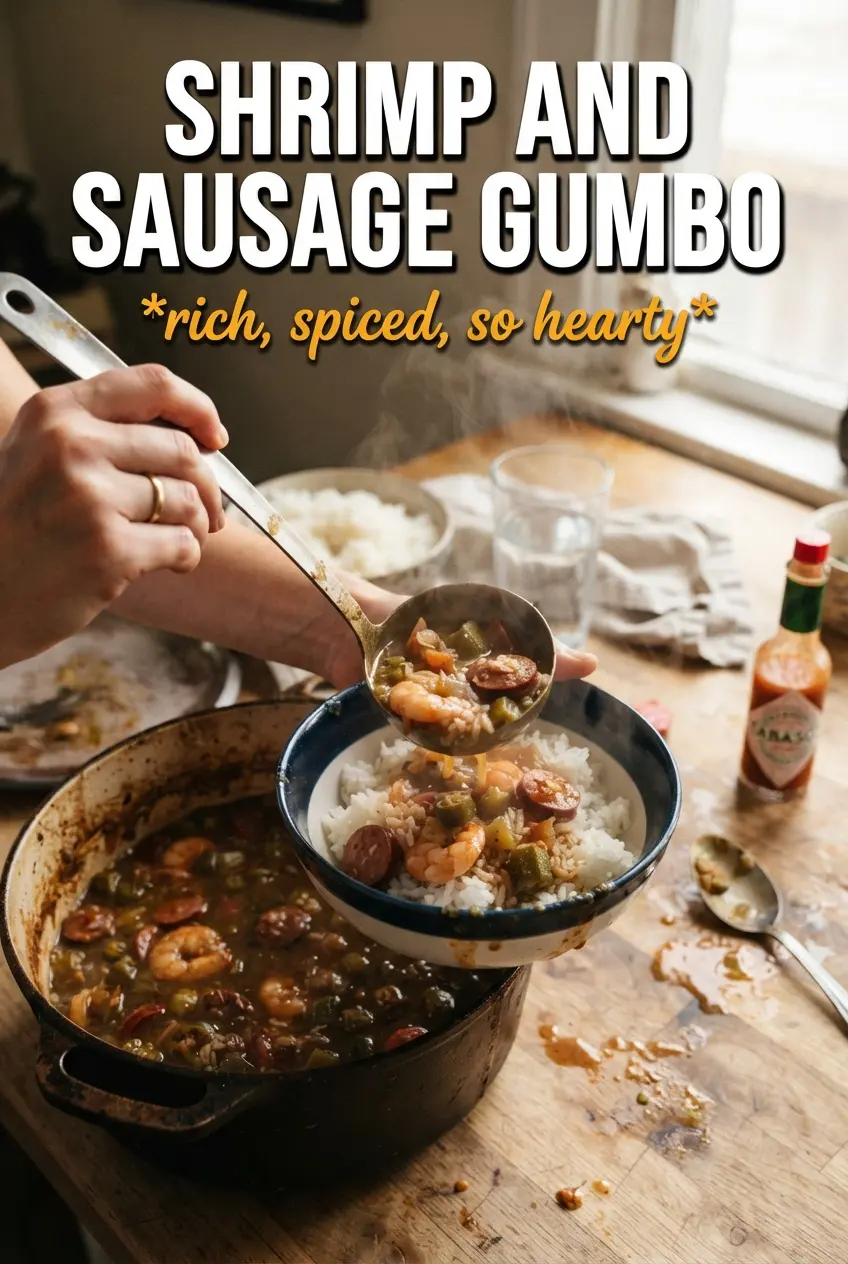
Shrimp and Sausage Gumbo
Ingredients
Equipment
Method
- Heat the vegetable oil in a Dutch oven over medium heat and whisk in the all-purpose flour. Cook, stirring constantly, for 30-35 minutes until the roux turns deep chocolate-brown and looks smooth.
- Add the green bell pepper, celery, and onion (the Cajun Holy Trinity) to the roux and cook for 5 minutes. Stir often so the vegetables soften without scorching.
- Add the minced garlic and cook for 1 minute. Keep stirring until fragrant.
- Gradually pour in the shrimp or chicken broth while whisking constantly to prevent lumps. Add the andouille sausage, Cajun seasoning, and bay leaves as you finish the broth.
- Bring the mixture to a simmer and cook for 45 minutes. Keep the heat steady so it bubbles gently.
- Add the sliced okra and cook for 15 more minutes. It should turn bright green and begin to thicken the broth.
- Add the peeled and deveined large shrimp and cook for 3-5 minutes until pink and just cooked through. Turn off the heat as soon as the shrimp curl.
- Stir in filé powder if using. Add it off the boil and mix until smooth.
- Remove the bay leaves and season the gumbo with salt and pepper to taste. Serve hot over steamed rice with parsley and green onions.


