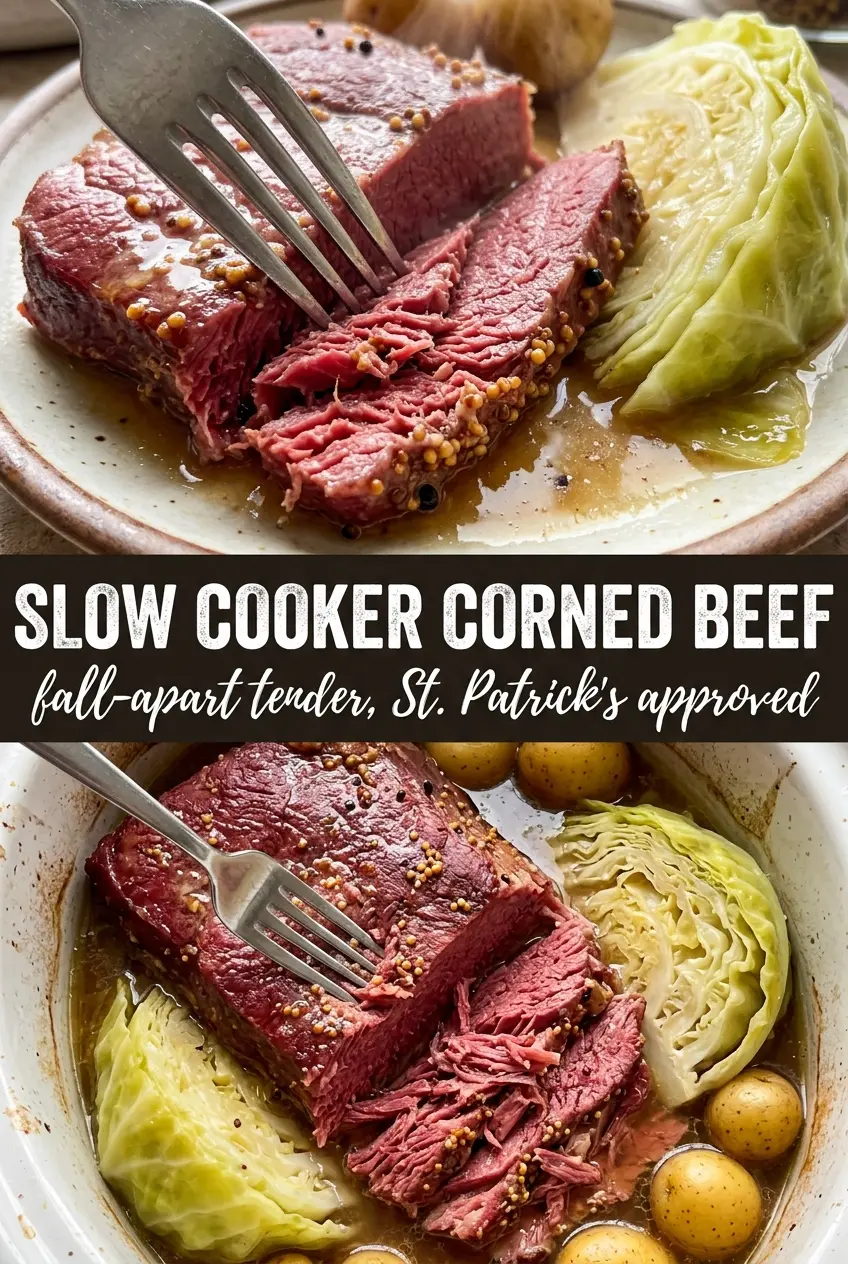
Slow cooker corned beef and cabbage turns into the kind of dinner that slices cleanly, falls apart at the edge of the fork, and still holds enough structure to plate beautifully. The brisket gets deeply tender without turning stringy, the cabbage softens into buttery wedges, and the potatoes soak up the seasoned broth that runs through the whole pot. It’s the sort of meal that tastes like it took all day because, well, it did — but the slow cooker does the heavy lifting while you go on with your day.
The trick is building the pot in layers and respecting the timing. Potatoes, carrots, onion, and broth go in first so they can take the long cook without collapsing. The cabbage waits until the end, where it steams in the spiced liquid just long enough to turn tender without going mushy. A quick rinse of the brisket also matters here, since corned beef is cured with plenty of salt and you want the final broth balanced, not harsh.
Below, you’ll find the timing that keeps the beef sliceable, the small ingredient choices that make the broth taste rounded instead of one-note, and a few practical swaps if you need to work with what’s in your kitchen.
The brisket was tender all the way through and sliced beautifully after resting. I added the cabbage in the last two hours like you said, and it stayed soft without falling apart. The broth with the mustard at the table was fantastic.
Love how the cabbage waits until the end and stays tender instead of turning to mush? Save this slow cooker corned beef and cabbage for an easy, make-ahead supper that slices like a dream.
The Brisket Needs Low Heat, Not Just Long Time
The most common mistake with corned beef is pushing the cook too hard. High heat tightens the meat fibers before the connective tissue has time to relax, and that’s how you end up with slices that shred dry at the edges instead of turning silky and tender. Low and slow is what turns this from tough cured beef into something you can cut across the grain with almost no resistance.
Starting the brisket fat-side up matters, too. As the fat warms, it bastes the meat a little as the pot comes up to temperature, and the spice packet has time to perfume the broth instead of disappearing into a harsh, salty liquid. The cabbage is a separate job entirely. It doesn’t need nine hours; it needs the final stretch, when it can soften and absorb flavor without losing all shape.
What Each Ingredient Is Actually Doing In This Pot

- Flat-cut corned beef brisket — Flat-cut brisket slices neatly, which is what you want here. Point cut has more marbling, but it can fall apart faster in the slow cooker. Rinsing the brisket under cold water removes surface brine and keeps the finished broth from tasting aggressively salty.
- Beef broth — This gives the vegetables something savory to absorb and keeps the cooking environment moist. If you use stock instead, the result is fine, but a full-salt broth plus the corned beef can push the dish over the edge. Low-sodium broth is the safer choice if your brisket looks especially heavily seasoned.
- Apple cider vinegar — The vinegar doesn’t make the dish sour. It brightens the broth and helps balance the richness of the beef and potatoes. White vinegar works in a pinch, but cider vinegar adds a rounder note that fits the cabbage better.
- Brown sugar — Just a tablespoon, but it softens the briny edges of the cure and helps the spice packet taste fuller. You don’t want sweetness here; you want balance.
- Yukon Gold potatoes — These hold their shape better than russets and turn creamy instead of grainy. If you swap in russets, cut them larger or they’ll break apart before the beef is done.
- Cabbage — Add it late or it will collapse. Wedges keep enough core intact to stay tender rather than dissolving into the broth.
How to Build the Pot So Nothing Turns Mushy
Start With the Vegetables on the Bottom
Put the potatoes, carrots, onion, and garlic in the bottom of the slow cooker first. They need the longest time in the pot, and they also act as a rack so the brisket isn’t sitting directly on the insert. If you skip this order, the meat can scorch on the bottom edge while the vegetables on top stay undercooked.
Lay the Brisket Over the Broth, Not Buried in It
Place the rinsed brisket on top of the vegetables and pour the broth and vinegar around it. You want the liquid to come up partway, not cover everything completely. Slow cookers trap steam, so the beef will still braise; too much liquid just washes out the seasoning and gives the broth a flat, gray taste.
Add the Cabbage Only When the Beef Is Nearly Done
After about 7 hours, tuck the cabbage wedges into the liquid and let them finish with the beef for the last 2 hours. Press them down a little so the cut sides pick up broth, but don’t worry if the tops sit above the liquid at first; the lid steam finishes the job. If you add cabbage from the start, it will lose its texture and take on a sulfur-heavy smell that takes over the whole pot.
Rest Before You Slice
Pull the brisket out and let it rest for 10 minutes before cutting. That short pause keeps the juices inside the meat instead of letting them run across the cutting board. Slice against the grain in thin pieces. If the brisket seems to fall apart when you slice, it’s still tender enough to eat, but the grain direction matters if you want those neat, plate-ready slices.
How to Adapt It Without Losing the Heart of the Dish
Gluten-Free Version
This recipe is naturally close to gluten-free as written, but check the corned beef spice packet and broth label. Some packaged seasonings use wheat-based anti-caking ingredients, and some broths are less careful than you’d expect. Once those two are confirmed, nothing else needs changing.
A More Vegetal, Less Salty Broth
Use low-sodium beef broth and keep the rinse on the brisket. That combination gives you a cleaner broth that tastes more balanced at the table, especially if you plan to spoon the cooking liquid over the meat. If you skip the rinse, the broth can turn one-note and overly cured.
No Whole Grain Mustard on Hand
Stone-ground mustard or Dijon both work. Whole grain mustard adds texture and a mellow bite, while Dijon is sharper and smoother. If you use Dijon, start with a small spoonful at the table and add more as needed so it doesn’t overpower the sweet carrots and cabbage.
Leftover Corned Beef Hash
Chop the leftovers and crisp them in a skillet with a little butter the next morning. The texture changes in a good way: the edges get browned, the potatoes pick up a crust, and the beef gets even more savory. This is one of those leftovers that tastes almost better on day two.
Storage and Reheating
- Refrigerator: Store the beef and vegetables in an airtight container for up to 4 days. The potatoes soften a bit more as they sit, but the flavor gets deeper.
- Freezer: The sliced brisket freezes well, but the cabbage and potatoes don’t keep their texture as nicely. Freeze the meat with a little cooking liquid for up to 2 months, and keep the vegetables for fresh serving if possible.
- Reheating: Warm gently on the stove or in the microwave with a splash of broth. Don’t blast it on high heat or the beef can toughen at the edges before the center is hot.
Questions I Get Asked About This Recipe
Slow Cooker Corned Beef and Cabbage
Ingredients
Equipment
Method
- Add the quartered onion along with the quartered Yukon Gold potatoes and 2-inch carrot pieces to the bottom of the slow cooker. Spread them out in an even layer so the liquid can circulate.
- Stir in the smashed garlic, then pour in the beef broth and apple cider vinegar. Make sure the broth covers most of the vegetables.
- Rinse the corned beef brisket under cold water, then place it fat-side up on top of the vegetables. Center the brisket so it steams and tenderizes evenly.
- Sprinkle the included spice packet and the brown sugar over the brisket. Keep the sugar on top so it helps create flavor as the meat cooks.
- Cover and cook on low for 8–9 hours, until the brisket is very tender. If your slow cooker runs hot, start checking at hour 8.
- During the last 2 hours, add the cabbage wedges and press them into the liquid. The visual cue is cabbage that turns bright and softens while still holding its wedge shape.
- Remove the brisket to a cutting surface and rest for 10 minutes. This helps the juices redistribute so slices stay moist.
- Slice the brisket against the grain and serve with the vegetables, spooning some cooking liquid over the plate. Offer whole grain mustard on the side.