Slow cooker Indian butter chicken comes out velvety, deeply spiced, and rich enough to coat every grain of basmati rice. The chicken turns tender without drying out, and the sauce settles into that familiar butter chicken balance: tomato, cream, warm spices, and just enough heat to keep each bite lively. It’s the kind of dinner that tastes like it took more attention than it did.
What makes this version work is the order. The chicken goes in first so it can braise gently while the tomatoes, onion, garlic, ginger, and spices cook down around it. Then the butter and cream are stirred in at the end, after the heat has been turned up briefly to bring the sauce together. That last step matters because cream can separate if it’s cooked too hard for too long, and butter gives the sauce the glossy finish you want without making it greasy.
You’ll find the timing that keeps the chicken tender instead of stringy, plus a few simple swaps and fixes for when you want a milder sauce, a dairy-free version, or leftovers that still taste good the next day.
The sauce turned out silky and thick, and the chicken stayed tender even after the full slow cook. I loved that the cream went in at the end instead of curdling, and the leftovers were just as good the next day.
Pin this slow cooker Indian butter chicken for a creamy, spice-forward dinner with tender chicken and an easy finish.
The Part That Keeps the Cream Smooth Instead of Broken
Butter chicken fails in a very specific way when the dairy goes in too early or too hot: the sauce turns grainy, oily, or separated instead of glossy. The slow cooker does the long, gentle work on the chicken and tomato base, but the cream needs a different kind of heat. It belongs in at the end, after the chicken is already tender and the sauce has had time to taste cooked, not raw.
The other thing that matters is the high-heat finish for those last 20 minutes. That short burst helps the sauce tighten without reducing it into paste. If you skip it, the flavor is still good, but the sauce can look thin and the cream won’t fully settle into the tomatoes and spices.
- Chicken thighs — Thighs stay succulent after hours in the slow cooker. Breasts will work in a pinch, but they go stringy faster and don’t give you the same forgiving texture.
- Crushed tomatoes — They melt into the sauce better than diced tomatoes, which can stay a little sharp and chunky. This is what gives the base body before the cream goes in.
- Garam masala — This is the backbone flavor, so use a fresh jar if you can. If yours has been sitting for a while, add a small extra pinch at the end to wake it up.
- Heavy cream — This is the ingredient that gives the sauce its classic silkiness. Half-and-half can split more easily, and coconut cream changes the flavor, but it’s the best dairy-free direction if you need one.
- Butter — It rounds off the spices and gives the sauce that finished, restaurant-style sheen. Don’t swap it for oil unless you have to; oil adds richness, but not the same taste.
What Each Ingredient Is Actually Doing in This Recipe
- Primary ingredient (the star) — Quality matters most. Choose the best you can find.
- Cooking medium (oil, butter, or broth) — This carries flavors and prevents dryness.
- Seasonings (salt, pepper, spices, herbs) — Layer flavors so nothing overpowers. Build depth gradually.
- Aromatics (garlic, onion, herbs) — Cook with fat to bloom flavors. Become the foundation.
- Supporting ingredients — Complement the main ingredient without overpowering it.
- Sauce or liquid (if applicable) — Brings flavors together. Balance richness with acid.
- Acid (lemon, vinegar, wine, or other) — Brightens and prevents flat-tasting results.
- Final finish (garnish, glaze, or sauce) — Prevents one-dimensional taste and adds visual appeal.
Letting the Chicken Braise Before the Finish
Build the spice base in the slow cooker
Start by placing the chicken in the slow cooker, then whisk the tomatoes, onion, garlic, ginger, and spices together before pouring them over the top. That mixing step matters because the spices need to be dispersed through the sauce, not dumped in one spot where they can clump. Once everything is in, the raw onion softens into the sauce instead of staying crunchy, which is what gives the finished dish its full-bodied texture.
Cook until the chicken pulls apart easily
Cook on low for 6 to 7 hours, or high for 3 to 4 hours, until the chicken is very tender and the sauce smells cooked through, not sharp. If you rush this stage, the chicken can be cooked through but still tight, and the sauce won’t have developed enough depth. The chicken should shred with little resistance, though you don’t need to fully pull it apart unless you want a more saucy, tossed texture.
Finish with butter and cream at the end
Stir in the butter and heavy cream only after the slow cooking is done, then cook on high for about 20 minutes. That brief extra time helps the sauce thicken and smooth out without boiling hard. If the sauce looks a little loose at first, leave the lid on and let it settle; stirring constantly or cranking the heat higher usually works against you here.
How to Adapt This for a Milder Bowl, a Dairy-Free Version, or a Bigger Crowd
Make it milder without losing the warm spice
Cut the cayenne in half or leave it out entirely, then keep the garam masala, cumin, and paprika the same. You’ll still get the layered, savory spice that makes butter chicken taste like butter chicken, just without the lingering heat on the back of the throat.
Dairy-free version with coconut cream
Swap the heavy cream for full-fat coconut cream and use a dairy-free butter substitute or a drizzle of neutral oil at the end. The sauce will still be rich, but you’ll pick up a faint coconut note, so this works best if you like that warmer, slightly sweeter edge.
Use chicken breasts if that’s what you have
Chicken breasts can replace thighs, but they need a closer eye because they dry out more easily over a long slow-cooker run. Check them at the low end of the cook time and move straight to the cream and butter finish once they’re tender.
Stretch it for a larger group
Double the chicken and sauce ingredients, but don’t crowd the slow cooker past the fill line. If the pot is too full, the sauce takes longer to thicken and the top can taste less developed than the bottom. A wide slow cooker handles this dish better than a deep one when you’re scaling up.
Storage and Reheating
- Refrigerator: Store in an airtight container for up to 4 days. The sauce thickens as it chills, which actually helps the flavor.
- Freezer: It freezes well for up to 2 months, though the cream may look slightly less silky after thawing. Freeze in portions and thaw overnight in the fridge for the best texture.
- Reheating: Reheat gently on the stove or in the microwave at medium power, stirring once or twice. High heat is the mistake here — it can make the cream separate and dry out the chicken.
Answers to the Questions Worth Asking
Slow Cooker Indian Butter Chicken
Ingredients
Equipment
Method
- Place the chicken thigh chunks into the slow cooker in an even layer so they cook through uniformly.
- Whisk together crushed tomatoes, diced onion, minced garlic, grated ginger, garam masala, curry powder, cumin, smoked paprika, turmeric, cayenne pepper, salt, and sugar until the mixture is evenly combined and fragrant, about 1–2 minutes.
- Pour the sauce over the chicken so most pieces are covered, then cook on LOW for 6–7 hours or on HIGH for 3–4 hours until the chicken is very tender.
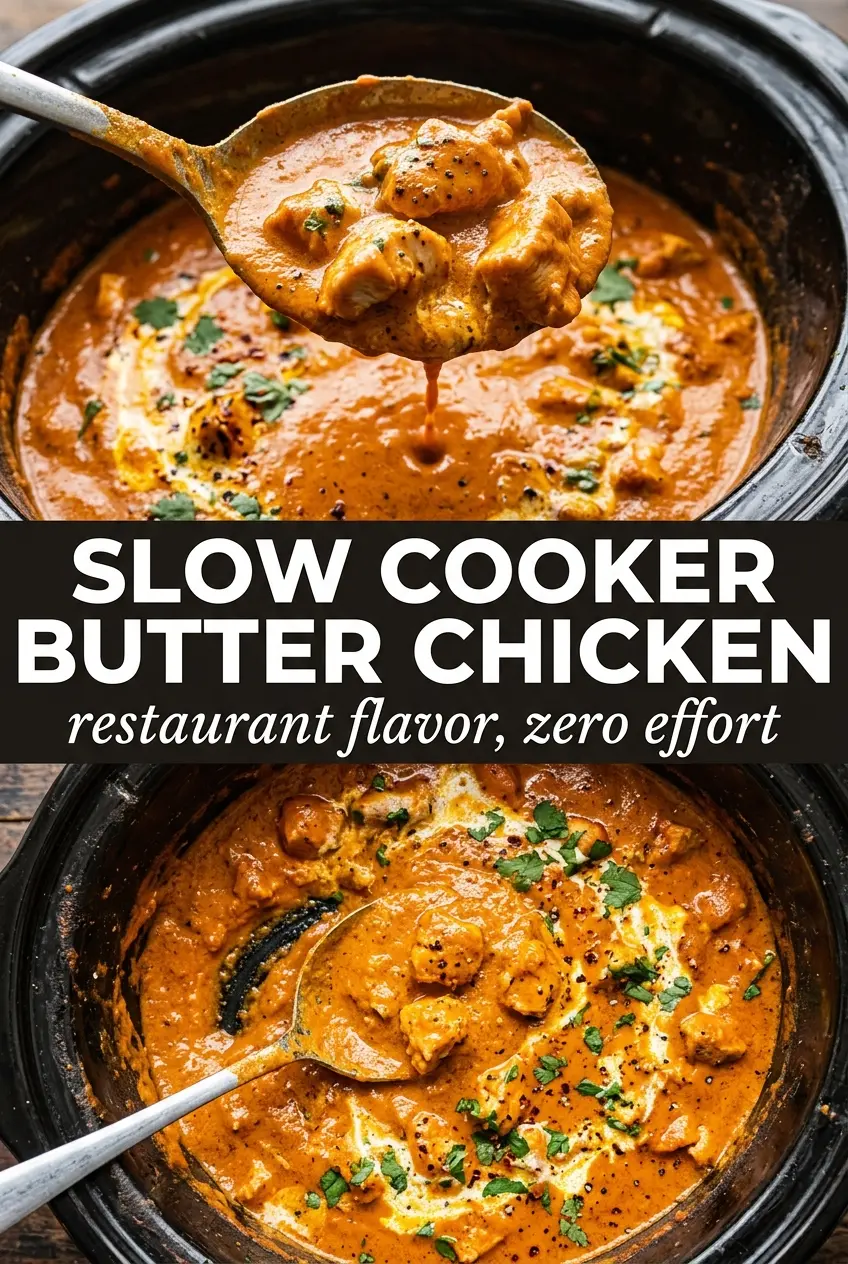
- Shred the chicken slightly or leave it in chunks, then stir in the butter and heavy cream until the sauce looks glossy and smooth.
- Cook on HIGH for 20 minutes, stirring once if possible, until the sauce is rich and slightly thickened with a creamy consistency.
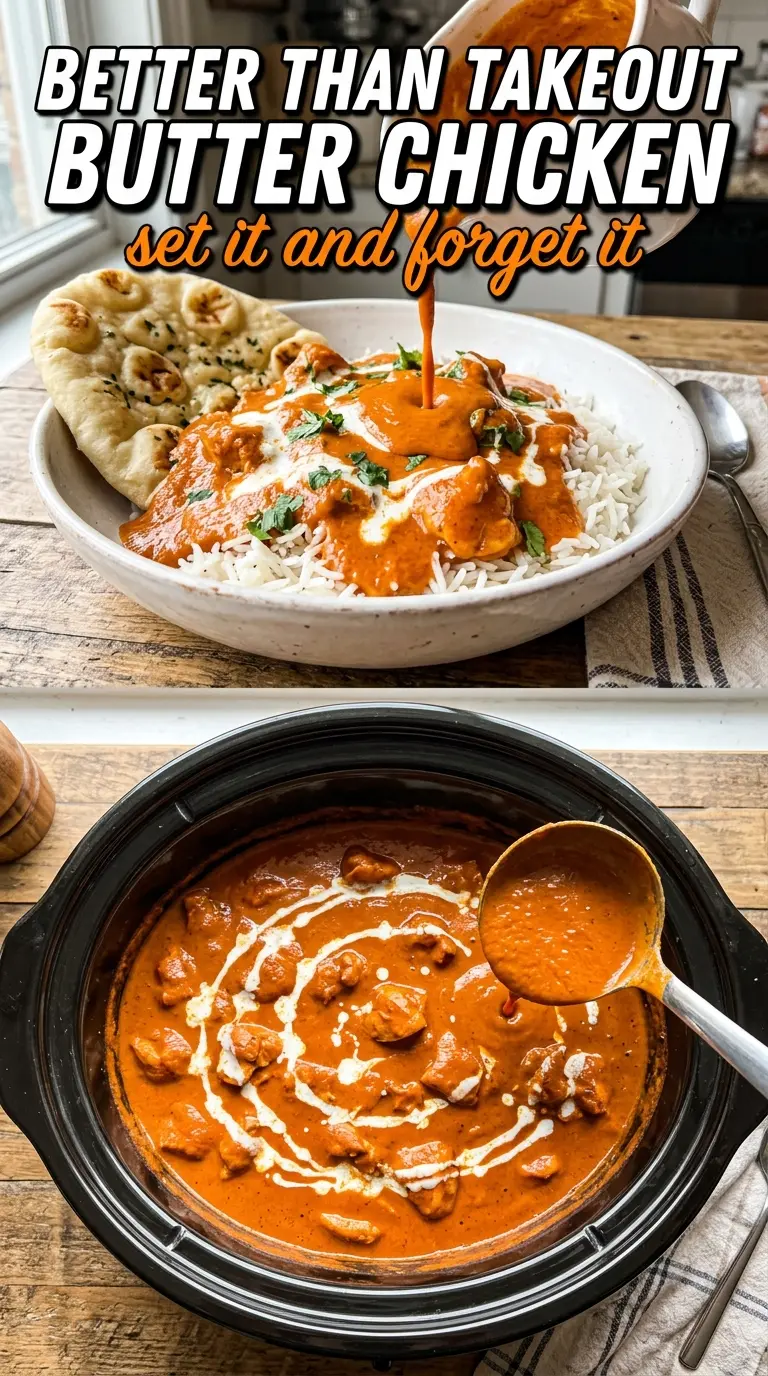
- Serve the butter chicken over basmati rice with naan on the side, then garnish with fresh cilantro.