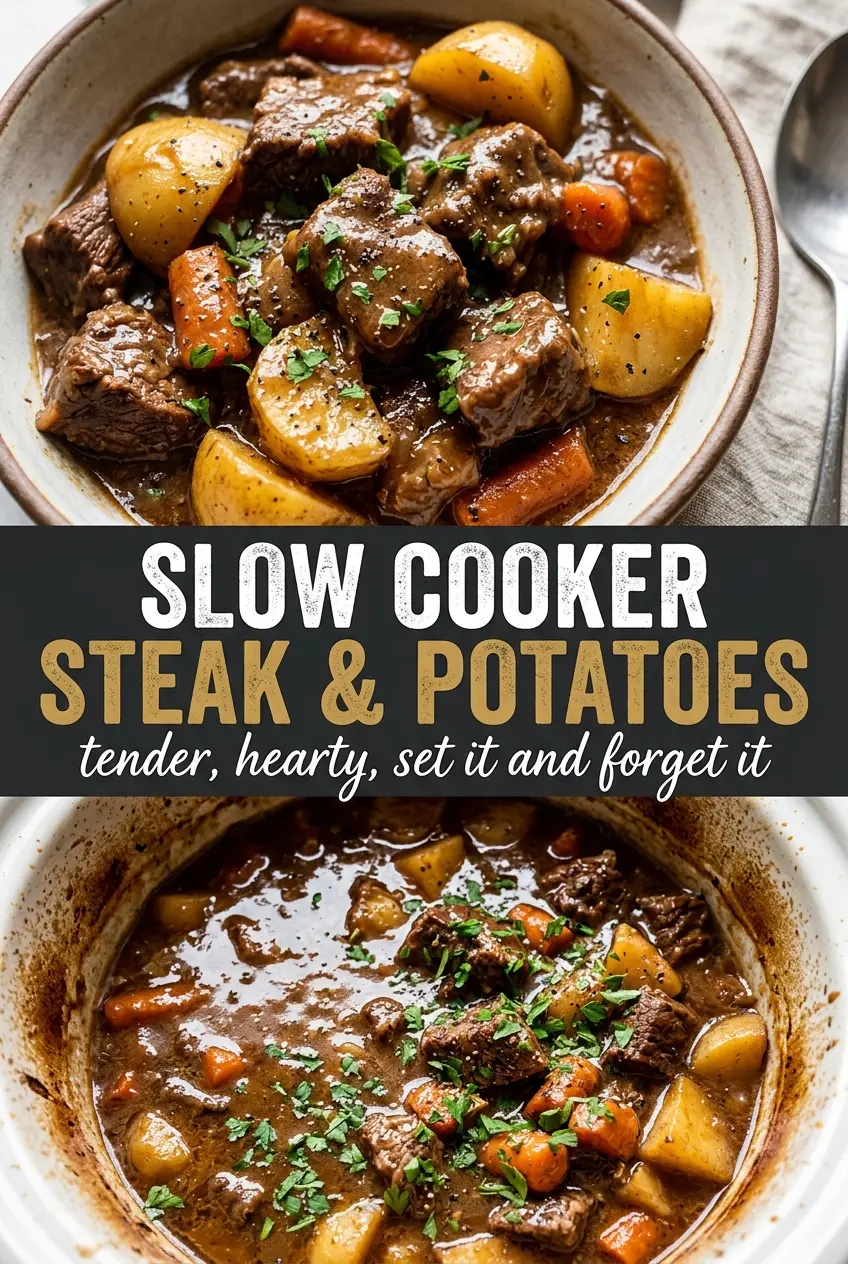
Fork-tender steak and buttery potatoes are what make this slow cooker dinner worth keeping on repeat. The beef comes out rich and deeply savory, the potatoes soak up every bit of the broth, and the whole pot tastes like it cooked with more effort than it actually did. It’s the kind of meal that lands on the table with no fuss and disappears fast.
The trick is layering the potatoes underneath the steak so they catch the drippings instead of turning mushy on top. Chuck steak gives you the best texture for long, slow cooking, while sirloin works if you want something a little leaner and don’t mind a slightly tighter bite. The broth, Worcestershire, and soy sauce build a base that tastes full and rounded without needing a long list of ingredients.
Below, I’ve included the one timing detail that keeps the potatoes from breaking down too early, plus a few smart swaps if you need to work with what’s in the kitchen. If you’ve ever had slow cooker beef turn out flat or watery, this version fixes both problems.
The steak turned out tender enough to cut with a fork, and the potatoes soaked up the broth without falling apart. I used chuck, cooked it on low, and the juices were thick and savory by the end.
Save this Slow Cooker Steak and Potatoes for a no-stress dinner with tender beef, buttery potatoes, and rich herb gravy.
The Slow Cooker Trick That Keeps the Beef Tender Instead of Stringy
The biggest mistake with slow cooker steak is treating every cut like it wants the same treatment. Chuck steak has enough connective tissue to benefit from the long cook, so it turns silky instead of dry. Sirloin can work, but it’s leaner, which means you want to stop cooking as soon as the potatoes are fork-soft and the beef yields easily. Push it much past that and the edges start to lose their texture.
Layering matters too. The potatoes go on the bottom because they need the most direct heat and can handle being bathed in the broth for hours. The steak sits above them so it braises in steam and juices rather than sitting fully submerged, which helps keep the pieces intact instead of shredding before serving.
- Chuck steak — This is the best choice if you want the most tender, braised texture. It has enough connective tissue to relax during the long cook.
- Baby Yukon Gold potatoes — Their waxy texture holds shape better than russets and gives you creamy centers without turning grainy.
- Worcestershire and soy sauce — These add the deep savory backbone you’d usually get from a longer stovetop reduction. Don’t skip both unless you replace them with another salty, umami-rich ingredient.
What Each Ingredient Is Actually Doing in the Pot

- Chuck steak or sirloin — Chuck gives you the softest, most forgiving result. Sirloin works if that’s what you have, but it stays a little firmer and benefits from being checked earlier.
- Baby Yukon Gold potatoes — Halving them helps them cook through at the same pace as the beef without collapsing. If you use larger potatoes, cut them into even chunks so they don’t lag behind.
- Onion and garlic — They melt into the broth and turn the cooking liquid into something that tastes built, not just seasoned. Fresh garlic matters here; garlic powder alone won’t give the same depth.
- Beef broth, Worcestershire, and soy sauce — This is the liquid that turns into the pan juices. Use a broth you’d actually drink on its own, because the flavor concentrates as it cooks.
- Butter — It finishes the dish with richness and helps the broth taste glossy instead of thin. Those slices on top baste the beef as they melt.
Building the Pot So Nothing Goes Mushy
Start with the potatoes and onions
Put the potatoes and onions in the bottom of the slow cooker first. That gives them direct contact with the heat and keeps the steak from sinking into liquid and overcooking before the potatoes catch up. If your potatoes are much larger than bite-size, cut them smaller now rather than hoping extra time will fix them later.
Season the beef before it goes in
Toss the steak with the garlic powder, onion powder, paprika, salt, and pepper before adding it to the pot. The seasoning sticks better this way and gets carried into the juices as the meat cooks. If you season only the liquid, the beef tastes flatter and less finished.
Cook low and slow for the best texture
Set the slow cooker on low for 6 to 7 hours if you can. High heat gets the job done faster, but it’s easier to overshoot the sweet spot and end up with beef that’s softer at the edges than you want. The finished steak should pull apart with light pressure, and the potatoes should give easily when pierced but still hold their shape.
Stir gently at the end
Once everything is tender, stir just enough to coat the beef and potatoes in the juices. Don’t beat at the pot or the potatoes will break apart and turn the sauce cloudy. A light hand keeps the texture clean and gives you those fork-tender chunks instead of a mash.
Three Ways to Adjust This Without Losing the Character of the Dish
Make it dairy-free
Leave out the butter and finish with an extra tablespoon of broth plus a drizzle of olive oil if you want a little gloss. You’ll lose a touch of richness, but the broth and beef still carry the dish just fine.
Use sirloin for a leaner result
Sirloin cooks a little firmer than chuck, so check it near the 5 1/2 hour mark on low. It won’t have the same silky fall-apart texture, but it still gives you tender slices and a cleaner beef bite.
Swap the potatoes for sweet potatoes
Sweet potatoes turn this into a slightly sweeter, softer dish and they break down more easily than Yukon Golds. Cut them into larger chunks so they don’t disappear into the broth before the beef is done.
Make it gluten-free
Use a certified gluten-free Worcestershire sauce and gluten-free soy sauce or tamari. The flavor stays the same, and the slow cooker does the rest.
Storage and Reheating
- Refrigerator: Store leftovers in an airtight container for up to 4 days. The potatoes will soften a bit more as they sit, but the flavor deepens.
- Freezer: Freeze for up to 2 months in a sealed container. The potatoes get a little softer after thawing, but the beef holds up well.
- Reheating: Warm gently on the stove over low heat or in the microwave at medium power. Add a splash of broth if the juices have thickened too much, and don’t blast it on high or the beef can tighten up.