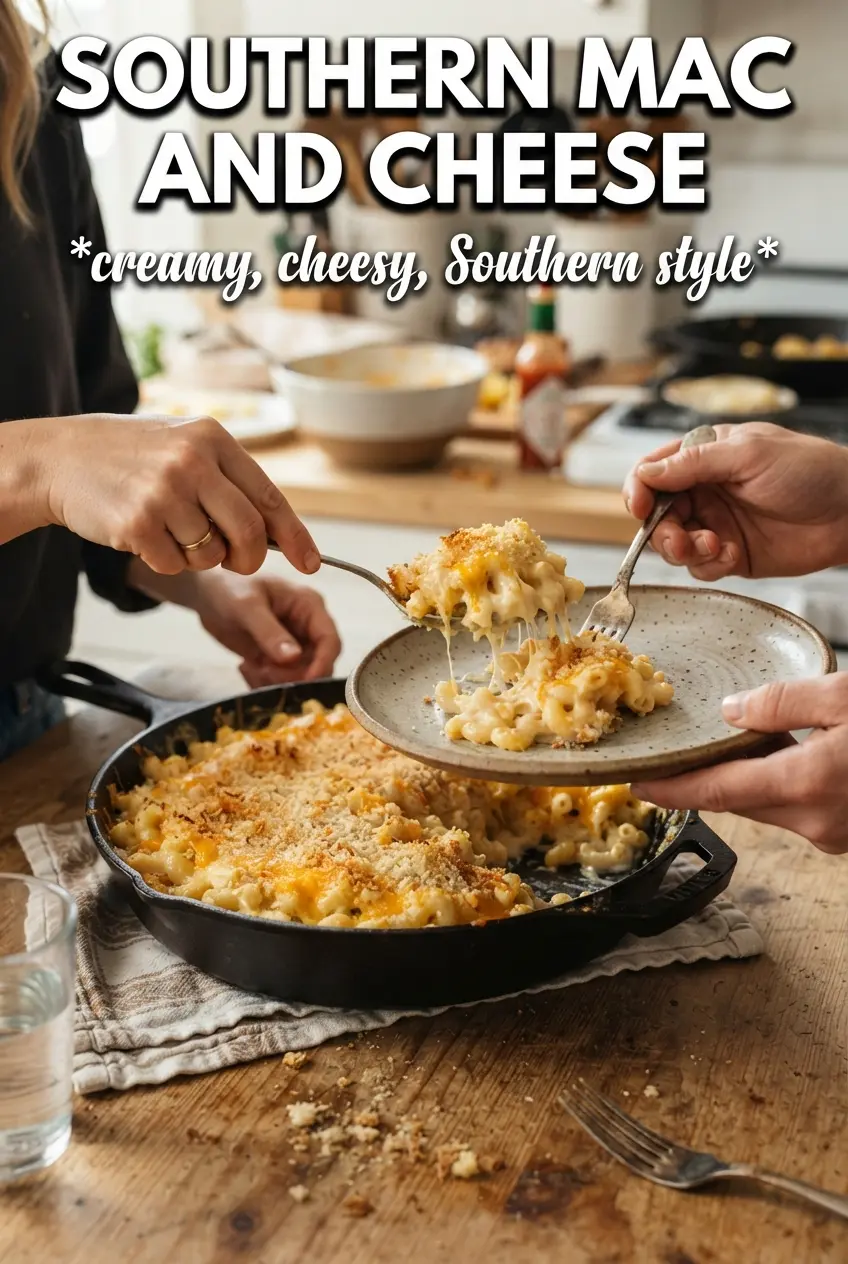
Southern mac and cheese comes out rich, custardy, and deeply satisfying when it’s built with just enough structure to slice, but still soft enough to spoon. The top turns golden and lightly crisp while the center stays creamy and full of sharp cheddar, nutty Gruyere, and that familiar baked-pasta comfort people expect from a true Southern-style pan.
What makes this version work is the balance between the egg-based custard and the three cheeses. The evaporated milk gives the filling body without making it heavy, while the eggs help the casserole set instead of collapsing into a loose, greasy puddle. Layering the cheese between the macaroni also keeps every scoop from tasting flat. You get pockets of melted cheese inside and a browned lid on top.
Below, I’ve added the one detail that keeps the texture from going grainy, plus a few smart swaps for when you want to change the cheese blend without losing that classic baked finish.
The custard set up perfectly and the top turned golden without drying out the center. I used the Gruyere like you suggested, and every scoop had that creamy middle with a little crusty edge.
Save this Southern mac and cheese for the nights when you want a creamy custard center, a golden crust, and that old-school baked cheese pull.
The Custard Sets Before the Cheese Breaks
The mistake that ruins baked mac and cheese is rushing the heat. If the dish bakes too hot, the eggs tighten before the cheese melts evenly, and you end up with a rubbery top and a grainy center. A steady 350°F gives the custard time to set gently while the cheese underneath turns molten.
Layering the pasta and cheese instead of stirring everything together also matters. It keeps the sauce from disappearing into one uniform mass and gives you those pockets of molten cheese people fight over. The top layer of cheddar browns best because it has enough fat to melt and enough sharpness to taste like something once it’s baked.
- Eggs — They’re what turn this from stovetop mac into a sliceable Southern casserole. Whisk them thoroughly with the milk so you don’t get little cooked egg streaks in the bake.
- Evaporated milk — This adds richness without the heaviness of straight cream. It helps the custard stay smooth and gives the filling a more stable set.
- Sharp cheddar — This is the backbone of the dish. Pre-shredded cheese works in a pinch, but freshly shredded cheddar melts more cleanly and gives you a better finish.
- Gruyere and Colby Jack — Gruyere brings depth and a little nuttiness, while Colby Jack keeps the texture creamy and familiar. If you need a swap, Monterey Jack is the closest practical stand-in for Colby Jack.
- Dijon, smoked paprika, and cayenne — These don’t make the dish spicy or mustardy; they wake up the cheese and keep the flavor from tasting flat.
Building the Layers So the Center Stays Creamy

- Elbow macaroni — Cook it until just shy of fully tender. The pasta finishes in the oven, and if it starts soft in the pot, it goes mushy after baking.
- Butter cubes — Those little pieces melt into the top and help the crust brown instead of drying out. Don’t skip them if you want that classic baked finish.
- Whole milk — This keeps the custard loose enough to flow through the pasta before baking. Lower-fat milk works, but the texture loses some of its silkiness.
The 45 Minutes That Matter Most
Preparing the Pan and Pasta
Butter a deep 9×13 dish so the edges release cleanly and the crust doesn’t glue itself to the sides. Cook the macaroni just to al dente, then drain it well; too much water trapped in the pasta thins the custard and can leave the bake loose. You want the noodles warm, not steaming wet, when they go into the pan.
Whisking the Custard
Whisk the eggs, whole milk, evaporated milk, Dijon, paprika, garlic powder, cayenne, salt, and pepper until the mixture looks completely smooth. If the eggs stay streaky, you’ll get uneven setting in the oven. The custard should look pale and liquid, with no visible ribbons of yolk.
Layering the Cheese
Spread half the macaroni in the dish, then scatter over 2 cups of cheddar, all the Colby Jack, and all the Gruyere. This middle layer is what creates those creamy pockets after baking. Add the rest of the macaroni on top so the custard can move down through the whole casserole instead of sitting only on the surface.
Baking Until the Center Just Sets
Pour the custard over everything, dot with the butter, and finish with the remaining cheddar. Bake until the top is golden and the center barely jiggles when you nudge the pan. If the top browns too quickly, loosely cover it with foil near the end, but don’t pull it early; underbaked custard turns soupy once it rests.
The Rest Before Serving
Let the pan sit for 10 minutes before serving. That pause matters because the custard finishes setting as it cools slightly, which keeps each scoop creamy instead of runny. Cut in too soon and the cheese floods the plate instead of holding together.
How to Adapt This Southern Mac and Cheese Without Losing the Texture
Make It Gluten-Free
The recipe is naturally gluten-free as written as long as your cheeses and Dijon are certified gluten-free. Keep the pasta cook time short, because gluten-free elbows soften faster and can go from tender to fragile in the oven.
Swap the Cheese Blend
If you don’t have Gruyere, use more sharp cheddar or replace it with Fontina for a similar melt. Just keep at least one bold cheese in the mix, or the casserole tastes flat once it bakes.
Make It a Little Lighter
You can replace one cup of whole milk with 2% milk, but don’t go lower than that or the custard loses body. The bake will still set, but it won’t have the same plush texture.
Add a Topping
For a crunchier top, scatter a thin layer of buttered crushed crackers or toasted breadcrumbs over the final layer of cheddar. It gives you more crackle, but it also leans the dish away from the softer, classic Southern casserole texture.
Storage and Reheating
- Refrigerator: Store covered for up to 4 days. The custard firms up in the fridge, so expect a denser slice the next day.
- Freezer: It freezes, but the texture gets a little grainy after thawing. For the best result, freeze in portions, wrap tightly, and thaw overnight in the refrigerator before reheating.
- Reheating: Reheat covered in a 325°F oven until hot in the center, adding a spoonful of milk if it looks dry. The common mistake is blasting it in the microwave, which turns the custard rubbery and makes the cheese separate.
Answers to the Questions Worth Asking
Southern Mac And Cheese
Ingredients
Equipment
Method
- Preheat your oven to 350F, then butter a deep 9x13 baking dish so the custard releases easily.
- Whisk eggs, whole milk, evaporated milk, Dijon mustard, smoked paprika, garlic powder, cayenne, salt, and pepper until fully combined and smooth.
- Layer half the cooked macaroni in the baking dish in an even spread.
- Scatter 2 cups cheddar, all the Colby Jack, and Gruyere over the macaroni.
- Add the remaining macaroni on top to create a second layer.
- Pour the egg-milk custard over everything so it seeps through the pasta.
- Dot the surface with butter cubes, then top with the remaining 2 cups cheddar for a browned crust.
- Bake at 350F for 40-45 minutes, until the custard is set and the top turns golden and bubbly.
- Rest for 10 minutes before serving so the interior thickens into a custard-style slice.


