Sweet potato chocolate cake bakes up with the kind of deep, moist crumb that makes people pause after the first bite. The chocolate stays rich and dark, but the sweet potato quietly softens the texture and keeps every layer tender for days. It’s the kind of cake that tastes even better on day two, when the frosting has settled in and the chocolate flavor has had time to deepen.
The sweet potato puree isn’t there for novelty. It adds body, moisture, and a subtle earthy sweetness that lets you use a full hit of cocoa without the cake turning dry or bitter. Buttermilk gives the batter enough acidity to keep the crumb light, and the ganache frosting brings that glossy, plush finish that makes this feel like a real celebration cake instead of a clever shortcut.
Below, I’ve included the small timing and texture cues that keep the layers from overbaking, plus the trick for turning the ganache into a frosting that spreads cleanly instead of sliding off the cake.
The cake layers came out incredibly moist and the sweet potato gave the chocolate a deeper, almost fudgy texture without tasting like vegetables at all. The ganache frosting set up perfectly after a short chill, and it sliced cleanly without smearing.
Save this sweet potato chocolate cake for the days when you want a deep chocolate layer cake with a moist crumb and glossy ganache frosting.
The Trick That Keeps the Cake Moist Without Making It Heavy
Sweet potato can turn a chocolate cake dense if the batter gets overworked or the puree is too wet. The goal here is a batter that looks thick, but still drops off the spatula in heavy ribbons. Once the flour goes in, stop as soon as the dry streaks disappear. Overmixing wakes up the gluten and steals the tenderness the sweet potato is helping to build.
The other thing that matters is the puree itself. Thick, smooth sweet potato puree blends into the batter cleanly, while watery puree can throw off the structure and make the layers bake up gummy in the center. If your puree seems loose, cook it down a bit first or drain off any excess liquid before measuring. That small step keeps the crumb plush instead of wet.
What the Chocolate, Sweet Potato, and Buttermilk Are Each Doing
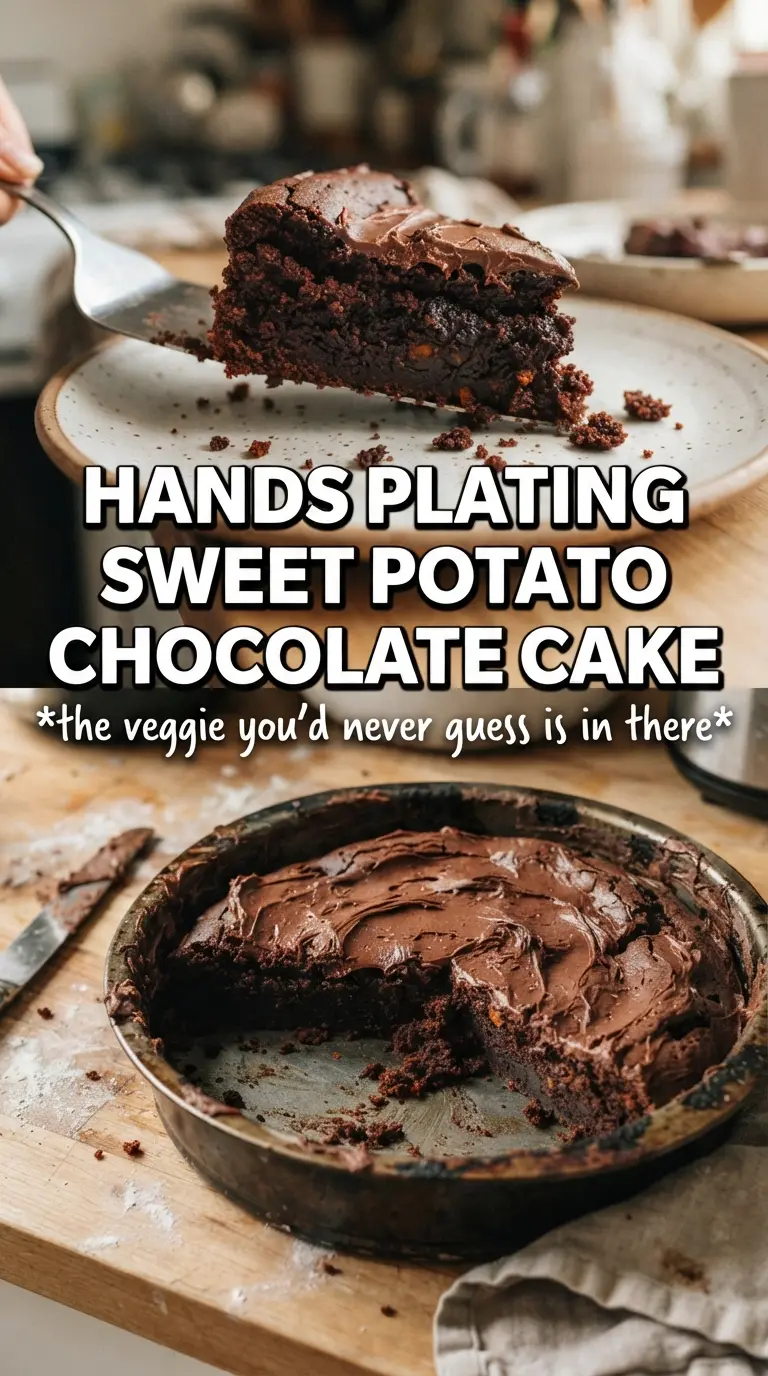
The chocolate chips in the ganache give you a frosting that sets with body, not a thin glaze that slides around. Dark chocolate is the best choice here because the sweet potato already brings a little sweetness and you want the frosting to stay bold. If you only have semi-sweet chips, the cake will still work, but the final result will taste a touch sweeter and less intense.
- Sweet potato puree — This is the moisture engine in the cake. It keeps the layers soft for days and gives the crumb that almost fudgy texture. Use a thick puree, not a thin baby-food-style one.
- Buttermilk — It loosens the batter just enough and reacts with the baking soda for lift. Plain milk won’t do the same job as well, but if that’s what you have, mix 1 cup milk with 1 tablespoon lemon juice or vinegar and let it sit for 5 minutes.
- Dark chocolate chips — Chips melt smoothly into a stable ganache, especially once the powdered sugar is beaten in. Chop up a bar if that’s what you have; just don’t use chocolate with a very low cocoa percentage or the frosting can taste flat.
- Butter in both parts of the recipe — Butter gives the cake richness and helps the ganache turn silky instead of greasy. For the frosting, use unsalted butter so you can control the salt level in the finished cake.
Getting the Batter Mixed, the Layers Baked, and the Ganache Ready
Building the Cake Base
Beat the butter and sugar until the mixture looks pale and fluffy, then add the eggs one at a time. That step traps air and gives the cake some lift before the heavier ingredients go in. Once you add the sweet potato puree, buttermilk, and vanilla, the batter may look slightly curdled; that’s normal and it smooths out as soon as the dry ingredients are added. The mistake to avoid here is rushing straight to the flour with cold butter or underbeaten sugar, which leaves the cake tight instead of tender.
Folding in the Dry Ingredients
Sift or whisk the flour, cocoa powder, baking powder, baking soda, cinnamon, and salt together before adding them to the bowl. Cocoa likes to clump, and those lumps show up in the finished cake as dry pockets. Fold just until you stop seeing flour streaks, then divide the batter evenly between the pans. If you keep stirring after that point, the cake loses the soft crumb that makes this recipe work.
Knowing When the Layers Are Done
Bake at 350°F until the tops look set and a toothpick comes out with a few moist crumbs, not wet batter. The center should spring back lightly when touched, and the edges will pull away from the pan just a little. Start checking at 35 minutes, because overbaked chocolate cake dries out fast once it cools. Let the layers cool completely before frosting or the ganache will slide right off.
Turning Ganache Into Frosting
Pour the hot cream over the chocolate chips and butter, then let it sit untouched for 2 minutes before stirring. That pause gives the chocolate time to melt evenly, which is what keeps the ganache smooth instead of grainy. Once it’s glossy, let it cool until it thickens to a spreadable texture, then beat in the powdered sugar and vanilla until it looks fluffy and holds soft peaks. If it feels too loose, it needs more cooling time, not more sugar right away.
Make It a Little More Intense
Add 1 teaspoon espresso powder to the dry ingredients. It doesn’t make the cake taste like coffee, but it pushes the chocolate flavor forward and gives the crumb a deeper finish.
Dairy-Free Version
Use a plant-based butter, a thick unsweetened non-dairy milk with a little lemon juice in place of the buttermilk, and a dairy-free dark chocolate for the frosting. The cake will still be moist and rich, though the ganache will set a little softer.
Cupcake Version
Portion the batter into lined muffin tins and bake until the centers spring back and a tester comes out with moist crumbs, usually around 18 to 22 minutes. The texture stays soft and tender, but the tops brown a little faster than the layer cakes.
Storage and Reheating
- Refrigerator: Store covered for up to 4 days. The frosting firms up in the fridge, but the cake stays moist.
- Freezer: Freeze unfrosted layers wrapped tightly for up to 2 months, or freeze frosted slices on a tray before wrapping. Thaw in the fridge so the ganache doesn’t sweat.
- Reheating: Bring slices to room temperature before serving. If you warm them, do it briefly at low power in the microwave; too much heat melts the frosting and dries the crumb.
Questions I Get Asked About This Cake
Sweet Potato Chocolate Cake
Ingredients
Equipment
Method
- Preheat the oven to 350F, then grease two 9-inch round pans and set aside.
- Beat butter and sugar together until smooth, then beat in the eggs one at a time, followed by sweet potato puree, buttermilk, and vanilla until fully combined.
- Fold the flour, cocoa powder, baking powder, baking soda, cinnamon, and salt into the batter just until no dry streaks remain.
- Divide the batter evenly between the two prepared pans and smooth the tops.
- Bake for 35-40 minutes at 350F, until a toothpick inserted in the center comes out with moist crumbs, then cool completely.
- Heat the heavy cream until steaming, then pour it over the dark chocolate chips and unsalted butter.
- Rest for 2 minutes, then stir until smooth and glossy.
- Cool the ganache until spreadable, then beat in powdered sugar and vanilla until fluffy.
- Frost between the cake layers and then frost all over.


