Juicy grilled chicken starts with a marinade that actually does more than add surface flavor. This one gives you salty, tangy, garlicky chicken with a little sweetness to help the edges caramelize on the grill, and the balance is what keeps it in regular rotation. It works on breasts, thighs, drumsticks, or even a mixed pack when dinner needs to be flexible.
The key is the ratio. Olive oil carries the seasonings and helps the meat brown without sticking, while soy sauce, lemon juice, and Worcestershire bring depth and sharpness without turning the chicken mushy. A short marinating time gives you decent flavor, but the sweet spot is a few hours in the fridge, which is long enough for the seasoning to sink in and short enough to keep the texture clean.
Below, I’ve included the little details that matter most: how long to marinate different cuts, what to do if you’re using thinner pieces, and the one grilling step that keeps the outside from drying out before the center is cooked through.
The marinade gave the chicken a clean, bright flavor and the grill marks came out gorgeous. I used thighs and they stayed juicy even after a long rest.
Save this grilled chicken marinade for juicy, well-browned chicken with a bright lemon-garlic finish.
The Trick to Marinade Flavor That Reaches the Meat, Not Just the Surface
The biggest mistake with grilled chicken marinade is treating it like a sauce. If the chicken sits too long in a mix that’s heavy on acid, the outside can get a little tight or chalky before the center ever hits the grill. This version keeps the lemon juice in check with enough oil and Worcestershire to round it out, so the flavor gets in without wrecking the texture.
Chicken cut matters here. Boneless breasts need less time than thighs, and smaller pieces need less time than whole cuts because the marinade moves faster. If you’re grilling a mixed batch, pull the thinner pieces first and leave the thicker ones in the bag until they’re ready; that keeps everything juicy instead of over-marinated and uneven.
- Olive oil — This carries the garlic, herbs, and pepper across the chicken and helps the surface brown on the grill instead of drying out. A good everyday olive oil is enough here.
- Soy sauce — This gives the marinade its salty backbone and helps the chicken taste seasoned all the way through. Regular soy sauce works best; low-sodium is fine if that’s what you keep on hand, but the flavor will be a little softer.
- Lemon juice — Fresh lemon juice gives the marinade its brightness and keeps the chicken from tasting flat. Bottled juice will work in a pinch, but fresh gives you a cleaner, sharper finish.
- Dijon mustard — Dijon helps emulsify the marinade so the oil and acid stay blended long enough to coat the chicken evenly. Yellow mustard won’t give the same depth or texture.
- Brown sugar — Just enough to encourage better browning and balance the salt and acid. Don’t skip it unless you’re deliberately cutting sugar; even two tablespoons makes a difference on the grill.
- Garlic and dried herbs — Garlic gives the marinade its punch, and the herbs keep it from tasting one-note. Mince the garlic finely so it spreads through the marinade instead of clumping in one hot spot on the grill.
What Each Ingredient Is Actually Doing in This Chicken Marinade
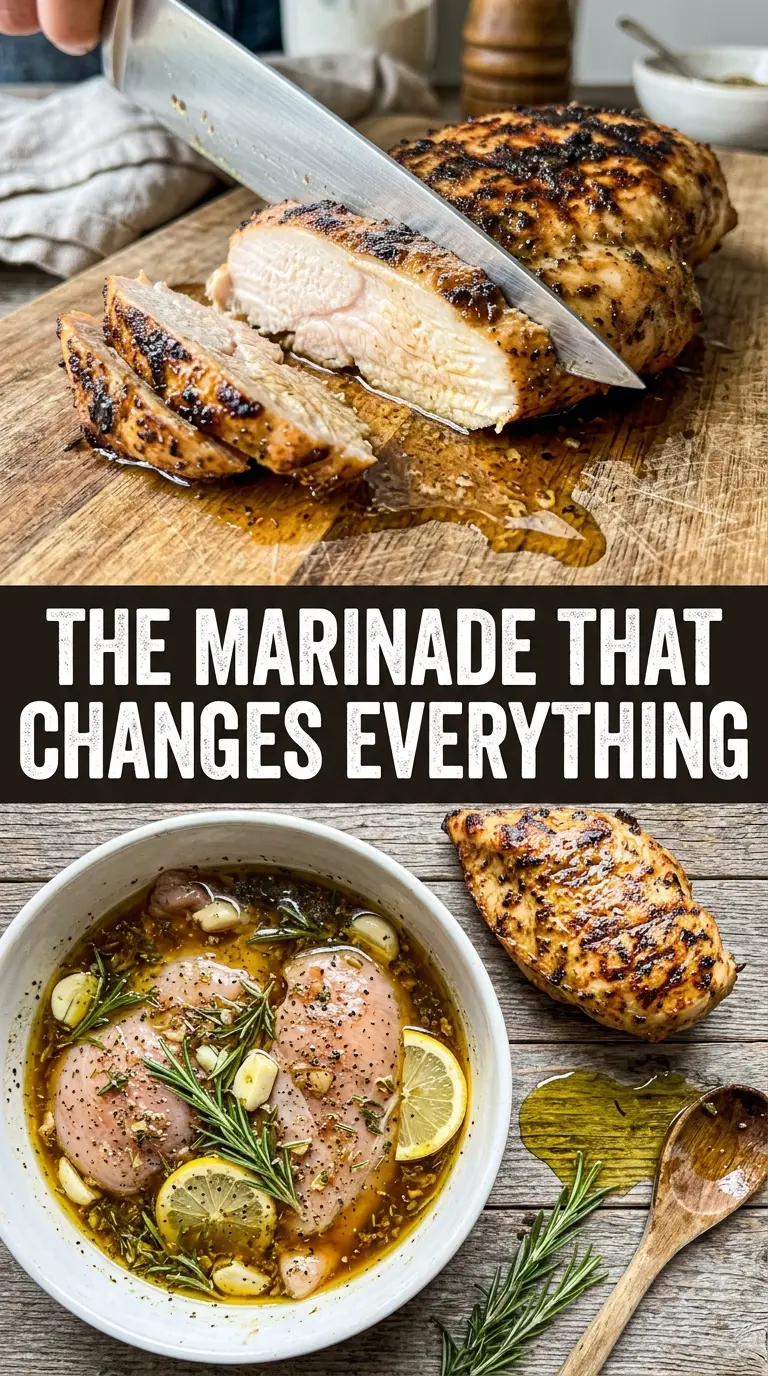
- Chicken breasts (the lean protein) — Cut evenly so pieces cook at the same rate. Lean chicken picks up marinade flavors quickly without needing long soaking.
- Soy sauce or tamari (the savory base) — This provides umami and salt that seasons the chicken all the way through. Low-sodium versions work if that’s your preference.
- Fresh citrus juice (lime, lemon, or orange) — Acid tenderizes the surface and brings brightness. Fresh juice tastes better than bottled in marinades.
- Olive oil or sesame oil (the carrier) — Oil helps the marinade coat evenly and prevents the chicken from sticking on the grill. It also carries aromatic flavors throughout.
- Garlic and ginger (fresh aromatics) — These add pungent depth that mellows slightly when grilled, becoming sweet and mellow rather than harsh.
- Honey or brown sugar (the caramelizer) — A small amount helps the chicken brown and glaze on high heat. Too much can burn before the chicken finishes cooking.
- Fresh herbs (cilantro, parsley, or basil) — These bring freshness that prevents the marinade from tasting heavy. Add some after grilling to keep the dish bright.
- Proper marinating time (30 minutes to 4 hours) — Longer isn’t always better. Acid can soften the chicken surface if it sits too long, so find the balance between flavor and texture.
How to Grill It So the Outside Browns Before the Inside Dries Out
Mixing the Marinade Completely
Whisk the marinade until the oil looks fully blended with the lemon juice and soy sauce, not separated into slicks on top. Dijon helps that happen, but it still needs a good whisk so every bit of chicken gets the same balance of salt, acid, and sweetness. If the garlic sits in a clump at the bottom of the bowl, it’ll scorch later instead of seasoning the meat evenly.
Marinating Without Overdoing It
Put the chicken in a zip-top bag, pour the marinade over it, and press out as much air as you can before sealing. Four hours is plenty for thinner cuts, while 12 to 24 hours works well for thicker pieces and bone-in chicken. If the chicken starts to look pale and slightly firm on the outside, it’s been in the acid too long, so keep a close eye on the timing.
Grilling for Color and Juiciness
Preheat the grill to medium-high so the chicken sears when it hits the grates. Cook until the internal temperature reaches 165°F, turning once or twice for good grill marks without constant flipping. If the outside is browning too fast, move the chicken to a cooler part of the grill; that’s the easiest way to avoid burnt edges and an undercooked center.
Resting Before You Slice
Let the chicken rest for 5 to 10 minutes after grilling. That short rest keeps the juices inside the meat instead of running onto the cutting board the second you slice in. If you cut too early, even perfectly cooked chicken can seem dry.
How to Adjust This Marinade for Different Cuts and Diets
For Boneless Chicken Breasts
Use the shorter end of the marinating window, about 4 to 8 hours, because breasts pick up flavor faster and can dry out if they sit too long in the acid. Grill them over medium-high heat, then pull them as soon as they hit 165°F. The result is cleaner and leaner than thighs, but still juicy if you don’t overcook them.
For Bone-In Thighs or Drumsticks
These can sit in the marinade closer to 12 to 24 hours and still hold up beautifully. Bone-in pieces need a little more time on the grill, so keep the heat at medium-high and move them if the skin or outside starts to darken too quickly. You get deeper flavor and a juicier bite than with boneless cuts.
Gluten-Free Version
Use tamari or a certified gluten-free soy sauce in place of regular soy sauce. Everything else in the marinade stays the same, and the flavor stays balanced and savory. This is the easiest swap because soy sauce is doing most of the seasoning work.
Lower-Sugar Marinade
Cut the brown sugar in half if you want less sweetness, but don’t remove it completely unless you’re okay losing some browning on the grill. The sugar doesn’t just sweeten the marinade; it helps the chicken pick up that lightly caramelized edge. A full sugar-free version will taste sharper and brown less evenly.
Storage and Reheating
- Refrigerator: Store cooked chicken in an airtight container for up to 4 days. It stays moist best when sliced only after it cools.
- Freezer: Cooked chicken freezes well for up to 2 months. Wrap it tightly or store it in freezer bags, then thaw in the refrigerator overnight.
- Reheating: Reheat gently in a covered skillet over low heat with a splash of water or broth, or warm it in a 300°F oven until just heated through. High heat dries grilled chicken out fast, especially breast meat.
Answers to the Questions Worth Asking

The Best Ever Grilled Chicken Marinade
Ingredients
Equipment
Method
- Whisk together olive oil, soy sauce, lemon juice, Worcestershire sauce, Dijon mustard, minced garlic, brown sugar, black pepper, and dried herbs until evenly combined.
- Place chicken in a large zip-top bag and pour the marinade over the chicken, then seal the bag.
- Refrigerate the sealed bag and marinate for 4-24 hours for best results, turning once halfway if convenient.
- Preheat your grill to medium-high heat.
- Grill the chicken until the internal temperature reaches 165°F, timing varies by cut.
- Let the grilled chicken rest for 5-10 minutes before serving to keep it juicy.