Golden chicken thighs resting over creamy orzo, sun-dried tomatoes, and spinach make this skillet dinner feel far more polished than the effort it takes to get there. The orzo cooks right in the same pan as the sauce, which means it picks up every bit of browned chicken flavor along the way and finishes with a rich, clingy texture instead of sitting in a separate pot waiting to be tossed together.
The key is letting the chicken get a real sear before anything else goes into the pan. That crust gives the finished dish depth, and the pan drippings help the onion, garlic, and sun-dried tomatoes build a sauce that tastes layered instead of flat. Cream and parmesan do the heavy lifting at the end, but they only work well if the orzo has already absorbed enough broth to turn the skillet into something silky and cohesive.
Below, you’ll find the little timing details that keep the orzo tender without turning mushy, plus the substitution that works if you want to lighten the sauce a bit without losing that Tuscan-style richness.
The orzo turned out creamy without getting gluey, and the sun-dried tomatoes made the sauce taste like it had been simmering all afternoon. My husband asked for seconds before I even sat down.
Love this creamy one-pan Tuscan chicken orzo? Save it to Pinterest for the nights when you want golden chicken, silky orzo, and barely any cleanup.
The Pan That Makes the Sauce Taste Like More Than Cream
The biggest mistake with creamy skillet pasta is building the sauce in a clean pan. That misses the browned fond from the chicken, which is where the deep savory flavor comes from. Here, the onion and garlic go into the same skillet after the chicken comes out, and the broth loosens all those stuck-on bits before the cream goes in.
Orzo also behaves differently than larger pasta. It cooks fast, tightens the sauce as it simmers, and can go from tender to bloated in a minute or two. Stir it occasionally, keep the simmer gentle, and stop when it still has the slightest bite before the parmesan and spinach go in.
What Each Ingredient Is Actually Doing In This Dish
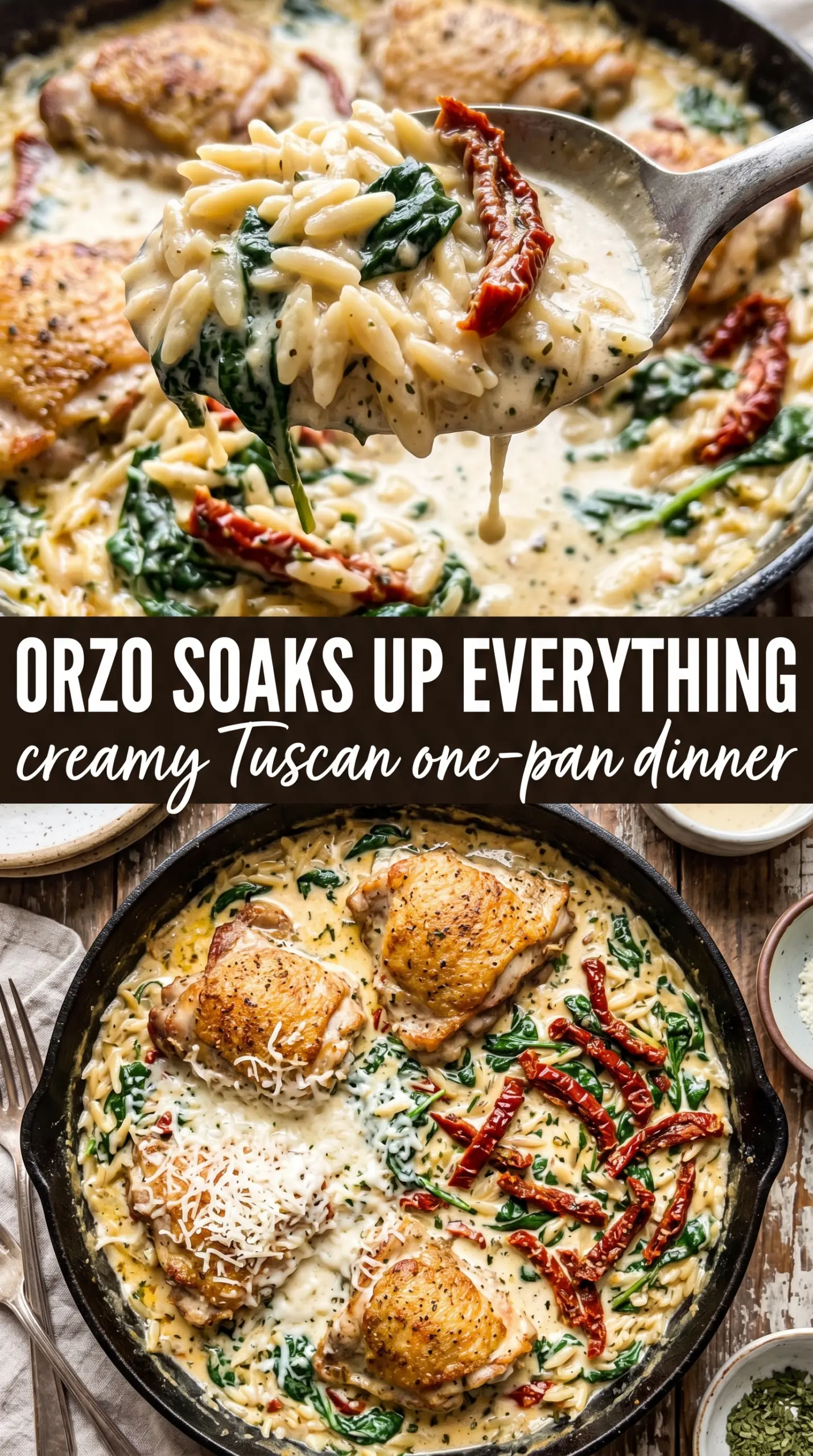
- Boneless chicken thighs — These stay juicier than breasts and handle the sear better. If you swap in chicken breasts, use cutlets or pound them to an even thickness so they don’t dry out before the orzo finishes.
- Orzo — This is the structure of the dish. It releases starch as it cooks, which helps the cream and broth turn into a sauce instead of a loose pool.
- Sun-dried tomatoes — They bring concentrated sweetness and acidity, which keeps the sauce from tasting flat. Oil-packed tomatoes work best; if yours are very dry, soak them briefly in hot water and chop them small.
- Heavy cream — This is what gives the skillet its body. Half-and-half will work in a pinch, but the sauce will be thinner and you’ll need to rely more on the parmesan and simmer time to thicken it.
- Parmesan — Grate it fresh if you can. Pre-grated cheese often melts less smoothly and can leave the sauce a little grainy.
- Spinach — It wilts down fast and gives the dish some freshness at the end. Add it at the very end so it stays green instead of turning dull and stringy.
Building the Skillet in the Right Order
Seasoning and Searing the Chicken
Coat the chicken thighs with paprika, Italian seasoning, salt, and pepper before they hit the pan. Heat the oil until it shimmers, then lay the chicken down and leave it alone long enough to build a deep golden crust. If it sticks when you try to lift it, give it another minute; it will release on its own once it has browned enough.
Softening the Aromatics
Once the chicken comes out, the onion goes into the same pan and picks up all the flavor left behind. Cook it until it looks translucent and a little glossy, then add the garlic and sun-dried tomatoes for just a short burst so the garlic doesn’t burn. Burnt garlic turns the whole sauce bitter, and there is no fixing that later.
Cooking the Orzo in the Sauce
Stir in the orzo so it toasts for a moment in the oil and aromatics, then add the broth and cream. Keep the heat at a steady simmer, not a hard boil, and stir occasionally so the pasta doesn’t settle and stick to the bottom. The sauce should look loose at first; it thickens as the orzo swells and releases starch.
Finishing With Cheese, Greens, and Chicken
When the orzo is almost tender, stir in the parmesan and spinach. Pulling the skillet off the heat for a minute before adding the cheese helps keep the sauce smooth instead of grainy. Nestle the chicken back on top, cover the pan, and let it finish gently so the thighs stay juicy while the orzo absorbs the last bit of flavor.
How To Change The Skillet Without Losing Its Character
Make It Dairy-Free
Use full-fat coconut milk or an unsweetened dairy-free cooking cream in place of the heavy cream, then finish with a dairy-free parmesan substitute if you like. The sauce won’t taste exactly the same, but it will still be creamy and cling to the orzo.
Use Chicken Breasts Instead Of Thighs
Chicken breasts work, but they need less time and a little more attention. Sear them just until golden, then return them to the skillet near the end so they finish without drying out while the orzo cooks.
Make It Gluten-Free
Swap the orzo for a small gluten-free pasta shape that cooks in a similar time, and watch the liquid closely because different pastas absorb broth at different rates. Stir often and add a splash more broth if the pan looks dry before the pasta is tender.
Add Mushrooms For More Depth
Brown sliced mushrooms with the onion so they lose their moisture and pick up color before the liquid goes in. They add another savory layer and make the skillet feel even heartier without changing the balance of the dish.
Storage and Reheating
- Refrigerator: Store leftovers in an airtight container for up to 3 days. The orzo thickens as it sits, so the sauce will look tighter the next day.
- Freezer: It freezes, but the cream-based sauce can separate a little after thawing. If you freeze it, cool it completely first and thaw overnight in the refrigerator.
- Reheating: Warm it gently on the stove with a splash of broth or water to loosen the sauce. High heat is the fastest way to make the cream split and turn the orzo gummy.
Answers to the Questions Worth Asking
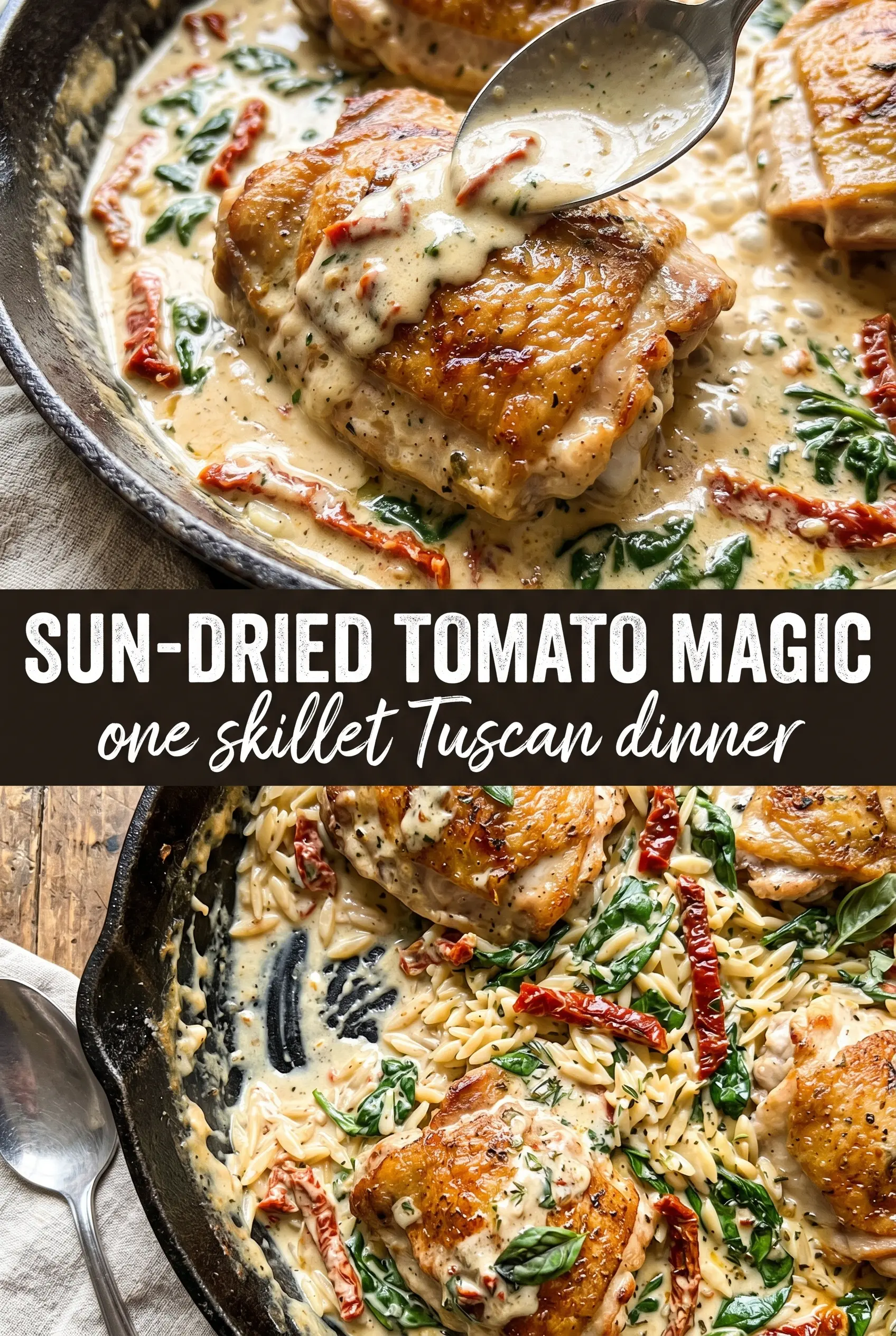
Tuscan Chicken And Orzo Skillet
Ingredients
Equipment
Method
- Season boneless chicken thighs with smoked paprika, Italian seasoning, salt, and pepper.
- Heat olive oil in a large skillet and sear chicken thighs for 5-6 minutes per side until golden; remove to a plate.
- Sauté diced onion for 3 minutes, then add minced garlic and chopped sun-dried tomatoes and cook 2 minutes.
- Add orzo pasta and toast briefly, then pour in chicken broth and heavy cream and stir to combine.
- Simmer for 10 minutes, stirring occasionally, until orzo is nearly tender.
- Stir in grated parmesan and baby spinach until spinach wilts.
- Nestle chicken back on top, cover, and cook for 5 more minutes until the chicken is cooked through.
- Garnish with fresh basil for serving.