Silky strands of pasta coated in deep golden caramelized onions have a way of tasting far more luxurious than the ingredient list suggests. The onions turn sweet and jammy, the pasta water pulls everything into a glossy sauce, and the nutritional yeast adds just enough savory depth to make the whole bowl feel finished instead of merely tossed together.
The key here is patience with the onions. They need steady medium-low heat so their natural sugars can develop without scorching, and the pan needs a little attention every few minutes so nothing sticks in one bitter layer. A splash of dry white wine lifts the browned bits off the bottom, while a small amount of balsamic vinegar sharpens the sweetness and keeps the sauce from tasting flat.
Below you’ll find the timing that matters most, the best way to keep the sauce creamy without dairy, and a few smart swaps if you need to adjust for what’s in the pantry.
The onions got that deep sweet edge I was hoping for, and the pasta water made the sauce cling to the rigatoni instead of pooling at the bottom. My husband kept going back for “just one more forkful.”
Save this vegan caramelized onion pasta for the nights when you want a creamy, savory bowl with deep onion sweetness and no dairy.
The One Thing That Keeps This Sauce Creamy Instead of Clumpy
The sauce in this pasta doesn’t rely on cream, so the texture comes from the way the onions, pasta water, and nutritional yeast are brought together. If the onions are undercooked, the sauce tastes sharp and thin. If they’re pushed too hard over high heat, they brown on the outside before they turn soft and sweet in the middle, and that bitterness carries through the whole dish.
The other part that matters is timing. The pasta water goes in after the wine and balsamic, when the onions are already glossy and concentrated. That starch helps emulsify the olive oil and vegan butter into a sauce that clings to the noodles instead of slipping off the pan. Add the nutritional yeast at the end of the pan stage so it stays savory and nutty, not chalky.
- Onions — Thin slices matter here because they collapse evenly and caramelize at the same pace. Thick slices take longer and can leave you with a mix of burnt edges and underdone centers.
- Dry white wine — This is the acid that lifts the sweetness and deglazes the pan. If you don’t use wine, a splash of vegetable broth plus a teaspoon of extra balsamic works, but the flavor will be less bright.
- Pasta water — This is what turns the onions from loose and glossy into an actual sauce. Don’t use plain water unless you have to; it won’t thicken or bind the same way.
- Nutritional yeast — It gives the sauce that parmesan-like savoriness. Grate-like substitutes won’t do the same job, and this is one place where the ingredient earns its keep.
Building the Onions Into a Sauce That Actually Clings
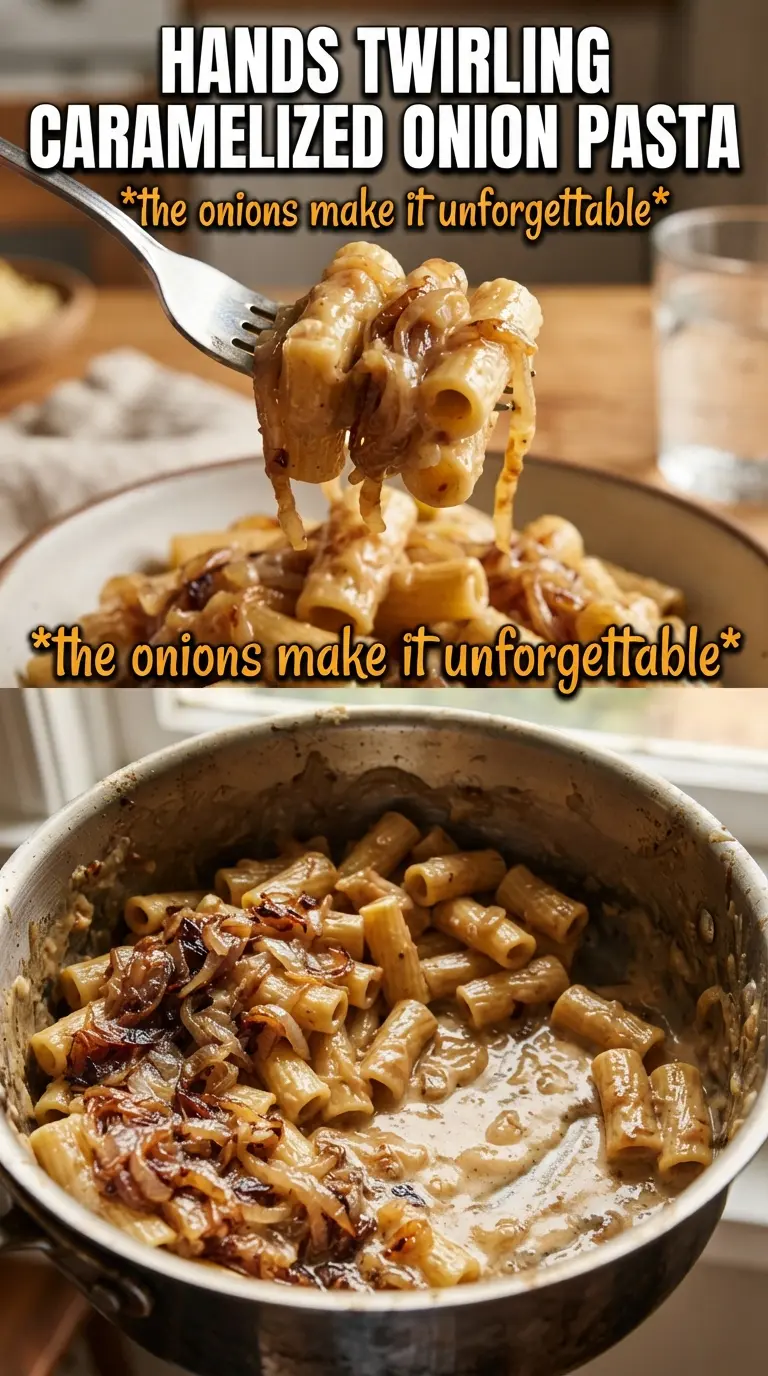
- Rigatoni or spaghetti — Rigatoni catches the onion strands and sauce in every ridge, while spaghetti gives you a silkier, more streamlined bite. Either works, but rigatoni is the better choice if you want the onions to stay front and center.
- Olive oil and vegan butter — The combination gives the onions better browning and a rounder finish than oil alone. If you only have oil, the dish will still work, but it loses a little of that buttery depth.
- Fresh thyme — Dried thyme can stand in, but use half as much because it reads louder once it hits the hot pan. Fresh thyme gives the sauce a cleaner, woodsy note that balances the sweetness.
- Balsamic vinegar — A teaspoon is enough to sharpen the caramelized onions without making them taste tangy. More than that and the sauce starts reading as sweet-and-sour instead of savory.
The 45 Minutes You Shouldn’t Rush
Softening the Onions First
Start the onions in olive oil and vegan butter over medium-low heat and give them time to collapse before you expect color. The pan should sound like a gentle sizzle, not a hard fry. If the heat is too high, the edges will darken before the full batch has softened, which leaves you with uneven sweetness and little burnt bits throughout. Stir every few minutes and scrape the bottom so the browning stays even.
Letting the Sugars Develop
As the onions cook, they’ll move from watery and pale to sticky, then finally deep amber and jammy. That shift is the whole point of the recipe, and it takes about 35 to 40 minutes. If the pan looks dry before the onions are ready, add a small splash of water and keep going rather than turning up the heat. Water buys you time without forcing the sugars to scorch.
Finishing the Pan Sauce
Once the garlic and thyme go in, cook them just long enough to smell fragrant, about two minutes. Add the wine and let it bubble until the sharp alcohol smell fades and the liquid reduces slightly, then stir in the balsamic and red pepper flakes. Toss in the pasta with the reserved water and nutritional yeast, and keep moving everything until the sauce turns glossy and coats the noodles instead of sitting in the bottom of the pan. If it looks dry, add more pasta water a tablespoon at a time.
How to Adapt This for a Lighter Pantry, a Bigger Bite, or No Wine
Gluten-Free Version
Use your favorite gluten-free pasta and reserve a little extra cooking water because GF noodles often need more help loosening the sauce. The onions and pan sauce stay the same, but the final texture may be a touch softer, so toss it quickly once the pasta is drained.
No-Wine Swap
Use vegetable broth plus a teaspoon of extra balsamic to replace the wine. You’ll lose a little brightness and complexity, but the sauce will still deglaze the pan and keep the onions from tasting flat.
Extra Savory Finish
Stir in a spoonful of white miso at the very end if you want a deeper, more savory sauce. Add it off the heat with a splash of pasta water so it dissolves cleanly instead of clumping.
Storage and Reheating
- Refrigerator: Store leftovers in an airtight container for up to 4 days. The sauce will thicken as it sits, so expect the pasta to look a little tighter the next day.
- Freezer: It freezes, but the pasta softens after thawing, so I only freeze it if I need to. Freeze in a flat airtight container for up to 2 months.
- Reheating: Reheat gently on the stove with a splash of water or broth over low heat, stirring until the sauce loosens again. High heat dries out the pasta and can make the onions stick and darken too fast.
Answers to the Questions Worth Asking
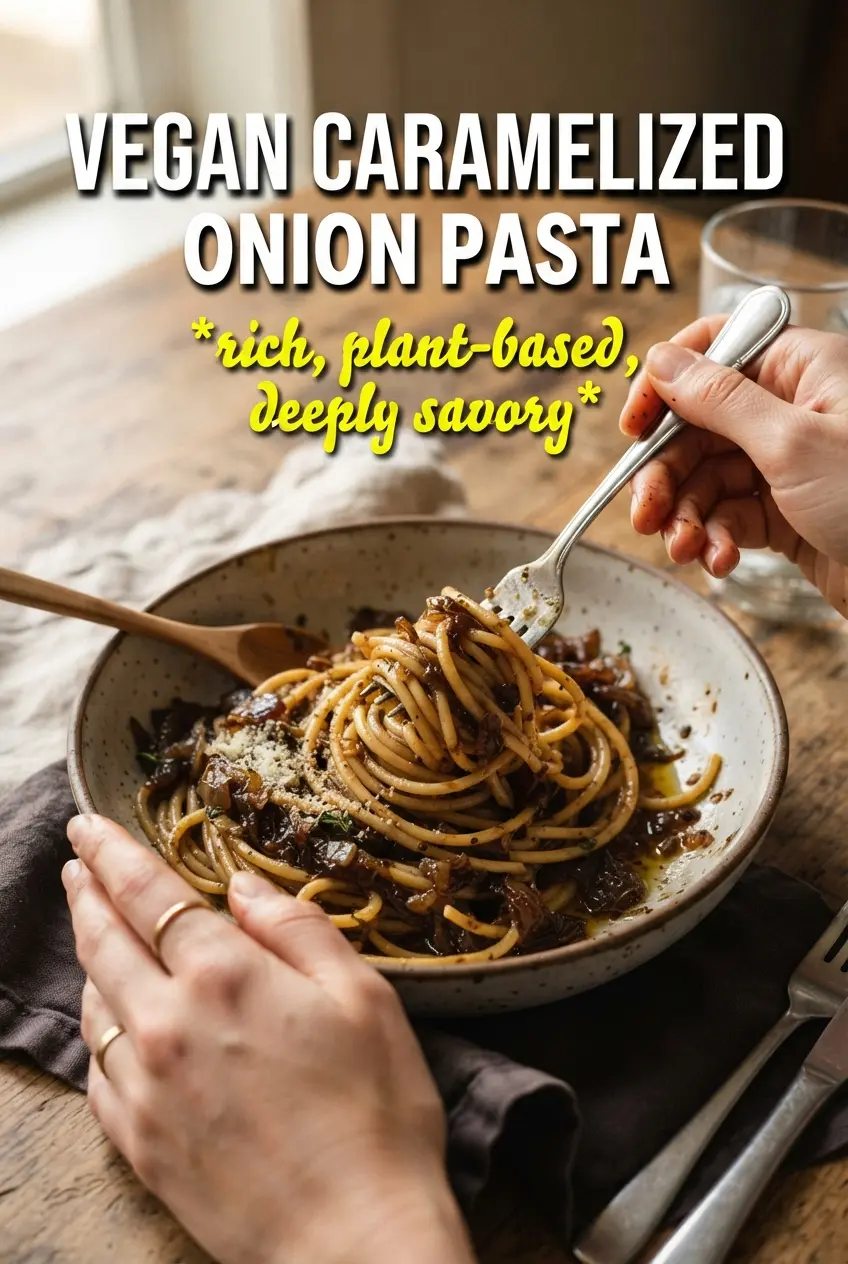
Vegan Caramelized Onion Pasta
Ingredients
Equipment
Method
- Heat olive oil and vegan butter in a cast iron skillet over medium-low heat, then add the thinly sliced onions. Cook 35-40 minutes, stirring every few minutes, until deeply caramelized and golden.
- Stir in the minced garlic and fresh thyme and cook for 2 minutes, until fragrant and lightly softened. Keep the heat at medium-low to avoid browning the garlic.
- Pour in the dry white wine to deglaze the pan, scraping up the browned bits from the bottom. Cook for 2 minutes, until the wine reduces slightly.
- Add the balsamic vinegar and red pepper flakes, then stir to coat the onions evenly. Cook 2 minutes so the sauce tastes balanced and cohesive.
- Cook the rigatoni or spaghetti according to package directions, then reserve 1 cup pasta cooking water before draining. Set aside the drained pasta.
- Add drained pasta to the skillet with the caramelized onion sauce and toss with nutritional yeast and pasta cooking water. Keep tossing 1-2 minutes, until creamy and glossy.
- Season with salt and pepper to taste, then top with fresh parsley and extra nutritional yeast. Serve immediately while the sauce clings to the pasta.


