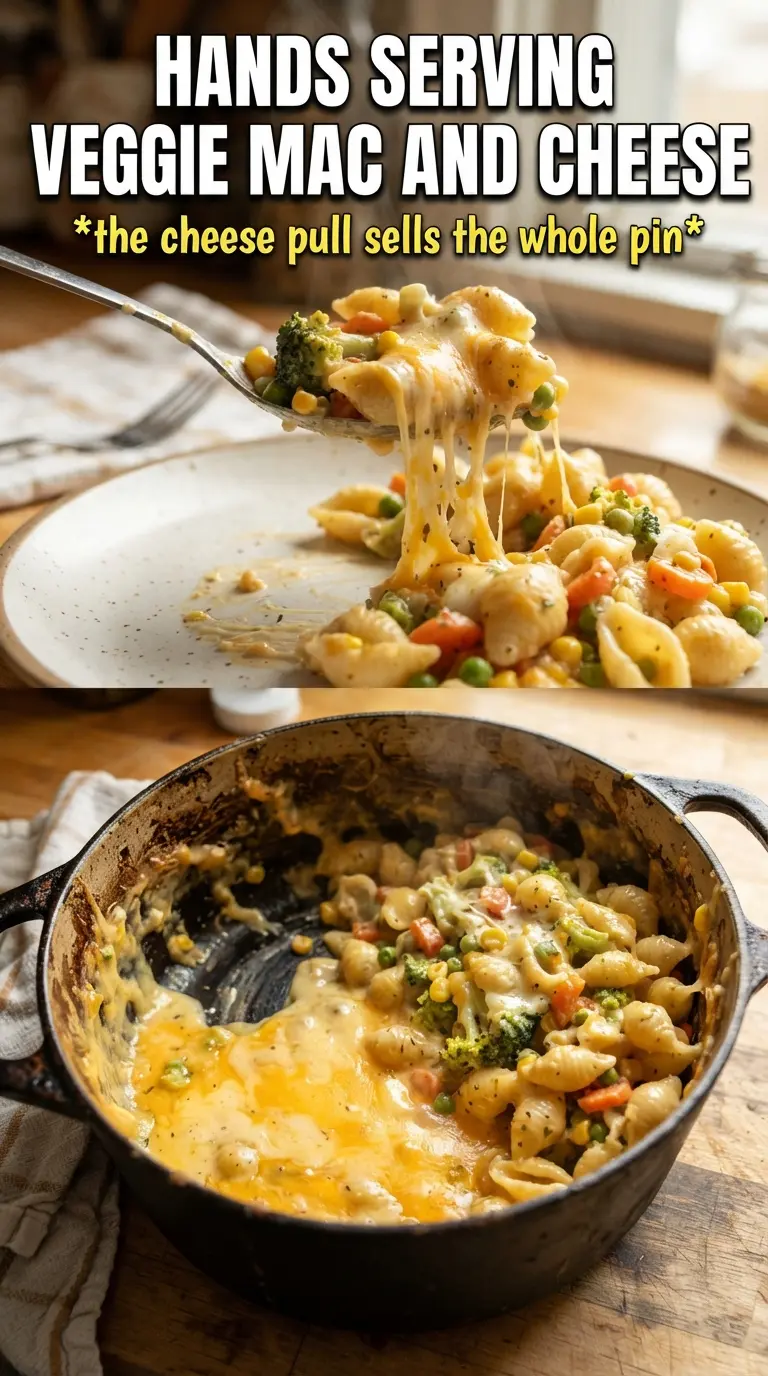
Veggie mac and cheese should come out creamy, stretchy, and full of enough texture to keep every bite interesting. The vegetables aren’t just tossed in as an afterthought here; they’re chosen to bring color, sweetness, and a little freshness to balance all that cheddar and cream. When it’s done right, the top goes deeply golden while the pasta underneath stays saucy instead of stiff.
The trick is building a sauce that can handle the extra vegetables without going thin or grainy. A quick flour-butter roux gives the milk and cream something to cling to, and the Dijon and smoked paprika keep the cheese from tasting flat. I like using sharp cheddar for bite and Gruyere for melt, because one without the other can lean either too blunt or too heavy.
Below, you’ll find the exact way to keep the sauce smooth, how to keep the vegetables from watering everything down, and a few useful swaps if you want to change up the mix.
The sauce stayed silky even after baking, and the broccoli and peppers kept it from feeling too heavy. My kids picked out the roasted red peppers first, which surprised me in the best way.
Save this veggie mac and cheese for the nights when you want a creamy baked pasta with a crisp golden top and plenty of vegetables in every bite.
The Reason the Sauce Stays Creamy Even with All Those Vegetables
The biggest mistake with veggie mac and cheese is adding vegetables that carry too much water into a sauce that hasn’t been thickened enough. Broccoli, peas, spinach, and roasted peppers all bring something good to the dish, but they also change the balance fast. A proper roux gives the milk and cream a stable base, and that matters once the vegetables and pasta go in.
The other detail that keeps this from turning loose is the cheese timing. If the sauce is boiling when the cheddar and Gruyere go in, the proteins can seize and go grainy. Pull the heat down before adding the cheese, then stir until the sauce is smooth and glossy. That gives you a sauce that bakes into the pasta instead of separating around it.
- Broccoli — Blanch it first so it stays bright and tender instead of dumping raw crunch into the casserole. A quick dip in boiling water is enough.
- Roasted red peppers — These add sweetness and color without needing extra cooking time. Jarred peppers are fine as long as you drain them well.
- Spinach — It wilts fast and disappears into the sauce, but it still adds freshness. If you skip it, the dish will taste richer and less balanced.
- Gruyere — This is what gives the sauce that smooth, stretchy melt. If you substitute all cheddar, the flavor gets sharper but the texture loses some silkiness.
What Each Ingredient Is Doing in the Pan
- Sharp cheddar — Use a good block and shred it yourself if you can. Pre-shredded cheese has anti-caking starches that can make the sauce less smooth.
- Whole milk and heavy cream — Together they give the sauce enough body to coat the pasta and survive the bake. You can use all milk in a pinch, but the finished dish will be looser.
- Dijon mustard — It doesn’t make the dish taste like mustard. It sharpens the cheese and keeps the flavor from leaning flat.
- Smoked paprika — This adds warmth and a little depth under the cheese. It’s subtle, but it makes the whole pan taste more complete.
- Panko topping — Panko stays lighter and crispier than regular breadcrumbs, which is why the top gets that satisfying crunch. Mix it with melted butter and parmesan so it browns evenly.
Building the Sauce So It Doesn’t Turn Grainy
Start with a clean roux
Melt the butter, whisk in the flour, and cook it for about a minute until it smells a little nutty and looks foamy rather than pasty. That brief cook takes away the raw flour taste and gives the sauce a smooth backbone. If the roux stays pale and wet, the sauce can taste floury later.
Add the dairy gradually
Whisk in the milk and cream a splash at a time at first, then in a steady stream once the mixture loosens. This keeps lumps from forming and gives you a smooth base. If the sauce looks thin at this stage, don’t panic; it thickens as it simmers.
Lower the heat before the cheese goes in
Once the sauce has thickened enough to coat a spoon, pull the heat down and stir in the cheddar and Gruyere off a hard boil. High heat is what breaks cheese sauces. Stir until the sauce looks glossy and the last shreds disappear before folding in the pasta and vegetables.
Bake until the edges bubble
After everything goes into the baking dish, the oven should finish the job without drying it out. You’re looking for a bubbling edge and a golden, crisp top, not a pan that’s reduced to a stiff brick. If it looks done on top but doesn’t bubble around the edges, give it a few more minutes.
How to Adapt This for Different Kitchens and Dietary Needs
Make It Gluten-Free
Use your favorite gluten-free pasta and swap the all-purpose flour for a gluten-free flour blend that works as a 1:1 thickener. The panko topping should be replaced with gluten-free breadcrumbs or crushed rice cereal for the same crunch.
Make It Lighter Without Losing the Bake
Swap the heavy cream for more whole milk if you want a less rich version. The sauce will still work, but it won’t be quite as plush, so don’t overbake it or the pasta can dry out.
Change Up the Vegetables
Cauliflower, sautéed mushrooms, or chopped cooked zucchini all work here, but each one changes the moisture level. Keep watery vegetables cooked down and drained well before they go into the pan, or the sauce will thin out in the oven.
Storage and Reheating
- Refrigerator: Store covered for up to 4 days. The sauce will thicken as it chills.
- Freezer: It freezes, but the texture gets a little softer after thawing. Wrap portions well and freeze for up to 2 months.
- Reheating: Reheat in the oven at 350°F with a splash of milk covered loosely with foil, or microwave in short bursts with a spoonful of milk stirred in. The common mistake is blasting it until the sauce turns oily and the pasta dries out.
Questions I Get Asked About This Recipe
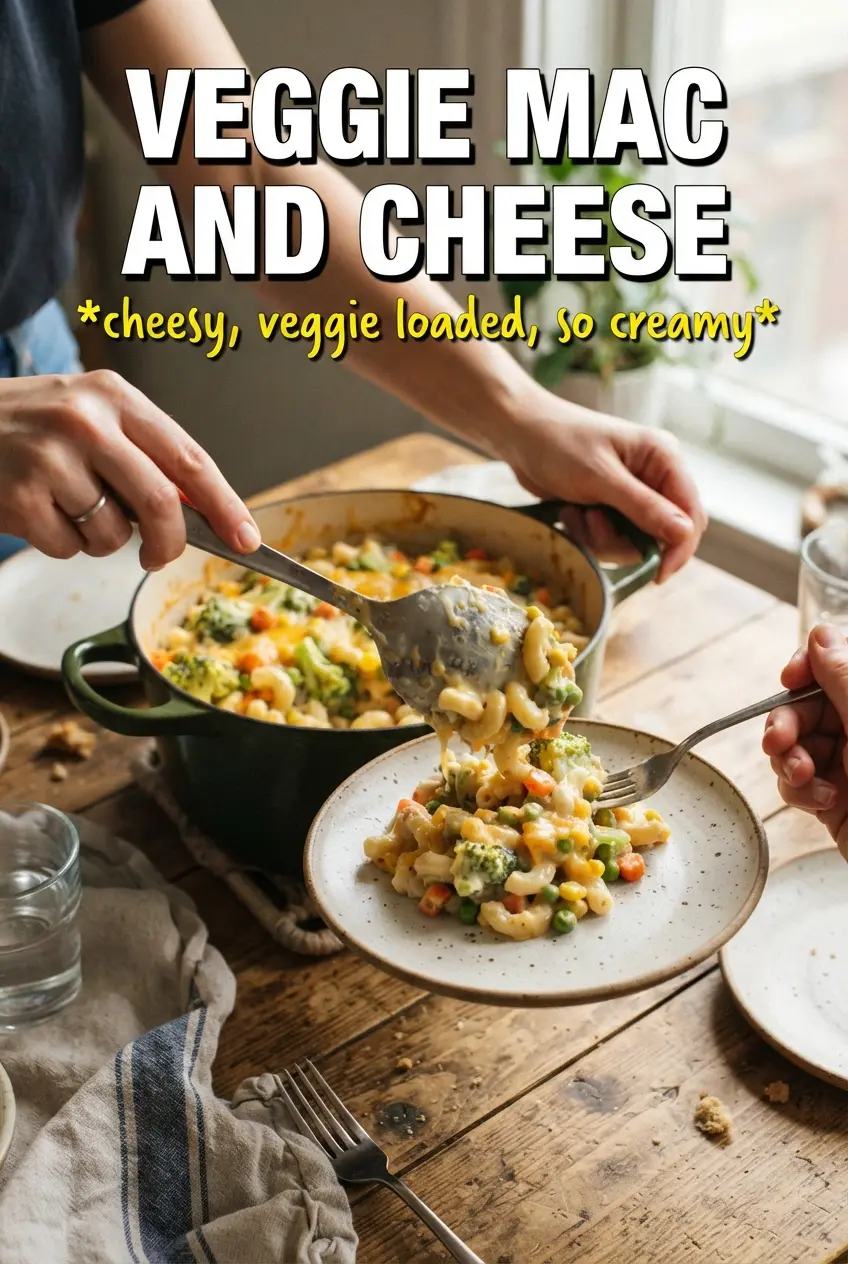
Veggie Mac And Cheese
Ingredients
Equipment
Method
- Preheat oven to 375F and grease a 9x13 dish for easy release. Make sure the dish is evenly coated so the topping turns crisp on the edges.
- Cook the elbow pasta or shells until tender, then drain well. Keep it drained so the sauce doesn’t thin and the bake stays creamy.
- Melt the unsalted butter and whisk in the all-purpose flour, then cook for 1 minute. The mixture should look smooth and slightly thickened before adding liquids.
- Gradually add the whole milk and heavy cream while whisking. Simmer until thick enough to coat a spoon, about a few minutes.
- Stir in the sharp cheddar, Gruyere, Dijon mustard, and smoked paprika. Mix until the cheeses fully melt and the sauce looks glossy and uniform.
- Fold in the pasta, broccoli florets, frozen peas, roasted red peppers, and baby spinach, then season with salt and pepper to taste. Continue mixing until everything is coated in sauce and the spinach wilts.
- Transfer the mixture to the greased dish. Spread it out evenly so the topping browns consistently.
- Mix the panko topping with butter and parmesan, then scatter over the top. Aim for an even layer so you get a golden crust across the whole surface.
- Bake at 375F for 25-30 minutes, until golden and bubbling at the edges. Let it rest briefly before serving so the cheese sauce sets.


