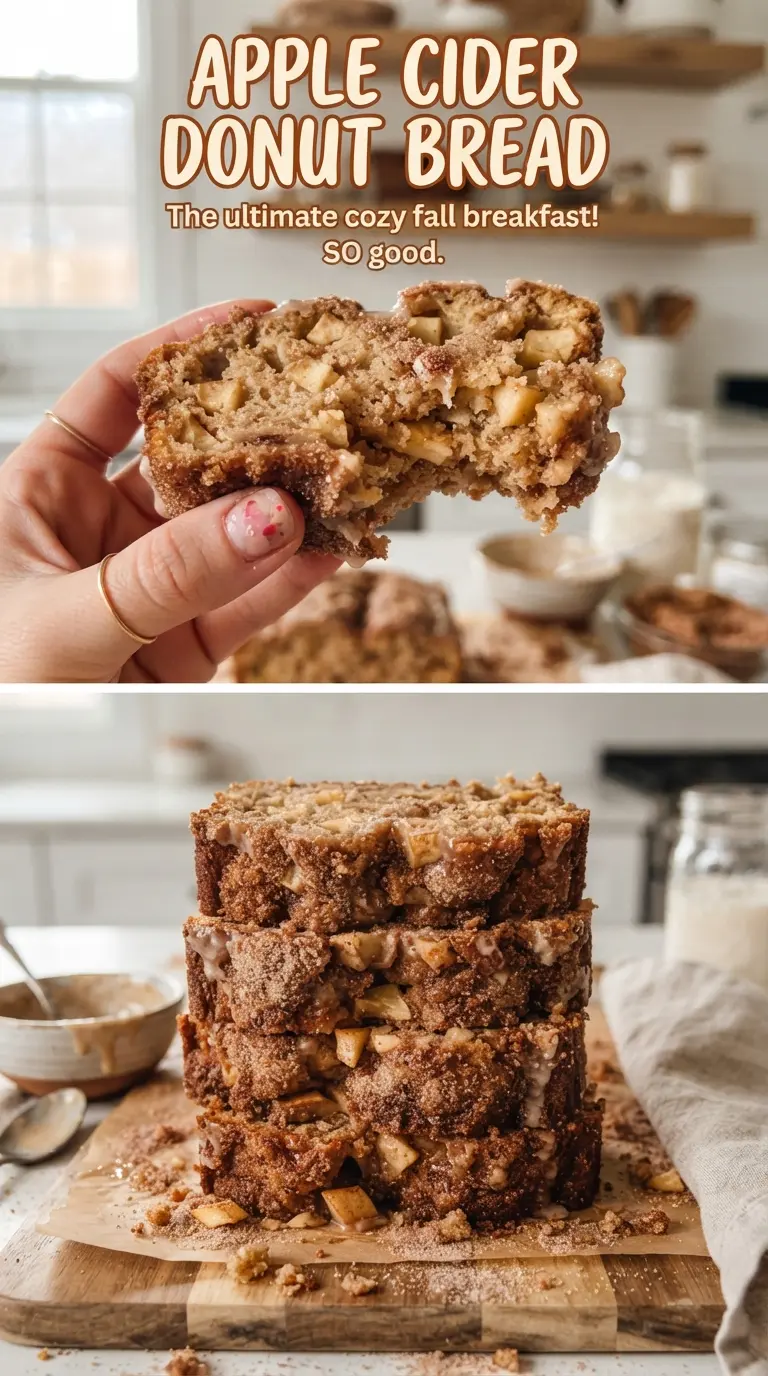
Apple cider donut bread brings the bakery-donut experience into a loaf pan, with a tender, spice-speckled crumb and that unmistakable cinnamon-sugar crust on the outside. The best part is the contrast: a soft, slightly tangy interior from the reduced cider and sour cream, then a buttery coating that gives every slice a crackly, sweet finish.
What makes this version work is reducing the cider before it goes into the batter. That step concentrates the apple flavor and keeps the loaf from tasting thin or watered down. Sour cream adds moisture without making the crumb heavy, and brushing the loaf while it’s still warm helps the cinnamon sugar cling instead of sliding off.
Below, you’ll find the one trick that keeps the crumb tender, plus a few useful swaps and storage notes for when you want to bake it ahead.
The cider flavor came through beautifully, and the cinnamon sugar crust stayed crunchy even after the loaf cooled. I sliced it while it was still just warm and the crumb was so tender it practically pulled apart.
Save this apple cider donut bread for the loaf with the crunchy cinnamon sugar crust and tender spiced crumb.
The Secret to Apple Cider Flavor That Doesn’t Bake Away
Most cider breads taste faint because the liquid gets diluted by the batter. Reducing the cider down to half a cup fixes that problem before it starts. You’re concentrating the fruit flavor and adding a little natural sweetness, which gives the loaf a deeper apple note without needing extract or extra spices.
The other place people lose texture is overmixing once the flour goes in. This batter should look just combined, with no dry pockets but still a little rough around the edges. Overworking it builds gluten and turns a tender loaf into something tight and bready instead of soft and donut-like.
What Each Ingredient Is Doing in This Loaf
- Apple cider — Reducing it is non-negotiable here. Unreduced cider adds too much water and too little flavor, while the simmered version gives you a stronger apple backbone in every bite.
- Sour cream — This keeps the crumb moist and plush without making the loaf greasy. Full-fat plain Greek yogurt works in a pinch, but the texture is a touch firmer and tangier.
- Brown sugar — It brings a deeper caramel note than white sugar and helps the loaf stay soft for a couple of days. If you swap in all white sugar, the bread will still work, but it tastes flatter.
- Cinnamon and nutmeg — These are what push the loaf into donut territory. Don’t overdo them; the cider should still be the main flavor, not a spice cake.
- Butter for the topping — Brushing the loaf while it’s warm gives the sugar something to grab onto. If the loaf is fully cool, the coating won’t cling as well and you’ll lose that crisp crust.
Building the Loaf So It Stays Tender
Reducing the cider first
Pour the cider into a small saucepan and simmer it until you have about 1/2 cup left. It should smell concentrated and look a little deeper in color. Let it cool before it goes into the batter; if it’s hot, it can soften the butter too early and throw off the texture.
Mixing the batter without toughening it
Beat the butter and brown sugar until the mixture looks pale and fluffy, then add the eggs, sour cream, vanilla, and cooled cider. When the dry ingredients go in, fold just until the flour disappears. A few small streaks are better than a heavy hand here, because overmixing is the fastest way to lose that soft donut-style crumb.
Baking and finishing the crust
Spread the batter evenly into the prepared loaf pan and bake until a toothpick comes out clean, about 50 to 55 minutes. Cool it for about 10 minutes, then brush the top and sides with melted butter while the loaf is still warm. Press the cinnamon sugar on firmly so it forms that sandy, crackly shell instead of falling off in patches.
How to Adapt Apple Cider Donut Bread Without Losing the Point
Dairy-Free Version
Use a plant-based butter and swap the sour cream for thick unsweetened dairy-free yogurt. The loaf will still be tender, though the finish won’t have quite the same rich dairy note. Keep the cider reduction exactly the same so the apple flavor stays strong.
Gluten-Free Swap
Use a 1:1 gluten-free baking flour that contains xanthan gum. The loaf may bake a little more quickly and it’ll be a touch more delicate when slicing, but the cider flavor and cinnamon sugar crust still work well.
Extra Donut-Shop Crunch
For a thicker coating, brush on the butter in two light layers, then press the loaf into the cinnamon sugar after each pass. That builds a heavier crust, almost like the outside of a cake donut, but it also makes the loaf a little sweeter overall.
Storage and Reheating
- Refrigerator: Store covered for up to 4 days. The sugar crust softens a little, but the crumb stays moist.
- Freezer: Freeze slices tightly wrapped for up to 2 months. The coating won’t stay crisp, so freeze without expecting the same fresh texture.
- Reheating: Warm slices briefly in a 300F oven or toaster oven. A microwave makes the crust sticky instead of crunchy, which is the main thing to avoid.
Answers to the Questions Worth Asking
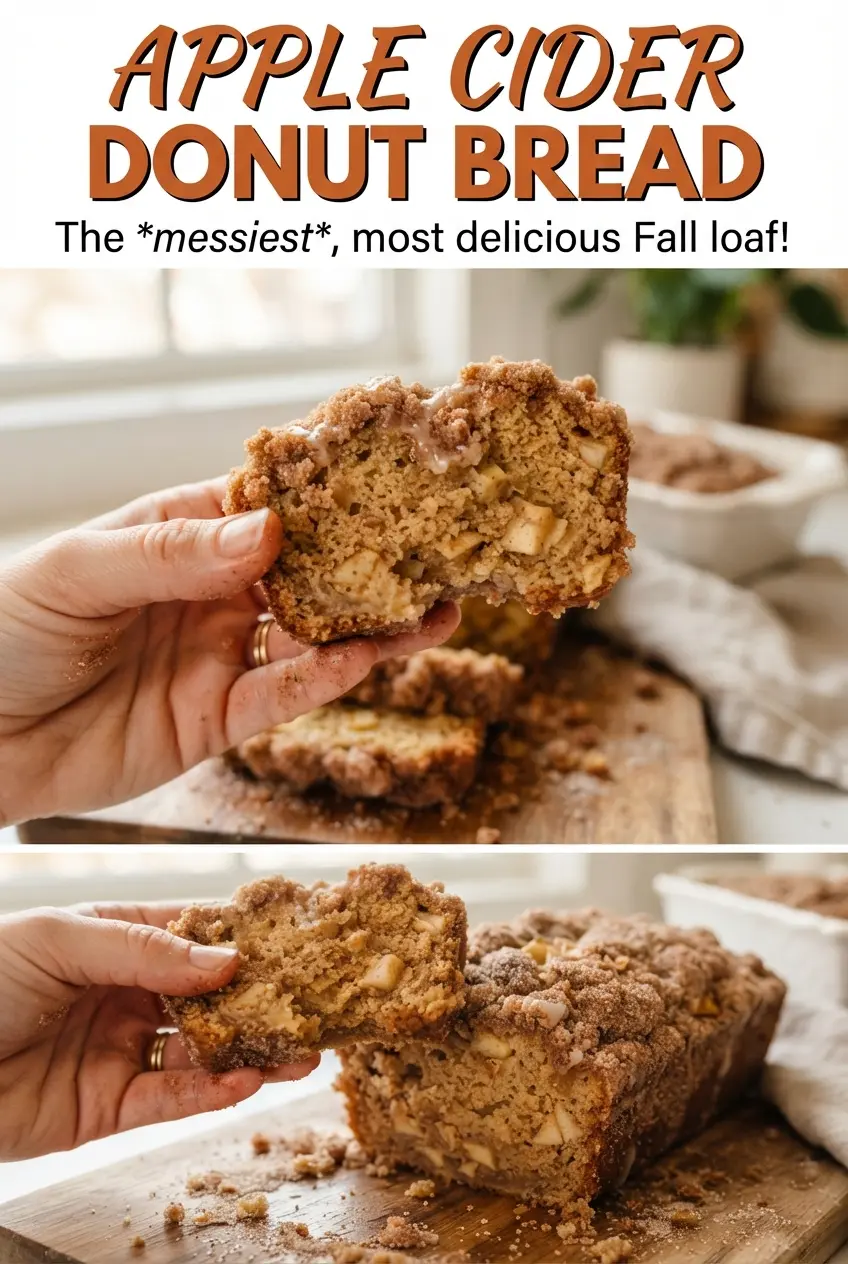
Apple Cider Donut Bread
Ingredients
Equipment
Method
- Simmer apple cider for 15-20 minutes, until reduced to 1/2 cup, then cool.
- Preheat the oven to 350F, then grease and line a 9x5-inch loaf pan.
- Whisk all-purpose flour, baking powder, baking soda, salt, ground cinnamon, and nutmeg in a bowl.
- Beat butter (softened) and brown sugar (packed) until fluffy.
- Beat in eggs, sour cream, reduced apple cider, and vanilla extract until smooth.
- Fold the dry ingredients into the wet just until combined, then spread the batter into the pan.
- Bake at 350F for 50-55 minutes, until a toothpick comes out clean.
- Cool the loaf for 10 minutes before topping.
- Brush the warm loaf all over with melted butter and press it into the cinnamon sugar topping.


