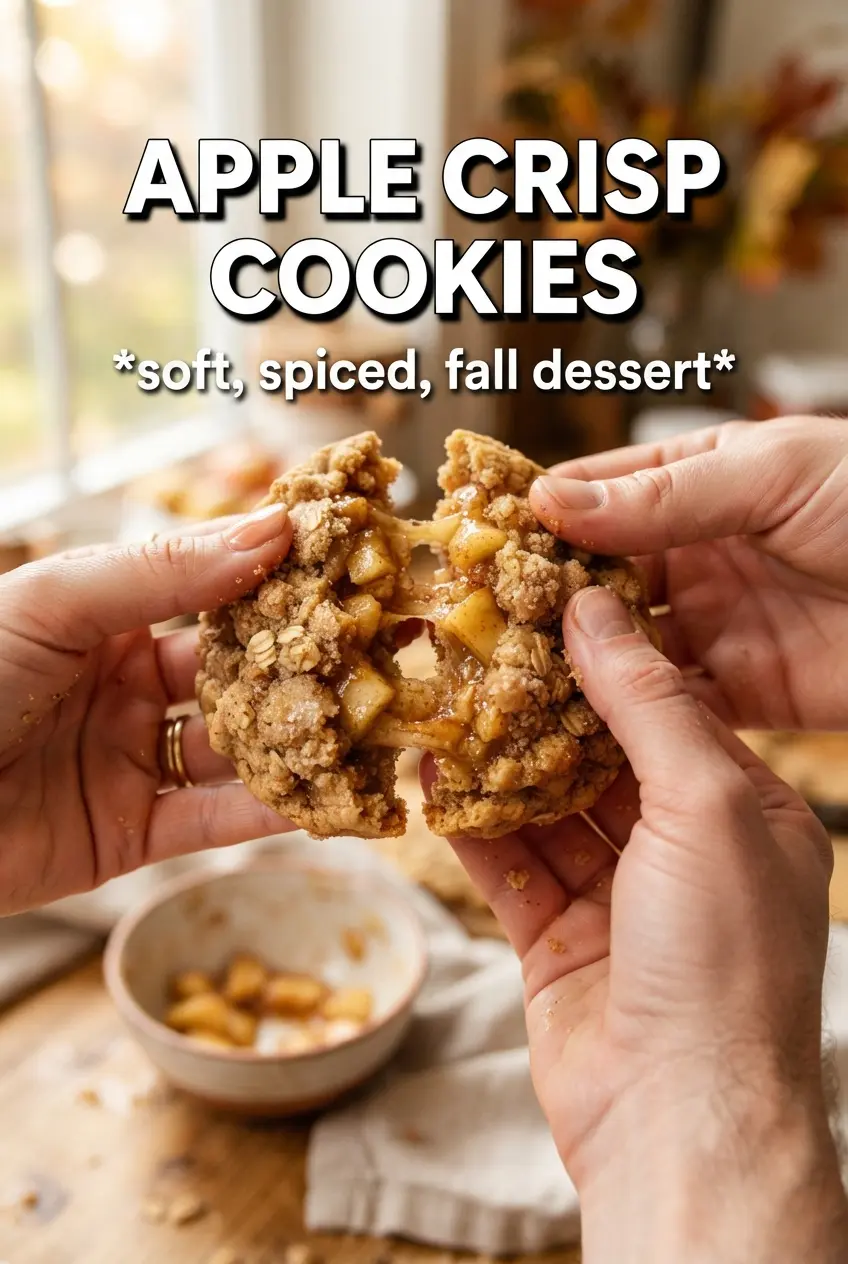
Apple crisp cookies bring the cozy, oat-filled crunch of a baked apple dessert into a handheld cookie that stays soft in the middle and lightly crisp at the edges. The dried apple pieces give you real apple flavor without watering down the dough, and the caramel chips melt into little pockets of sweetness that echo the topping on a classic crisp.
This version works because the dough is built to hold a lot of mix-ins without spreading into a thin sheet. Brown sugar adds moisture and chew, while the cinnamon sugar roll on the outside gives each cookie a gently crackly edge and a warmer spice hit than the dough alone can manage. The oats matter here too: they add texture, but they also help the cookies feel substantial instead of cakey.
Below, you’ll find the small details that keep these cookies chewy instead of dry, plus a few smart swaps if you’re working with what you already have in the pantry.
The cookies baked up with crisp edges, a chewy center, and those little apple bits stayed soft instead of drying out. I brought a batch to work and they disappeared before lunch.
Save these apple crisp cookies for the days when you want chewy oats, cinnamon sugar edges, and soft apple bits in every bite.
The Trick to Keeping These Cookies Chewy Instead of Muffin-Like
The biggest risk with apple crisp cookies is a dough that turns cakey. That usually happens when the flour gets overmeasured or the cookies spend too long in the oven, which dries out the oats and tightens the crumb before the centers finish setting. These cookies should come out when the edges are golden and the middles still look slightly underdone; they finish on the hot pan.
The other thing that matters is the apple. Dried apple pieces give you concentrated flavor without adding moisture that can make the dough spread strangely or bake up gummy. Chop them finely so they distribute through the dough instead of clumping in one sweet pocket.
- Rolled oats — Old-fashioned oats give these cookies the best chew and that classic crisp texture. Quick oats will work in a pinch, but the cookies will be softer and less toothsome.
- Brown sugar — This is what keeps the centers moist and gives the cookies that deeper, almost caramel-like background. Light brown sugar is fine; dark brown sugar will push the flavor a little richer.
- Dried apple pieces — Fresh apple looks tempting, but it brings too much water to a cookie dough like this. Dried apple gives a concentrated apple flavor and stays pleasantly chewy after baking.
- Caramel or butterscotch chips — These melt into sweet pockets that make the cookies taste more like apple crisp than oatmeal cookies. If you can’t find them, chopped soft caramels are stickier but workable, though you’ll want smaller pieces.
Building the Dough Without Overmixing the Oats
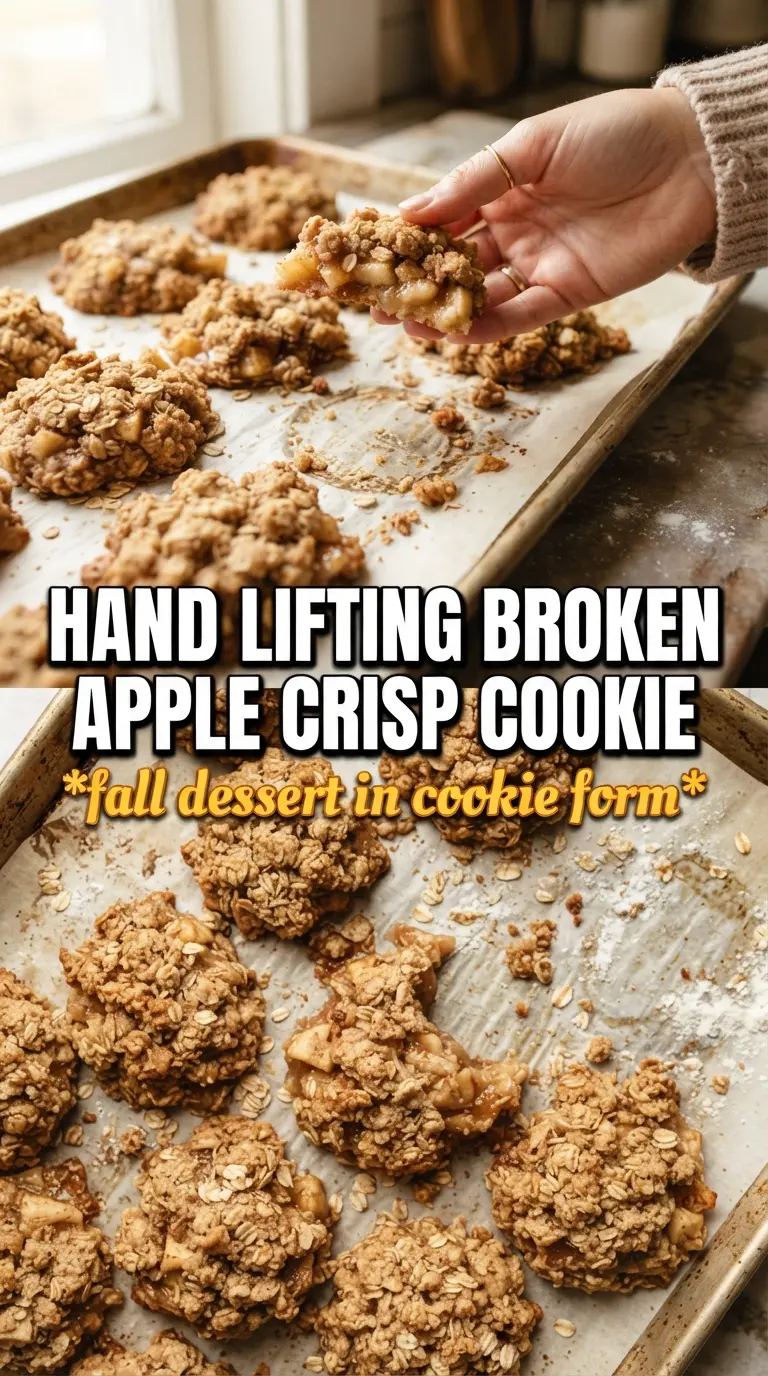
The flour mixture goes in first so the leavening and spices are evenly spread before the oats show up. Once the flour disappears, stop mixing and switch to folding. If you beat the oats in hard, the dough tightens up and the cookies can bake up dense instead of tender.
Softened butter matters here. Cold butter won’t cream properly, and melted butter makes the cookies spread too much before the centers set. You want butter that presses easily under a finger but still holds its shape, because that gives the dough enough structure to support the oats and apple pieces.
- All-purpose flour — Standard flour gives enough structure to hold the mix-ins without making the cookies dry. Spoon and level it if you can; packed flour is one of the quickest ways to end up with heavy cookies.
- Cinnamon, nutmeg, and allspice — This trio gives the cookies that baked-apple warmth. Cinnamon does most of the work, but the other two keep the flavor from tasting flat.
- Eggs — They bind the dough and help the cookies set at the edges while staying soft in the center. Room-temperature eggs blend in more smoothly, but straight-from-the-fridge eggs will still work.
- Vanilla extract — Vanilla rounds out the spice and makes the apple flavor read as warmer and fuller. Use the real stuff if you have it; imitation vanilla tastes sharper in a simple cookie like this.
The Bake That Gives You Golden Edges and a Soft Center
Creaming the Butter and Sugars
Beat the softened butter, brown sugar, and granulated sugar until the mixture looks lighter and a little fluffy, not greasy or loose. That step traps air and helps the cookies bake up with lift instead of turning flat. If the butter is too warm, the mixture will look slick and the cookies will spread too much, so stop and chill the dough briefly if the bowl feels soft and glossy.
Folding in the Oats and Mix-Ins
Once the flour mixture is in, fold in the oats, chopped dried apples, and caramel chips just until everything is distributed. The dough will be thick and a little sticky, which is exactly what you want. If the mix-ins seem to disappear in the dough, they’re probably chopped too large or the dough was mixed too long, both of which can throw off the texture.
Baking Until the Centers Still Look Soft
Scoop the dough into 2-tablespoon rounds and roll the tops in cinnamon sugar before baking. The cookies should come out at 10 to 12 minutes with set edges and centers that still look pale and slightly puffy. Let them sit on the pan for 5 minutes, because that’s when they finish setting without drying out.
How to Adapt These Cookies for Different Pantry Situations
Gluten-Free Version
Swap in a cup-for-cup gluten-free flour blend that includes xanthan gum, then keep the oats certified gluten-free. The cookies will still be chewy, though the crumb may be a little more delicate, so let them cool fully before moving them off the pan.
Dairy-Free Cookies
Use a plant-based butter stick with a similar fat content to real butter. Tub-style spreads tend to have more water, which can make the dough spread and the centers bake up too soft.
No Caramel Chips
Chopped soft caramels or butterscotch chips both work, though caramels melt more dramatically and give little gooey pockets. If you skip them entirely, the cookies will still taste like apple crisp, just with a less dessert-like finish.
Making Smaller Cookies
Use 1 tablespoon of dough per cookie and shorten the bake by a couple of minutes. Smaller cookies get crisp faster, so pull them when the edges are set and the centers still look soft in the middle.
Storage and Reheating
- Refrigerator: Store in an airtight container for up to 5 days. The oats will soften slightly, but the cookies stay chewy.
- Freezer: Freeze baked cookies for up to 2 months, or freeze scooped dough balls and bake from frozen with an extra minute or two.
- Reheating: Warm a cookie in the microwave for 8 to 10 seconds or in a low oven for a few minutes. Don’t overheat them or the centers will dry out and the caramel chips can turn hard.
Questions I Get Asked About These Cookies
Apple Crisp Cookies
Ingredients
Equipment
Method
- Preheat the oven to 375F and line baking sheets with parchment so the cookies release cleanly.
- In a bowl, whisk together all-purpose flour, baking soda, baking powder, cinnamon, nutmeg, allspice, and salt until evenly combined and no clumps remain.
- Beat unsalted butter and brown sugar until fluffy, then add granulated sugar and continue beating until light in color.
- Beat in eggs one at a time, then mix in vanilla extract until the dough looks cohesive and glossy.
- Stir the flour mixture into the butter mixture until just combined, then fold in rolled oats, dried apple pieces, and caramel chips.
- Scoop the dough into 2-tablespoon rounds, then roll the tops in cinnamon sugar to coat well.
- Bake at 375F for 10-12 minutes, until edges are golden and the centers are just set with a soft look.
- Cool on the pan for 5 minutes, then transfer to a rack so the bottoms finish setting.


