Golden puff pastry wrapped around brie turns into the kind of appetizer people circle back to while standing in the kitchen. The outside bakes up crisp and deeply browned, while the center softens into a warm, spoonable cheese that spills out the second you cut in. The jam gives it a glossy sweet edge, and the pecans add just enough crunch to keep every bite interesting.
What makes this version work is the balance. Brie brings richness, but it needs a bright, sweet layer to keep it from tasting flat, and a thick jam does that job better than a runny one. The pastry is rolled just enough to seal neatly without getting too thin, which helps it bake through before the cheese escapes. A short rest after baking matters too, because hot brie moves like lava if you cut it too soon.
Below, I’ve included the little details that keep the pastry crisp, plus a few ways to adapt the filling if you want to change the fruit or skip the nuts. It’s one of those recipes that looks fancier than it is, and that’s exactly why it earns a place on the table.
The pastry baked up crisp all the way around, and the brie stayed perfectly gooey after a 10-minute rest. I used fig jam and it tasted like something from a nice wine bar.
Save this baked brie with raspberry jam for the appetizer spread that disappears while the pastry is still warm.
The One Thing That Keeps Baked Brie From Bursting Open
The most common mistake with baked brie is overfilling it and sealing it too tightly. Brie softens fast, and the pastry needs a little room to expand as the cheese warms, or steam builds up and forces a split in the seam. A neat package is good; a compressed one is asking for leaks.
The other thing that matters is timing. The pastry should be deep golden before the brie is fully molten, because it keeps cooking as it rests on the pan. If you pull it too early, the bottom stays pale and soggy. If you skip the rest, the cheese runs everywhere before anyone gets a clean cut.
- Puff pastry — This is what gives you the crisp shell. Thaw it until pliable but still cold; warm pastry turns sticky and loses some of that dramatic rise.
- Brie — A standard 8-ounce wheel is perfect here. Leave the rind on; it holds the cheese together while it bakes and softens enough to disappear into the filling.
- Jam — Raspberry gives you a sharper finish, while fig leans deeper and earthier. Use a thick jam, not a loose preserves-style spread, so it stays in place instead of bubbling out.
- Pecans — Chopped nuts add texture and a toasted note. If you leave them too large, they can tear the pastry when you fold it, so keep the pieces small.
- Egg wash — This is what gives the pastry that lacquered finish. Brush on a thin coat; too much egg drips into the seams and can glue the layers shut before they rise.
How to Build the Brie Package So It Stays Sealed and Crisp
Rolling the Pastry Just Enough
Lightly roll the pastry to smooth the folds, but don’t stretch it thin. You want enough surface area to wrap over the top without tearing, and too much rolling makes the final crust fragile. If the dough starts sticking, dust the counter very lightly with flour and keep moving. Cold pastry is easier to shape, so if it softens while you work, slide it back into the fridge for a few minutes.
Layering the Filling in the Center
Set the brie in the middle, then spread the jam right on top and scatter the pecans and brown sugar over that. Keeping the filling centered prevents the sugar from melting onto the pastry edges, which can glue them open. The sugar helps the top caramelize a little and adds a deeper note, but if it falls onto exposed dough it can burn before the pastry finishes baking.
Wrapping and Sealing the Edges
Bring the pastry up and over the brie, trimming excess if needed so you don’t end up with thick overlapping corners. Press the seams firmly, then flip the whole bundle seam-side down before brushing with egg wash. That small move keeps the closure from opening in the oven. If there’s a tiny seam gap, pinch it shut now; once it bakes, there’s no fixing a leak without losing the whole package.
Baking Until Deep Golden
Bake at 400°F until the pastry is deep golden brown and the bottom feels crisp when lifted with a spatula. Pale pastry means the inside may be warm, but the outside won’t have the sturdy shell you want. If the top browns too quickly, your oven runs hot, so tent it loosely with foil for the last few minutes. Let it sit for 10 minutes before slicing so the cheese settles from molten to creamy.
What to Change When You Want a Different Filling
Fig Jam and Walnuts
Swap the raspberry jam for fig jam and the pecans for chopped walnuts if you want something deeper and a little less bright. The result tastes woodsy and elegant, which works especially well with a glass of red wine. Keep the amount the same so the filling stays balanced and doesn’t seep out.
Dairy-Free Puff Pastry Appetizer
For a dairy-free version, use a plant-based wheel that melts well and holds its shape under heat. The texture won’t be quite as creamy as brie, but you still get that warm center and crisp pastry shell. Check the pastry label too, since some brands use butter.
Nut-Free Version
Skip the pecans and add a little extra jam instead, or scatter a pinch of rosemary over the filling for contrast. You lose the crunch, so serve it with crisp crackers or sliced apples for texture. This version is the safest route if you’re serving a crowd with nut allergies.
Storage and Reheating
- Refrigerator: Store leftovers covered for up to 3 days. The pastry softens in the fridge, but it still reheats well.
- Freezer: Freeze before baking for best results. Wrap the assembled brie tightly and bake from frozen, adding a few extra minutes until the pastry is deep golden.
- Reheating: Warm in a 325°F oven until heated through and the crust crisps back up. The mistake to avoid is the microwave, which turns the pastry soggy and makes the cheese separate.
Questions I Get Asked About This Recipe
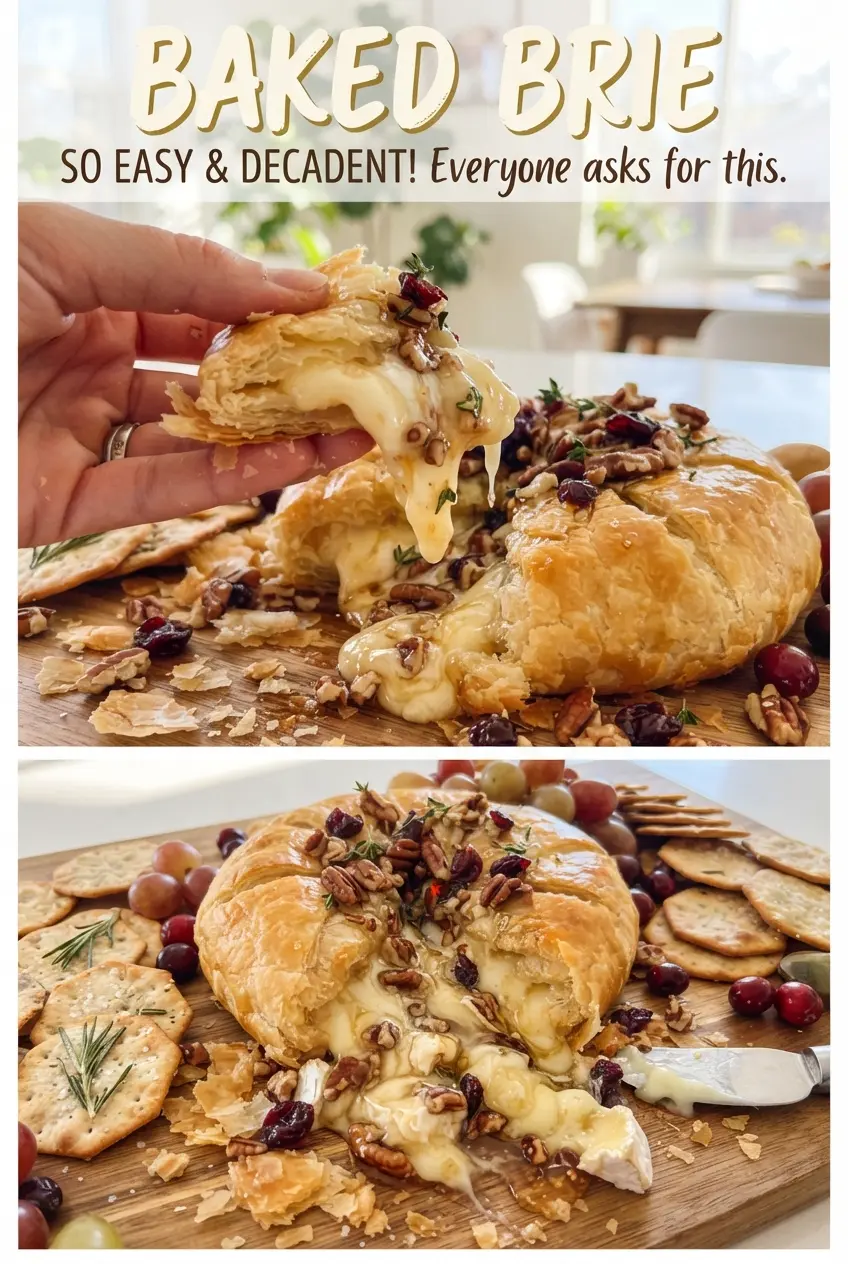
Baked Brie
Ingredients
Equipment
Method
- Preheat oven to 400°F and line a baking sheet with parchment. This prevents sticking as the puff pastry bakes.
- Roll the puff pastry slightly and place the brie in the center. Keep the brie positioned so the pastry can wrap evenly.
- Spread the raspberry or fig jam over the brie, then sprinkle with pecans and brown sugar. Make sure the topping covers the surface for flavor in every bite.
- Fold the pastry up over the brie, trimming excess and pressing the seams to seal. Seal tightly so the jam and cheese stay inside during baking.
- Flip seam-side down onto the baking sheet and brush with egg wash. Use a light, even coat for an even golden crust.
- Bake at 400°F for 22-25 minutes until deep golden brown. Watch for puffing and browning at the edges.
- Rest for 10 minutes so the cheese sets slightly. Garnish with fresh rosemary and serve with crackers and apple slices.


