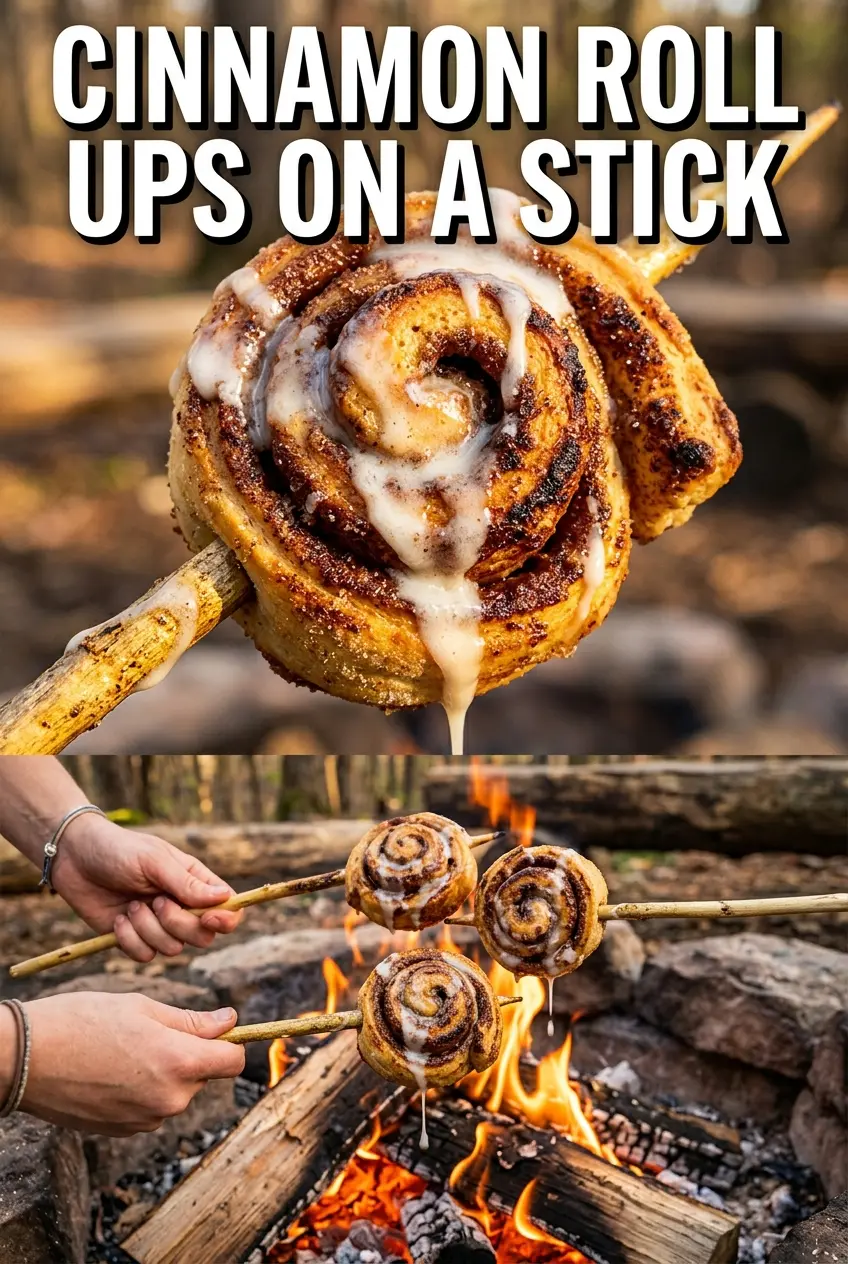
Golden, gooey cinnamon roll ups with crisped edges are the kind of campfire dessert people remember long after the fire burns down. The dough turns lightly blistered on the outside, stays tender in the center, and catches just enough cinnamon sugar to taste like a fresh bakery roll with a smoky edge. Drizzled with glaze while still warm, they disappear fast.
What makes this version work is the spiral. Wrapping the dough around the stick gives it even exposure to the heat, so you don’t end up with raw dough tucked under a burned top. A brush of melted butter helps the cinnamon sugar cling and encourages browning, while constant rotation keeps the dough from scorching before the center cooks through.
Below you’ll find the small details that matter most: how tightly to wrap the dough, how close to hold it over the fire, and what to look for when it’s done. The glaze is simple, but it adds the last bit of sweetness that makes the whole thing feel complete.
The dough cooked all the way through and the cinnamon sugar caramelized on the outside without dripping into the fire. My kids asked for a second stick before I even finished the glaze.
Save these campfire cinnamon roll ups on a stick for the next time you want a sticky, smoky dessert that cooks right over the flames.
Why the Dough Burns Before the Center Cooks
Campfire desserts fail when the outside gets direct flame and the inside never has time to set. Breadstick dough is thinner than biscuit dough, so it cooks fast, but it still needs steady rotation and a little distance from the hottest part of the fire. If you hold it too close, the sugar scorches before the dough has a chance to turn pillowy and baked.
The other mistake is wrapping the dough too thickly. A tight spiral with a small amount of overlap gives you an even wall of dough around the stick. That shape cooks through more predictably than a bulky twist, which can leave raw pockets near the center.
- Constant rotation keeps one side from blackening before the rest catches up.
- Medium heat from glowing coals or a steady flame edge cooks the dough more evenly than a big, aggressive fire.
- Thin, even spirals help the center cook at the same pace as the outside.
What Each Ingredient Is Actually Doing in This Dessert
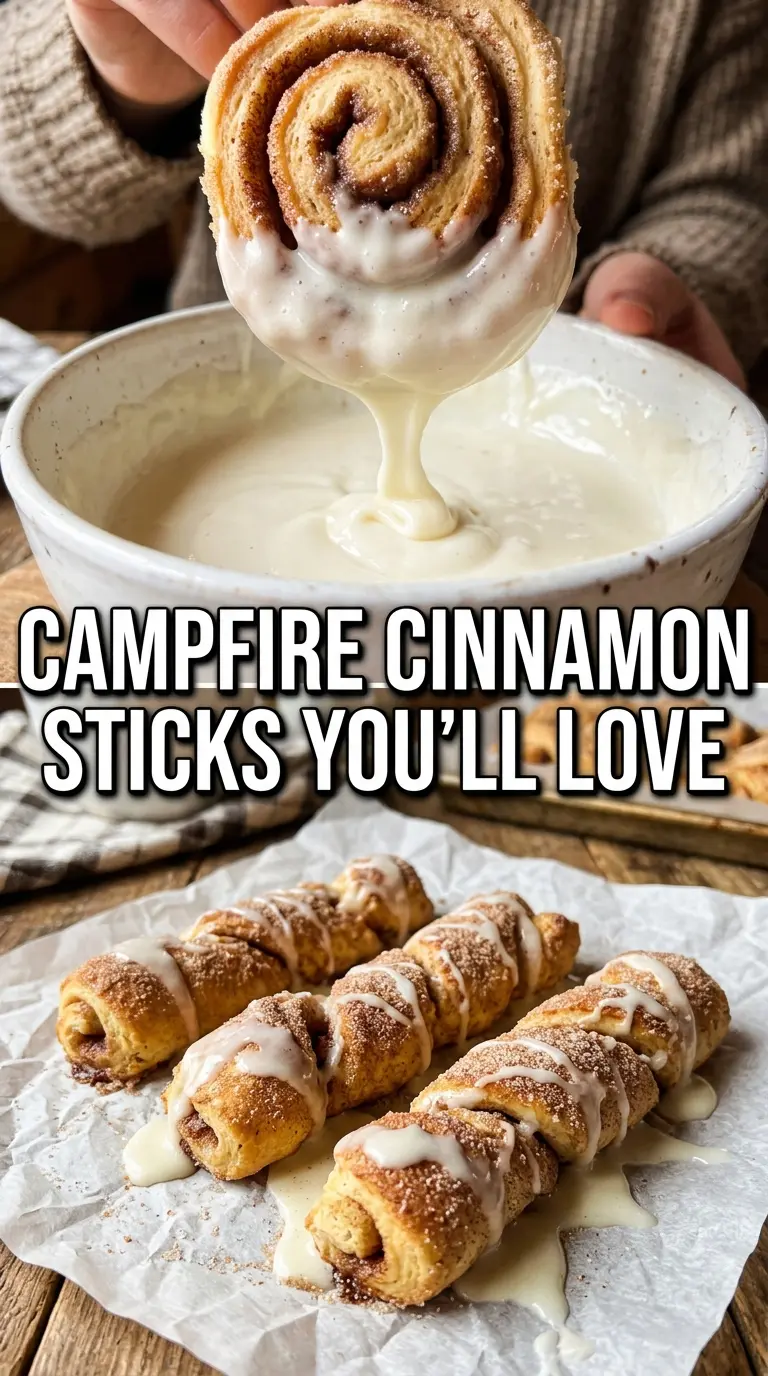
- Refrigerated breadstick dough gives you a dough that’s easy to spiral around the stick and bakes up lighter than biscuit dough. Biscuit dough works too, but it tends to be denser and a little more rustic. If that’s what you have, keep the pieces slightly thinner so the center cooks through.
- Melted butter helps the cinnamon sugar stick and encourages browning. Brush it on after wrapping so the sugar doesn’t fall off before it hits the heat.
- Cinnamon sugar is the main flavor here, and the ratio matters. Too much sugar can melt off into the fire, so a light, even coating gives you the best crust.
- Powdered sugar and milk make a fast glaze that loosens the sweetness and turns this into a proper dessert. Add the milk a little at a time so it stays drizzleable instead of turning thin and watery.
- Roasting sticks need to be sturdy and long enough to keep hands safely away from the heat. Wooden sticks should be soaked first; metal sticks heat up fast, so use gloves or a thick towel when handling them.
Getting the Spiral Cooked Without Losing the Glaze
Wrapping the Dough
Separate the dough into individual pieces and stretch each one just enough to make a rope-like strip. Wrap it in a spiral around the end of the roasting stick, keeping the turns close but not jammed together. If the dough overlaps too much, the inner layers stay gummy while the outside browns too fast.
Butter and Cinnamon Sugar
Brush the wrapped dough with melted butter until every exposed surface looks glossy. Sprinkle cinnamon sugar evenly over the top, pressing lightly so it clings. If you dump it on thick, most of it will fall into the fire instead of caramelizing on the dough.
Roasting Over the Fire
Hold the stick over the edge of the campfire, not directly in the flames, and rotate it constantly. You’re looking for a deep golden color and a dry, set surface that springs back when nudged. If the outside browns in spots before the dough is cooked through, move it farther from the heat and keep turning; patience here is what keeps the center from staying raw.
Finishing and Glazing
Let the roll ups rest for about 2 minutes after you slide them off the stick. That short pause keeps the glaze from melting off completely. Stir the powdered sugar and milk until smooth, then drizzle while the rolls are still warm so it settles into the cracks and clings to the crust.
How to Change These for a Different Campfire Crowd
Use biscuit dough for a thicker, more bread-like bite
Biscuit dough works when you want a sturdier, slightly richer roll up. It needs a touch more time over the fire, and the texture comes out more bready than stretchy, but it still gives you a good cinnamon-sugar crust.
Make it dairy-free with plant-based butter and a simple sugar drizzle
Use a dairy-free butter substitute in the same amount, then swap the milk in the glaze for unsweetened almond or oat milk. The glaze will be a little lighter, but the cinnamon coating still gives you plenty of flavor.
Add a little extra spice without changing the method
A pinch of nutmeg or pumpkin pie spice mixed into the cinnamon sugar makes the roll ups taste warmer and more bakery-style. Keep the amount modest so the sugar still caramelizes cleanly instead of tasting dusty.
Make them ahead for a campsite dessert station
You can mix the cinnamon sugar and keep the glaze ready before you head out, but don’t assemble the dough until you’re close to roasting time. Once the dough sits wrapped on the stick, it starts to warm and soften, which makes it harder to keep the spiral neat.
Storage and Reheating
- Refrigerator: Store leftovers in an airtight container for up to 2 days. The sugar coating softens as it sits.
- Freezer: They don’t freeze well once glazed; the texture turns soggy after thawing.
- Reheating: Warm in a 300°F oven for a few minutes until just heated through. The microwave makes the dough rubbery and melts the glaze into a sticky puddle.