Campfire S’mores Dip turns a classic fireside treat into a skillet full of molten chocolate and toasted marshmallow that people head back to again and again. The best part is the contrast: a soft, glossy center under a crisp, golden top, with graham crackers breaking through the surface in the best possible way.
This version works because the chocolate goes in first and melts gently under the marshmallows, which keeps the center smooth instead of scorched. A cast iron skillet helps hold steady heat, and the marshmallows toast before the chocolate overheats. That timing matters. If the fire is too hot, the tops darken before the chocolate loosens, so medium heat over coals is the sweet spot.
Below you’ll find the small details that make this dessert cooperate at the fire pit, plus a few useful swaps when you want to change up the chocolate or make the dip work with what you’ve got on hand.
The marshmallows browned evenly and the chocolate underneath stayed silky instead of turning gritty. We kept passing the skillet around and it disappeared fast.
Like this gooey campfire s’mores dip? Save it for the nights when you want toasted marshmallow, melted chocolate, and graham crackers in one skillet.
The trick to melted chocolate and toasted marshmallows without scorching either
Campfire desserts can go wrong fast because direct flame is unforgiving. Chocolate chips at the bottom need steady, indirect heat, and the marshmallows on top need enough warmth to brown before the chocolate seizes. The skillet should sit over coals or a grate, not licking flame, so the heat rises evenly through the pan instead of blasting the top.
Cast iron earns its keep here because it holds heat long enough to finish melting the chocolate once you pull the pan from the fire. If you use a thinner pan, the marshmallows may toast before the center softens. Keep the heat moderate and rotate the skillet a quarter turn now and then if one side of your fire runs hotter.
What each ingredient is actually doing in this skillet
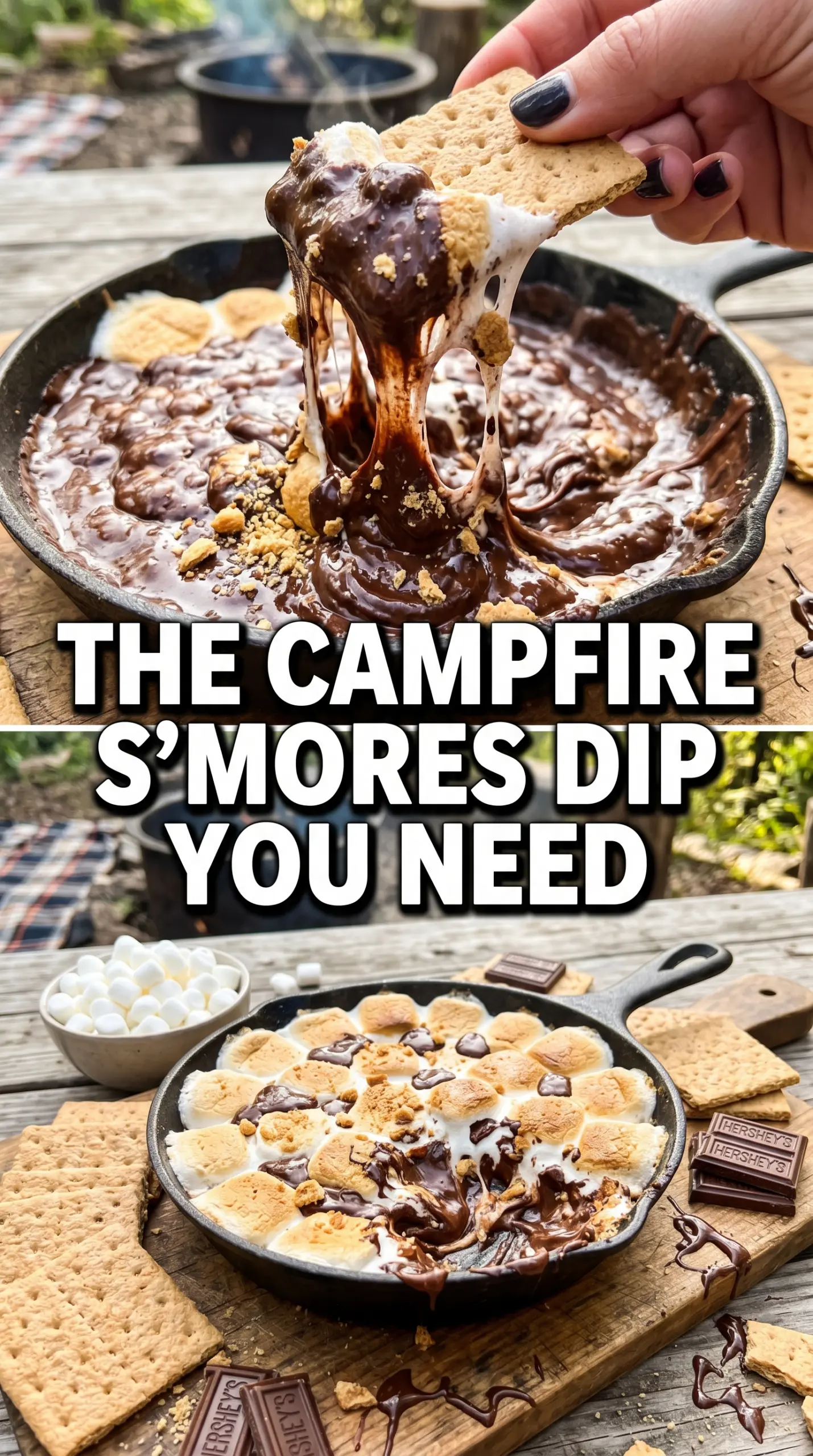
- Chocolate chips — Standard semisweet chips melt into a smooth base and hold their shape long enough to keep the dip from becoming greasy. Dark chocolate works if you want a less sweet finish, but milk chocolate will set softer and sweeter. If you’re using chopped chocolate instead of chips, cut it into small, even pieces so it melts at the same rate.
- Mini marshmallows — The small ones toast fast and give you that golden, blistered top without overcooking the chocolate underneath. Large marshmallows can work, but they take longer to brown and may make the timing uneven. Scatter them in an even layer so the top finishes at the same time.
- Graham crackers — These are more than a serving suggestion. Their dry, sturdy texture is what keeps the dip from feeling heavy. Honey grahams are classic, but chocolate grahams or gluten-free graham-style crackers both work well if they can stand up to a thick scoop.
Building the skillet so the center melts before the top burns
Setting the Chocolate Base
Spread the chocolate chips in a single layer across the bottom of the cast iron skillet. A thin, even layer melts more predictably than a mound, and it gives the marshmallows a stable surface instead of sliding around. If your chips are piled high, the top layer will toast while the bottom stays stubbornly firm.
Covering With Marshmallows
Top the chocolate evenly with mini marshmallows, nudging them into the corners so you don’t end up with bald spots. Leave them in a loose layer; packing them down too tightly blocks heat from reaching the chocolate. The goal is a marshmallow top that turns golden all over, not a dense cap that browns only at the edges.
Cooking Over Coals
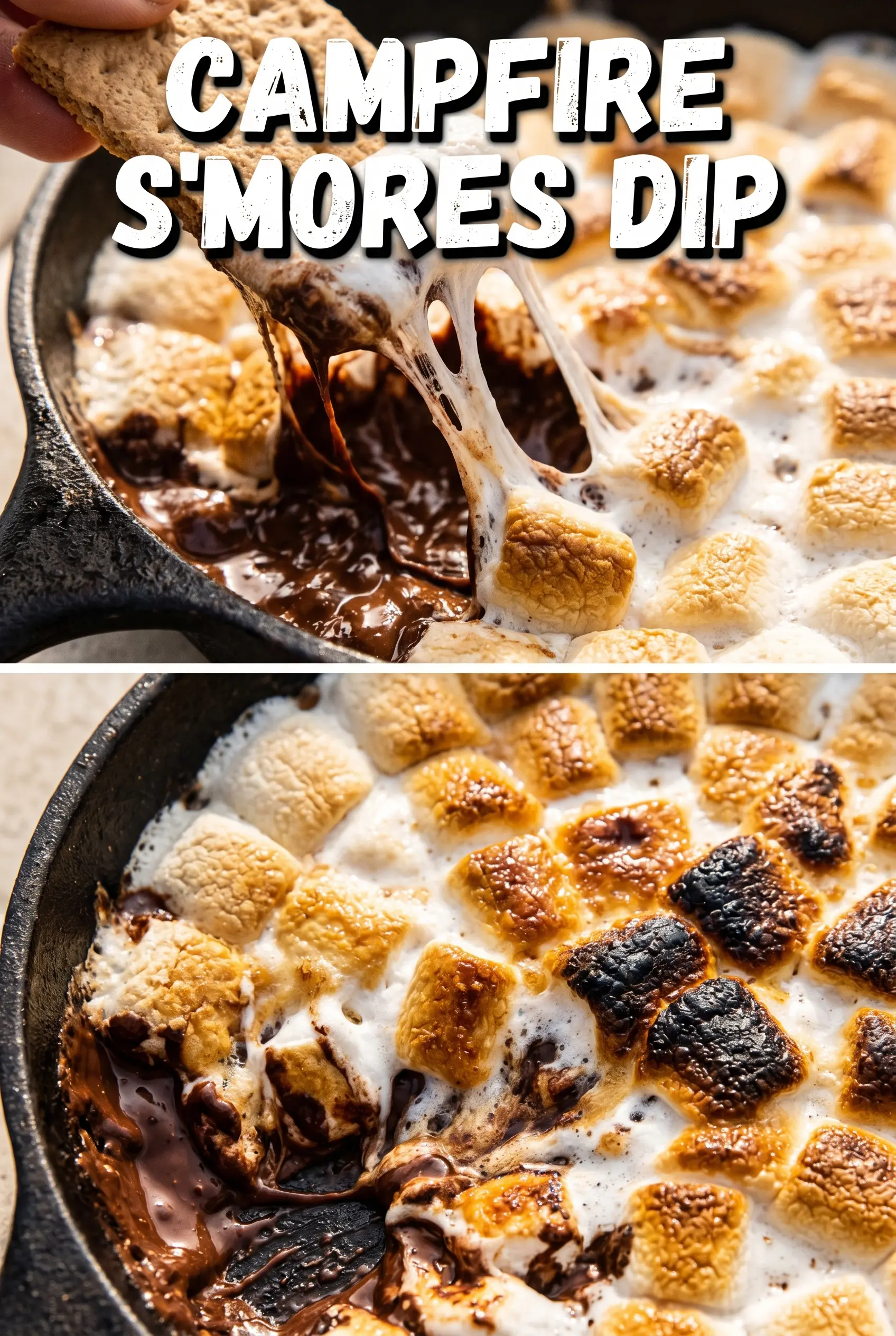
Set the skillet on a campfire grate over medium heat or suspend it above coals, then cook for 8 to 10 minutes. Watch for the marshmallows to puff, turn shiny, and pick up toasted spots while the chocolate underneath loosens around the edges. If the tops are browning too fast, move the skillet farther from the heat immediately. Once the marshmallows are golden and the chocolate looks fully melted when you nudge the surface, pull it off the fire.
Serving Before It Sets
This dip waits for no one. Bring the graham crackers over first, then set the skillet down and start dipping while the chocolate is still glossy and the marshmallows are soft. If the pan sits too long, the center firms up and you lose that scoopable texture that makes the whole thing worth making.
How to change this skillet dip without losing the gooey center
Use dark chocolate for a less sweet dip
Swap the semisweet chips for dark chocolate chips or chopped dark chocolate. The marshmallows still bring plenty of sweetness, so the result tastes a little deeper and less sugary. This is the best move if you like your s’mores more chocolate-forward.
Make it gluten-free with the right dippers
Keep the dip itself the same and swap in gluten-free graham-style crackers for serving. The texture of the dip doesn’t change, and that’s what matters most here. Just pick a sturdy cracker, since thin or crumbly ones break before they reach the chocolate.
Add peanut butter for a richer campfire version
Dollop a few spoonfuls of peanut butter over the chocolate chips before adding the marshmallows. It melts into the chocolate and gives the dip a saltier, nuttier edge that plays well with the graham crackers. Don’t add so much that it overwhelms the chocolate layer.
Storage and Reheating
- Refrigerator: Leftovers keep for 2 days, but the marshmallow top loses its toast and turns sticky.
- Freezer: I don’t recommend freezing it. Marshmallows change texture badly after thawing and the dip won’t recover that fresh melted finish.
- Reheating: Warm leftovers in a low oven until the chocolate softens again. Avoid the microwave if you can; it makes the marshmallows collapse and the chocolate can split at the edges.
Answers to the questions worth asking
Campfire S'mores Dip
Ingredients
Equipment
Method
- Spread the chocolate chips in the bottom of a cast iron skillet in an even layer so they melt uniformly.
- Top the chocolate chips evenly with the mini marshmallows so the surface is fully covered.
- Place the skillet on a campfire grate over medium heat (or suspend it over coals) and cook for 8-10 minutes until the chocolate melts and the marshmallows are golden and toasted, with visible browning on the tops.
- Remove from the heat and serve immediately with graham crackers for dipping while the chocolate stays fluid.