Glassy, jewel-toned cranberry sauce with whole berries and a bright citrus edge is the kind of preserve that makes holiday meals feel organized before the turkey even hits the table. The berries burst just enough to thicken the pot into a spoonable, glossy sauce, but they still hold enough shape that every jar looks homemade in the best way.
What makes this version work is the balance of sugar, acid, and heat. Cranberries bring their own pectin, so once the berries split and the mixture cooks down, the sauce sets up without needing anything extra. Bottled lemon juice matters here because it gives the acidity needed for safe water-bath canning, while the orange juice and zest round out the sharpness with a softer, fragrant finish.
If you’ve ever ended up with cranberry sauce that was too loose, too tart, or separated in the jar, the notes below will help you avoid all three. The timing is straightforward, but the details around headspace, lid tightening, and cooling untouched are what make the difference between a pantry shelf of clean, sealed jars and a batch you can’t trust to keep.
The sauce thickened up beautifully and the jars sealed on the first day with no sticky rim issues. I loved that the orange zest stayed bright instead of disappearing into the background.
Canning cranberry sauce with whole berries, bright orange, and a clean pantry-safe seal for up to a year
The Part Most People Rush: Getting Cranberry Sauce Thick Before It Hits the Jars
The biggest mistake with canned cranberry sauce is treating the boiling stage like a quick warm-up. The berries need time to burst and the liquid needs time to reduce slightly, or you end up with jars that look fine on day one but pour out thinner than you expected. The sauce will continue to thicken a little as it cools, so stop cooking when it looks loose but clearly syrupy, not when it’s already jam-like in the pot.
That gentle boil matters too. A hard rolling boil can make the sauce spit and scorch on the bottom before the berries have all broken down. You want active bubbles with steady stirring, then a texture that coats a spoon and lets a trail stay visible for a second before closing back in.
- Cranberries — Fresh cranberries bring the pectin that gives this sauce its body. Frozen cranberries work too; add them straight from the freezer and expect a slightly longer cook time.
- Bottled lemon juice — This is the safety ingredient, not just a flavor note. Use bottled, not fresh, because the acidity is standardized for canning.
- Orange juice and zest — The juice softens the sharp cranberry flavor, and the zest adds the bright top note that keeps the sauce from tasting flat. Zest the orange before juicing it so you don’t fight a slippery fruit later.
- Sugar — Sugar does more than sweeten here; it helps the sauce set and keeps the finished flavor balanced. Cutting it significantly changes both texture and safety, so this isn’t the place to freestyle.
How to Keep the Jars Sealed and the Sauce Evenly Suspended
Wash the jars, lids, and bands ahead of time, then keep the jars hot in simmering water so the filling doesn’t cool too fast when it goes in. Bring the sugar, water, and orange juice to a full boil first and stir until the sugar disappears before you add the cranberries. That gives you a stable base and prevents gritty crystals from hanging around in the finished sauce.
Once the cranberries go in, keep the boil gentle and steady for 10 to 12 minutes. Stir often enough to prevent sticking, but not so aggressively that you break every berry apart; some whole berries make the final texture better. Ladle the sauce into the hot jars with 1/4-inch headspace, wipe the rims carefully, and tighten the bands fingertip tight only. If the bands are cranked down hard, air can’t vent properly during processing and the seal may fail.
Heating the Jars and Lids
Hot jars reduce the chance of thermal shock and help the sauce stay at temperature when it goes in. Keep them in barely simmering water until you’re ready to fill, and don’t let the lids sit in boiling water unless the manufacturer says that’s appropriate. The goal is warm and ready, not scorched or warped.
Cooking the Cranberry Base
Once the berries start popping, the pot will look frothy and uneven before it settles into a thicker sauce. That’s normal. Keep the heat steady and watch the bottom of the pot; if you see dark streaks forming, lower the heat and stir from the corners where scorching starts first.
Filling and Processing
Ladle the sauce into the jars while it’s still hot, then remove bubbles by tapping the jar or running a clean utensil through the sauce if needed. Leave the full 1/4-inch headspace so the lids can seal correctly during processing. After the jars come out of the canner, don’t tilt, tighten, or press the lids; let them sit undisturbed for 24 hours so the vacuum seal can form properly.
What to Do When You Want a Different Batch Without Breaking the Process
Sweeter, Softer Cranberry Sauce
Add an extra 1/4 cup of sugar if you want a rounder, less tart sauce. It won’t change the processing time, but it does push the flavor closer to the canned cranberry sauce most people remember from holiday tables.
Lower-Sugar Canned Cranberry Sauce
This recipe is not one I’d cut down dramatically for canning. Cranberries need the sugar for balance and texture, and the canning safety depends on keeping the tested acid levels intact. If you want a less sweet version, make a refrigerator batch instead of changing the preserved one.
Using Frozen Cranberries
Frozen cranberries work without thawing first. They may take a minute or two longer to reach the burst-and-thicken stage, but the finished texture stays nearly the same.
Storage and Reheating
- Refrigerator: Once opened, store jars in the fridge and use within 3 to 4 weeks. The sauce will firm up a little more after chilling.
- Freezer: I don’t recommend freezing sealed canned jars. If you have extra sauce that wasn’t canned, freeze it in freezer-safe containers with headspace.
- Reheating: Serve it cold or bring it to room temperature. If you warm it, do it gently on the stove over low heat. High heat can make the berries break down into a loose, jammy mash.
Answers to the Questions Worth Asking
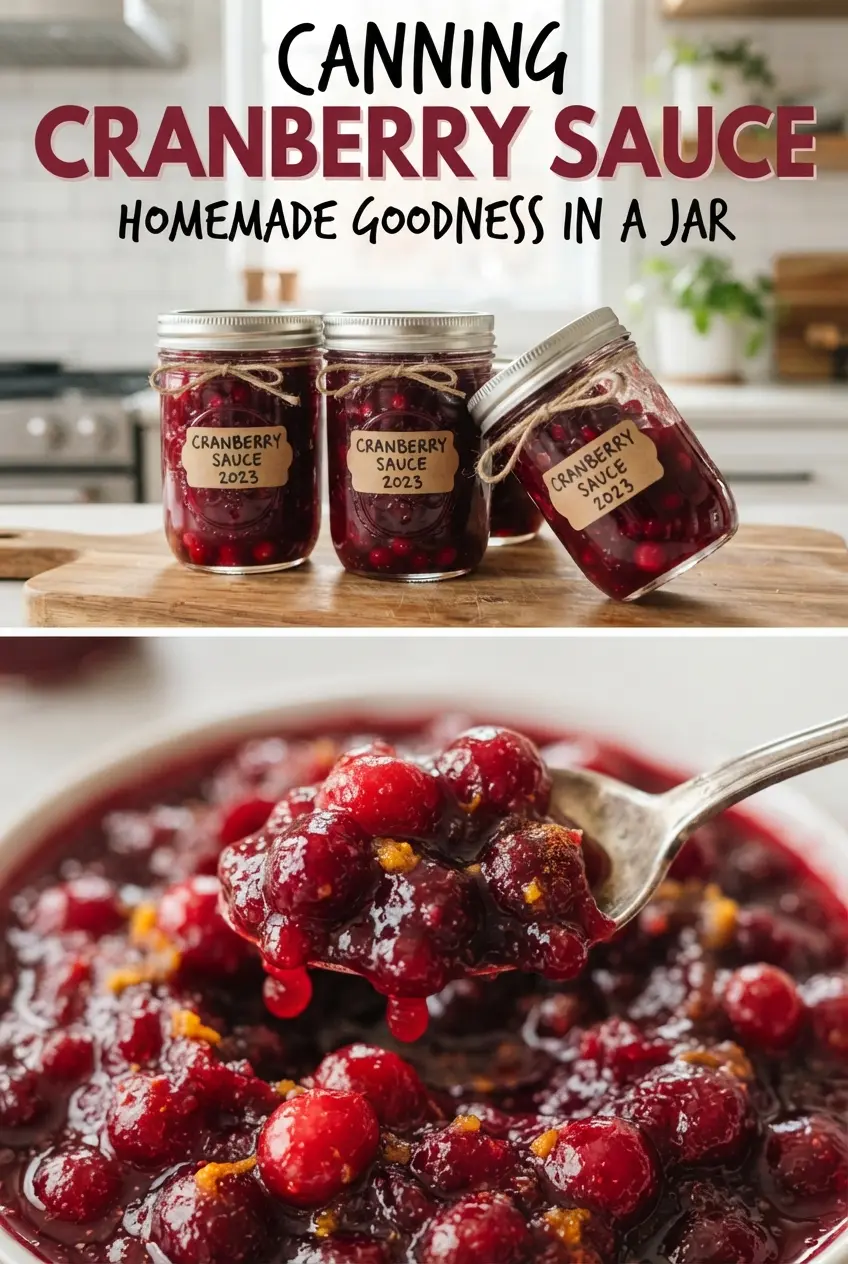
Canning Cranberry Sauce
Ingredients
Equipment
Method
- Wash 12 half-pint jars, lids, and bands, and keep the jars hot in simmering water. Keep them warm so you can ladle in hot sauce without temperature shock.
- Bring sugar, water, and orange juice to a boil in a large pot, stirring until the sugar dissolves. Maintain a steady boil over medium-high heat.
- Add fresh cranberries and bottled lemon juice, then boil gently for 10-12 minutes until the berries burst and the sauce thickens. Stir occasionally so the mixture cooks evenly.
- Stir in orange zest after the berries burst and the sauce has thickened. Cook just long enough to distribute the zest through the sauce.
- Ladle the hot sauce into the hot jars, leaving 1/4-inch headspace. Wipe the rims clean to help lids seal properly.
- Apply lids and bands fingertip tight on each jar. Do not overtighten.
- Process the jars in a boiling water bath canner for 15 minutes, adjusting time for altitude. Start timing once the water returns to a full boil.
- Turn off the heat and let the jars rest in the canner for 5 minutes. This gradual cooling helps reduce disruption during transfer.
- Lift the jars out and cool them undisturbed for 24 hours. Place jars on a stable surface away from drafts.
- Check that the lids have sealed, then store sealed jars in a cool dark place up to 1 year. Refrigerate any jars that did not seal promptly.


