Wide egg noodles give chicken noodle soup a heartier, silkier spoonful than thin pasta ever can. They hold onto the broth, stay satisfying under the chicken and vegetables, and turn a simple pot of soup into something that feels like a full meal without losing the clean, soothing character people want from chicken soup.
The trick is timing. The chicken simmers first so the broth picks up body and flavor, then the noodles go in at the end so they keep their shape instead of swelling into soft, broken strands. Fresh dill gets stirred in right before serving, which keeps the soup bright instead of flat. A good pinch of salt at the end matters here too, because broth-based soups often need more seasoning than people expect.
Below you’ll find the little details that keep the noodles tender, the broth clear, and the chicken juicy. There’s also a smart way to handle leftovers so the noodles don’t steal all the broth overnight.
The noodles stayed perfectly tender and the broth tasted layered, not bland. I liked that the chicken shredded easily after simmering and the dill at the end made the whole pot taste fresh.
Save this chicken noodle soup with egg noodles for the nights when you want tender chicken, wide noodles, and a clear, comforting broth.
The Secret to Keeping Egg Noodles from Going Soft
The easiest way to ruin chicken noodle soup is to let the noodles simmer too long in the pot. Egg noodles absorb broth fast, and once they cross the line from tender to bloated, they take the whole soup with them. That’s why the chicken cooks first, comes out to shred, and the noodles go in only after the broth is already seasoned and the meat is back in the pot.
This order keeps the broth clean and the noodles distinct. If you boil the noodles from the start, they’ll dump starch into the soup and keep drinking liquid as they sit. By adding them at the end and cooking just until tender, you get a bowl that still tastes brothy instead of thickened into a stew.
- Chicken breast — Lean breast meat stays light in the finished soup and shreds cleanly once it’s cooked through. If you use thighs, the soup will taste richer and the meat will stay a little juicier, but the texture will be softer.
- Egg noodles — Wide noodles hold their shape better than thin strands and give the soup that old-school, satisfying bite. Regular pasta works in a pinch, but it won’t give you the same soft, buttery texture.
- Fresh dill — Add it at the end so the flavor stays bright and grassy. Dried dill won’t give the same lift, though a small pinch can stand in if that’s what you have.
What Each Ingredient Is Actually Doing in the Pot

- Onion, carrots, and celery — This is the base that gives the broth its familiar soup flavor. Cook them until the onion turns translucent and the carrots start to soften; if they stay raw, the broth tastes thin.
- Garlic, thyme, parsley, and garlic powder — Fresh garlic gives bite, dried thyme brings the classic poultry-herb note, parsley rounds it out, and garlic powder fills in the gaps so the broth tastes seasoned all the way through.
- Chicken broth — Use a broth you’d actually drink. A weak broth makes the whole soup taste flat, and no amount of herbs can fully fix that.
- Olive oil — A little fat helps the vegetables sweat instead of scorch and carries the aromatics through the pot. Butter works too if you want a rounder, richer finish.
How to Build the Soup Without Losing the Broth
Softening the Vegetables First
Start by cooking the onion, carrots, and celery in olive oil until the onion looks glossy and the vegetables smell sweet, not sharp. That five-minute head start matters because raw aromatics can make the broth taste thin and unfinished. If the pot looks dry before the vegetables soften, lower the heat instead of adding more oil. You want them tender, not browned.
Simmering the Chicken Gently
Once the broth, herbs, and chicken go in, bring everything just to a boil, then drop the heat to a steady simmer. A hard boil can tighten the chicken and cloud the broth. Pull the chicken when it’s cooked through and shreds easily with two forks; if it feels rubbery in the middle, give it a few more minutes before shredding.
Cooking the Egg Noodles at the End
Put the noodles in only after the chicken is back in the pot and the soup is bubbling again. Stir them once or twice so they don’t clump, then watch closely at the 7-minute mark. The goal is tender noodles with a little bite in the center. If they stay in much longer, they’ll drink up too much broth and lose their shape.
Finishing with Dill and Salt
Stir in the dill after the heat is off or just lowered. That keeps the herb fresh instead of dull. Taste the soup before serving and season more aggressively than you think you need; broth, chicken, and noodles all need salt to wake up. If the soup tastes flat, it usually needs salt, not more herbs.
How to Adapt This for Different Kitchens and Different Schedules
Use chicken thighs for a richer bowl
Swap the chicken breast for boneless thighs if you want a deeper, more savory soup. Thighs stay juicier during simmering and give the broth a little extra body, though the finished soup will taste a touch heavier.
Make it gluten-free with the right noodle
Use a gluten-free wide noodle or even rice noodles if that’s what you keep on hand. Cook them just until tender and expect a little more fragility than egg noodles; they can break down faster, so add them near the very end.
Make the soup ahead, but cook the noodles later
The broth, chicken, and vegetables hold well on their own for a day or two. If you’re planning leftovers, keep the noodles separate and add them to each bowl as you reheat, or they’ll keep soaking up broth and turn mushy.
Add extra vegetables without changing the method
Mushrooms, peas, or spinach all work here, but add tender vegetables at the end so they don’t overcook. Spinach only needs a minute to wilt, while mushrooms should be sautéed with the onion mixture so they release their moisture before the broth goes in.
Storage and Reheating
- Refrigerator: Store for up to 4 days. The noodles will keep absorbing broth, so the soup thickens as it sits.
- Freezer: The broth and chicken freeze well for up to 3 months, but the noodles get soft after thawing. Freeze the soup without noodles if you can.
- Reheating: Warm gently on the stove over medium-low heat until steaming. If the soup is thick, add a splash of broth or water. High heat can overcook the noodles and make the chicken dry.
Answers to the Questions Worth Asking
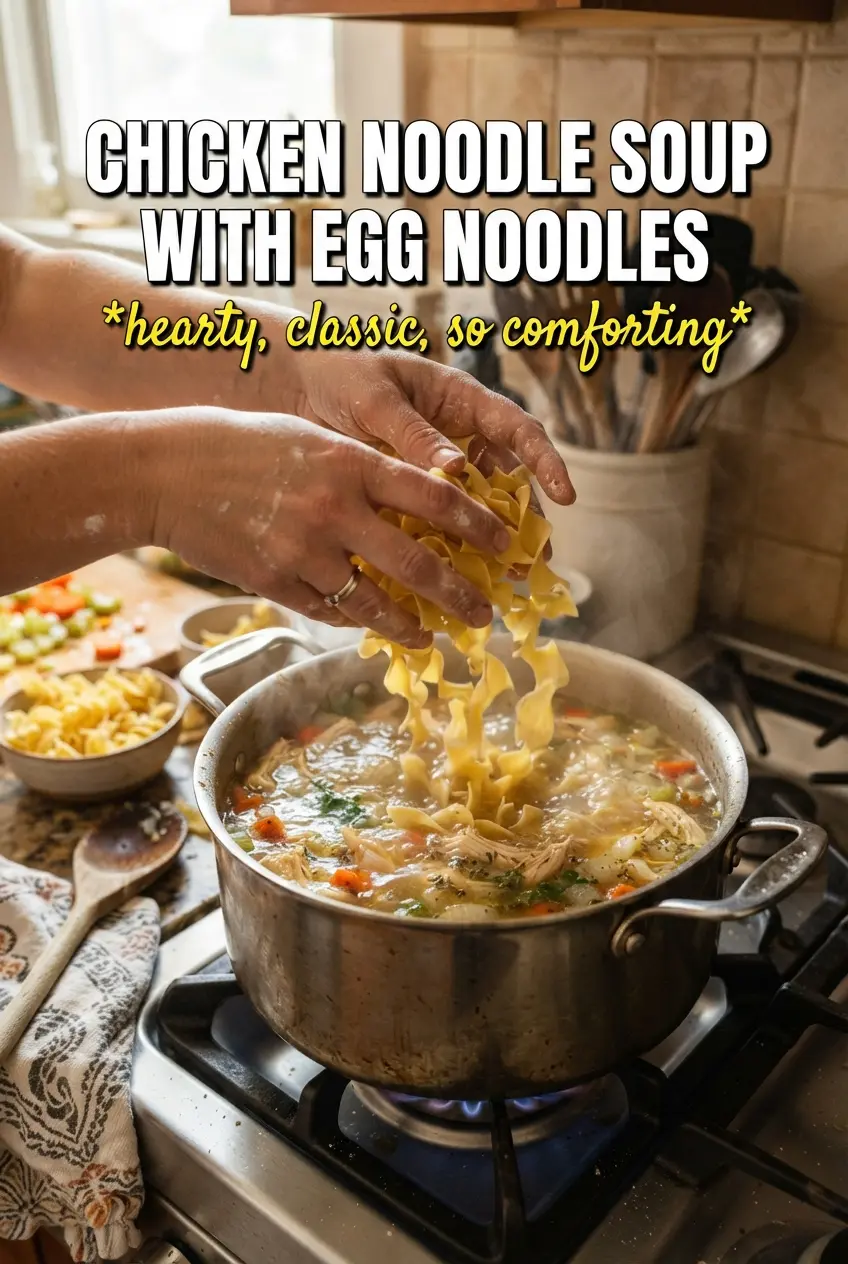
Chicken Noodle Soup With Egg Noodles
Ingredients
Equipment
Method
- Heat the olive oil in a large pot over medium heat, then add the onion, carrots, and celery. Cook for 5 minutes until the vegetables look slightly softened.
- Add the garlic and cook for 1 minute, stirring so it doesn’t brown. Cook until fragrant.
- Pour in the chicken broth, then add the dried thyme, dried parsley, garlic powder, and chicken breast. Bring to a boil over high heat.
- Reduce the heat to maintain a gentle simmer and cook for 18-20 minutes until the chicken is cooked through. You should see light bubbling across the surface.
- Remove the chicken from the pot and shred it with forks, then return it to the soup. Stir to distribute the chicken evenly.
- Bring the soup back to a boil. Once boiling, add the wide egg noodles.
- Cook the noodles for 7-8 minutes until tender but not mushy. Watch for the noodles to lose their raw center while keeping some bite.
- Stir in the fresh dill and let it wilt into the broth for about 30 seconds. Season generously with salt and pepper to taste.


