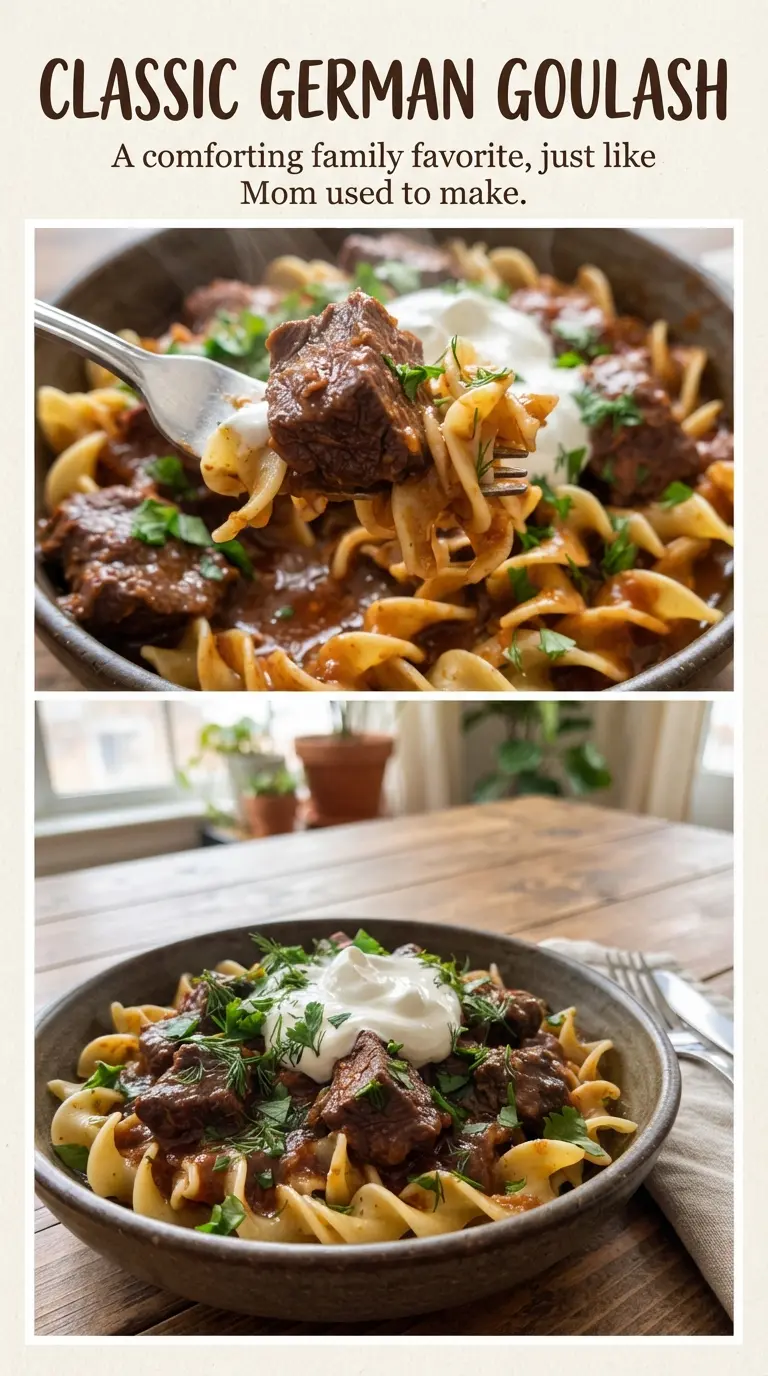
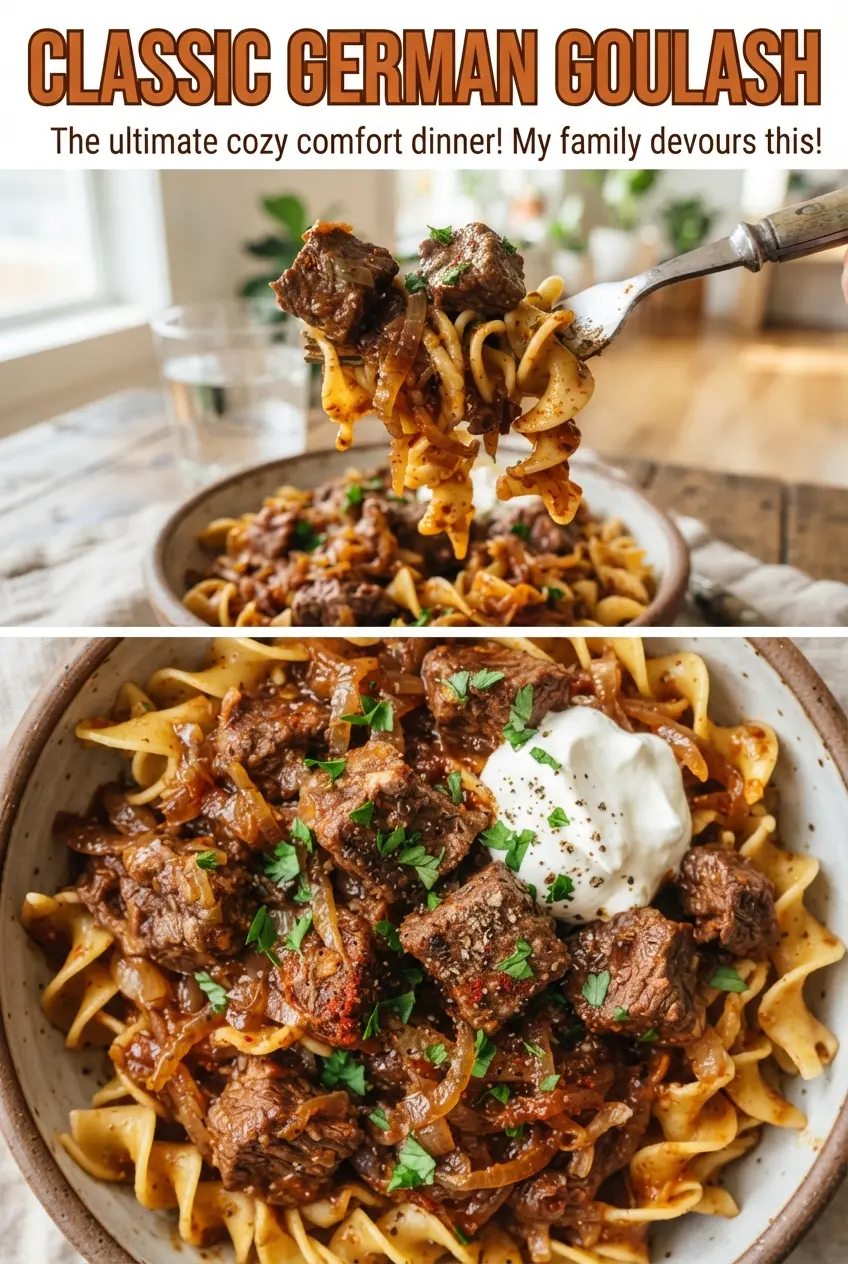
Classic German goulash lands on the table as a deep, paprika-rich stew with tender beef, soft onions that nearly melt into the gravy, and a sauce that clings to spaetzle instead of running off the plate. The flavor is bold without being heavy-handed, and the texture is what keeps it on repeat: beef that gives way with a spoon, onions that disappear into the base, and a glossy sauce with just enough body to coat every bite.
The trick is patience at the front end. Browning the beef builds the foundation, but the real work comes from cooking the onions long enough to turn sweet and jammy before the paprika goes in. That step matters because paprika can turn bitter if it fries too hard or too long, so the pot needs to be ready before it hits the heat. A splash of vinegar and a small amount of tomato paste round out the gravy without making it taste sharp or tomato-heavy.
Below, you’ll find the timing that gives the beef time to turn tender without falling apart too early, plus a few simple swaps if you want to serve it with noodles, potatoes, or make it a little lighter.
The onions cooked down into the gravy and the sauce thickened up beautifully after the slurry went in. I served it over spaetzle, and the beef was fork-tender right on time.
Save this German goulash for the kind of dinner where tender beef and paprika-onion gravy are the whole point.
The Onion Base Is What Keeps the Gravy Rich, Not Thin
Most goulash goes wrong when the onions are rushed. If they stay pale, the broth tastes flat and the sauce needs extra thickener to feel complete. Here, the onions are the backbone of the dish, and cooking them until they turn soft and golden gives the gravy its natural body and sweetness. That long, slow cook is what makes this version taste rounded instead of sharp.
The paprika belongs in the pot after the onions are ready, not before. It only needs about a minute with the tomato paste and caraway to bloom; any longer and it can taste dusty or bitter. Once the broth goes in, the fond on the bottom lifts into the sauce and gives the whole pot that dark, savory depth you expect from a good goulash.
What Each Ingredient Is Actually Doing In This Dish
- Beef chuck — This cut has enough connective tissue to turn silky during the long simmer. Lean stew meat can work in a pinch, but it tends to dry out before the sauce gets deep and glossy.
- Onions — Use the full amount. They melt down into the gravy and replace the need for a roux-heavy base, which is why this stew tastes substantial without feeling pasty.
- Sweet paprika and hot paprika — Sweet paprika gives color and warmth; hot paprika adds a quiet edge. If you only have sweet paprika, use it all and add a small pinch of cayenne if you want a little heat.
- Caraway seeds — They give the stew its unmistakable German character. Crush them lightly in your fingers before they go in so the flavor shows up in the broth instead of staying locked in the seed.
- Red wine vinegar — The vinegar sharpens the onion sweetness and keeps the stew from tasting heavy. Lemon juice won’t give the same rounded finish, so vinegar is the better swap.
- Flour slurry — This thickens the gravy at the end without making it muddy. Stir it in after the beef is tender; if you add flour too early, the sauce can turn gummy before the onions have fully broken down.
How To Keep The Beef Tender And The Sauce Smooth
Browning The Beef In Batches
Season the beef first, then brown it in a single layer with enough space between the pieces for real contact with the pan. If you crowd them, they steam and turn gray, which leaves you without the browned bits that make the gravy taste built, not boiled. Each batch should pick up a deep crust on at least two sides before you move it out of the pot.
Softening The Onions All The Way Down
Let the onions cook slowly in the same pot until they look soft, glossy, and golden at the edges. They should shrink dramatically and start to smell sweet. If they start to stick hard or brown too fast, lower the heat and add a small splash of broth to loosen them; burnt onions will carry a bitter note through the whole stew.
Blooming The Paprika Without Burning It
Once the garlic is fragrant, stir in the paprika, caraway, and tomato paste and keep them moving for just about a minute. You want the spices to wake up and darken slightly, not scorch. Add the vinegar and broth right after that so the pan cools before the paprika can overcook.
Finishing The Gravy At The End
Simmer the stew until the beef is tender enough to cut with a spoon, then stir in the flour slurry and give it another short simmer. The sauce should turn glossy and coat the back of a spoon without looking gluey. If it still seems thin, let it bubble a few minutes longer; if it gets too thick, loosen it with a splash of broth before serving.
How To Adapt This Goulash For Different Tables
Serve It The Classic German Way
Buttered spaetzle is the best match because it catches the paprika gravy in every ridge. Egg noodles work well too, but spaetzle gives you the more traditional feel and a little more chew against the soft beef.
Make It Gluten-Free Without Losing Body
Skip the flour slurry and thicken the finished stew with a cornstarch slurry instead, using about half the amount and simmering only until the sauce turns glossy. Serve it over potatoes or gluten-free noodles, since traditional spaetzle and egg noodles usually contain wheat.
Make The Paprika Flavor Gentler
Use all sweet paprika and leave out the hot paprika if you want a softer, rounder stew. The dish will still taste like goulash, but it leans more toward sweet onion richness than gentle heat.
Storage And Reheating
- Refrigerator: Keeps for 4 days in a sealed container. The flavor deepens overnight, and the sauce usually thickens as it chills.
- Freezer: Freezes well for up to 3 months. Cool it completely first and leave a little room in the container since the sauce will expand.
- Reheating: Warm it gently on the stove over low heat, stirring now and then. A hard boil can make the beef tighten up and can split the sauce if it was thickened heavily.
Answers To The Questions Worth Asking
Classic German Goulash
Ingredients
Equipment
Method
- Season the beef cubes with salt and black pepper, then brown in batches in the vegetable oil over medium-high heat until deeply browned on all sides, about 3-5 minutes per batch. Move browned beef to a plate as it finishes.
- In the same pot, cook the sliced onions over medium heat until soft and golden, 15-20 minutes. Add the minced garlic and cook 1 minute, stirring to prevent browning.
- Stir in the sweet paprika and hot paprika, plus the caraway seeds and tomato paste, and cook for 1 minute to bloom the spices. Keep stirring until the paste looks brick-red and fragrant.
- Add the red wine vinegar, beef broth, dried marjoram, and bay leaves, then return the browned beef to the pot. Cover and simmer until the beef is tender, 2 hours, stirring once or twice so the gravy stays smooth.
- Stir the flour slurry (all-purpose flour mixed with water) into the simmering goulash, then simmer 10 minutes to thicken the gravy. The sauce should coat a spoon visibly.
- Remove bay leaves and serve the goulash over buttered spaetzle or egg noodles. Top with extra sauce so the noodles get glossy and saucy.


