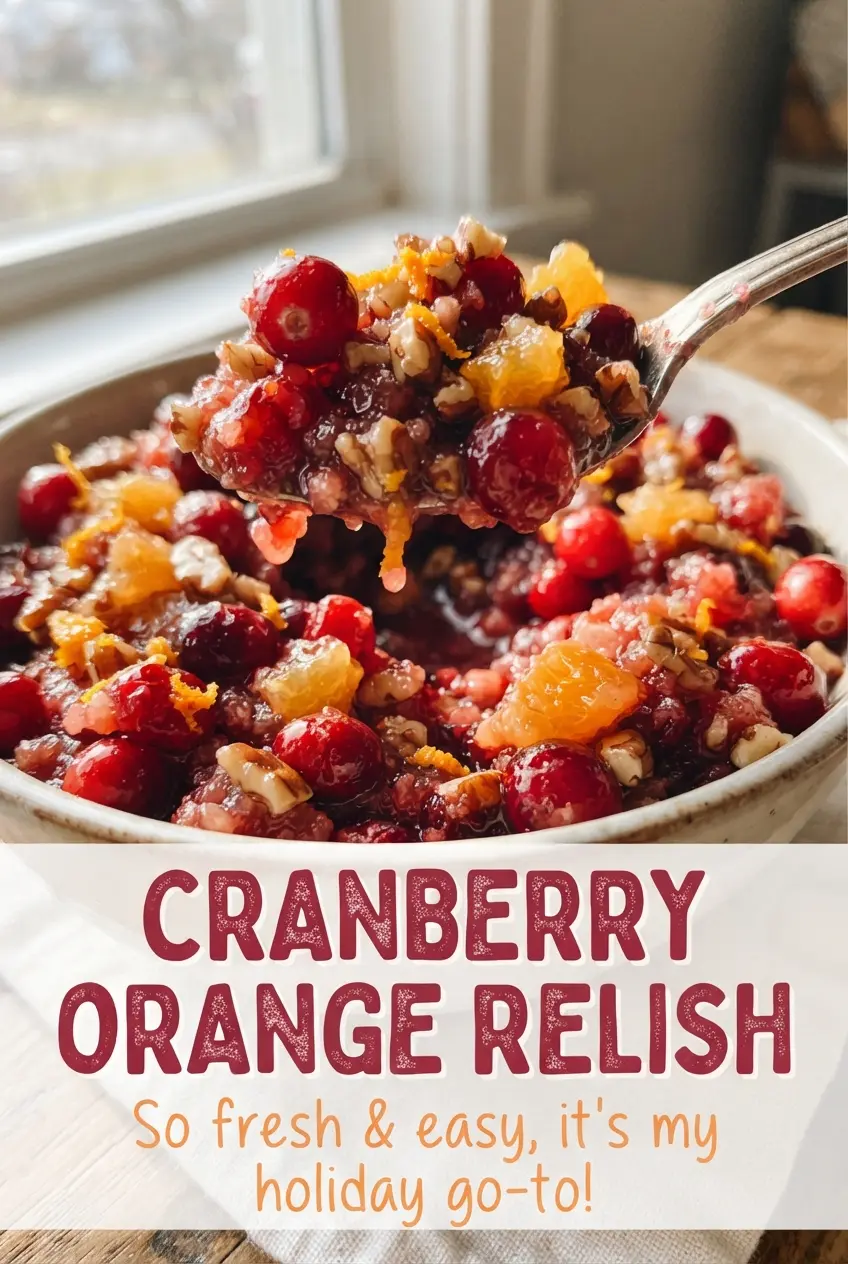
Bright, tart cranberry orange relish brings the kind of fresh bite that cuts through rich holiday plates and wakes up everything on the table. It stays crisp instead of turning into jam, with little sparks of orange zest in every spoonful and just enough sweetness to round out the sharp edges of the cranberries.
The key is pulsing the fruit instead of grinding it down. You want a finely chopped texture with some structure left, because that texture is what makes this relish feel fresh and lively rather than heavy. Leaving the orange unpeeled adds the bitter-sweet oil in the zest and peel, which gives the relish its perfume and depth. A little orange liqueur adds another layer, but orange juice works just as well if that’s what you have.
Below, I’ll walk through the texture to look for in the food processor, the ingredient swap that matters most, and the short chilling time that turns these simple ingredients into something worth making ahead.
I chopped it just until the cranberries were broken down and chilled it overnight. The sugar pulled out enough juice to make it spoonable, but it still had that fresh, crunchy bite my mother-in-law loved with turkey.
Bright, fresh cranberry orange relish with that perfect sweet-tart crunch for turkey, ham, or spooning onto leftovers.
The Texture That Keeps Cranberry Orange Relish Fresh
Cranberry relish fails when it turns mushy. The goal here isn’t a smooth sauce; it’s a chopped, juicy relish with definition in every bite. Pulsing the cranberries and orange together gives you that balance, while the sugar draws out enough liquid to soften the sharp edges without erasing the texture.
If you run the processor too long, the mixture starts to look pasty and the bright, fresh feel disappears. Stop as soon as the cranberries are finely chopped and the orange pieces are small but still visible. After chilling, the relish thickens on its own as the sugar dissolves and the fruit releases juice, so it may look loose at first and then settle into the right consistency.
- Fresh cranberries — Use fresh, not dried. Their tartness and natural pectin are what give the relish its snap and its body.
- Navel orange — The peel stays on, which means the zest oils and bitter-sweet pith are part of the final flavor. Seed it well so the bitterness comes from the peel, not from stray seeds.
- Sugar — This isn’t just for sweetness. It pulls moisture from the fruit and mellows the raw sharpness, which is why the relish tastes better after chilling.
- Orange liqueur or orange juice — Liqueur adds a little depth and aroma, while juice keeps it alcohol-free. Use juice if you want a cleaner, brighter finish; use liqueur if you want a rounder citrus note.
What Each Ingredient Is Doing in the Bowl
- Fresh cranberries — They provide the tart backbone and the ruby color. Frozen cranberries can work in a pinch, but thaw them first and expect a softer final texture.
- Unpeeled orange chunks — This is where the recipe gets its fragrance. The peel brings oil and brightness that plain orange juice can’t match.
- Sugar — It balances the cranberries and helps the mixture macerate. Cutting the sugar much lower changes the texture as well as the taste, so adjust carefully.
- Orange liqueur or orange juice — A small amount loosens the mixture and rounds out the citrus. If you skip it entirely, the relish will still work, but it will taste sharper and a little less layered.
- Fresh mint — This is a garnish, not a requirement, but the cool herbal note looks and tastes right against the bright cranberry-orange base.
The Chill Time That Turns It Into Relish
Pulsing the Fruit
Add the cranberries and orange chunks to the food processor and pulse in short bursts. You’re looking for a finely chopped mixture, not a puree. If the bowl starts to look like sauce, stop immediately; the fruit will keep breaking down a little once the sugar goes in. A few uneven pieces are fine and actually make the relish taste fresher.
Sweetening and Seasoning
Transfer the chopped fruit to a bowl and stir in the sugar, orange liqueur or juice, and salt. At first it will look dry, then the sugar will begin pulling juice from the cranberries and orange. Stir until everything is evenly coated and the sugar is no longer sitting in dry pockets. That even distribution matters because any unmixed sugar can leave a gritty bite later.
Letting the Fruit Do the Work
Cover the bowl and chill for at least 4 hours, or overnight if you can. This resting time softens the cranberries just enough and gives the flavors time to meld without cooking them. When it’s ready, you’ll see a glossy, spoonable relish with a little syrup at the bottom. Stir well before serving so the juices redistribute, then top with fresh mint right before it hits the table.
How to Adapt This Relish for Different Tables
Alcohol-Free Version
Use orange juice instead of orange liqueur. You’ll get a cleaner citrus flavor and the relish will stay family-friendly without losing the bright, fresh edge.
Lower-Sugar Relish
Reduce the sugar a little, but don’t slash it in half on the first try. Sugar is doing more than sweetening here; it’s also softening the cranberries and helping the relish develop that juicy texture. If you cut too much, the result can taste harsh and dry.
Make-Ahead Holiday Side
This relish gets better after a night in the fridge, so it’s a great make-ahead side. The flavor mellows and the juices settle into a glossy spoonable texture, which means less work on the day you’re serving it.
Serving It With Savory Mains
Keep the mint garnish if you want a fresher look, or skip it for a more traditional table presentation. This relish works best cold, straight from the fridge, where the tartness stays sharp enough to cut through turkey, pork, or rich leftovers.
Storage and Reheating
- Refrigerator: Store in an airtight container for up to 5 days. The texture softens slightly as it sits, but the flavor stays bright.
- Freezer: It freezes well for up to 2 months, though the texture will be a little softer after thawing. Thaw in the refrigerator and stir well before serving.
- Reheating: No reheating needed. Serve it chilled or cool from the fridge, and don’t warm it or you’ll lose the fresh, crisp character that makes it worth making.
Answers to the Questions Worth Asking
Cranberry Orange Relish
Ingredients
Equipment
Method
- Pulse the fresh cranberries and orange chunks in a food processor until finely chopped but not pureed.
- Stop and scrape down the bowl as needed so the mixture stays evenly chopped with visible zest flecks.
- Transfer the chopped cranberry-orange mixture to a bowl and stir in the sugar, orange liqueur or orange juice, and salt.
- Cover and chill at least 4 hours or overnight to let the flavors meld.
- Stir well before serving so the syrupy juices distribute through the relish.
- Garnish with fresh mint immediately before serving for a bright, fresh finish.


