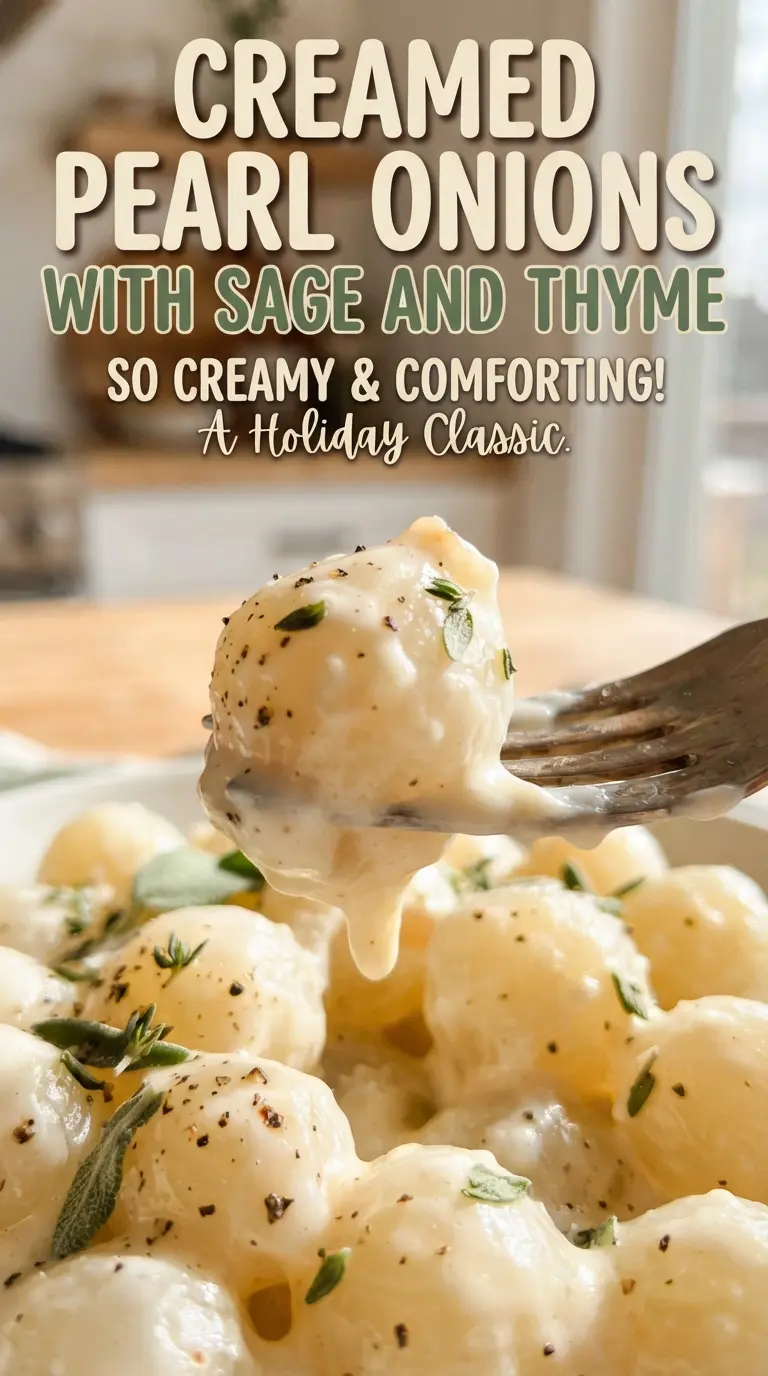
Glossy pearl onions in a velvety cream sauce are the kind of side dish that quietly steals the table. The onions stay tender but intact, the sauce clings instead of pooling, and the sage gives each bite a warm, savory edge that keeps the dish from tasting heavy. Crispy fried sage on top adds one last hit of texture that makes the whole thing feel finished.
Frozen pearl onions are the shortcut that makes this dish easy to pull together without sacrificing the soft, sweet center you want. Thawing them first matters because it keeps the pan from flooding with extra water, which is the quickest way to lose browning. The flour goes in before the broth and cream so the sauce thickens evenly instead of turning thin or grainy at the end.
Below, I’ve included the small details that matter most here: how to keep the onions from steaming, how to get the sauce silky, and what to change if you need a dairy-free version without losing the character of the dish.
The onions browned beautifully before the cream went in, and the sauce thickened up into this silky coating instead of turning runny. I served it with roast chicken and my husband kept going back for the last spoonfuls.
Save these creamed pearl onions for the night you want a silky, herb-flecked side that feels special without extra work.
The Trick That Keeps the Sauce Smooth Instead of Gluey
The biggest mistake with creamed onions is rushing the sauce after the onions have already given off steam. If you add the flour too late or crank the heat too high once the cream goes in, the sauce tightens unevenly and can turn pasty instead of silky. Cooking the flour briefly with the herbs and onions gives it time to lose that raw edge and helps the finished sauce stay cohesive.
Another thing that matters here is patience after the liquid goes in. The sauce needs a gentle simmer, not a hard boil, so the cream thickens without separating and the onions finish turning tender at the same pace. You’re looking for a glossy coating that settles around the onions and barely moves when you tilt the pan.
What Each Ingredient Is Actually Doing in This Dish
- Frozen pearl onions — These give you the sweet, tender center without the peeling work. Thawing them first is worth the extra few minutes because wet onions brown poorly; pat them dry if they seem damp.
- Butter — This carries the sage flavor and gives the sauce a round, rich base. You can use salted or unsalted, but if you use salted butter, keep a close eye on the final seasoning.
- Fresh sage and thyme — Fresh herbs matter here because dried sage can get dusty and harsh, while fresh leaves mellow into the cream. The whole sage leaves for garnish turn crisp in seconds and give the dish its best texture contrast.
- Heavy cream and Parmesan — This is the body of the sauce. Half-and-half will work in a pinch, but it won’t cling the same way, and the Parmesan adds both salt and a little backbone so the sauce tastes finished instead of flat.
- White pepper and nutmeg — White pepper keeps the sauce clean-looking and quietly warm, while nutmeg pulls the cream and onions together. Don’t skip the nutmeg; even a pinch makes the sauce taste more complete.
Building the Onions So They Brown Before They Swell
Frying the Sage First
Start with the whole sage leaves in the butter and pull them out as soon as they darken and crisp, usually in about 30 seconds. They go from fragrant to burned fast, so stay close to the pan and move them to a plate the second they stop looking glossy. That infused butter becomes the flavor base for everything that follows.
Getting Color on the Onions
Add the thawed onions to the skillet and let them cook long enough to pick up light golden patches before anything else goes in. If they’re crowded and look wet, hold the heat at medium so the moisture evaporates instead of trapping the onions in steam. This is where the dish gets its depth; pale onions in a pale sauce taste one-note.
Thickening Without Breaking
Stir in the chopped sage, thyme, and flour, then let that cook for a full minute so the flour loses its raw taste and coats the onions evenly. Whisk in the broth and cream gradually, then keep the simmer gentle. If the heat is too high, the cream can separate and the sauce will look oily instead of smooth.
Finishing the Sauce
When the sauce has thickened and the onions are tender, stir in the Parmesan, salt, pepper, and nutmeg off the hottest part of the burner if needed. The cheese melts best when the sauce is hot but not aggressively boiling. Spoon the onions into a serving dish and top with the crisp sage leaves right before serving so they keep their crunch.
How to Adapt These Creamed Pearl Onions for Different Tables
Make It Dairy-Free
Use plant butter, unsweetened coconut cream, and a dairy-free Parmesan-style cheese. The sauce will still thicken, but it won’t have quite the same round finish as heavy cream, so keep the simmer gentle and taste carefully at the end for salt.
Gluten-Free Swap
Replace the all-purpose flour with a 1:1 gluten-free flour blend. The sauce will still thicken nicely as long as you cook the flour with the herbs for that same minute before adding liquid.
Swap in Shallots for a Sweeter Edge
If you don’t have pearl onions, small shallots cut in halves or quarters work well and bring a softer, more caramelized flavor. They cook a little faster, so start checking them early once they hit the skillet.
Storage and Reheating
- Refrigerator: Store in an airtight container for up to 3 days. The sauce will thicken as it chills.
- Freezer: Not my first choice. Cream sauces can separate after freezing, and the onions can turn soft. If you do freeze it, cool it completely and reheat gently after thawing overnight.
- Reheating: Warm slowly over low heat with a splash of broth or cream to loosen the sauce. High heat is what turns it grainy, so don’t rush it in the microwave unless you’re stirring every 20 to 30 seconds.
Answers to the Questions Worth Asking

Creamed Pearl Onions with Sage and Thyme
Ingredients
Equipment
Method
- Melt the butter in a large skillet and fry a few whole sage leaves for 30 seconds until crisp, then set aside.
- Add the thawed pearl onions and cook for 8-10 minutes until lightly golden.
- Stir in the chopped sage, thyme, and flour, then cook for 1 minute.
- Whisk in the chicken broth and heavy cream, then simmer for 6-8 minutes until thick and the onions are tender.
- Stir in the Parmesan, salt, white pepper, and nutmeg.
- Top with the crispy sage leaves and serve warm.


