Rich beef stew rewards patience with spoon-tender chunks of beef, soft potatoes, and carrots that hold their shape without going mushy. The broth turns deep and savory as it simmers, with enough body to coat the back of a spoon instead of tasting thin or watery.
What makes this version work is the flour-coated beef and the browned bits left in the pot. That first sear builds flavor fast, and the tomato paste and Worcestershire deepen the broth without making it taste like tomato soup. Low heat does the rest. Once the beef has enough time to relax, the potatoes and carrots can finish in the same pot and pick up all that flavor.
Below, I’ll walk through the small choices that keep the stew rich instead of cloudy or dull, plus a few swaps that still give you a proper one-pot dinner.
The beef turned meltingly tender and the broth thickened up beautifully after the flour on the meat cooked down. I added the potatoes a little later like suggested and they held their shape perfectly.
Save this beef stew for the kind of night when you want tender meat, a rich broth, and one pot doing all the work.
The Trick to Beef Stew That Tastes Slow-Cooked, Not Boiled
The difference between good stew and muddy stew usually comes down to two things: browning and heat control. If you crowd the pot, the beef steams instead of searing, and you lose the deep flavor that makes the broth taste like it cooked all day. Brown the meat in batches and leave the dark bits on the bottom of the pot. That’s the base of the stew.
The other place people go wrong is turning the simmer up too high. A hard boil makes the beef seize up and the broth turn cloudy. Keep it at a gentle burble, with just a few bubbles breaking the surface. That slow simmer is what turns stew meat tender without shredding it into strings.
What Each Ingredient Is Doing in the Pot
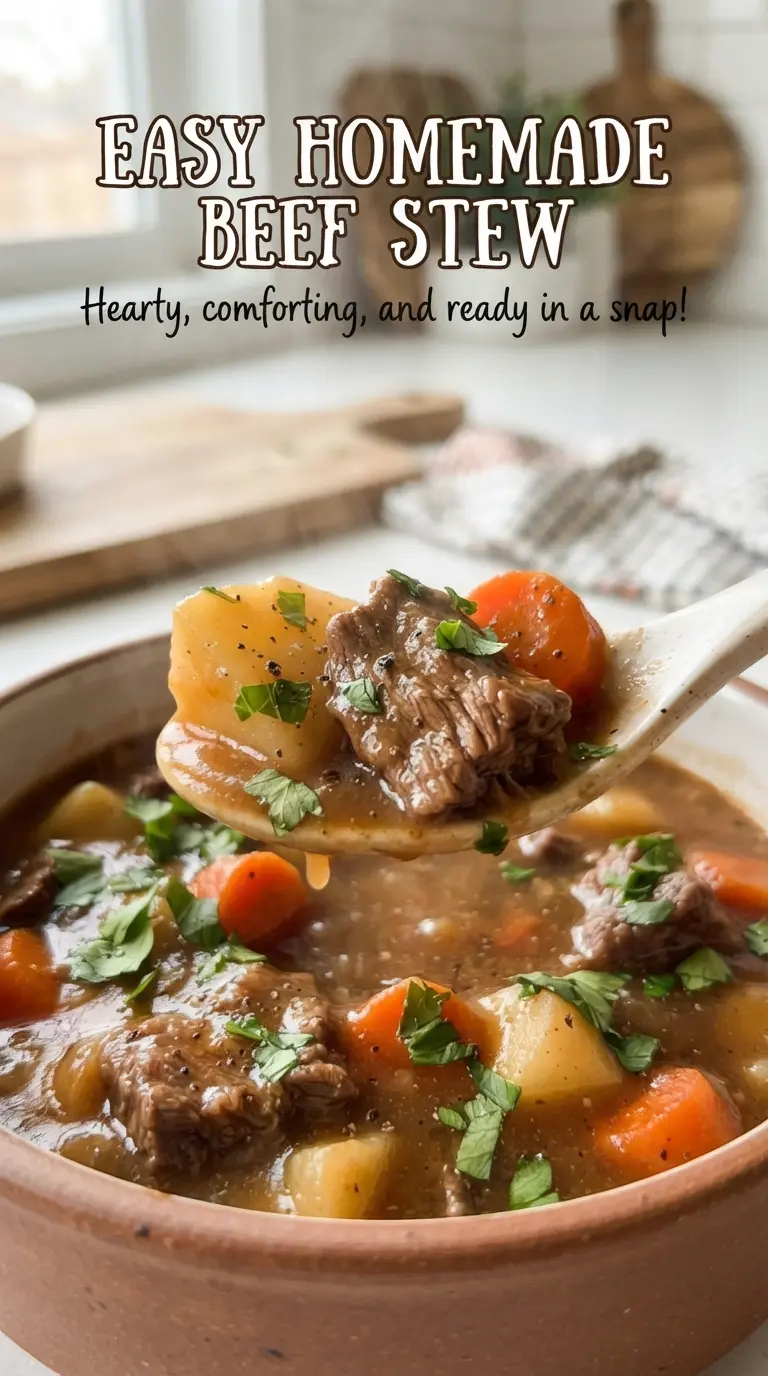
- Beef stew meat — Cut it into even 1 1/2-inch pieces so it cooks at the same pace. Chuck is ideal if your butcher has it; it has more connective tissue and turns softer during the long simmer.
- All-purpose flour — This lightly coats the beef and helps thicken the broth as it cooks. It won’t make a thick gravy on its own, but it gives the stew a fuller body than broth alone.
- Tomato paste — This is here for depth, not tomato flavor. Cook it into the liquid so it loses the raw edge and darkens the broth.
- Worcestershire sauce — A small amount adds salt, tang, and savoriness that broth alone can’t match. There isn’t a perfect substitute, but soy sauce works in a pinch if you use a little less and taste before adding more salt.
- Potatoes and carrots — Add them later so they stay intact. If they go in at the beginning, the potatoes break down and the carrots turn soft and dull.
Building the Stew in the Right Order
Coating and Browning the Beef
Toss the beef with the flour, salt, and pepper until the pieces look evenly dusted, not caked. When the oil is hot, add the beef in batches and let each side sit long enough to build color before turning. If the pan looks dry or the meat starts to gray, the pot is crowded. Take the time to brown properly here, because this is where the stew gets its backbone.
Developing the Broth
After the onion softens and the garlic smells fragrant, stir in the broth, tomato paste, Worcestershire, thyme, and bay leaf. Scrape the bottom of the pot with a wooden spoon until the browned bits dissolve into the liquid. That’s where the best flavor lives. If the tomato paste clumps, keep stirring for another minute before the liquid comes back to a gentle simmer.
The Long Simmer
Return the beef, cover the pot, and cook low and slow until the meat starts to relax. You want small bubbles, not a rolling boil. If the stew boils hard, the beef gets tough before it gets tender. After about 1 1/2 hours, the meat should be starting to yield when pressed with a spoon.
Finishing with the Vegetables
Add the potatoes and carrots only after the beef has had time to soften. They’ll finish in the broth and absorb the savory liquid without disappearing into it. Keep simmering until a fork slides into the potatoes easily and the carrots are tender at the center. Pull out the bay leaf before serving and taste for salt at the end, since the broth concentrates as it cooks.
How to Adapt This Stew Without Losing the Heart of It
Make it gluten-free
Skip the flour and brown the beef plain. To thicken the stew, simmer it uncovered for the last 15 to 20 minutes or stir in a small cornstarch slurry at the end. You’ll lose a little of the coating on the beef, but the broth will still turn rich and spoonable.
Use red wine for deeper flavor
Replace 1 cup of the broth with dry red wine and let it simmer for a minute before adding the rest of the liquid. The wine gives the stew a darker, rounder taste, but don’t use a sweet one or the broth will turn flat and strange.
Add mushrooms or peas
Mushrooms can go in with the onions so they cook down and add earthiness. Peas belong at the very end, just long enough to warm through. If you add them too early, they lose their color and turn mushy.
Storage and Reheating
- Refrigerator: Keeps well for 4 days. The flavor deepens overnight, and the broth usually thickens a little as it chills.
- Freezer: Freezes well for up to 3 months. Cool it completely first and leave a little headspace if you’re packing it into containers.
- Reheating: Warm it gently on the stove over low heat, stirring now and then. A hard boil can break down the potatoes and make the beef stringy, so keep the heat calm and add a splash of broth if it gets too thick.
Questions I Get Asked About This Beef Stew

Easy Homemade Beef Stew
Ingredients
Equipment
Method
- Toss the beef stew meat with all-purpose flour, salt, and black pepper until evenly coated. Brown in hot vegetable oil in a large pot in batches over high heat and set aside.
- Cook the chopped onion in the same pot for 4 minutes. Add the minced garlic and cook for 30 seconds.
- Stir in the beef broth, tomato paste, Worcestershire sauce, dried thyme, and bay leaf, scraping the bottom of the pot to loosen browned bits.
- Return the browned beef to the pot, cover, and simmer on low for 1 1/2 hours. Keep the stew at a gentle simmer with occasional stirring.
- Add the cubed potatoes and sliced carrots, then continue simmering for 45-60 minutes until everything is tender. Skim foam if needed and stir occasionally so the vegetables cook evenly.
- Remove the bay leaf, adjust seasoning to taste, and top with chopped fresh parsley. Serve hot with steam rising from the surface.


